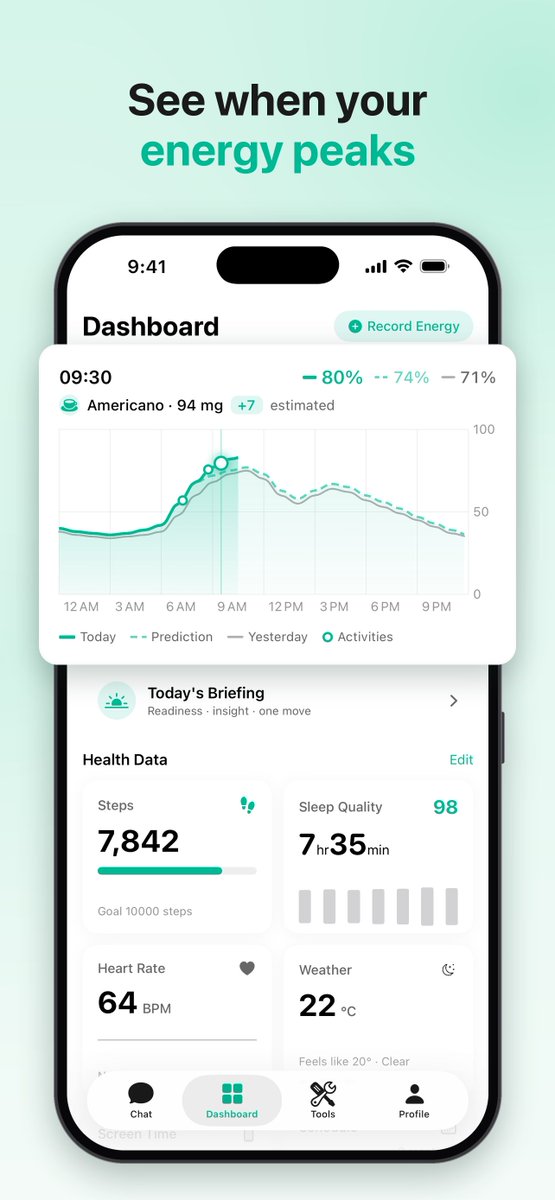
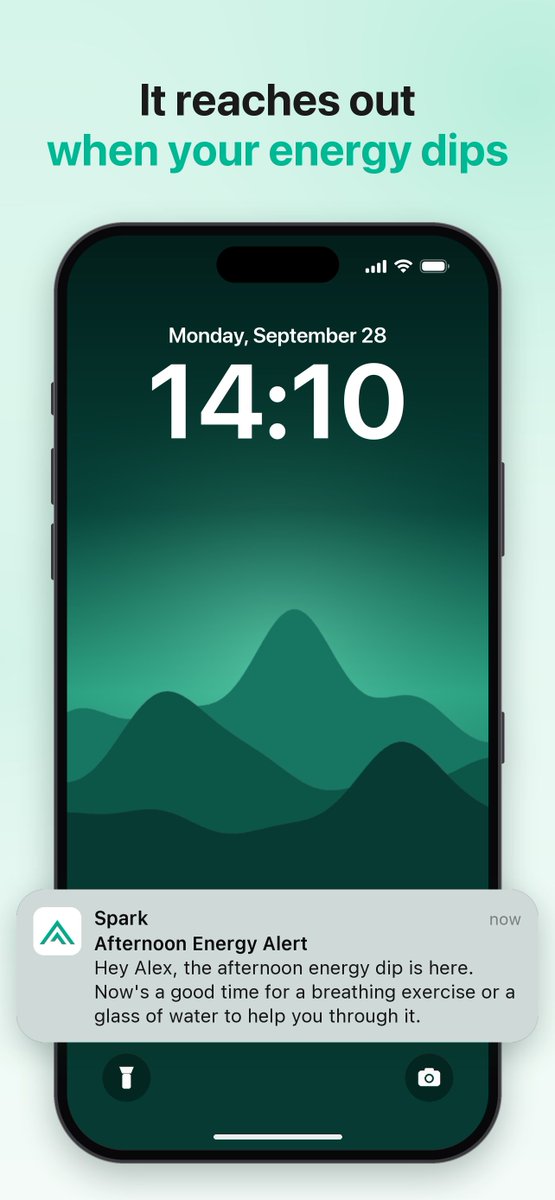
Ever wonder why you crash at 3pm even after "enough" sleep?
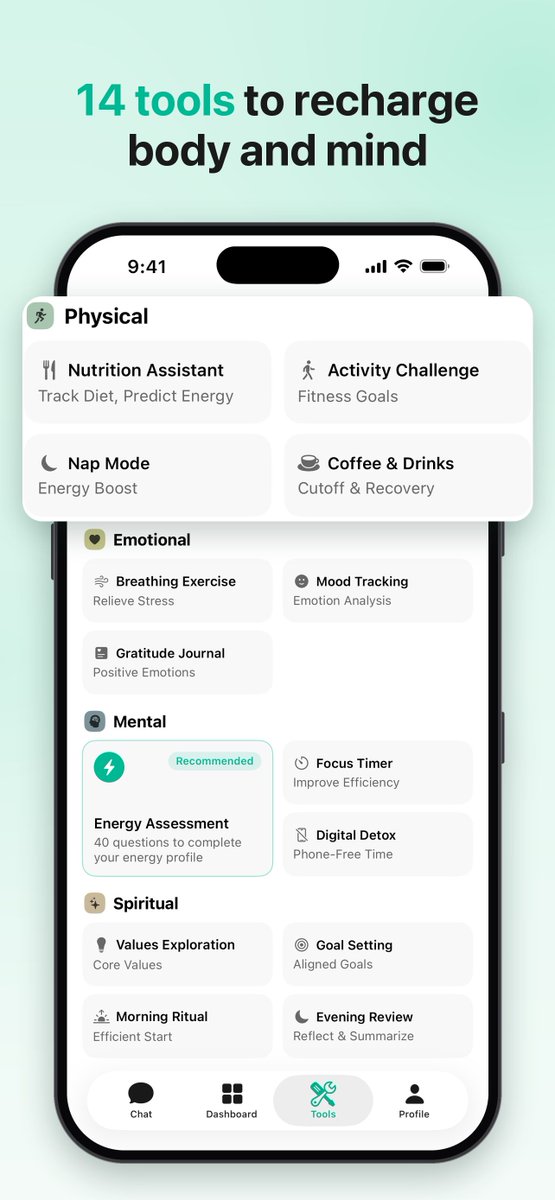
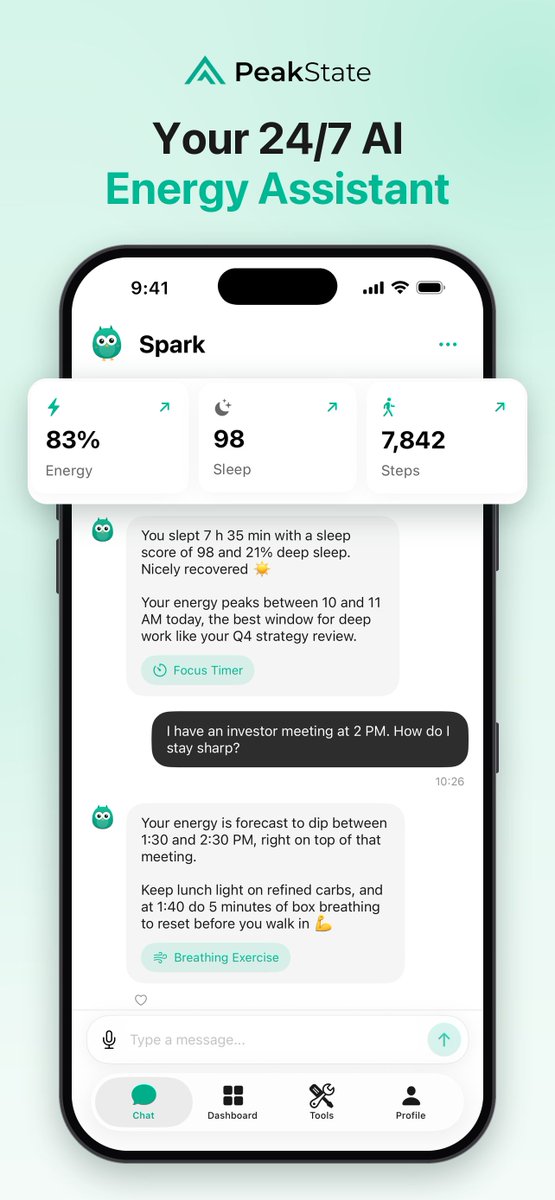
PeakState is an AI energy assistant for iPhone. Ask anything, and it answers using your own sleep, HRV, activity and calendar.
7-day free trial. Tell us what drains your energy. We read every reply.
🔗 below ↓
3 small experiments from our recent science notes:
1. Finish the last coffee about 9 hours before bed
2. A brisk 5-minute walk every hour you sit
3. A 5-minute to-do list before sleep
@misscoco_ohwhy Early dark is rough. What helps a lot of people: 10 minutes outside in the first hour after waking, even on a cloudy day. Morning outdoor light is far brighter than indoor lighting, and it's what the body clock mainly uses to set itself.
@Aizy_IceSickle Caffeine hangs around longer than it feels. In a 2013 study, a large dose 6 hours before bed still cost about an hour of sleep — and people didn't notice the loss in their own diaries (Drake et al.). Tonight is mostly waiting it out.
@noseyandloud If it happens every day, last night is often the first place to look. A 2021 meta-analysis of 64 sleep-loss studies found that after less sleep, positive emotions dropped sharply — more than negative ones rose (Tomaso et al.). The day can feel flat, not just tired.
@byakodev Four back-to-back meetings will do that. A single HRV reading also moves a lot with sleep, stress and timing — many people find a 7-day average against their own baseline easier to read than one morning.
We launched PeakState on Product Hunt today.
It's an AI energy coach for iPhone: ask why you're tired at 3pm and get an answer from your own sleep, HRV and calendar.
We'd love honest feedback, especially the critical kind. Link's in our profile.
@Timer5150 Depends when you want to sleep. In a 2013 study, a large caffeine dose 6 hours before bed still cost about an hour of sleep — and people didn't notice it in their own sleep diaries (Drake et al.). If bedtime is 11, last cup around 2pm is a common back-of-the-envelope.
@dontdoitlikemex Both can be true. In a 2006 sleep-lab study, a 10-minute nap after a short night helped alertness right away. A 30-minute nap often meant grogginess first (Brooks & Lack). A 20-minute timer — plus a few minutes to actually fall asleep — is what a lot of people land on.
@strwbrryspit Those dreams might be your brain still half-on. In a 2015 sleep-lab study, reading on a light-emitting screen before bed, versus a printed book, meant later sleep, less evening melatonin, and feeling groggier the next morning (Chang et al., PNAS). Last 30 minutes off the phone.
@yosoysimurgh A third cup can feel like that. Caffeine lingers: a 2023 review of 24 studies found it cut total sleep by about 45 minutes on average, and a regular cup's estimate was to finish it at least 8.8 hours before bed (Gardiner et al.). At 3pm, a short walk is the less jittery option.
Your HRV is lower than your friend's? Don't panic.
HRV varies with age, sex and how long and how it's measured (Shaffer & Ginsberg 2017 review).
More useful: compare this week's average with your own recent weeks, not one morning.
Do you check the daily number or the trend?
Big talk tomorrow and tense already? Before you go in, take 3 minutes to write what you value most, and why.
A 2005 study of 85 students (Creswell et al.): those who did this before a stress test had no real cortisol rise. Controls did. Small study.
Which value would you pick?
@sspaciee_ Same. When it's dark by 4, getting outside in the first hour after waking helps a lot of people feel less flat. Even an overcast morning is far brighter than most indoor lighting.
@hussainalispace Bodies are weird like that. A single morning reading moves a lot with sleep, stress, alcohol and timing. Many people find a 7-day average against their own baseline easier to read than any one day. Same time, same position each morning helps too.
@basedonadoll There's a sleep-lab study behind that. People who read on a light-emitting tablet before bed, vs a printed book, took longer to fall asleep, had lower evening melatonin and were groggier the next morning (Chang et al., 2015, PNAS).
@TheCyberHouse The fourth re-read is so real. What helps a lot of people: a 10-minute walk outside instead of another coffee, then answer just the one email that actually needs you. At 3pm, light and movement tend to beat willpower.
Try it at lunch once: vegetables and protein first, carbs last.
When the afternoon slump hits, do you usually reach for sugar, coffee, or just push through?
It's 3pm. Your hand goes to the snack drawer. Sugar, soda, the office cookies — just to get through it.
The problem: this move doesn't hold up in the research.
What's more worth trying: meal order.
A small 2017 trial (16 people, all with type 2 diabetes): same meal, vegetables and protein first, carbs last — the post-meal glucose peak fell by about half (Shukla et al., 2017). Not medical advice; just shows order can change the swing.