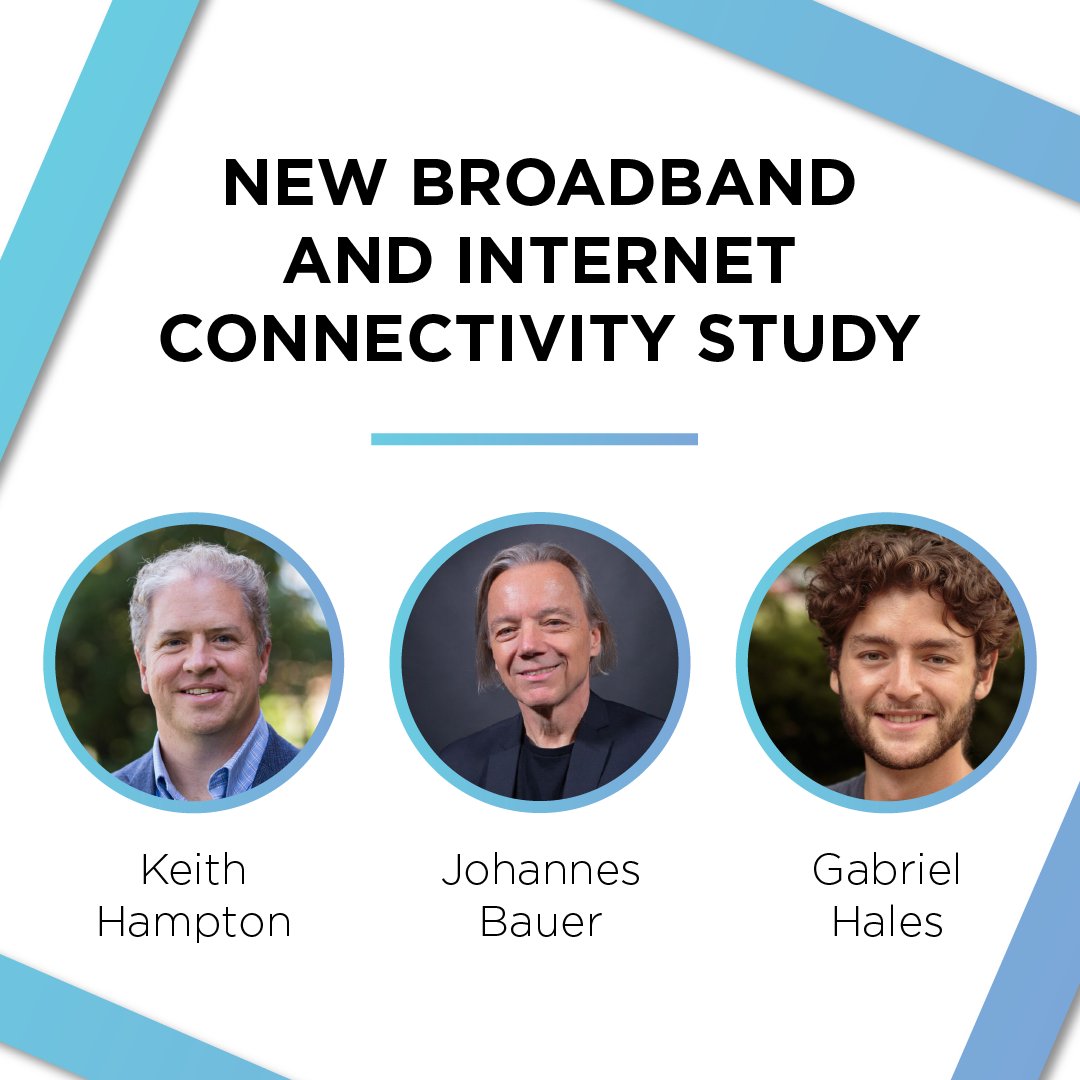
Key findings on rural students pre-post pandemic:
✔️self-esteem returns to pre-pandemic levels
✔️sharp drop in education asperations
✔️ interest in STEM careers drop
✔️learning from home over COVID-19 pandemic boosted digital skills
✔️rural access inequalities are now reversing
Rural students’ access to Wi-Fi is in jeopardy as pandemic-era resources recede, with major costs to academic achievement and educational outcomes
https://t.co/wm9EqQkRDE
pre-post COVID-19 report on Broadband and Student Performance Gaps After the COVID-19 Pandemic. Change in rural Michigan digital inequality, student achievement, and adolescent well-being https://t.co/Jv6qsYaZHx
@QuelloCenter@GabeHales@jm_bauer
Interesting article on "Kinwork revisited: The gendered work of keeping up with family through communication technology" (some older media are abandoned as gender norms change) by Lina Eklund at Uppsala University https://t.co/3jhZ7uHpvz
@ATTHelp It has been six months since I got a new phone and I still can't make outgoing phone calls (except 911, it was the only way to reach the police after an accident)! Support keeps telling me that they will get back to me, but this is ridiculous!! Why am I paying for this?
Nice! "Detectable differences or functional equivalents?" validity of structural vs subjective measures of network diversity in political comm. I had not positive feedback when introducing position generators to this area @mbarni109 @MikeXenos @CynPeacock https://t.co/Jr9zuMmV3W
Law enforcement organizations are promoting a troubling new documentary about child "sextortion."
But many of the film's key claims lack context. https://t.co/5ktMofoCb6
Concerns over the future of sociology of media & communication, and a field of digital media studies "Disciplinary brakes on the sociology of digital media: the incongruity of communication and the sociological imagination" #socialmedia https://t.co/ATKiqIfKl8
Interesting paper by Rize Jing et al: digital inequality predicts depressive symptoms among older (especially rural) adults in China https://t.co/hZAfNQC27d
Postdoc opportunity at @MSUComArtSci open to scholars doing research on digital media (including sociologists like me). Two, 1-2 year positions for recent PhDs advancing research related to diversity, equity, and inclusion. More info: https://t.co/1RyWMDAdf4
Video games can help teenagers feel less isolated by helping them socialize and build community. Read about the positive effects of video gaming and @michiganstateu Professor Keith Hampton @mysocnet’s study: https://t.co/YNtJUUFVwF
A good summary of my recent work with @inyoung_shin looking at the small effect of screen time on teen self-esteem relative to "disconnection" and traditional inequalities. @QuelloCenter@MediaInfoMSU@MSUComArtSci
https://t.co/cZliHlapze
Teens who are “excessive” users of screens report higher self-esteem than those who are disconnected, according to new research from MSU. https://t.co/3vxxvvatvF
Join us on October 11 for the annual Hotelling Lecture with guest speaker Keith N. Hampton to address the digital divide among Michigan's rural youth.
For more, visit 👉 https://t.co/bs4pVEBLon
#WeAreLTU
Interesting paper that ties together the research on network size and diversity w/ FOMO and social media fatigue by @terryzhou1979 and Yu Tian (@NewhouseSU) https://t.co/bET0E5cU9C