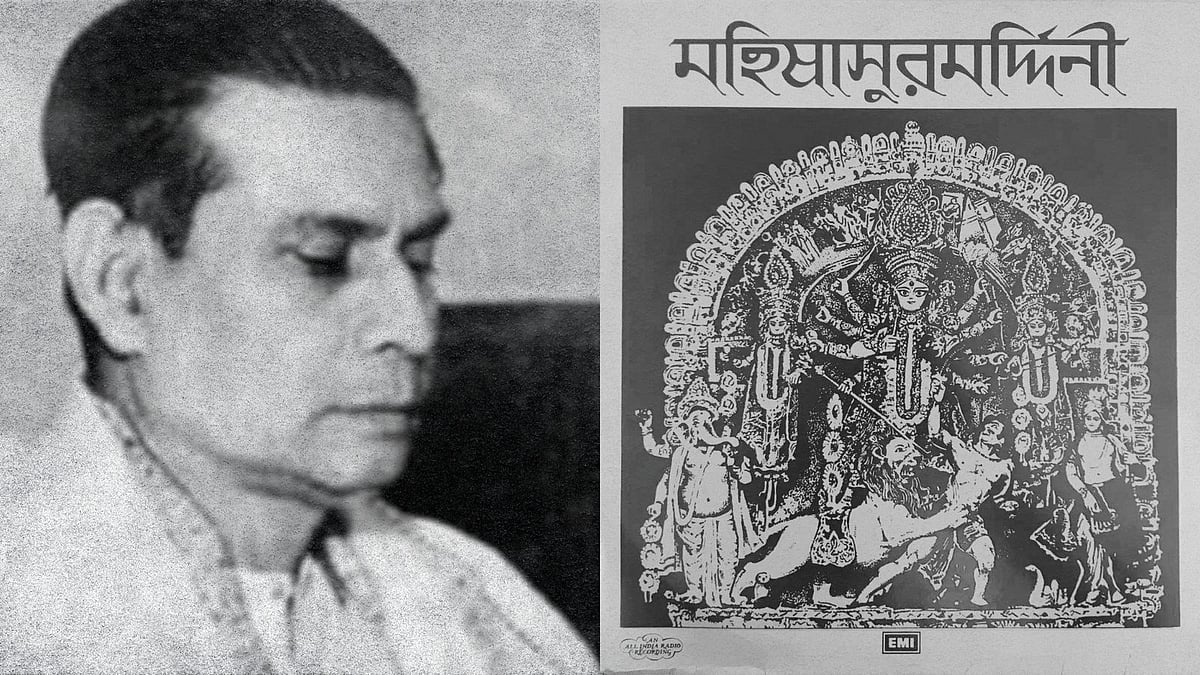
In 1931, All India Radio Kolkata aired “Mahishasura Mardini,” a dawn program blending narration and devotional songs. Narrated by Birendra Krishna Bhadra, it marked the start of Durga Puja for Bengalis.
Interior of the Orient Express :
The Orient Express is one of the few true relics we have of 'Old World' splendor.
Orient Express was a long-distance passenger train service created in 1883 AD, by Compagnie Internationale des Wagons-Lits (CIWL) that operated in Europe until 2009.
Presently Venice-Simplon Orient Express train, a private venture by Belmond using original CIWL carriages from the 1920s and 1930s, continues to run from London to Venice and to other destinations in Europe, including the original route from Paris to Istanbul.
The carriages (rolling-stock) which now make up the world famous Venice Simplon Orient Express luxury train, have each uniquely acquired their own history and special character over years of travelling the length and breadth of Europe and beyond.
George Mortimer Pullman, a creative railway constructor in 1864, built a train in Great Britain that featured all the up-to-date technology of the time employing more advanced technology and far more luxurious than anything else that existed in Europe to date.
Following this, in 1870’s, parlour cars and sleeping carriages were introduced and passengers of those trains were first to enjoy the novelty of having their meals served on board a train.
In 1881 AD, Pullman Limited Express began operating an all Pullman service between London and Brighton and George Mortimer Pullman progressed by connecting train services to ferry services to offer luxury train travel between London and Paris.
At a similar time, a Belgian railway entrepreneur, George Nagelmackers, began building luxury rolling stock and in 1883 AD, started Orient Express service from Paris to Giurgi in Romania. His train was unique in that it featured sleeping carriages and first restaurant cars to be offered on a continental train.
In 1906, Simplon Tunnel was completed – longest tunnel in the world at the time connecting Switzerland to Italy under the Alps. Effect was to drastically reduce the travelling time between Paris and Venice.
In 1920’s, Orient Express began its Simplon Orient Express journey to Istanbul ushering in heyday of luxury rail journeys that were enjoyed by social elite of the time. The unique and opulent approach to travel featured fine wines and highest level of service throughout the journey.
The 2nd World War put an end to decadence of this form of travel, with Europe seeing ferry services cancelled and borders closed.
Following recovery after the war, and development of air travel, it was inevitable that Orient Express would suffer as cheaper and faster travel took over. This resulted in Orient Express service conducting its last trip in 1977. Train carriages were auctioned at a Sotherby’s in Monte Carlo that year and two of the carriages were purchased by rail enthusiast and millionaire entrepreneur, James B Sherwood. Over next few years he spent many millions procuring 35 of original vintage carriages and restoring them to their former glory.
In 1982, Orient Express was reborn as the world famous train made its maiden journey from London to Venice under the new name, the Venice Simplon Orient Express which still runs to this day.
#archaeohistories
America built some of the world's greatest architecture — then demolished it.
A thread of the most beautiful buildings that were razed, and why... 🧵
1. Cincinnati Library: destroyed for a parking garage
One of more mysterious symbols that has been found in carvings from the ancient world is an image that looks uncannily like a modern-day handbag. The shape appears in depictions made by the Sumerians of Iraq, in ruins of Turkish temples, in decorations of Maori of New Zealand and in crafts made by the Olmecs of Central America.
Handbags can be seen in the art of disparate cultures from around the world and throughout time, with the first known instance of a handbag appearing at the end of the Ice Age. Once it’s been pointed out, its actually quite hard to avoid and the ubiquity of this mysterious symbol raises captivating questions about its significance and purpose in the ancient world.
What deeper meaning lies behind this recurrent and cross-cultural portrayal of handbags, and what might it reveal about the interconnectedness of humanity's ancient civilizations? In this exploration, we will delve into the symbolism and potential implications of this timeless emblem, seeking to unravel the secrets hidden within. It’s hard to deny that these supposed “handbags” look surprisingly similar to the contemporary purse. According to Scranton, the objects depicted within ancient art “typically feature a rounded handle-like top and a rectangular bottom, and may include varying degrees of additional details of texture or pattern.” The images sometimes appear as stand-alone objects; while other times they are depicted in the hand of a person, god or mythical being in a manner similar to how one would hold a basket.
One possible theory for the proliferation of this image is that it’s a simple and straightforward representation of the cosmos. The semi-circle of the image—which appears to be the bag’s strap—represents the hemisphere of the sky. Meanwhile, the solid square base represents the earth.
“In ancient cultures from Africa to India to China, the figure of a circle was associated symbolically with concepts of spirituality or non-materiality, while that of a square was often associated with concepts of the Earth and of materiality,” continued Scranton. Thus, some argue that the image is used to symbolize the (re)unification of the earth and sky, of the material and the non-material elements of existence.
One of the earliest instances of the handbag motif can be seen in the ruins of Göbekli Tepe, located at the top of a mountain ridge in southeastern Turkey. Dating back to approximately 11,000 BC, Göbekli Tepe is one of the oldest temple complexes ever discovered. While the exact purpose of the mountain sanctuary is unknown, it appears that the temple may have served as a site for religious sacrifices since archaeologists have unearthed many butchered animal bones.
The walls and pillars of the temple at Göbekli Tepe are decorated with finely carved animals, gods, and mythical creatures, perhaps in an effort to portray the many different creations of the cosmos. Nestled among this tapestry of carvings from another era, appear to be three handbags, adding an extra layer of mystery and intrigue to the richly adorned walls and pillars of the ancient sanctuary.
Experts believe that early religions worshiped fundamental elements of life on earth. Therefore, “three Göbekli Tepe handbags, taken as an early form of those icons, could be said to symbolically define the site as a temple,” argued Scranton.
Elsewhere, handbag image shows up with striking similarities in two stone reliefs, one made by Assyrians of ancient Iraq sometime between 880-859 BC and other made by the Olmecs of ancient Mesoamerica sometime between 1200-400 BC.
In both of these images, a male figure carries the handbag in his hand, as if it were a basket or purse. “When used in Assyrian art it is said the purse holds magic dust. When depicted in Olmec art they postulate it contains herbs for getting high,” explained Freeborn in Noahsage. This suggests that handbags may have been a standard of measurement uniquely discovered by both cultures.
#archaeohistories
In Hindu mythology, the goddess Kali is often depicted as a fierce warrior. But did you know that she's also associated with time, change, and destruction? Her name means "black" or "time" in Sanskrit! #MythoProfessori
Did you know that in Hindu mythology, the god of creation, Brahma, was born from a golden egg? The egg was said to have emerged from the primordial waters, marking the beginning of creation! #MythoProfessori
BOTD in 63 BC, Augustus; Marble statue of Augustus from the ancient city of Julia Caesarea (Cherchell), Algeria; circa 1st century AD, height: 2.35 m, discovered in 1916. The artist showed a great concern for realism in detail; on display at the Archaeological Museum of Cherchell
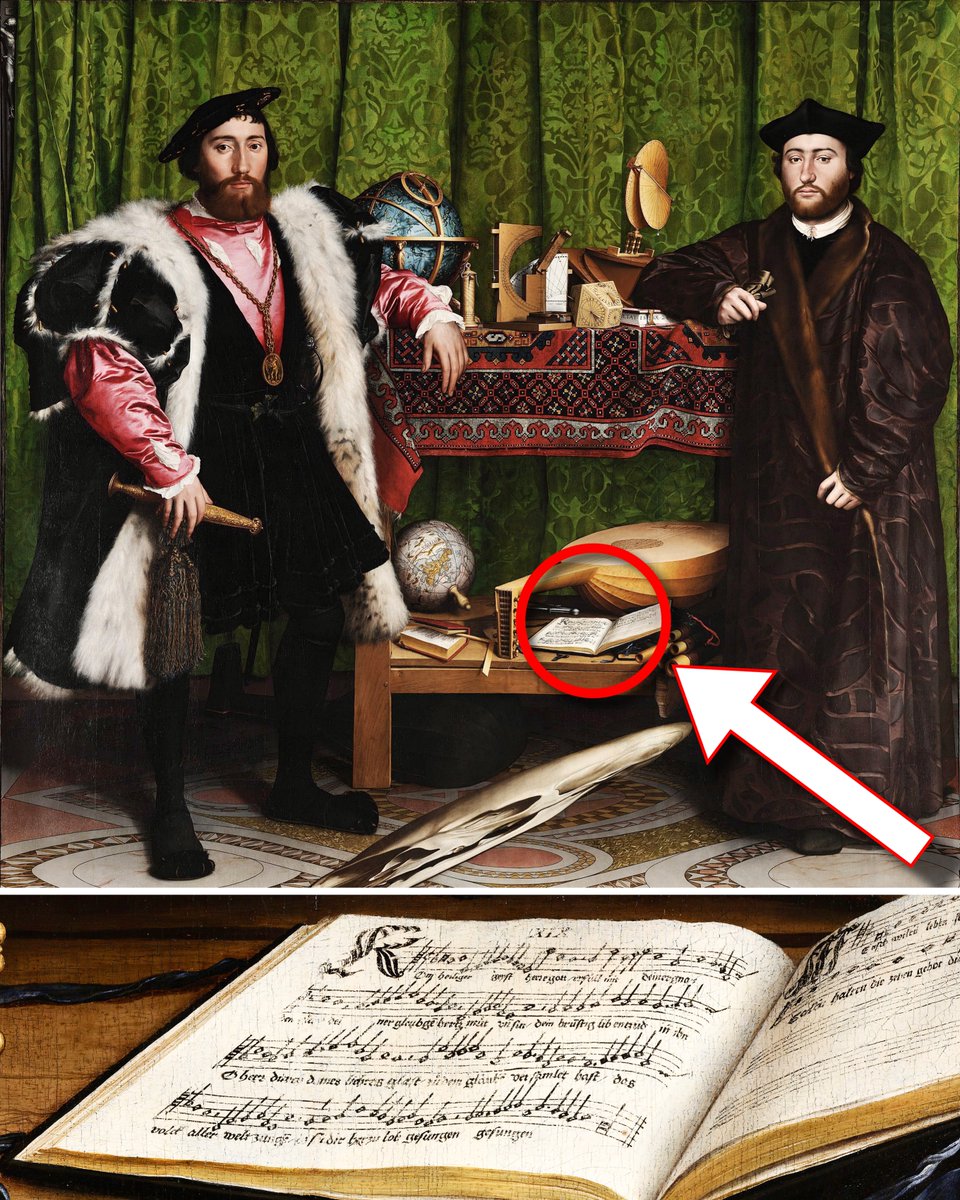
This 500-year-old portrait may seem ordinary, but it's one of the most mysterious in history.
There's so much detail that you can read every musical note on this small page.
But look closer — an unsettling secret is hiding in plain sight... 🧵