Debunking decades of propaganda through facts, research & documented history.
Exposing narratives built on misinformation and revealing the truth behind Azaadi
MYTHS OF AZAADI | The Women Question Separatism Never Answered
The Azaadi narrative spoke endlessly about freedom, dignity and honour but when it came to Kashmiri women, it offered symbolism, not safety.
Women were used as images of suffering.
Their grief was amplified.
Their pain was politicised.
Their tears were turned into slogans.
But where was the real framework for women’s dignity?
Where was the movement against sexual assault, molestation, intimidation, forced silence and social control within society itself?
Where was the space for women’s education, leadership, careers, safety, justice and independent voice?
The truth is uncomfortable:
Separatism did not empower Kashmiri women.
It instrumentalised them.
A woman was useful when her pain could feed the narrative.
But her agency, freedom, choices and future were rarely central to the politics that claimed to fight for liberation.
That is the hypocrisy.
A movement that speaks of Azaadi but cannot protect women from fear, violence, coercion and silence has no moral right to define freedom.
Real freedom is not a slogan shouted by men over the suffering of women.
Real freedom begins when women are not reduced to victims, symbols or emotional fuel.
The Azaadi myth collapses here:
It claimed to liberate Kashmir, but never seriously answered whether Kashmiri women would be free.
آزادی کے افسانے | خواتین کا وہ سوال جس کا جواب علیحدگی پسندی نے کبھی نہیں دیا
آزادی کے بیانیے نے آزادی، وقار اور عزت کی باتیں بہت کیں، مگر کشمیری خواتین کے معاملے میں اس نے تحفظ نہیں، صرف علامت سازی دی۔
خواتین کو دکھ کی تصویر بنایا گیا۔
ان کے غم کو نعرہ بنایا گیا۔
ان کے درد کو سیاست بنایا گیا۔
ان کے آنسوؤں کو بیانیے کا ایندھن بنایا گیا۔
مگر خواتین کے حقیقی وقار کا نقشہ کہاں تھا؟
جنسی زیادتی، دست درازی، ہراسانی، خوف، جبری خاموشی اور سماجی دباؤ کے خلاف سنجیدہ آواز کہاں تھی؟
خواتین کی تعلیم، قیادت، روزگار، تحفظ، انصاف اور آزاد رائے کے لیے واضح راستہ کہاں تھا؟
تلخ سچ یہ ہے:
علیحدگی پسندی نے کشمیری خواتین کو بااختیار نہیں بنایا۔
اس نے انہیں اپنے بیانیے کے لیے استعمال کیا۔
خاتون اس وقت اہم تھی جب اس کا درد نعرے کو طاقت دے سکتا تھا۔
مگر اس کی اپنی آواز، مرضی، مستقبل اور آزادی کبھی اس سیاست کا مرکز نہ بن سکی۔
یہی اصل منافقت ہے۔
جو تحریک آزادی کی بات کرے مگر خواتین کو خوف، تشدد، دباؤ اور خاموشی سے آزاد نہ کر سکے، اسے آزادی کا مطلب سمجھانے کا کوئی اخلاقی حق نہیں۔
حقیقی آزادی مردوں کے نعروں میں نہیں ہوتی۔
حقیقی آزادی وہاں شروع ہوتی ہے جہاں خواتین کو صرف مظلوم، علامت یا جذباتی ایندھن نہ بنایا جائے۔
آزادی کا افسانہ یہاں ٹوٹ جاتا ہے:
اس نے کشمیر کو آزاد کرنے کا دعویٰ کیا، مگر کبھی سنجیدگی سے یہ جواب نہیں دیا کہ کشمیری خواتین آزاد ہوں گی یا نہیں۔
MYTHS OF AZAADI | The Freedom That Created Fear
The most brutal contradiction of the Azaadi narrative was this, it claimed to fight fear, but created fear inside Kashmiri homes.
People were afraid to speak differently.
Afraid to open shops during shutdowns.
Afraid to send children to school.
Afraid to vote.
Afraid to question slogans.
Afraid to say they wanted peace.
This was not freedom.
This was social intimidation dressed as resistance.
A real liberation movement gives people courage.
The separatist ecosystem gave people labels.
Ask a question, you were called a traitor.
Choose normal life, you were called compromised.
Demand education, jobs and peace, you were accused of weakening the cause.
That is how the myth survived, not through truth, but through pressure.
The loudest slogan of freedom created a society where many Kashmiris whispered their real opinions inside their own homes.
That is the final exposure of the Azaadi fraud:
A movement that makes its own people afraid can never claim to be fighting for freedom.
آزادی کے افسانے | وہ آزادی جس نے خوف پیدا کیا
آزادی کے بیانیے کا سب سے بڑا تضاد یہی تھا کہ وہ خوف کے خلاف لڑنے کا دعویٰ کرتا تھا، مگر کشمیری گھروں کے اندر ہی خوف پیدا کرتا رہا۔
لوگ مختلف رائے دینے سے ڈرتے تھے۔
بند کے دن دکان کھولنے سے ڈرتے تھے۔
بچوں کو درسگاہ بھیجنے سے ڈرتے تھے۔
ووٹ دینے سے ڈرتے تھے۔
نعروں پر سوال اٹھانے سے ڈرتے تھے۔
یہ کہنے سے ڈرتے تھے کہ ہمیں امن چاہیے۔
یہ آزادی نہیں تھی۔
یہ سماجی دھمکی تھی، جسے مزاحمت کا لباس پہنایا گیا۔
حقیقی آزادی لوگوں کو حوصلہ دیتی ہے۔
علیحدگی پسند بیانیے نے لوگوں کو الزامات دیے۔
سوال پوچھو تو غدار۔
معمول کی زندگی چاہو تو سمجھوتہ زدہ۔
تعلیم، روزگار اور امن مانگو تو مقصد کو کمزور کرنے والا۔
یہ افسانہ سچ سے نہیں، دباؤ سے زندہ رہا۔
آزادی کا سب سے بلند نعرہ ایک ایسا ماحول بنا گیا جہاں بہت سے کشمیری اپنی اصل رائے اپنے گھروں کے اندر بھی آہستہ آواز میں کہتے تھے۔
یہی آزادی کے دھوکے کی آخری بے نقابی ہے:
جو تحریک اپنی ہی قوم کو خوف میں رکھے، وہ آزادی کے نام پر بولنے کا حق نہیں رکھتی۔
“Those ten rounds of fire from just one meter away can never be forgotten.”
These words of Rafiya Asadullah carry more truth than decades of romanticised Azaadi slogans.
Behind every slogan, there was a family shattered.
Behind every “resistance” poster, there was a home that never recovered.
Behind every myth sold as freedom, there were innocent Kashmiris buried by the very violence that claimed to speak for Kashmir.
This is what the Azaadi narrative always tried to hide:
terror was not poetry, not resistance, not sacrifice.
It was murder.
It was intimidation.
It was the destruction of ordinary Kashmiri lives.
A movement that silenced families with bullets has no moral right to speak of freedom.
The myth collapses when victims speak.
“صرف ایک میٹر کے فاصلے سے چلائی گئی وہ دس گولیاں کبھی نہیں بھلائی جا سکتیں۔”
رفیعہ اسد اللہ کے یہ الفاظ آزادی کے کئی دہائیوں پرانے رومانوی نعروں سے زیادہ سچ رکھتے ہیں۔
ہر نعرے کے پیچھے ایک ٹوٹا ہوا گھر تھا۔
ہر مزاحمت کے پوسٹر کے پیچھے ایک خاندان تھا جو کبھی سنبھل نہ سکا۔
ہر آزادی کے افسانے کے پیچھے وہ بے گناہ کشمیری تھے جنہیں اسی تشدد نے نگل لیا جو کشمیر کے نام پر بولنے کا دعویٰ کرتا تھا۔
یہی وہ حقیقت ہے جسے آزادی کا بیانیہ ہمیشہ چھپاتا رہا:
دہشت گردی شاعری نہیں تھی۔
مزاحمت نہیں تھی۔
قربانی نہیں تھی۔
یہ قتل تھا۔
یہ خوف تھا۔
یہ عام کشمیری زندگی کی تباہی تھی۔
جو تحریک خاندانوں کو گولیوں سے خاموش کرے، اسے آزادی کے نام پر بولنے کا کوئی اخلاقی حق نہیں۔
جب متاثرین بولتے ہیں، آزادی کا افسانہ ٹوٹ جاتا ہے۔
The Cost of “Azadi” in Kashmir Was Paid by Innocent People Not by Its Slogan Sellers
For decades, Kashmir was sold a dream called “Azadi.”
But behind that emotional slogan was a brutal reality: fear, funerals, orphaned children, widowed mothers, burnt schools, silenced voices, destroyed careers and generations pushed into uncertainty.
The people who shouted the loudest often stayed safe.
The poor sent their sons to the streets.
The ordinary buried their dead.
The innocent lost their homes, peace, education and future.
And what happened to those Kashmiris who refused to follow the separatist narrative?
They were branded traitors.
Their patriotism was mocked.
Their loyalty to the country became a reason for harassment, threats and social isolation.
Teachers, workers, political voices, minority communities, security personnel’s families, grassroots leaders and ordinary citizens who stood against violence were made to suffer not because they harmed Kashmir, but because they rejected the politics of fear.
This so-called movement did not create humility.
It created arrogance in those who claimed to speak for everyone.
It created a culture where disagreement became betrayal, where violence was romanticised, where young minds were used as fuel, and where ordinary Kashmiris were expected to sacrifice everything while the powerful protected their own children.
The real question is:
Who paid the cost of “Azadi”?
• Not the handlers.
• Not the propagandists.
• Not the families of those who pushed others into chaos.
The cost was paid by innocent Kashmiris.
By those who wanted peace.
By those who wanted education.
By those who wanted jobs.
By those who wanted to live without fear.
By those who believed Kashmir’s future should be built through dignity, democracy and development — not blood, shutdowns and slogans.
History must record this clearly:
▪︎》The biggest victims of separatist politics were Kashmiris themselves.
▪︎》Kashmir did not need a politics that turned its youth into statistics.
▪︎》Kashmir needed honesty, humility and courage.
And today, the truth is louder than the slogan:
The people who claimed to liberate Kashmir only chained it to fear.
MYTHS OF AZAADI | The Slogan That Could Not Build a School
The loudest slogan in Kashmir could not build one serious institution.
For decades, Azaadi was sold as the future.
But where was the future?
=> Which school did this movement build?
=> Which hospital did it create?
=> Which university did it strengthen?
=> Which economic model did it present?
=> Which job pipeline did it design?
=> Which governance blueprint did it place before the people?
Nothing.
• Only shutdown calendars.
• Only street rage.
• Only emotional blackmail.
• Only slogans dressed as strategy.
That is the difference between a movement and a manipulation.
A real movement builds.
It educates.
It organises.
It creates institutions.
It prepares people for dignity, leadership and self-reliance.
Separatism did the opposite.
It disrupted classrooms, punished businesses, romanticised anger, and made ordinary Kashmiris believe that suffering was proof of loyalty.
This was not vision.
This was political bankruptcy.
The Azaadi ecosystem had enough energy to shut schools, but no capacity to build them.
It had enough power to mobilise youth for streets, but no seriousness to prepare them for the future.
That is the myth Kashmir must finally confront:
=> A slogan that cannot build a school cannot build a nation.
آزادی کے افسانے | وہ نعرہ جو ایک درسگاہ بھی نہ بنا سکا
کشمیر کا سب سے بلند نعرہ ایک سنجیدہ ادارہ بھی نہ بنا سکا۔
کئی دہائیوں تک آزادی کو مستقبل بنا کر بیچا گیا۔
مگر مستقبل کہاں تھا؟
=> اس بیانیے نے کون سی درسگاہ بنائی؟
=> کون سا شفاخانہ قائم کیا؟
=> کون سا تعلیمی ادارہ مضبوط کیا؟
=> کون سا معاشی نقشہ دیا؟
=> نوجوانوں کے لیے روزگار کا کون سا راستہ بنایا؟
=> حکمرانی کا کون سا واضح منصوبہ عوام کے سامنے رکھا؟
کچھ نہیں۔
• صرف بند کے روزنامچے۔
• صرف سڑکوں کا غصہ۔
• صرف جذباتی دباؤ۔
• صرف نعرے، جنہیں حکمت عملی بنا کر پیش کیا گیا۔
یہی تحریک اور فریب کا فرق ہے۔
حقیقی تحریک تعمیر کرتی ہے۔
تعلیم دیتی ہے۔
ادارے بناتی ہے۔
قوم کو وقار، قیادت اور خود انحصاری کے لیے تیار کرتی ہے۔
علیحدگی پسندی نے اس کے برعکس کیا۔
درسگاہیں متاثر ہوئیں، کاروبار رکے، غصے کو رومانوی رنگ دیا گیا، اور عام کشمیری کو یہ باور کرایا گیا کہ تکلیف ہی وفاداری کا ثبوت ہے۔
یہ بصیرت نہیں تھی۔
یہ سیاسی دیوالیہ پن تھا۔
آزادی کے بیانیے میں اتنی طاقت تھی کہ درسگاہیں بند کرا سکے، مگر اتنی سنجیدگی نہیں تھی کہ ایک درسگاہ بنا سکے۔
نوجوانوں کو سڑکوں کے لیے ابھارنے کی صلاحیت تھی، مگر مستقبل کے لیے تیار کرنے کا حوصلہ نہیں تھا۔
کشمیر کو اب یہ افسانہ توڑنا ہوگا:
=> جو نعرہ ایک درسگاہ نہیں بنا سکتا، وہ قوم نہیں بنا سکتا۔
MYTHS OF AZAADI | The Myth of Speaking for Kashmir
One of the biggest frauds of the Azaadi ecosystem was the claim that Hurriyat “represented Kashmir.”
Represented whom?
Who elected them?
Who gave them the mandate?
Where was the vote?
Where was the manifesto?
Where was the public consent of Pandits, Sikhs, Shias, Gujjars, Buddhists, women, youth, traders, workers and ordinary families?
Representation was never earned.
It was simply declared.
A handful of men sat behind microphones, issued shutdown calls, framed public emotion, and claimed to speak for an entire society without ever passing through the basic test of democratic legitimacy.
That was not representation.
That was political capture.
A real representative answers people.
Hurriyat labelled questions as betrayal.
A real representative protects daily life.
Hurriyat disrupted it.
A real representative builds institutions.
Hurriyat built slogans.
A real representative includes every community.
Hurriyat reduced plural Kashmir into one manufactured voice.
This is where the myth collapses:
Kashmir was never one slogan.
Kashmir was never one camp.
Kashmir was never one unelected microphone.
The Azaadi narrative did not represent Kashmir.
It tried to monopolise Kashmir.
And the difference is everything.
آزادی کے افسانے | کشمیر کے نام پر بولنے کا جھوٹ
آزادی کے بیانیے کا سب سے بڑا دھوکہ یہ تھا کہ حریت نے خود کو کشمیر کا نمائندہ بنا کر پیش کیا۔
نمائندہ کس کا؟
انہیں کس نے چنا؟
کس عوامی اجازت سے وہ بولتے تھے؟
رائے کہاں لی گئی؟
منشور کہاں تھا؟
پنڈتوں، سکھوں، شیعوں، گجروں، بدھ مت ماننے والوں، خواتین، نوجوانوں، تاجروں، مزدوروں اور عام گھروں کی رضامندی کہاں تھی؟
نمائندگی کمائی نہیں گئی۔
صرف دعویٰ کر دی گئی۔
چند چہرے مائیک کے پیچھے بیٹھے، بند کی کالیں دیتے رہے، جذبات کو رخ دیتے رہے، اور پورے معاشرے کے نام پر بولنے کا دعویٰ کرتے رہے، مگر کبھی عوامی اختیار کے امتحان سے نہیں گزرے۔
یہ نمائندگی نہیں تھی۔
یہ سیاسی قبضہ تھا۔
حقیقی نمائندہ عوام کو جواب دیتا ہے۔
حریت سوال پوچھنے والوں کو غدار کہتی رہی۔
حقیقی نمائندہ روزمرہ زندگی کی حفاظت کرتا ہے۔
حریت نے اسے مفلوج کیا۔
حقیقی نمائندہ ادارے بناتا ہے۔
حریت نے صرف نعرے بنائے۔
حقیقی نمائندہ ہر طبقے کو ساتھ لیتا ہے۔
حریت نے کثیر رنگ کشمیر کو ایک بنائے گئے نعرے میں قید کرنے کی کوشش کی۔
یہیں آزادی کا افسانہ ٹوٹ جاتا ہے:
کشمیر کبھی ایک نعرہ نہیں تھا۔
کشمیر کبھی ایک خیمہ نہیں تھا۔
کشمیر کبھی ایک غیر منتخب مائیک نہیں تھا۔
آزادی کا بیانیہ کشمیر کی نمائندگی نہیں کرتا تھا۔
وہ کشمیر پر اپنی آواز مسلط کرنا چاہتا تھا۔
فرق یہی ہے، اور یہی اصل سچ ہے۔
MYTHS OF AZAADI | The Business of Keeping Wounds Open
One of the dirtiest truths of the Azaadi ecosystem is this: Kashmir’s wounds were not always allowed to heal because healing would have ended the politics built around them.
• Pain became currency.
• Grief became mobilisation.
• Anger became identity.
• Victimhood became a political industry.
Every time Kashmir tried to breathe, study, work, travel, earn, celebrate or return to normal life, the same ecosystem appeared to remind people that peace was betrayal and healing was surrender.
Why?
Because a healed society asks questions.
A stable society demands accountability.
A confident youth rejects emotional blackmail.
A peaceful Kashmir exposes the irrelevance of those who survived only through conflict.
This was never about protecting Kashmir’s pain.
It was about owning it.
The separatist class did not build institutions, futures, jobs, schools or governance models.
It built narratives around suffering because suffering gave them relevance.
Some people did not want Kashmir to heal because their politics lived inside the wound.
That is the myth Kashmir must finally bury:
Azaadi was sold as liberation, but it survived by keeping Kashmir emotionally wounded.
آزادی کے افسانے | زخموں کو کھلا رکھنے کی سیاست
آزادی کے بیانیے کی سب سے تلخ حقیقت یہ ہے کہ کشمیر کے زخموں کو ہمیشہ بھرنے نہیں دیا گیا، کیونکہ زخم بھر جاتے تو اس سیاست کی دکان بند ہو جاتی جو انہی زخموں پر قائم تھی۔
• درد کو کرنسی بنایا گیا۔
• غم کو احتجاج بنایا گیا۔
• غصے کو شناخت بنایا گیا۔
• مظلومی کو سیاسی صنعت بنا دیا گیا۔
جب بھی کشمیر نے سانس لینے، پڑھنے، کام کرنے، کمانے، سفر کرنے، خوشی منانے یا معمول کی زندگی کی طرف لوٹنے کی کوشش کی، یہی حلقے سامنے آئے اور امن کو کمزوری، شفا کو غداری، اور معمول کی زندگی کو سمجھوتہ کہنے لگے۔
کیوں؟
کیونکہ ایک شفا یافتہ معاشرہ سوال پوچھتا ہے۔
ایک پُرسکون معاشرہ جوابدہی مانگتا ہے۔
ایک بااعتماد نوجوان جذباتی بلیک میلنگ کو رد کرتا ہے۔
اور ایک پُرامن کشمیر ان چہروں کی غیر اہمیت بے نقاب کرتا ہے جن کی سیاست صرف انتشار پر زندہ تھی۔
یہ کشمیر کے درد کی حفاظت نہیں تھی۔
یہ کشمیر کے درد پر قبضہ تھا۔
علیحدگی پسند طبقے نے نہ ادارے بنائے، نہ روزگار، نہ تعلیمی ڈھانچہ، نہ مستقبل کا کوئی نقشہ۔
انہوں نے صرف تکلیف کے گرد بیانیہ بنایا، کیونکہ تکلیف ہی ان کی سیاسی اہمیت کا ذریعہ تھی۔
کچھ لوگ کشمیر کو شفا یاب ہوتے نہیں دیکھنا چاہتے تھے، کیونکہ ان کی سیاست کشمیر کے زخموں کے اندر زندہ تھی۔
یہی وہ افسانہ ہے جسے کشمیر کو دفن کرنا ہوگا:
آزادی نجات کے نام پر بیچی گئی، مگر زندہ رہنے کے لیے کشمیر کو جذباتی طور پر زخمی رکھتی رہی۔
How Azaadi Tried to Replace Kashmiriyat
The biggest fraud of the Azaadi narrative was that it claimed to speak for Kashmir while slowly disconnecting Kashmir from its own soul.
Kashmir was never built on imported rage.
Kashmir was built on Kashmiriyat the Rishi-Sufi spirit, coexistence, softness, wisdom, spirituality, shared culture and civilisational dignity.
But separatist politics reduced that deep identity into one narrow slogan.
Where Kashmiriyat taught humility, they sold anger.
Where Kashmiriyat taught coexistence, they pushed division.
Where Kashmiriyat gave us Nund Reshi, Lal Ded, shrines, poetry and moral depth, they gave us shutdowns, stones, funerals and fear.
That was not cultural awakening.
That was cultural replacement.
The tragedy is that many were made to believe that rejecting normal life, peace, pluralism and shared heritage was somehow resistance.
But Kashmir’s soul was never in permanent rage.
It was in its saints, its language, its hospitality, its shrines, its crafts, its memory, its compassion, and its ability to live with difference.
Azaadi politics did not protect Kashmiriyat.
It tried to hijack it, politicise it, and shrink it into conflict.
The truth is blunt:
A movement that wounds Kashmir’s plural spirit cannot claim to represent Kashmir.
They said they were fighting for Kashmir.
But they were slowly making Kashmir forget itself.
آزادی کے افسانے | جب آزادی نے کشمیریت کو بدلنے کی کوشش کی
آزادی کے بیانیے کا سب سے بڑا دھوکہ یہ تھا کہ اس نے کشمیر کے نام پر بات کی، مگر آہستہ آہستہ کشمیر کو اس کی اپنی روح سے دور کر دیا۔
کشمیر کبھی باہر سے آئی ہوئی نفرت پر نہیں بنا تھا۔
کشمیر کی بنیاد کشمیریت پر تھی — ریشی صوفی روایت، بھائی چارہ، نرمی، دانائی، روحانیت، مشترکہ تہذیب اور اخلاقی وقار۔
مگر علیحدگی پسند سیاست نے اس گہری شناخت کو ایک تنگ نعرے میں قید کر دیا۔
جہاں کشمیریت عاجزی سکھاتی تھی، وہاں انہوں نے غصہ بیچا۔
جہاں کشمیریت ہم آہنگی سکھاتی تھی، وہاں انہوں نے تقسیم پیدا کی۔
جہاں کشمیریت نے ہمیں نند ریشی، لل دید، خانقاہیں، آستانے، شاعری اور تہذیبی گہرائی دی، وہاں انہوں نے بند، پتھر، جنازے اور خوف دیے۔
یہ تہذیبی بیداری نہیں تھی۔
یہ تہذیبی تبدیلی کی کوشش تھی۔
اصل المیہ یہ ہے کہ لوگوں کو یہ باور کرایا گیا کہ معمول کی زندگی، امن، رواداری اور مشترکہ ورثے کو رد کرنا ہی مزاحمت ہے۔
مگر کشمیر کی روح کبھی مستقل غصے میں نہیں تھی۔
وہ اس کے اولیاء، زبان، مہمان نوازی، آستانوں، دستکاری، یادداشت، رحم دلی اور اختلاف کے ساتھ جینے کی صلاحیت میں تھی۔
آزادی کی سیاست نے کشمیریت کی حفاظت نہیں کی۔
اس نے اسے اغوا کیا، سیاسی بنایا، اور ایک وسیع تہذیب کو تنازعے کے ایک نعرے تک محدود کرنے کی کوشش کی۔
سچ تلخ ہے:
جو تحریک کشمیر کی مشترکہ روح کو زخمی کرے، وہ کشمیر کی نمائندگی کا دعویٰ نہیں کر سکتی۔
وہ کہتے رہے کہ وہ کشمیر کے لیے لڑ رہے ہیں۔
مگر حقیقت میں وہ کشمیر کو خود کشمیر سے دور کر رہے تھے۔
For decades, Kashmir’s youth were handed anger as inheritance and told to call it identity.
But anger does not build futures education does.
Real Azaadi is not endless rage.
Real Azaadi is direction, opportunity, skills, ambition, and the freedom to shape your own future.
Kashmir’s youth are not street fuel.
They are the future.
کشمیر کے نوجوانوں کو دہائیوں تک غصہ وراثت کی طرح دیا گیا، اور اسے شناخت کا نام دیا گیا۔
مگر غصہ مستقبل نہیں بناتا تعلیم بناتی ہے۔
حقیقی آزادی نہ ختم ہونے والا غصہ نہیں۔
حقیقی آزادی سمت، موقع، ہنر، شعور اور اپنے مستقبل کو خود بنانے کی طاقت ہے۔
کشمیر کے نوجوان کسی کے سیاسی ایندھن نہیں۔
وہ کشمیر کا مستقبل ہیں۔
#MythsOfAzaadi #KashmirYouth #KashmirBeyondMyths
Shopian 2009 and the Politics of Manufactured Rage
The tragedy of Asiya Jan and Neelofer Jan deserved dignity, truth and justice.
But the separatist ecosystem did what it always did best: it took a tragedy, injected it with the Azaadi narrative and turned Kashmir’s pain into political fuel.
On 29 May 2009, two women died in Shopian. Before facts could breathe, slogans took over. Before evidence could settle, outrage was weaponised. Before the truth could be established, Kashmir was pushed into shutdowns, street rage, fear and paralysis.
That summer was not destroyed by truth.
It was destroyed by narrative manipulation.
The CBI later concluded that the deaths were due to drowning and found no evidence of rape or murder. The High Court record also reflected how false evidence, pressure and fabricated claims were alleged to have been used to implicate security forces.
But by then, the damage had already been done.
• Shops had shut.
• Schools had suffered.
• Tourism had collapsed.
• Daily life had been held hostage.
• A tragedy had been converted into a political season.
This is the ugliest face of the Azaadi machinery, it did not wait for facts, it waited for emotion. It did not protect victims, it consumed their names. It did not seek justice, it extracted mobilisation.
Kashmir must ask one blunt question:
=> Who benefited from turning grief into unrest?
Because real justice needs evidence.
Separatist politics needed anger.
And that is why the Shopian 2009 episode remains one of the clearest examples of how the Azaadi narrative weaponised tragedy, destroyed normal life, and left ordinary Kashmiris to pay the price.
آزادی کے افسانے | شوپیاں دو ہزار نو اور بنائے گئے غصے کی سیاست
آسیہ جان اور نیلوفر جان کے سانحے کو وقار، سچائی اور انصاف کی ضرورت تھی۔
مگر علیحدگی پسند حلقوں نے وہی کیا جو وہ ہمیشہ کرتے آئے: ایک سانحے کو پکڑا، اس پر آزادی کا بیانیہ چڑھایا، اور کشمیر کے درد کو سیاسی ایندھن بنا دیا۔
انتیس مئی دو ہزار نو کو شوپیاں میں دو خواتین کی موت ہوئی۔ حقائق سامنے آنے سے پہلے نعرے غالب آ گئے۔ ثبوت واضح ہونے سے پہلے غصہ ہتھیار بنا دیا گیا۔ سچ تک پہنچنے سے پہلے کشمیر کو بند، خوف، سڑکوں کی بے چینی اور مفلوج زندگی کی طرف دھکیل دیا گیا۔
وہ موسم سچ نے برباد نہیں کیا۔
اسے بیانیاتی دھوکے نے برباد کیا۔
بعد کی تفتیش نے موت کو ڈوبنے کا نتیجہ قرار دیا اور زنا بالجبر یا قتل کا ثبوت نہ پایا۔ عدالتی ریکارڈ میں بھی جھوٹے ثبوت، دباؤ اور گھڑی گئی کہانیوں کے الزامات درج ہوئے۔
مگر تب تک نقصان ہو چکا تھا۔
• دکانیں بند ہو چکی تھیں۔
• اسکول متاثر ہو چکے تھے۔
• سیاحت کو دھچکا لگ چکا تھا۔
• روزمرہ زندگی یرغمال بن چکی تھی۔
• ایک سانحہ سیاسی موسم میں بدل دیا گیا تھا۔
یہ آزادی کے بیانیے کا سب سے بدنما چہرہ تھا: اسے حقائق کا انتظار نہیں تھا، اسے جذبات چاہیے تھے۔ اسے متاثرین کا تحفظ نہیں چاہیے تھا، اسے ان کے ناموں سے احتجاج چاہیے تھا۔ اسے انصاف نہیں، اشتعال چاہیے تھا۔
کشمیر کو ایک سیدھا سوال پوچھنا چاہیے:
=> غم کو بدامنی میں بدلنے سے فائدہ کس کو ہوا؟
کیونکہ حقیقی انصاف ثبوت مانگتا ہے۔
علیحدگی پسند سیاست غصہ مانگتی ہے۔
اور شوپیاں دو ہزار نو اسی بات کی مثال ہے کہ آزادی کے بیانیے نے کس طرح سانحے کو ہتھیار بنایا، معمول کی زندگی تباہ کی، اور قیمت عام کشمیریوں سے وصول کی۔
MYTHS OF AZAADI | When Qurbani Was Hijacked
Eid-ul-Adha teaches sacrifice before Allah sacrifice of ego, greed, arrogance, hatred and moral corruption.
But in Kashmir, the separatist ecosystem hijacked the sacred language of qurbani and turned it into political currency.
Ordinary families were asked to sacrifice their children.
Students were asked to sacrifice their education.
Shopkeepers were asked to sacrifice their livelihood.
Youth were asked to sacrifice their future.
Mothers were asked to sacrifice peace.
And the leadership?
They sacrificed nothing equal.
They preached struggle from microphones, issued shutdown calls from safe spaces, romanticised pain from a distance, and kept turning public suffering into political relevance.
This was the fraud behind the slogan.
Eid teaches sacred sacrifice with purpose, humility and obedience to Allah.
Separatist politics turned sacrifice into a tool of control where the poor paid, the youth burned, families mourned, and elites preserved their status.
The question Kashmir must ask this Eid is simple:
Was qurbani ever equal?
Or was it always outsourced to ordinary homes?
Azaadi was sold as dignity.
But for many Kashmiris, it became the sacrifice of normal life itself.
آزادی کے افسانے | جب قربانی کو سیاسی ہتھیار بنایا گیا
عیدالاضحیٰ ہمیں اللہ کے سامنے قربانی کا درس دیتی ہے. نفس، تکبر، لالچ، نفرت اور اخلاقی بگاڑ کی قربانی۔
مگر کشمیر میں علیحدگی پسند بیانیے نے قربانی کے مقدس تصور کو hijack کر کے اسے سیاسی کرنسی بنا دیا۔
عام خاندانوں سے بچوں کی قربانی مانگی گئی۔
طالب علموں سے تعلیم کی قربانی مانگی گئی۔
دکانداروں سے روزگار کی قربانی مانگی گئی۔
نوجوانوں سے مستقبل کی قربانی مانگی گئی۔
ماؤں سے سکون کی قربانی مانگی گئی۔
اور قیادت؟
انہوں نے برابر کی کوئی قربانی نہیں دی۔
وہ مائیک سے جدوجہد کا درس دیتے رہے، محفوظ جگہوں سے بند کی کالیں دیتے رہے، دوسروں کے درد کو رومانوی رنگ دیتے رہے، اور عوامی تکلیف کو اپنی سیاسی اہمیت میں بدلتے رہے۔
یہی آزادی کے نعرے کے پیچھے اصل دھوکہ تھا۔
عید قربانی کو مقصد، عاجزی اور اللہ کی رضا سے جوڑتی ہے۔
مگر علیحدگی پسند سیاست نے قربانی کو قابو کا ذریعہ بنا دیا. جہاں غریب نے قیمت ادا کی، نوجوان جلے، خاندان روئے، اور اشرافیہ اپنی حیثیت بچاتی رہی۔
اس عید پر کشمیر کو ایک سیدھا سوال پوچھنا چاہیے:
کیا قربانی کبھی برابر تھی؟
یا ہمیشہ عام گھروں سے مانگی گئی؟
آزادی وقار کے نام پر بیچی گئی،
مگر بہت سے کشمیریوں کے لیے یہ معمول کی زندگی کی قربانی بن گئی۔
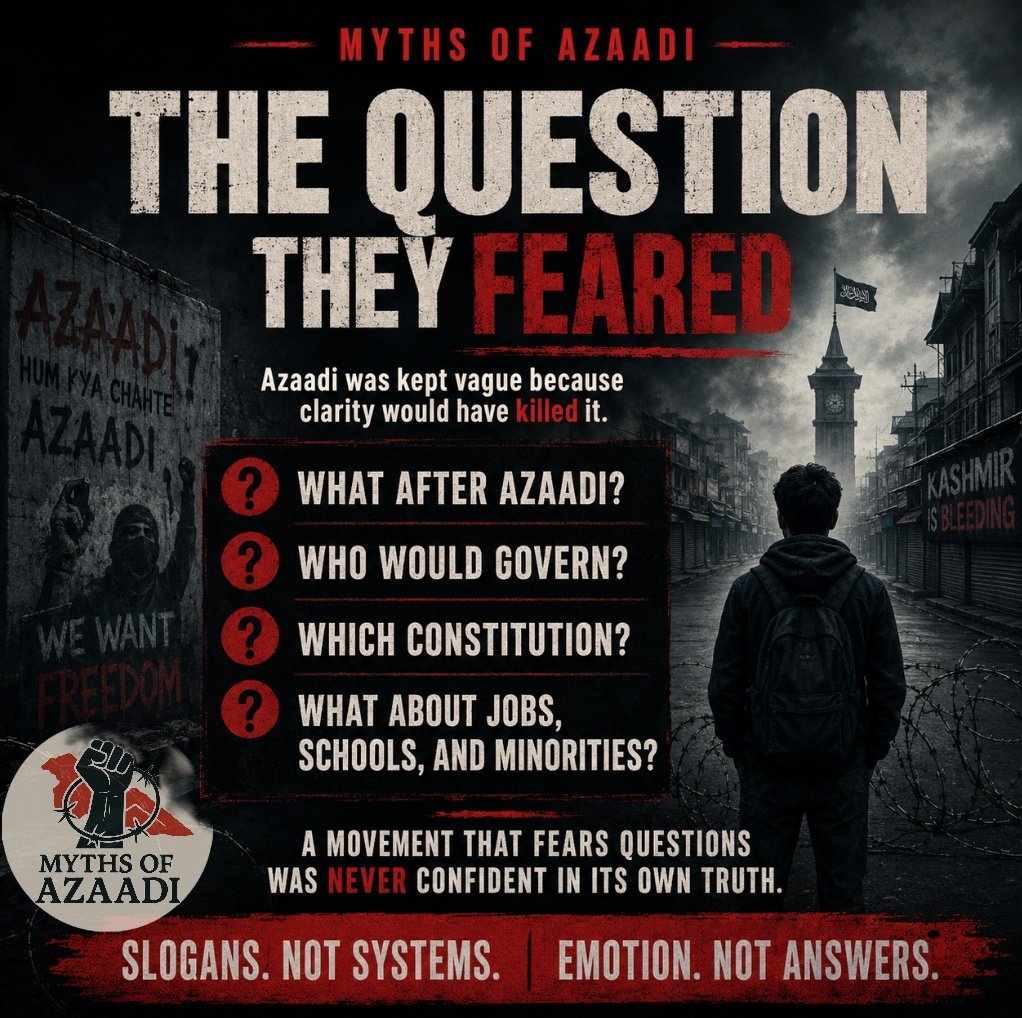
MYTHS OF AZAADI | The Question They Feared
The biggest myth of Azaadi was not only that it had no answers.
The bigger fraud was that Kashmiris were made to feel ashamed for even asking the questions.
• What after Azaadi?
• Who would govern?
• Which constitution?
• Which economy?
• What about minorities?
• What about jobs?
• What about schools, hospitals, courts, security and borders?
These were not anti-Kashmir questions.
These were basic questions any serious political movement must answer.
But the separatist ecosystem treated questions like betrayal.
If you asked for a roadmap, you were labelled compromised.
If you asked for accountability, you were called weak.
If you asked for clarity, you were accused of diluting the cause.
That is how hollow ideas survive:
not by answering people, but by frightening them into silence.
=> A confident movement welcomes scrutiny.
=> A serious movement presents plans.
=> A people’s movement explains the future.
But Hurriyat gave Kashmir slogans, not systems.
Emotion, not economics.
Shutdowns, not strategy.
Graves, not governance.
The truth is blunt:
Azaadi was kept vague because clarity would have killed it.
The moment Kashmir asks, “What exactly was the plan?”
the myth begins to collapse.
آزادی کے افسانے | وہ سوال جس سے وہ ڈرتے تھے
آزادی کا سب سے بڑا افسانہ صرف یہ نہیں تھا کہ اس کے پاس جواب نہیں تھے۔
اصل دھوکہ یہ تھا کہ کشمیریوں کو سوال پوچھنے پر ہی شرمندہ کیا گیا۔
• آزادی کے بعد کیا؟
• حکومت کون چلائے گا؟
• کون سا دستور ہوگا؟
• کون سا معاشی نظام ہوگا؟
• اقلیتوں کا کیا ہوگا؟
• نوکریوں کا کیا ہوگا؟
• اسکول، اسپتال، عدالتیں، تحفظ اور سرحدوں کا نظام کیا ہوگا؟
یہ کشمیر مخالف سوالات نہیں تھے۔
یہ وہ بنیادی سوالات تھے جن کا جواب ہر سنجیدہ سیاسی تحریک کو دینا پڑتا ہے۔
مگر علیحدگی پسند بیانیے نے سوال کو غداری بنا دیا۔
اگر آپ نے نقشہ مانگا، آپ کو سمجھوتہ زدہ کہا گیا۔
اگر آپ نے جوابدہی مانگی، آپ کو کمزور کہا گیا۔
اگر آپ نے وضاحت مانگی، آپ پر مقصد کو کمزور کرنے کا الزام لگا۔
کھوکھلے نظریات ایسے ہی زندہ رہتے ہیں:
لوگوں کو جواب دے کر نہیں، انہیں خاموش کرا کے۔
=> ایک بااعتماد تحریک سوالات سے نہیں ڈرتی۔
=> ایک سنجیدہ تحریک منصوبہ پیش کرتی ہے۔
=> ایک عوامی تحریک مستقبل واضح کرتی ہے۔
مگر حریت نے کشمیر کو نظام نہیں، نعرے دیے۔
معیشت نہیں، جذبات دیے۔
حکمت عملی نہیں، بند دیے۔
حکمرانی نہیں، قبریں دیں۔
سچ تلخ ہے:
آزادی کو جان بوجھ کر مبہم رکھا گیا، کیونکہ وضاحت اس افسانے کو ختم کر دیتی۔
جس دن کشمیر نے پوچھنا شروع کیا کہ “آخر منصوبہ کیا تھا؟”
اسی دن یہ افسانہ ٹوٹنا شروع ہو گیا۔
Some stories were reported.
Some stories were sold.
The Pen That Glorified Guns exposes how selective journalism, emotional storytelling, and digital propaganda allegedly turned violence into romance and gunmen into icons.
While headlines created heroes, real victims disappeared from memory.
Kashmir paid the price in fear, funerals, lost youth, broken families, and stolen futures.
This is not just about media.
It is about the narrative that normalized death.
Kashmir deserves peace, education, dignity, and truth not the glorification of guns.
کچھ کہانیاں رپورٹ کی گئیں۔
کچھ کہانیاں بیچی گئیں۔
The Pen That Glorified Guns اس حقیقت کو بے نقاب کرتی ہے کہ کیسے منتخب صحافت، جذباتی بیانیے اور ڈیجیٹل پروپیگنڈا نے کشمیر میں تشدد کو رومانوی رنگ دیا اور بندوق برداروں کو ہیرو بنا کر پیش کیا۔
جب سرخیاں “آئیکون” بنا رہی تھیں،
تب اصل متاثرین یادداشت سے مٹائے جا رہے تھے۔
کشمیر نے اس بیانیے کی قیمت خوف، جنازوں، گمراہ نوجوانوں، ٹوٹے خاندانوں اور چھینے گئے مستقبل کی صورت میں ادا کی۔
یہ صرف میڈیا کی کہانی نہیں۔
یہ اُس بیانیے کی کہانی ہے جس نے موت کو معمول بنا دیا۔
کشمیر کو امن، تعلیم، عزت اور سچ چاہیے
بندوقوں کی glorification نہیں۔
#Kashmir #Documentary #K2 #Peace #Journalism #DigitalPropaganda
The Funeralisation of Politics
One of the darkest truths of the Azaadi narrative is this:
it did not only politicise life, it politicised death.
=> Every funeral became a stage.
=> Every grave became a slogan.
=> Every grieving mother became an image.
=> Every tragedy became fuel for the next cycle of rage.
This was not resistance.
This was the funeralisation of politics.
Separatist politics needed wounds to remain open, because healing would weaken the narrative. It needed anger to stay alive, because peace would expose the emptiness. It needed grief to be public, emotional and repeatedly consumed because grief was its most powerful currency.
• Ordinary families buried their children.
• Leaders gave statements.
• Streets erupted.
• More youth were pulled into the same emotional trap.
That was the cycle.
=> A real movement protects life.
=> A destructive movement converts death into mobilisation.
The tragedy of Kashmir was not only that people died.
The deeper tragedy was that even mourning was not allowed to remain human, it was turned into politics.
Azaadi was sold as dignity, but it survived by keeping Kashmir wounded.
آزادی کے افسانے | جب موت کو سیاست بنا دیا گیا
آزادی کے بیانیے کی سب سے تاریک حقیقت یہ ہے کہ اس نے صرف زندگی کو سیاست زدہ نہیں کیا، بلکہ موت کو بھی سیاسی ہتھیار بنا دیا۔
=> ہر جنازہ ایک اسٹیج بن گیا۔
=> ہر قبر ایک نعرہ بن گئی۔
=> ہر روتی ہوئی ماں ایک تصویر بن گئی۔
=> ہر سانحہ اگلے غصے کا ایندھن بن گیا۔
یہ مزاحمت نہیں تھی۔
یہ غم کو سیاست میں بدلنے کا کھیل تھا۔
علیحدگی پسند سیاست کو زخم کھلے رکھنے کی ضرورت تھی، کیونکہ شفا بیانیے کو کمزور کر دیتی۔ اسے غصہ زندہ رکھنے کی ضرورت تھی، کیونکہ امن اس کے کھوکھلے پن کو بے نقاب کر دیتا۔
• عام خاندان اپنے بچوں کو دفن کرتے رہے۔
• قیادت بیانات دیتی رہی۔
• سڑکیں بھڑکتی رہیں۔
• اور مزید نوجوان اسی جذباتی جال میں کھنچتے رہے۔
یہی چکر تھا۔
=> حقیقی تحریک زندگی کی حفاظت کرتی ہے۔
=> تباہ کن سیاست موت کو تحریک کا ایندھن بنا دیتی ہے۔
کشمیر کا المیہ صرف یہ نہیں تھا کہ لوگ مرے۔
اس سے بڑا المیہ یہ تھا کہ غم کو بھی انسانیت سے چھین کر سیاست بنا دیا گیا۔
آزادی وقار کے نام پر بیچی گئی، مگر زندہ رہنے کے لیے کشمیر کے زخم کھلے رکھتی رہی۔
How Hurriyat Turned Daily Life Into Political Currency
The most brutal trick of Hurriyat politics was this, It did not merely call protests, it tried to own the calendar of ordinary Kashmiri life.
• When shops should open.
• When schools should function.
• When employees should report to work.
• When roads should be blocked.
• When grief should become mobilisation.
• When anger should become identity.
That was not resistance.
That was social control sold as politics.
In 2016, separatist-issued protest calendars became so dominant that private schools in Kashmir reportedly reopened only during relaxation windows after educational activity had remained suspended for over four months. Kashmir Life also reported a joint resistance calendar calling for complete shutdowns and even directing Azaadi songs through mosque loudspeakers.
This is how daily life was converted into political currency.
=> A shopkeeper’s shutter became a statement.
=> A student’s missed class became sacrifice.
=> A patient’s suffering became collateral.
=> A tourist season became expendable.
=> A labourer’s empty pocket became proof of resistance.
And who paid?
Not the slogan merchants.
Not the elite faces behind microphones.
Not those who converted Kashmir’s pain into relevance.
The J&K Economic Survey 2016 estimated losses of over ₹16,000 crore during the five-month unrest, noting that hartals, stone pelting, curfews and restrictions immobilised life across the Valley, affected medical services, and reduced tourism activity to almost zero during peak months.
This was the real economy of separatism:
public loss, private relevance.
Hurriyat never built schools, hospitals, businesses, industries, institutions or a governance roadmap.
But it built shutdown calendars.
It built fear.
It built pressure.
It built a system where normal life itself had to seek permission from politics.
That is why the myth of Azaadi must be broken with one blunt question:
What kind of freedom makes daily life its hostage?
A real movement protects people’s routines.
Hurriyat disrupted them.
A real movement expands opportunity.
Hurriyat monetised interruption.
A real movement gives society direction.
Hurriyat gave Kashmir calendars of paralysis.
The truth is harsh but necessary:
Hurriyat did not turn Kashmiris into citizens of a future.
It turned their daily suffering into political currency.
آزادی کے افسانے | حریت نے روزمرہ زندگی کو سیاسی کرنسی کیسے بنایا
حریت کی سیاست کا سب سے ظالم کھیل یہ تھا کہ اس نے صرف احتجاج نہیں کیا، بلکہ عام کشمیری کی زندگی کے روزنامچے پر قبضہ کرنے کی کوشش کی۔
• دکان کب کھلے گی۔
• اسکول کب چلے گا۔
• ملازم کب دفتر جائے گا۔
• سڑک کب بند ہوگی۔
• غم کب نعرہ بنے گا۔
• غصہ کب شناخت بنایا جائے گا۔
یہ مزاحمت نہیں تھی۔
یہ سماجی قابو تھا، جسے سیاست کا نام دے کر بیچا گیا۔
دو ہزار سولہ میں علیحدگی پسند حلقوں کے احتجاجی روزنامچے اتنے غالب ہو گئے کہ اسکول صرف دی گئی نرمی کے اوقات میں کھلنے لگے، جبکہ تعلیمی سرگرمیاں چار ماہ سے زیادہ متاثر رہیں۔ اسی دور میں مکمل بند، سڑکوں کی بندش، نعروں اور مذہبی مقامات تک کے استعمال کو سیاسی ہدایت کا حصہ بنایا گیا۔
یہی وہ جگہ تھی جہاں عام زندگی کو سیاسی کرنسی میں بدل دیا گیا۔
=> دکاندار کا شٹر بیان بن گیا۔
=> طالب علم کا ضائع دن قربانی بن گیا۔
=> مریض کی تکلیف ضمنی نقصان بن گئی۔
=> سیاحت کا موسم قربان کر دیا گیا۔
=> مزدور کی خالی جیب کو مزاحمت کا ثبوت بنایا گیا۔
اور قیمت کس نے ادا کی؟
نعرے بیچنے والوں نے نہیں۔
مائیک کے پیچھے کھڑی اشرافیہ نے نہیں۔
وہ چہرے نہیں جنہوں نے کشمیر کے درد سے اپنی سیاسی اہمیت بنائی۔
یہی علیحدگی پسندی کی اصل معیشت تھی:
عوام کا نقصان، قیادت کی اہمیت۔
حریت نے نہ اسکول بنائے۔
نہ اسپتال بنائے۔
نہ کاروبار کھڑے کیے۔
نہ ادارے بنائے۔
نہ مستقبل کا کوئی واضح نقشہ دیا۔
مگر اس نے بند کے روزنامچے بنائے۔
خوف بنایا۔
دباؤ بنایا۔
اور ایسا ماحول بنایا جہاں عام زندگی بھی سیاست سے اجازت مانگنے لگی۔
یہی آزادی کے افسانے کا اصل چہرہ ہے۔
حریت نے کشمیریوں کو مستقبل کا شہری نہیں بنایا۔
اس نے ان کی روزمرہ تکلیف کو سیاسی کرنسی بنا دیا۔
The so-called narrative of Azaadi did not protect Kashmir’s soul, it helped burn it.
Charar-e-Sharief was not just a shrine. It was the spiritual heartbeat of Kashmir, the resting place of Sheikh Noor-ud-Din Noorani, Nund Reshi, the symbol of our Rishi-Sufi essence, humility, coexistence and civilisational memory.
And what did the imported ideology of Azaadi bring to that sacred space?
=> Fire.
=> Fear.
=> Terrorism.
=> Desecration.
When the shrine of Nund Reshi was reduced to ashes, it was not only a building that burned, a part of Kashmir’s religious and cultural essence was attacked. The same ideology that claimed to speak for Kashmir stood silent while Kashmir’s own saintly heritage was wounded.
This is the truth separatist romanticism tries to hide:
• It did not liberate Kashmir.
• It uprooted Kashmir from its own spiritual foundations.
A movement that allows the shrine of Nund Reshi to burn has no moral right to speak in the name of Kashmir.
Azaadi was sold as dignity.
It delivered ashes to the doorstep of Kashmir’s soul.
نام نہاد آزادی کے بیانیے نے کشمیر کی روح کی حفاظت نہیں کی، بلکہ اسے آگ کے حوالے کر دیا۔
چرار شریف صرف ایک مزار نہیں تھا۔
یہ کشمیر کی روحانی دھڑکن تھی۔
یہ حضرت شیخ نورالدین نورانی، نند ریشیؒ کا آستانہ تھا، جو ہماری ریشی صوفی روایت، محبت، عاجزی، بھائی چارے اور تہذیبی شناخت کی علامت ہے۔
مگر آزادی کے نام پر لائی گئی شدت پسند سوچ نے اس مقدس مقام کو کیا دیا؟
=> آگ۔
=> خوف۔
=> تباہی۔
=> بے حرمتی۔
جب نند ریشیؒ کا آستانہ خاکستر ہوا، تو صرف عمارت نہیں جلی، کشمیر کی مذہبی اور تہذیبی روح پر حملہ ہوا۔
یہی وہ سچ ہے جسے علیحدگی پسند رومانویت ہمیشہ چھپاتی رہی۔
• اس بیانیے نے کشمیر کو آزاد نہیں کیا۔
• اس نے کشمیر کو اپنی ہی روحانی جڑوں سے کاٹنے کی کوشش کی۔
جو تحریک نند ریشیؒ کے آستانے کو جلنے سے نہ بچا سکی، اسے کشمیر کے نام پر بولنے کا کوئی اخلاقی حق نہیں۔
آزادی وقار کے نام پر بیچی گئی،
مگر کشمیر کی روح کو راکھ بنا گئی۔
What Happens After Azaadi ?
That was the question never answered.
Slogans were given.
Roadmaps were not.
Emotions were sold.
Futures were not built.
No clear constitution.
No governance model.
No economic vision.
And the price was paid by ordinary Kashmiris closed schools, lost years, broken opportunities, and a generation trapped in uncertainty.
Real freedom is not chaos.
Real freedom is peace, education, dignity, jobs, and a future.
Kashmir deserves answers not endless deception.
“آزادی کے بعد کیا ہوگا؟”
یہ وہ سوال تھا جس کا جواب کبھی نہیں دیا گیا۔
نعرے دیے گئے،
مگر کوئی راستہ نہیں بتایا گیا۔
جذبات ابھارے گئے،
مگر مستقبل نہیں بنایا گیا۔
نہ کوئی واضح آئین،
نہ حکمرانی کا منصوبہ،
نہ معاشی وژن۔
اور قیمت کس نے ادا کی؟
عام کشمیریوں نے۔
بند اسکول،
ضائع مواقع،
رُکی ہوئی زندگیاں،
اور بے یقینی میں پھنسی ایک نسل۔
حقیقی آزادی افراتفری نہیں ہوتی۔
حقیقی آزادی امن، تعلیم، وقار، روزگار اور روشن مستقبل ہے۔
کشمیر کو نعرے نہیں، جواب چاہیے۔
#Kashmir #MythsOfAzaadi #KashmirYouth #Peace #Education #Future #KashmirUnfolded
Operation Sindoor: When Pakistan’s Proxy Script Was Hit at Its Source
For decades, Pakistan and its separatist echo-system sold terrorism in Kashmir as local resistance and Azaadi sentiment.
Operation Sindoor tore that mask apart.
India targeted nine terrorist infrastructure sites in Pakistan and PoJK, places from where attacks against India were planned and directed. The action was described officially as focused, measured and non-escalatory.
That is the real story.
Hurriyat sold slogans.
Pakistan built terror infrastructure.
Terror groups executed violence.
Kashmir paid the price.
The Pahalgam attack was meant to hit Kashmir’s returning normalcy, tourism and public confidence. Operation Sindoor answered that design with precision.
It did not just strike terror camps.
It struck the myth that Kashmir’s violence was organic resistance.
Kashmir is not Pakistan’s battlefield.
Kashmiri youth are not Pakistan’s disposable assets.
And terror cannot hide forever behind the poetry of Azaadi.
آپریشن سندور: جب پاکستان کے آلہ کار بیانیے کو جڑ سے نشانہ ملا
کئی دہائیوں تک پاکستان اور اس کے علیحدگی پسند حلقوں نے کشمیر میں دہشت گردی کو عوامی غصہ، مقامی مزاحمت اور آزادی کا جذبہ بنا کر پیش کیا۔
آپریشن سندور نے یہ نقاب اتار دیا۔
بھارت نے پاکستان اور مقبوضہ جموں و کشمیر میں دہشت گردی کے نو ٹھکانوں کو نشانہ بنایا، جہاں سے بھارت کے خلاف حملوں کی منصوبہ بندی اور ہدایت کی جا رہی تھی۔ یہ کارروائی نپی تلی، محدود اور غیر اشتعال انگیز قرار دی گئی۔
یہی اصل حقیقت ہے۔
حریت نے نعرے بیچے۔
پاکستان نے دہشت گردی کا ڈھانچہ بنایا۔
دہشت گرد گروہوں نے خون بہایا۔
قیمت کشمیر نے ادا کی۔
پہلگام حملے کا مقصد کشمیر کی واپس آتی ہوئی نارملسی، سیاحت اور عوامی اعتماد کو نشانہ بنانا تھا۔ آپریشن سندور نے اسی منصوبے کو درست جگہ پر جواب دیا۔
یہ صرف دہشت گرد ٹھکانوں پر حملہ نہیں تھا۔
یہ اس جھوٹ پر ضرب تھی کہ کشمیر کا تشدد صرف مقامی مزاحمت تھا۔
کشمیر پاکستان کا میدان جنگ نہیں۔
کشمیری نوجوان پاکستان کے استعمال ہونے والے اثاثے نہیں۔
اور دہشت گردی آزادی کے نعروں کے پیچھے ہمیشہ نہیں چھپ سکتی۔
The biggest scam sold under the banner of Azaadi was “sacrifice.”
• Not equal sacrifice.
• Not shared sacrifice.
• Not leadership sacrifice.
It was sacrifice demanded from ordinary Kashmiri homes while the separatist elite stayed protected behind microphones, slogans, statements and political relevance.
They spoke of qurbani like it was sacred.
But whose children were on the streets?
Whose shops stayed shut?
Whose schools lost months?
Whose careers were delayed?
Whose mothers waited outside police stations, hospitals and graveyards?
Not the privileged architects of the movement.
Not the faces who romanticised pain.
Not the leadership that turned suffering into political capital.
That was the real fraud.
Azaadi politics created a moral economy where common people were expected to bleed, mourn, lose, and remain loyal while the leadership collected relevance from their pain.
If sacrifice was so noble, why was it always outsourced?
Why did ordinary families pay the emotional, economic and generational cost while separatist leaders kept their own futures insulated?
This was not liberation.
This was exploitation wrapped in holy vocabulary.
The myth of Azaadi collapsed the day Kashmir started asking one simple question:
Who sacrificed and who benefited?
آزادی کے نام پر سب سے بڑا دھوکہ “قربانی” کا بیانیہ تھا۔
• یہ برابر کی قربانی نہیں تھی۔
• یہ مشترکہ قربانی نہیں تھی۔
• یہ قیادت کی قربانی نہیں تھی۔
یہ قربانی عام کشمیری گھروں سے مانگی گئی، جبکہ علیحدگی پسند اشرافیہ مائیک، نعروں، بیانات اور سیاسی اہمیت کے پیچھے محفوظ رہی۔
وہ قربانی کو مقدس بنا کر پیش کرتے رہے۔
مگر سڑکوں پر کس کے بچے تھے؟
دکانیں کس کی بند رہیں؟
تعلیم کس کی متاثر ہوئی؟
کیریئر کس کے تباہ ہوئے؟
مائیں کس کی اسپتالوں، تھانوں اور قبرستانوں کے باہر انتظار کرتی رہیں؟
یہ قیمت عام لوگوں نے دی۔
مگر فائدہ بیانیہ بنانے والوں نے اٹھایا۔
یہی اصل فراڈ تھا۔
آزادی کی سیاست نے ایک ایسا نظام بنایا جہاں عام کشمیری سے خون، آنسو، خاموشی اور وفاداری مانگی گئی، جبکہ قیادت نے اسی درد سے اپنی سیاسی دکان چلائی۔
اگر قربانی اتنی ہی مقدس تھی، تو ہمیشہ دوسروں کے بچوں سے کیوں مانگی گئی؟
یہ آزادی نہیں تھی۔
یہ استحصال تھا، جسے مقدس الفاظ میں لپیٹ کر بیچا گیا۔
آزادی کا سب سے بڑا myth اسی سوال سے ٹوٹتا ہے:
قربانی کس نے دی اور فائدہ کس نے اٹھایا؟
One of the least discussed myths of Azaadi was how Hurriyat and separatist politics turned masculinity into a political performance.
Under the shadow of leaders like Syed Ali Shah Geelani, Yasin Malik, Mirwaiz Umar Farooq, Shabir Shah, Nayeem Khan, Masarat Alam, Ashraf Sehrai, Abdul Gani Bhat, Bilal Lone and others, an entire political culture was built where anger was sold as courage, confrontation was sold as honour, and reckless street mobilisation was packaged as resistance.
A young Kashmiri boy was not asked to become a thinker.
He was not pushed to become a builder, innovator, entrepreneur, scholar, reformer, or institution-maker.
He was emotionally trained to prove himself through rage.
Stone in hand became bravery.
Shouting slogans became commitment.
Standing in front of danger became sacrifice.
Ruining your future became loyalty.
This was not empowerment.
This was the weaponisation of young male insecurity.
Hurriyat’s politics understood one thing very well: a young man searching for identity can be easily captured if you offer him a costume of courage. Make him believe that calm is cowardice, education is compromise, employment is surrender, and violence-adjacent street politics is manhood and you can control his emotions without giving him any roadmap.
That is how the Azaadi narrative trapped youth.
• It reduced masculinity to reaction.
• It reduced dignity to defiance.
• It reduced courage to confrontation.
But real courage is not burning your own future for someone else’s slogan.
Real courage is asking uncomfortable questions:
▪︎》What did Hurriyat build?
▪︎》What did separatism deliver?
▪︎》Where was the constitution?
▪︎》Where was the economic plan?
▪︎》Where was the protection for minorities?
▪︎》Where was the future for ordinary Kashmiri youth?
A movement that teaches young men how to confront but not how to construct is not a liberation movement. It is a machinery of emotional exploitation.
Kashmir did not need boys turned into symbols of rage.
Kashmir needed men with clarity, discipline, education, responsibility, and vision.
Hurriyat sold the theatre of manhood.
Kashmir paid with generations of lost potential.
#MythsOfAzaadi #Kashmir
#KashmirYouth #AzaadiNarrative
#HurriyatPolitics #SeparatistPolitics
آزادی کے نام پر بیچے گئے بڑے فریبوں میں ایک فریب یہ بھی تھا کہ حریت اور علیحدگی پسند سیاست نے کشمیری نوجوانوں کی مردانگی کو سیاسی تماشے میں بدل دیا۔ غصے کو جرات، ٹکراؤ کو غیرت، نعرے کو وفاداری اور پتھر کو بہادری بنا کر پیش کیا گیا، جبکہ نوجوانوں کو سوچنے، پڑھنے، بنانے، کمانے، قیادت کرنے اور ادارے کھڑے کرنے کی طرف نہیں لے جایا گیا۔
ایک پورا سیاسی ماحول بنایا گیا جہاں نوجوان کو یہ سکھایا گیا کہ اپنی شناخت شعور سے نہیں، غصے سے ثابت کرو۔ اسے یہ باور کرایا گیا کہ سکون بزدلی ہے، تعلیم سمجھوتہ ہے، روزگار سرینڈر ہے، اور سڑکوں کا ٹکراؤ مردانگی ہے۔ یہ مزاحمت نہیں تھی؛ یہ نوجوانوں کی بے چینی، شناخت کی تلاش اور جذبات کا سیاسی استحصال تھا۔
اصل جرات اپنا مستقبل دوسروں کے نعروں کے لیے جلانا نہیں، بلکہ سوال پوچھنا ہے: حریت نے کشمیر کے لیے بنایا کیا؟ علیحدگی پسندی نے عام نوجوان کو دیا کیا؟ معاشی منصوبہ کہاں تھا؟ دستور کہاں تھا؟ اقلیتوں کے تحفظ کا خاکہ کہاں تھا؟ تعلیم، روزگار اور مستقبل کا واضح راستہ کہاں تھا؟
جو سیاست نوجوانوں کو صرف ٹکرانا سکھائے مگر تعمیر کرنا نہ سکھائے، وہ آزادی کی تحریک نہیں بلکہ جذباتی استحصال کی مشین ہوتی ہے۔ کشمیر کو غصے کا ایندھن بنائے گئے لڑکے نہیں چاہیے تھے؛ کشمیر کو شعور، تعلیم، نظم، ذمہ داری، کردار اور وژن رکھنے والے نوجوان چاہیے تھے۔ حریت نے مردانگی کا تماشہ بیچا، اور کشمیر نے نسلوں کی صلاحیت کھو کر اس کی قیمت ادا کی۔
#KashmirReality #FutureOverFury
#EducationOverAnger #BuildNotBurn
#YouthForPeace