Our new #SocSciAMR article on #AMR and #antibiotics and #farming is out!
Pharmaceuticalised livelihoods: antibiotics and the rise of ‘Quick Farming’ in peri-urban Uganda https://t.co/8kgIETRNNY
3/5 we illustrate how programs for sex worker, while valued for offering free treatment in a non-stigamatising setting, are narrow, exclusionary, and enact a pharmaceuticalised form of governance premised on the efficacy of antibiotics.
To understand how medicines are used and repurposed, we must pay attention to the ways that medicines are presented as opportunities themselves. More in our article on 'Taking Opportunities, Taking Medicines' @ldenyerwillis@fredkitutu@AnthroAMR https://t.co/9KwGNgBl3i
Excited to share this article on 'Reconciling Imperatives' highlighting that clinical guidelines alone are not enough to see a reduction in antibiotic use in healthcare settings. @clareirchandler @staedke @ldenyerwillis@Nabirye_C@AnthroAMR@fredkitutu https://t.co/KViFPaQAHu
So happy this article on 'Antibiotic Entanglements' (OA) is out! Written together across multiple lockdowns, I am incredibly proud to have been part of this work! If you're teaching on AMR, infrastructures, the postcolonial city, this could be a last minute syllabus add! #AMR 🧵
A woman in Uganda with a wounded leg takes antibiotics only on days she can afford to buy them, trying to suppress fever that would stop her precarious informal working. Anyone interested in antibiotic stewardship needs to read this...
Excited to share this piece that details how #antibiotics have become a way to negotiate inequalities written in urban informal landscapes. Antibiotic ‘entanglements’: health, labour and everyday life in an urban informal settlement in Kampala, Uganda https://t.co/XujF91PxJE
Critically important: drug resistance is a huge problem and especially for the poorest. Many infections are preventable with basics- water, sanitation, quality care. The burden is shouldered by those with least economic and political voice #AMR
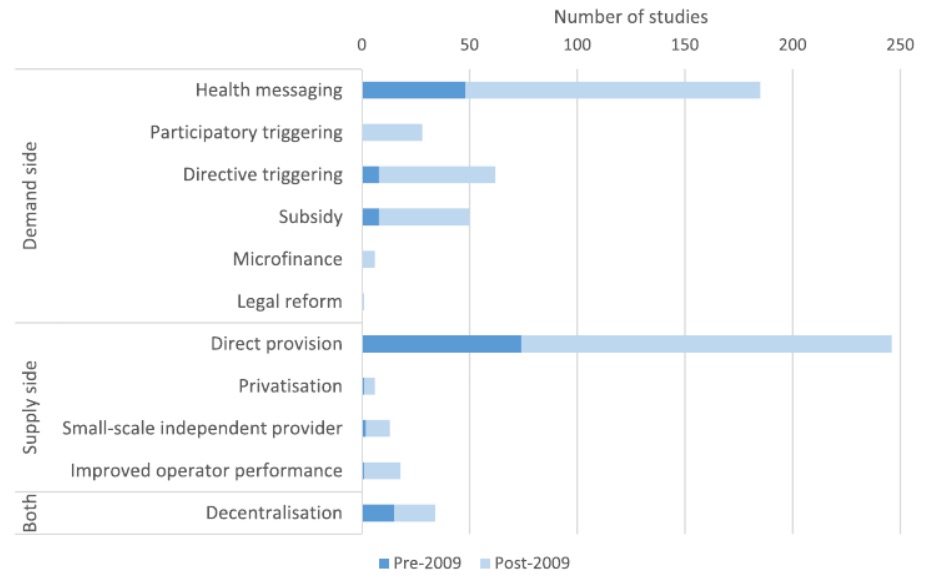
New evidence & gap map of WASH effectiveness studies
➡️ https://t.co/x4QztgpzUc
>450 impact evaluations of WASH interventions on behaviours, health and social outcomes
authors incl. Hugh & Sandy from @LSHTM_EHG#WASHtwitter