As Kannada TV journalists run after a #Hijab girl, a hijab-wearing Muslim girl runs away in panic. What kind of journalism is this chasing the students, the girl is running away from fear.
Via:-@RubinaAfaqueIND
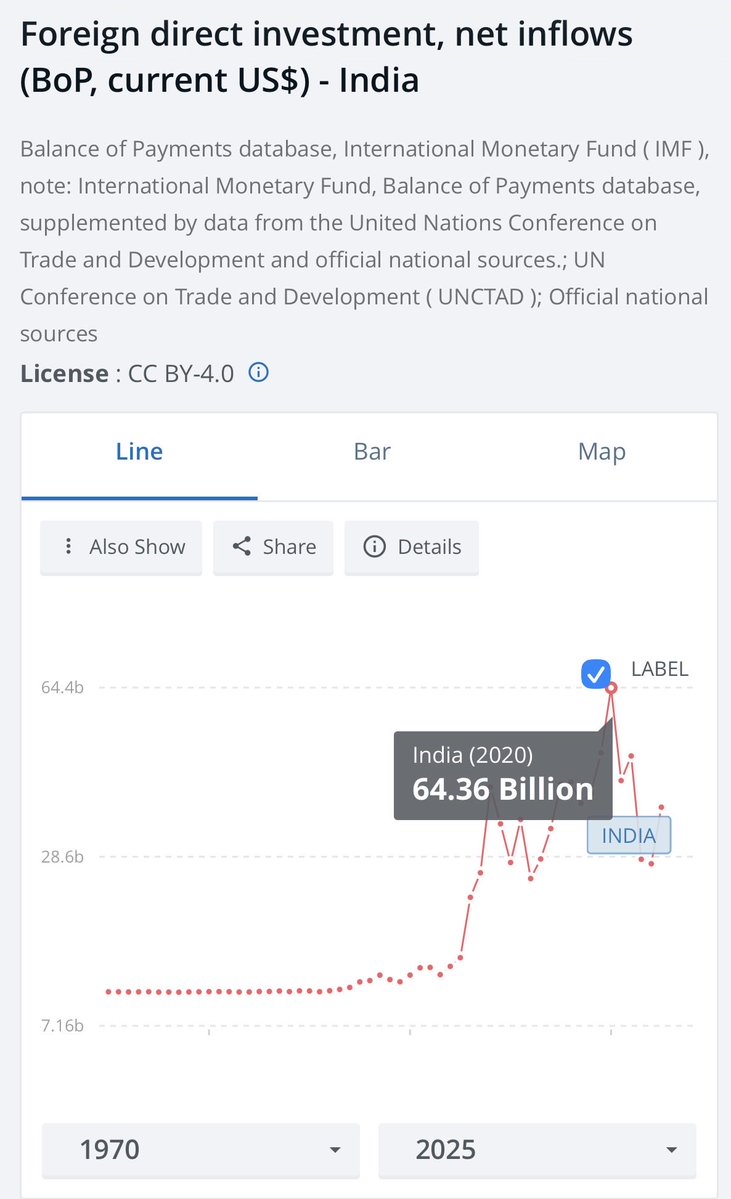
The decline in FDI into India over the last 5 years is the steepest in decades. This should not happen with capital from advanced economies looking for emerging markets. We have to move away from slogans to intelligent policy design.
This map, from @prabhavjain85, is fascinating.
Much of India already has TFRs on par with those of Western Europe or Latin America. Look at West Bengal, Tamil Nadu, or Kerala: 1.3! That is below Brazil’s (1.52) or the United Kingdom’s (1.44) and getting close to Italy’s (1.14).
If you are going to tell me some hypothesis about India’s family structure being “different” (i.e., higher marriage rates) in keeping fertility high, you’d better have a good explanation for West Bengal, Tamil Nadu, and Kerala.
At the same time, you still have Bihar at 2.9 and Uttar Pradesh at 2.6.
So right now, the best way to think about India demographically is as two distinct countries: a region with a high TFR and a region with quite a low TFR. Of course, this will have large consequences for the internal politics of India.
The birth-rate collapse isn’t just about money, housing, or women choosing careers. The sharper diagnosis: fewer couples. Across the world, young people still say they want kids. But they socialize less, partner less, commit less – and become parents less. Smartphones didn’t make us infertile. They may have made us lonelier. The fertility crisis is really a bonding crisis. https://t.co/DSi1emv0HU
On Raghu Rai: of his many unforgettable frames, I keep returning to Age and Innocence - that 1982 Baroda photo essay where a blind Muslim beggar and a mentally challenged Hindu girl share a beautifulf, wordless companionship. This is Rai at his most tender- and devastating. 1/4
most of the junior econ faculty I talk to are finding somewhere between "less" and "almost no" use for research assistants
for simple tasks - data cleaning, making tables, running regressions - in the time it would take them to give instructions to the RA, they can instead just instruct CC and get the results (and done much better)
so, the potential utility of an RA often depends now on the RA having high quality higher-level/architectural thoughts, being skilled at interpreting and iterating on the results of code, and/or being better at using coding agents than their prof
yes, ofc RAs may have a comparative advantage despite not having an absolute advantage - but this is quite tricky
a lot of the difference between mediocre and great results with agentic coding depends on having a simultaneous good mental model of the tools, how to work symbiotically with them, *AND* of the architecture of what it is you want to do (whether software or research)
in the past, an RA would work slow enough - because the process of writing code was slow, so that you - as a prof - could catch them in all these small problems/mistakes they'd make along the way due to a lack of experience
even so, reviewing RAs code was already a bottleneck for many profs
now reviewing (tens of) thousands of lines of vibe coded RA code, esp if poorly thought out, is just untenable
worth saying - the pool of junior faculty I talk to are highly selected, bc they're either coming to me for agentic coding training, or they're my friends and so have had to listen to me blather on about this stuff for the last year
I do expect though that the sentiments of these junior faculty is wider spread than is implied by what economists are publicly saying about "RA replacement", because it's an unpopular/costly opinion to publicly voice that you don't need your RAs anymore
New post with @soumitrashukla9 : Who uses AI (and how)?
This is another living post, where we will be updating the data as it comes in.
In the post, we review all of the studies and data that we can find and try to provide a synthesis on the adoption margin. While many experimental studies on AI use keep the adoption margin constant by design, in the real-world, who uses AI and how will likely not be random.
And it's not. From the studies we have so far, adoption is lumpy. The characteristics of those who adopt AI and use it effectively are typically correlated with existing advantages (e.g., higher skill, higher income). This adoption margin has implications for whether we will see the equalizing effects of AI observed in the experimental studies.
We have some initial survey data that institutional scaffolding matters greatly for the adoption margin. In organizations with top down support and training for AI, adoption is more uniform and people have more positive attitudes toward the tech. More research is needed in this area.
Big thanks to @PeterMcCrory@AlexTamkin and the @AnthropicAI for releasing and updating the Economic Index. We are learning a lot from the data.
If you see something we're missing, please let me know and I will add it.
For regular updates, please consider subscribing to the substack. Here is the link:
https://t.co/9VYmdG49B2
Do the police reduce crime? Well, yes. We have really clean evidence from this RCT in Hyderabad, where the police randomized which hot spots of sexual harassment they patrolled. Uniformed officers showing up reduced serious crime, without even having to write a ticket. 1/
China’s R&D-to-GDP ratio is *four times higher* than India’s — 2.4% versus 0.6%.
China’s figure is not particularly high; rather, India’s is very low. The average R&D-to-GDP ratio globally is around 2%.
If India wants to catch up with China, it needs to spend more on R&D.
The G RAM G is all set to destroy MGNREGA in the guise of revamping it as a new scheme. Here are 3 big issues:
1. Central govt retains power to decide where and when the new scheme comes into force (!!!). This makes a mockery of the legal guarantee.
BREAKING NEWS
The Royal Swedish Academy of Sciences has decided to award the 2025 Sveriges Riksbank Prize in Economic Sciences in Memory of Alfred Nobel to Joel Mokyr, Philippe Aghion and Peter Howitt “for having explained innovation-driven economic growth” with one half to Mokyr “for having identified the prerequisites for sustained growth through technological progress” and the other half jointly to Aghion and Howitt “for the theory of sustained growth through creative destruction.”
#NobelPrize
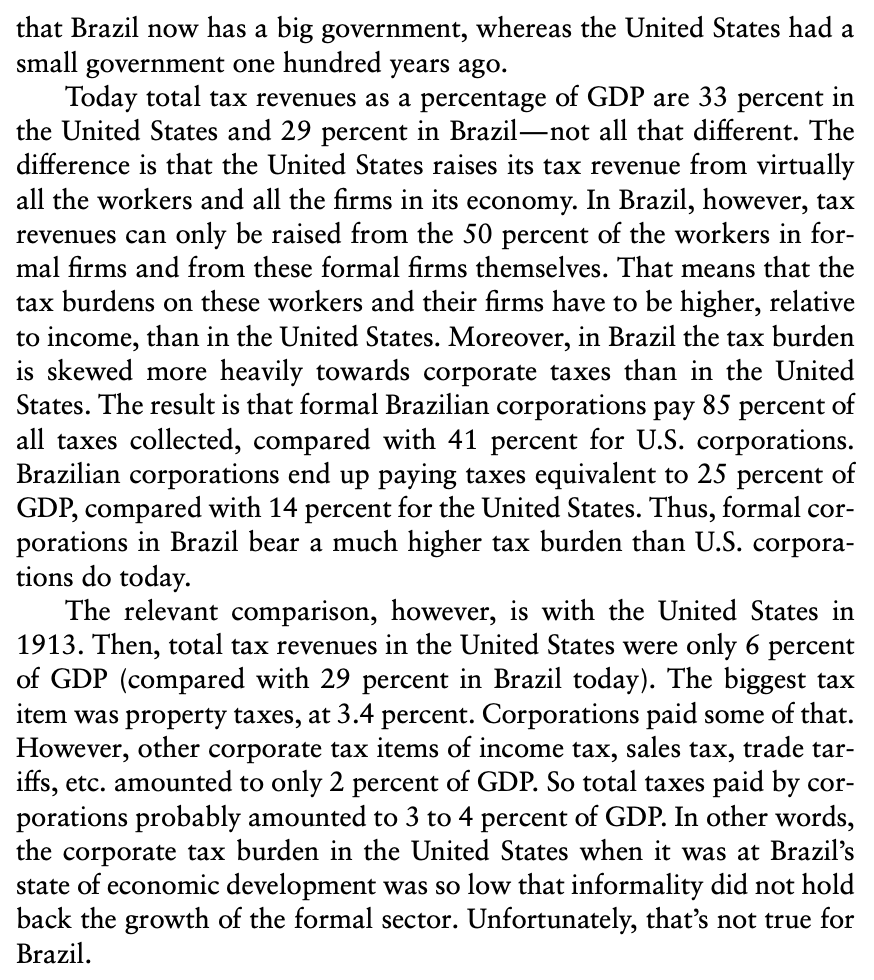
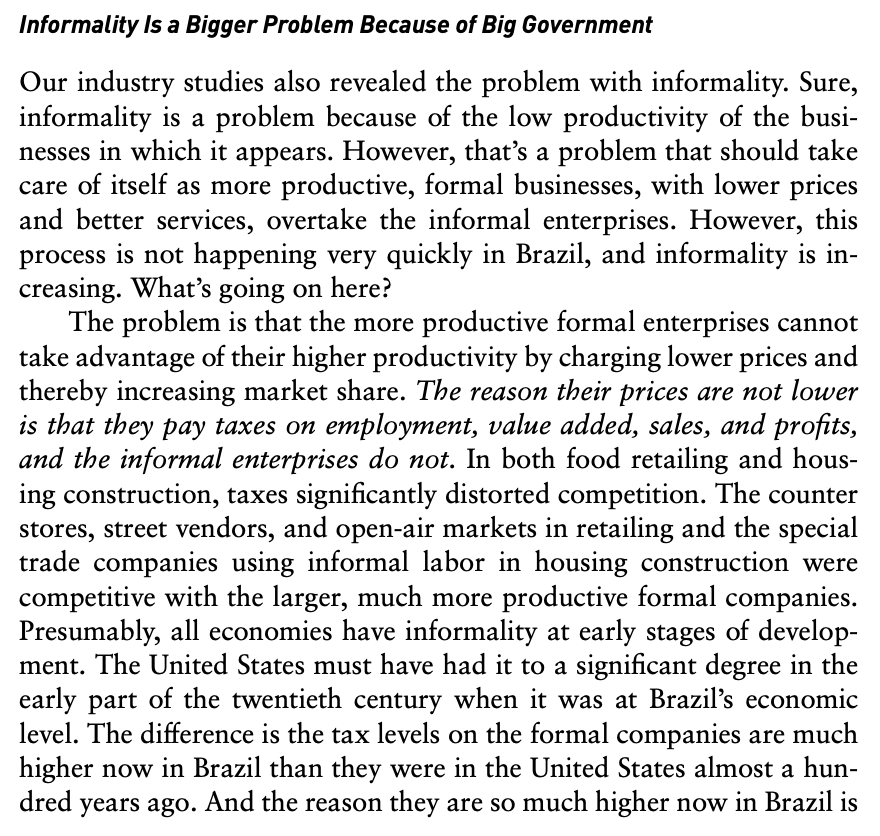
In The Power of Productivity, William Lewis argues that one reason poor countries have a hard time developing is that it's hard for high-productivity firms in the formal sector to displace low-productivity businesses in the informal sector, because compared to developed countries in the past developing countries today have a much larger state and a tax system that falls more on corporations, which means that firms in the formal sector in poor countries today face a much higher tax burden than similar firms in developed countries did in the past.
This prevents firms in the formal sector from taking advantage of their higher productivity to successfully compete with businesses in the informal sector, because unlike them the latter don't pay taxes, which makes up for their low productivity and allows them to offer competitive prices. I find that mechanism very plausible and I had never thought about it before, but I wonder if anyone has tried to test it more rigorously and to quantify how much it can explain of the lack of convergence between poor and rich countries.
2025 Nobel Prize Winner Maria Corina Machado once wrote to Israeli war criminal Benjamin Netanyahu and asked him for help to overthrow Venezuela’s🇻🇪 President Nicolas Maduro
In 2025 you get a Nobel Prize for trying to convince a foreign genocidal apartheid state to attack your own country and overthrow its leadership, so that Washington can privatise the largest natural oil reserves on Earth
BREAKING NEWS
The 2025 #NobelPrize in Literature is awarded to the Hungarian author László Krasznahorkai “for his compelling and visionary oeuvre that, in the midst of apocalyptic terror, reaffirms the power of art.”
something deeply visceral about the audacity to throw shoe at Justice Gavai.
so what if he's only the 2nd SC ever to be Chief Justice of India-- if you are SC, they want to cut you down to size :/ shameful moment for Indian legal fraternity.
There is a formula for statewise tax distribution
Some estimate of the inverse of a States’ per capita income has the largest weight in this formula,then popn, then area.
So the poorer, more populated, and bigger a State is, the more it gets.
Hence UP>Bihar>Gujarat>Kerala