If within 1 to 2 months Pi Network doesn't release the features, integrations, and complete infrastructures, they must give explanations to the Pioneers. Tell them, is the delay because of the United States, which risks being left behind?
#PiNetwork@PiCoreTeam
OpenPay is Officially Fully Released!
OpenPay is no longer in beta, under development, or a work in progress.
The platform is now fully released and functional, with its core payment features available and ready for use. This marks a major milestone for OpenPay and its vision of providing practical digital payment solutions within the Pi ecosystem.
At this stage, the remaining step is for the Pi Core Team to review and list OpenPay within the Pi Mainnet Ecosystem, making the platform accessible and discoverable through the official ecosystem.
OpenPay is ready. The platform is live. The infrastructure is in place. We are now waiting for ecosystem recognition.
🌐 https://t.co/Xv007Cb1dZ
#OpenPay #PiNetwork #PiMainnet #DigitalPayments #Web3 @PiCoreTeam@wainfoundation@OpenpayProTeam
Elon Musk:
"Don't pursue money.
Make useful products, and money will come as a consequence."
A simple philosophy that has shaped some of the world's most ambitious companies.
Every American Citizen MUST WATCH THIS. It’s about 24mins long, so save it and watch when you can. It breaks down our financial system and is the most impactful and important video you will ever watch to see WHY IT IS A SCAM, CORRUPT AF AND GOING AWAY!!! SHARE IT! 👏🏻🔥🔥🔥🇺🇸🇺🇸
🚨 Hoy ha pasado algo que casi nadie está explicando bien, y conviene que lo entiendas porque dice mucho de hacia dónde va esto.
Se ha lanzado Open USD (OUSD), una nueva stablecoin. Pero lo importante no es "otra stablecoin más"... es QUIÉN está detrás.
Más de 140 empresas que normalmente se pelean a muerte entre sí, juntas en el mismo proyecto: Visa, Mastercard, American Express, BlackRock, Google, Samsung, Stripe, Coinbase... y sí, Ripple también.
¿Y por qué se juntan todos? Aquí está la jugada, y es brillante.
Hasta ahora el negocio de las stablecoins funcionaba así: tú le das tu dinero a Circle (los de USDC), ellos emiten el token, y con TU dinero compran deuda de EEUU y se quedan ellos casi todo el rendimiento. Dinero gratis para el emisor.
OUSD le da la vuelta a la tortilla: el rendimiento se reparte entre las empresas que participan. La stablecoin deja de ser el negocio y pasa a ser solo la tubería. Un estándar compartido en vez de un emisor que se lo queda todo.
¿Y a quién le sienta esto como una patada? A Circle.
Hoy mismo sus acciones cayeron casi un 16%.
Ni Circle, ni Tether, ni PayPal están invitados a la fiesta. Normal.
Y ahora fíjate en quién dirige esto, porque lo explica TODO. El CEO de Open Standard (la empresa detrás de OUSD) es Zach Abrams, cofundador de Bridge. ¿Y qué es Bridge? La infraestructura de stablecoins que Stripe compró por 1.100 millones de dólares en 2024.
O sea: esto es, en el fondo, una jugada del ecosistema Stripe.
Por eso de entrada OUSD NO sale en todas partes. Sale nativo en Solana desde el día uno (donde Bridge ya tiene toda la fontanería montada y rodada) y en Tempo, que es la propia blockchain de pagos de Stripe.
No es casualidad ni ideología: lanzan donde el equipo fundador ya tiene la infraestructura funcionando.
¿Y las demás cadenas? Aquí te aviso, porque he visto a medios soltar alegremente "sale en Solana, Stellar, Base y Polygon".
Cuidado: eso NO lo ha confirmado Open Standard. Lo único sólido es Solana + Tempo el día uno. El resto es especulación de periodistas mirando qué cadenas están entre los socios.
No te lo creas hasta que salga la documentación técnica.
Y la cosa no estará del todo operativa hasta más adelante en 2026 — no hay fecha firme todavía.
Ahora, la pregunta que de verdad importa para nosotros: ¿qué pinta Ripple ahí?
Y aquí te voy a ser sincero, sin venderte humo: Ripple está en la lista de socios, pero eso NO significa que OUSD vaya a funcionar sobre la XRP Ledger.
La XRPL es, como mucho, un riel más entre varios posibles.
Y el centro técnico de todo esto no es la XRPL... es Bridge + Tempo, o sea, Stripe. Ripple está en la periferia estratégica, no en el núcleo.
Ripple está jugando a estar sentada en TODAS las mesas que importan.
Es estrategia de cobertura: "yo me pongo en todos los raíles posibles y ya veremos cuáles ganan". Inteligente, pero hay que llamarlo por su nombre.
Y ojo al detalle que nadie te va a decir, porque no vende: aunque OUSD acabara corriendo sobre la XRPL, las transacciones ahí cuestan fracciones de céntimo. Eso quemaría un goteo ridículo de XRP.
Que la red se use NO significa automáticamente que el token suba.
Lo llevo diciendo tiempo: una cosa es la utilidad de la red, otra muy distinta que ese valor llegue al token.
Resumen para que te lo lleves claro:
✅ Bueno para Ripple como empresa/infraestructura (está en la mesa de los grandes).
⚠️ Neutro para el precio de XRP a corto (el mecanismo que conecta uso → precio sigue siendo flojo).
💥 Muy malo para Circle (le acaban de montar una coalición en contra).
🏗️ Y en el fondo, esto huele a Stripe: su CEO viene de Bridge, sale en su cadena Tempo, y el núcleo técnico es suyo.
Esto va de raíles, no de tokens. Y el que entienda esa diferencia, va a leer este mercado mucho mejor que el que solo mira el precio.
¿Qué opináis? ¿Ripple cubriéndose las espaldas o tiene una carta que aún no enseña? 👇
Does anyone else feel that running AI models and agents locally, on your own computer, should be much easier?
The privacy benefits are clear: your data stays with you. But while there are many open-source models and projects out there, turning them into a usable local AI agent is still far too hard for non-engineers.
ALERT: @Microsoft identifies USB-spreading malware that hijacks crypto transfers by silently swapping copied wallet addresses with attacker-controlled ones before you paste.
Disable AutoRun for USBs, block .lnk file execution, and always verify wallet addresses after pasting.
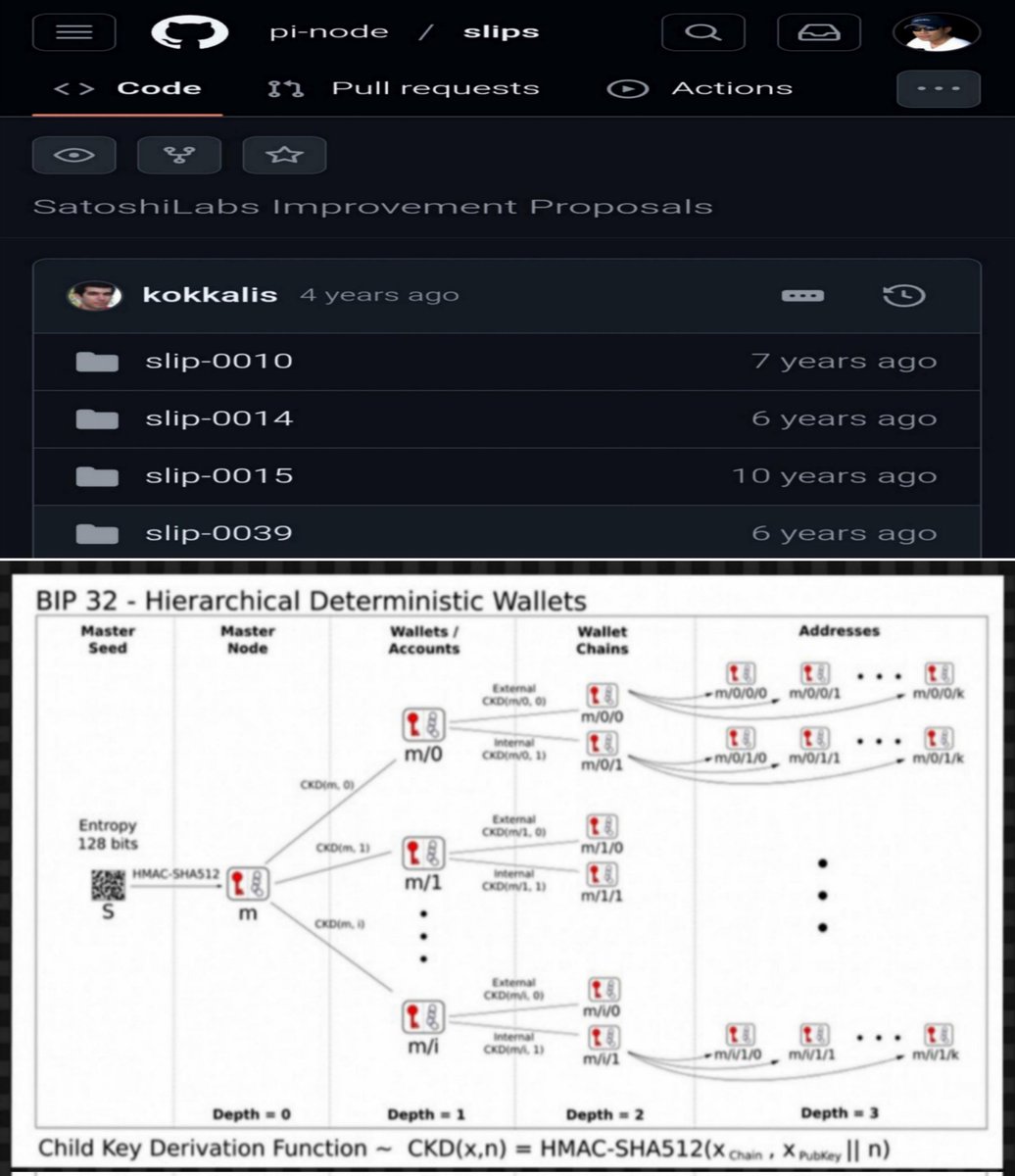
Many Pioneers have asked how the Pi Wallet can distinguish between Internal Pi and External Pi.Please study carefully BIP (Bitcoin Improvement Proposal) 0032 in the following link,which I took directly from Dr.Nicolas' Source Code in the CT's Pi Node Repository.
BIP-0032 (HD Wallets):
https://t.co/ShIjnxFreh
For those of you who have difficulty understanding,you can see a simple display in the image.
All transactions will automatically follow the Supernode Configuration.
Supernode Constants:
https://t.co/Ezg1ufiDi4
GCV!!..👑👑🔥🔥
@Kosasihg88G
#PiNetwork2025
🔻 LED LIGHTS FLICKER 120 TIMES PER SECOND. YOU CAN'T SEE IT. YOUR BRAIN REGISTERS EVERY SINGLE ONE. THIS WAS KNOWN BEFORE THEY MADE THEM MANDATORY.
In 2012, the U.S. government banned incandescent light bulbs. The reason given: energy efficiency. The real reason is in a document that was never meant to be public.
In 2007 — five years before the ban — the Department of Energy's Pacific Northwest National Laboratory completed a 14-month neurological study on LED flicker. Reference: PNNL-SA-2007-4419. Classified: "Limited Distribution — Not for Public Release."
What they found:
LED bulbs at 120Hz produce flicker invisible to conscious perception but fully registered by the thalamus. Continuous exposure over 6+ hours per day: measurable melatonin suppression, circadian disruption, and a 23% reduction in deep-sleep duration within 90 days.
23% less deep sleep. In 90 days. From your ceiling lights.
A former lighting engineer — 9 years at one of three companies manufacturing 87% of LED bulbs in North America:
"We were told the flicker had to remain at 120Hz. Not because of cost. Not because of engineering limitations. Because the specification came from outside the company. It was a compliance requirement attached to the federal energy rebate program. If you wanted the subsidy, you built to their spec. Nobody asked why the spec existed. We just built to it."
The spec came from the DOE. The DOE study proving neurological harm was completed 5 years before the ban. They knew. They mandated it anyway.
What 120Hz flicker does over years:
Melatonin suppression. Pineal calcification accelerates. Immune response weakens. Emotional regulation deteriorates. Attention span shortens. You become easier to agitate. Easier to distract. Easier to control.
Incandescent bulbs: continuous current. No flicker. Smooth light identical to fire — what human biology evolved under for 300,000 years. They banned the one light your brain was designed for and replaced it with one that degrades you 120 times per second.
The fix: Replace LEDs in rooms where you spend 4+ hours — especially bedrooms — with incandescent bulbs. Still legal as "heat lamps" or "rough service" bulbs. They never disappeared. Just relabeled so you wouldn't look.
Your sleep problems are not stress. Your brain fog is not aging. Your irritability is not personality. It's 120 invisible pulses per second, every waking hour, in every room you enter.
CODE: PNNL-2007-4419 / 120HZ-PWM / MELATONIN-23 / DOE-SPEC-MANDATE / THALAMUS-REGISTER
⟁
They banned the light your brain was built for and replaced it with one that breaks you so slowly you blame yourself. The bulbs are still available. They just made sure you'd never think to look. Share this.
🔻 YOUR PHONE'S CAMERA ACTIVATES 6-11 TIMES PER HOUR WHILE THE SCREEN IS OFF. THIS WAS EXPOSED IN A SEALED COURTROOM IN MARCH 2024. THE CASE WAS BURIED WITHIN 9 DAYS.
You already know it listens. You've said a word and seen the ad appear. That's 2017. What they moved to in 2020 is worse. And you carry it facing your body 16 hours a day.
In March 2024, a former infrastructure engineer testified in a sealed proceeding in the Northern District of Virginia. What he described:
"The front-facing camera captures a low-resolution thermal-adjacent frame every 6 to 11 minutes during what the system classifies as 'passive state.' Screen off. Phone locked. The frames are not stored on-device. They are transmitted in compressed micro-bursts during routine network handshakes — invisible in standard data logs. The system reads pupil dilation, micro-expressions, skin flush, and emotional state. It does not need your face in focus. It reads heat patterns through proximity."
He testified 4 hours. The case was sealed 9 days later. He was relocated under a $14 million NDA. I am not him. But I have read the 11-page summary that was circulated to 3 oversight offices before recall.
What your phone does while you sleep:
It maps the room using infrared proximity sensors — not the camera. It logs breathing rate through microphone amplitude variation. It timestamps every movement. It knows when you enter REM sleep. It knows when you wake. It knows if you are alone.
This data is not sold to advertisers. It goes somewhere else. Collected under Executive Order 13859 (2018) — "Maintaining American Leadership in AI." Section 4(b): "collection of behavioral data from consumer devices for national AI training purposes." Three sentences. Nobody read them. They authorized everything.
Trump revoked EO 13859 on January 20, 2025. The new order does not contain Section 4(b). Authorization removed. But the infrastructure remains active in devices manufactured before February 2025. Your phone still carries the firmware.
The fix is not a setting. It's not airplane mode. The passive capture operates on a hardware-level chip that does not respond to OS-level commands. The only confirmation it's active: your battery drains 11-14% overnight with no apps running. Check yours tonight. If it drains more than 10% in 8 hours with screen off — the system is active.
CODE: NDVA-SEALED / EO-13859-4B / 6-11-MIN-CYCLE / THERMAL-BURST / FIRMWARE-PRE-FEB25
They didn't just listen. They watched. While you slept. While you thought the screen was off.
⟁
Check your overnight battery drain tonight. That number is not a malfunction. It's a measurement. Share this.
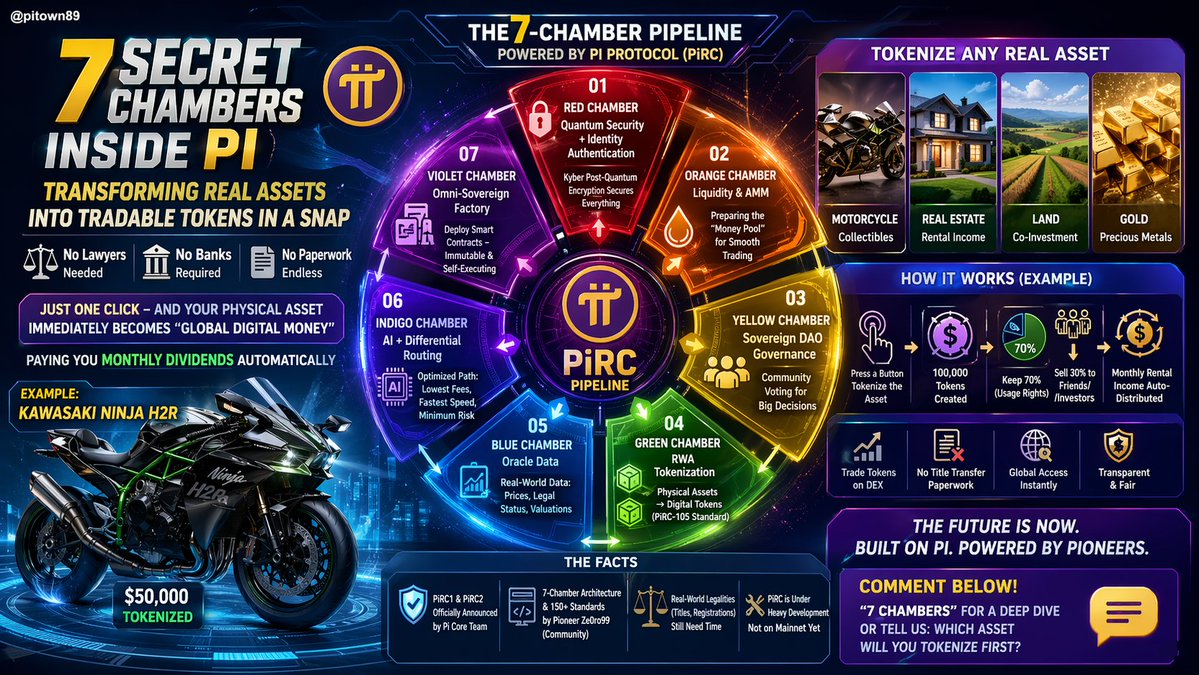
🤑👀 7 SECRET CHAMBERS INSIDE PI: TRANSFORMING REAL ASSETS INTO TRADABLE TOKENS IN A SNAP 🔥💫
🚨 You’re mining Pi every day... ⛏️
But there’s one thing almost nobody is talking about: 🤫
What if, with just one click, your real-world Kawasaki Ninja H2R 🏍️ (or your house 🏠, land 🪵, gold 🏆...) could be transformed into digital tokens that anyone in the world could buy in seconds? 💸
No lawyers needed ⚖️.
No banks required 🏦.
No endless paperwork 📝.
Just one click — and your physical asset immediately becomes "global digital money" 🌎💰, paying you monthly dividends automatically. 📈
Sound like sci-fi? 🛸
It’s not. 🙅♀️
It’s PiRC — and it’s being built right now with a super-intelligent 7-chamber, 7-color pipeline system. ⚙️
How the 7 Chambers Work (Simple yet In-depth):
➡️ 🔴 Red Chamber: Quantum Security + Identity Authentication 🔐. All data is locked with Kyber post-quantum encryption – even future hackers can't break it. ❌ If you don't pass this room, everything stops.
➡️ 🟠 Orange Chamber: Liquidity & AMM 🌊. Preparing the "money pool" so your tokens can be traded as smoothly as any top coin.
➡️ 🟡 Yellow Chamber: Sovereign DAO Governance ⚖️. Public community voting. If you want to go big, you need DAO approval.
➡️ 🟢 Green Chamber: Real World Asset (RWA) Tokenization 🏠➡️💎. Physical assets → converted into digital tokens under the PiRC-105 standard.
➡️ 🔵 Blue Chamber: Oracle Data 📡. Fetching real-world data (market prices, legal status, vehicle valuation...).
➡️ 🟣 Indigo Chamber: AI + Differential Routing 🤖🛣️. Calculating the optimal path: lowest fees, fastest speed, and minimum risk.
➡️ 🔮 Violet Chamber: Omni-Sovereign Factory 🏗️. Deploying the actual smart contracts – self-executing forever, immutable and tamper-proof.
💡 Real-Life Transaction Example:
Buying a Ninja H2R for $50,000 🏍️💨:
You press a button ➡️ Green
Chamber tokenizes the bike into 100,000 tokens 💎.
You keep 70% of the tokens (usage rights) and sell 30% to three friends who love bikes (10,000 tokens each) 🤝.
Rental income (from track days or events) is automatically distributed based on token ownership every month 💵✨.
Want to sell? Just trade the tokens on a DEX; no need for physical title transfer paperwork! 📲
🏠 Have a rental house? Tokenize it
➡️ rent is split monthly. 💸
🌱 Co-investing in land? The DAO votes ➡️ contracts run themselves, and profits are shared transparently. 🤝
⚠️ But Here’s What You Really Need to Know (The Facts):
PiRC1 & PiRC2 have been officially announced by the Pi Core Team 🛡️.
The 7-chamber architecture and the remaining 150+ standards are primarily developed by Pioneer Ze0ro99 from the community 👨💻.
While the tech is fast, real-world legalities (land titles, vehicle registrations) still take time to catch up ⏳.
PiRC is currently under heavy development and is not yet live on the Mainnet 🛠️.
What do you think about this future? 🤔
Comment below and let me know:
👉 "7 CHAMBERS" if you want a deep dive into a specific room. 🧐
👉 Or, which asset do you want to tokenize first? (Ninja H2R 🏍️, rental property 🏠, land 🪵, gold 🏆, etc.)
I’ll be here to answer all your questions! 🔥🙌
🔄 Repost to spread this knowledge to your fellow Pioneers.
💬 Comment which real-world asset you want to bring onto the Pi Network most.
🔔 Follow & Turn on Notifications to "deep dive" into Pi’s technical secrets with me every day!
#PiRC #PiNetwork #RWA #FutureOfPi #Web3 #Tokenization
Bayangin tahun 2011… cuma modal PC rakitan $800, seseorang bisa mining 1 Bitcoin setiap hari.
Masalahnya? Saat itu 1 BTC cuma sekitar $15. Buat banyak orang, Bitcoin cuma dianggap eksperimen aneh buat para “nerd internet”.
Tapi sejarah sering punya cara unik buat menguji keyakinan.
Kalau BTC hasil mining itu di-HODL sampai hari ini, nilainya bisa berubah dari recehan harian menjadi potensi kekayaan luar biasa.
Pelajarannya bukan cuma soal Bitcoin. Kadang peluang terbesar datang saat hampir semua orang meragukannya.
New Money meets everyday payment culture.
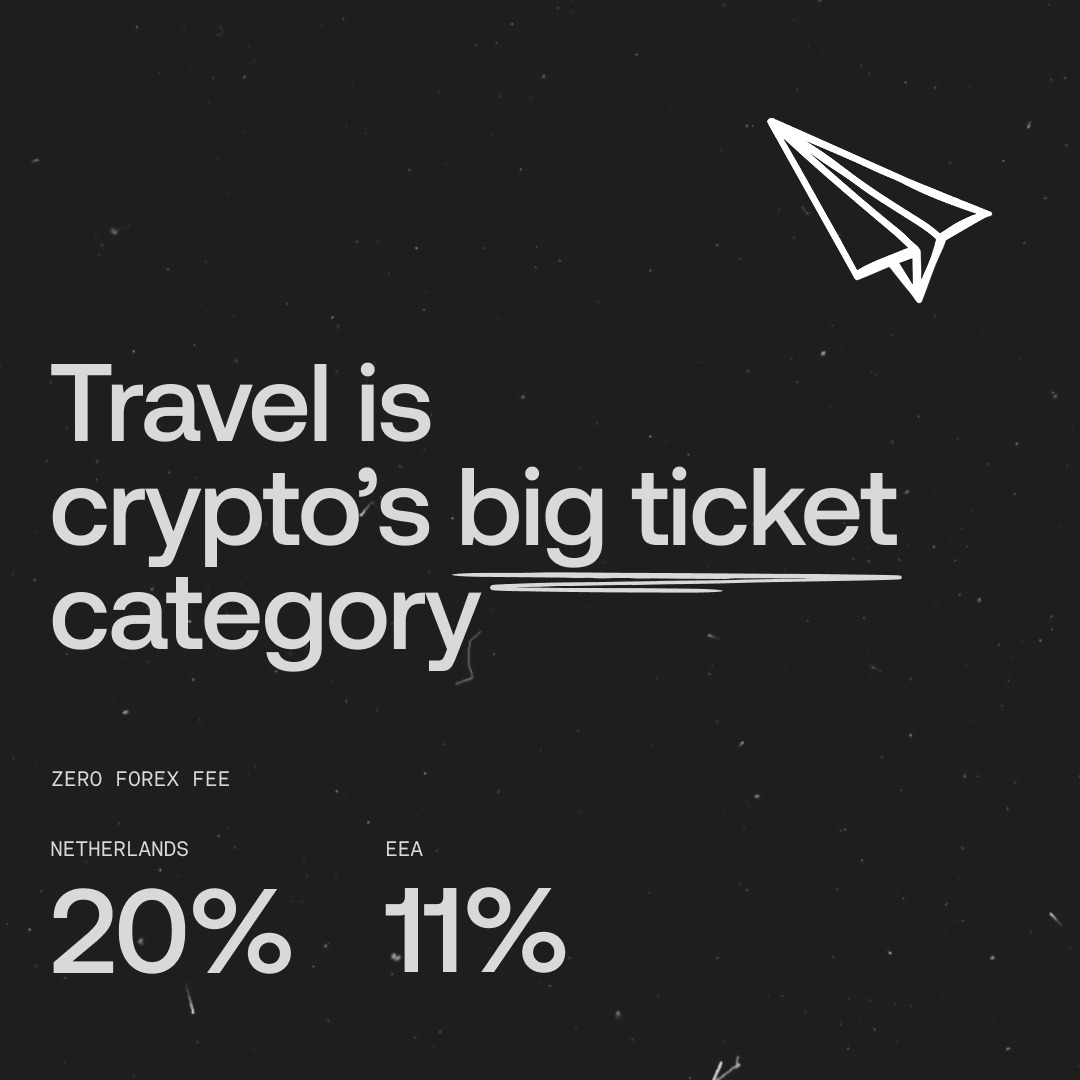
From supermarkets to cafés, OKX Card data shows crypto is becoming part of how Europe pays.
Read our blog ⤵New Money meets everyday payment culture.
From supermarkets to cafés, OKX Card data shows crypto is becoming part of how Europe pays.
Read our blog ⤵New Money meets everyday payment culture.
From supermarkets to cafés, OKX Card data shows crypto is becoming part of how Europe pays.
Read our blog ⤵New Money meets everyday payment culture.
From supermarkets to cafés, OKX Card data shows crypto is becoming part of how Europe pays.
Read our blog ⤵New Money meets everyday payment culture.
From supermarkets to cafés, OKX Card data shows crypto is becoming part of how Europe pays.
Read our blog ⤵️