@MachariaNjeru It's a form of corruption. 2 more examples:
1. Construction ongoing along Kenyatta Av/valley road. Immediately b4 construction began, a re-carpeting was done. Less than 6 months later, demolished for the major works.
2. Remember the red lines along Thika Road? What happened?
@DavidNdii@RobertAlai "...land for which there is no record of purchase" is your allegation. You are not a custodian to land ownership documents for the land. Demonstrate there are no such records. Otherwise it's incitement.
@elonmusk@elonmusk appears disgruntled by the social-economic and political disruption of the post apartheid SA. Just because he has a platform to amplify his voice does not mean he has the monopoly of truth.
SA is still in the works to full independence.
@citizentvkenya Statehouse will promptly comply.
😭 I'm just worried about how many billions will be allocated to correct the situation. Talk of creating a 'CLEAN' opportunity for someone.
@TheStarKenya Statehouse will promptly comply.
😭 I'm just worried about how many billions will be allocated to correct the situation. Talk of creating a 'CLEAN' opportunity for someone.
@Kenyans Statehouse will promptly comply.
😭 I'm just worried about how many billions will be allocated to correct the situation. It's a 'CLEAN' opportunity for someone.
@NationAfrica Statehouse will promptly comply.
😭 I'm just worried about how many billions will be allocated to correct the situation. It's a 'CLEAN' opportunity for someone.
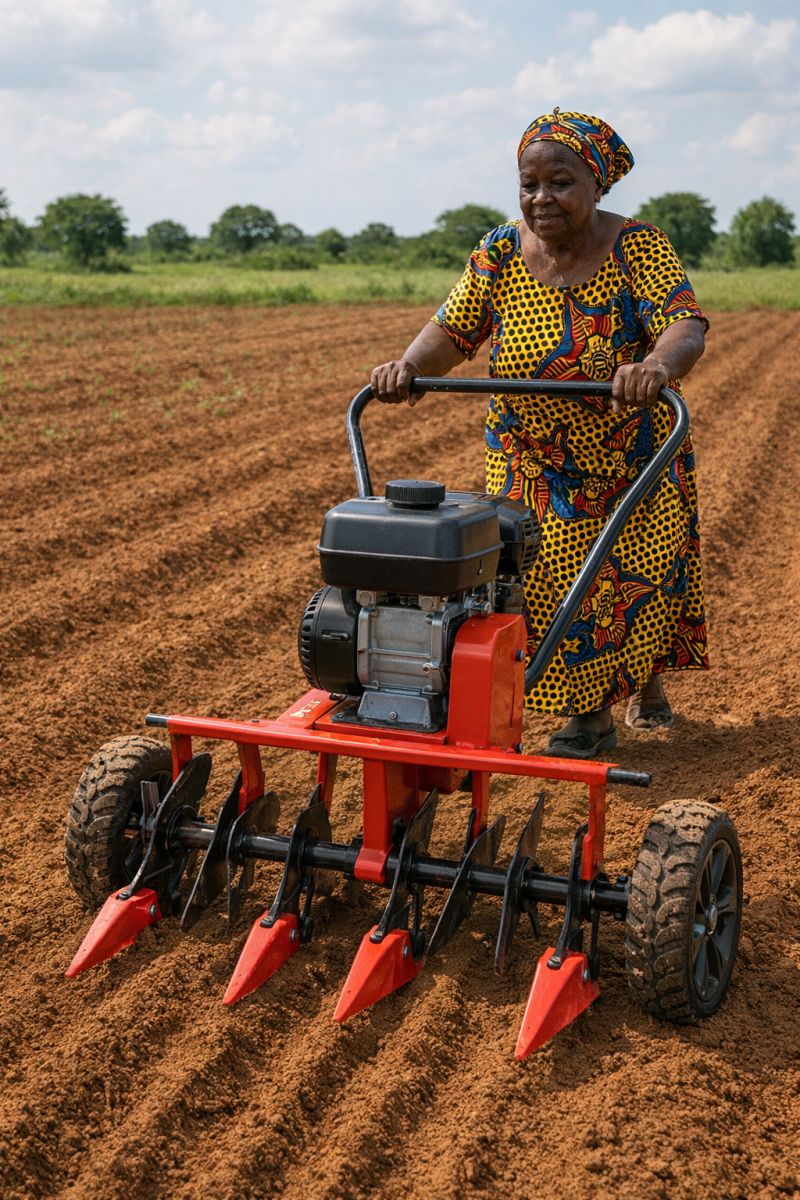
Africa Will Not Mechanize Agriculture with Just Tractors. Small Households Need Simpler Machines.
In the 21st century, it is absurd that tractors—machines that are heavier and more expensive than most cars—exist primarily to drag ploughs and harvesters across farms. This model is inefficient, capital-intensive, and fundamentally misaligned with the realities of smallholder agriculture.
True agricultural progress should start with tools so simple, light, and intuitive that even an elderly grandmother can use them comfortably. From there, we can scale intelligently—toward smarter machines, connected systems, and eventually autonomous agricultural robotics.
Africa’s agricultural challenge is not a lack of land, labor, or effort—it is a lack of human-scaled mechanization.
We are building from first principles:
start with a farming machine so simple, affordable, and intuitive that an elderly grandmother can use it without exhaustion. From that foundation, we can scale—toward smarter tools, connected systems, and eventually autonomous agricultural robotics.
This is an invitation to partners who understand that real transformation begins at the base of the pyramid.
To Gates Foundation :
If your mission is to lift productivity, incomes, and food security for smallholder farmers, this is where mechanization truly begins.
To Dangote Industries Limited :
Africa needs indigenous industrial champions to manufacture affordable machines at scale. This is an opportunity to industrialize agriculture the way, alongside your current investments in urea and fertilizer production.
To Global Agricultural Equipment Manufacturers:
The next billion farmers will not be reached with tractors designed for industrial farms. They will be reached with radically simpler, lighter, and smarter machines designed for emerging markets.
To African Development Bank Group, African Governments, Ministries and Institutions:
Let us build the tools that unlock productivity per person—
and in doing so, unlock Africa’s economic potential.
@citizentvkenya So, what is wrong with the name TALANTA? Everyone would associate with the name.
Build another and name it to glorifying the person from inception.
A Japanese scientist earned a Nobel Prize after discovering one of the body’s most powerful self-healing mechanisms: during periods of fasting, the human body begins to consume its own damaged cells, triggering a deep cellular reset known as autophagy. This natural process acts like an internal cleanup system, breaking down old proteins, malfunctioning components, and toxic buildup that contribute to aging and disease. The discovery revealed that fasting doesn’t just change metabolism — it activates a fundamental survival program hard-wired into our biology.
Researchers found that autophagy boosts cellular renewal, supports immune function, protects against neurodegeneration, and improves overall resilience. When the body isn’t busy digesting food, it shifts focus to maintenance and repair, recycling damaged parts into fresh, healthy components. This helps reduce inflammation, sharpen brain function, and improve the body’s ability to handle stress. Some studies even show that activating autophagy may lower the risk of chronic conditions linked to aging.
The Nobel-winning research transformed how scientists view fasting, turning it from a simple diet trend into a legitimate biological reset. Doctors now say intermittent fasting — when done safely — can help support long-term cellular health, boost energy, and improve metabolic balance. While it’s not a cure-all, the discovery showed that the body has extraordinary built-in abilities to heal itself when given the right conditions.
For millions around the world, the research opened a new window into how deeply our lifestyle affects our cells — and how something as simple as timing our meals can unlock one of the body’s most powerful repair systems.