@AdrianoAguzzi Here is an overview of the concept: https://t.co/vRNvW225te
Your probe can be a little block next to the slot for the tube rack / well plate, at a known distance, and the probe the needle itself.
@AdrianoAguzzi Your "probing plate" can also be any shape, as long as you know exactly how it relates to the position of the wells in plates (i.e. the XYZ offsets). I'm sorry I don't elaborate much more... I don't know how to get past twitter's character limit.
@AdrianoAguzzi Indeed as Aaron says. When the contact between the needle/probe and the reference object triggers, get the location of the toolhead through GCODE. Then subtract the radius of the needle to get its center. For Z you might probe the nozzle body, if your reference is tall enough.
@AdrianoAguzzi The simplest option requires no additional components, just to wires. Your needle is conductive, so wire it to one end of a pin, and wire another pin to a metal reference object which you can probe by continuity. A simple solution used in PCB milling and CNC. :)
@ondsel Everything needed for working with standard aluminium extrusions, o-rings, common bearings, trapezoidal nuts and leadscrews, GT2 belts and pulleys... anything in a Prusa 3D-printer really.
@rickwierenga@pylabrobot Ok, thanks for the info :) I wouldn't like to lose the messages in there. What is the scope for the new forum? I had imagined its appearance was related to the DNS issue.
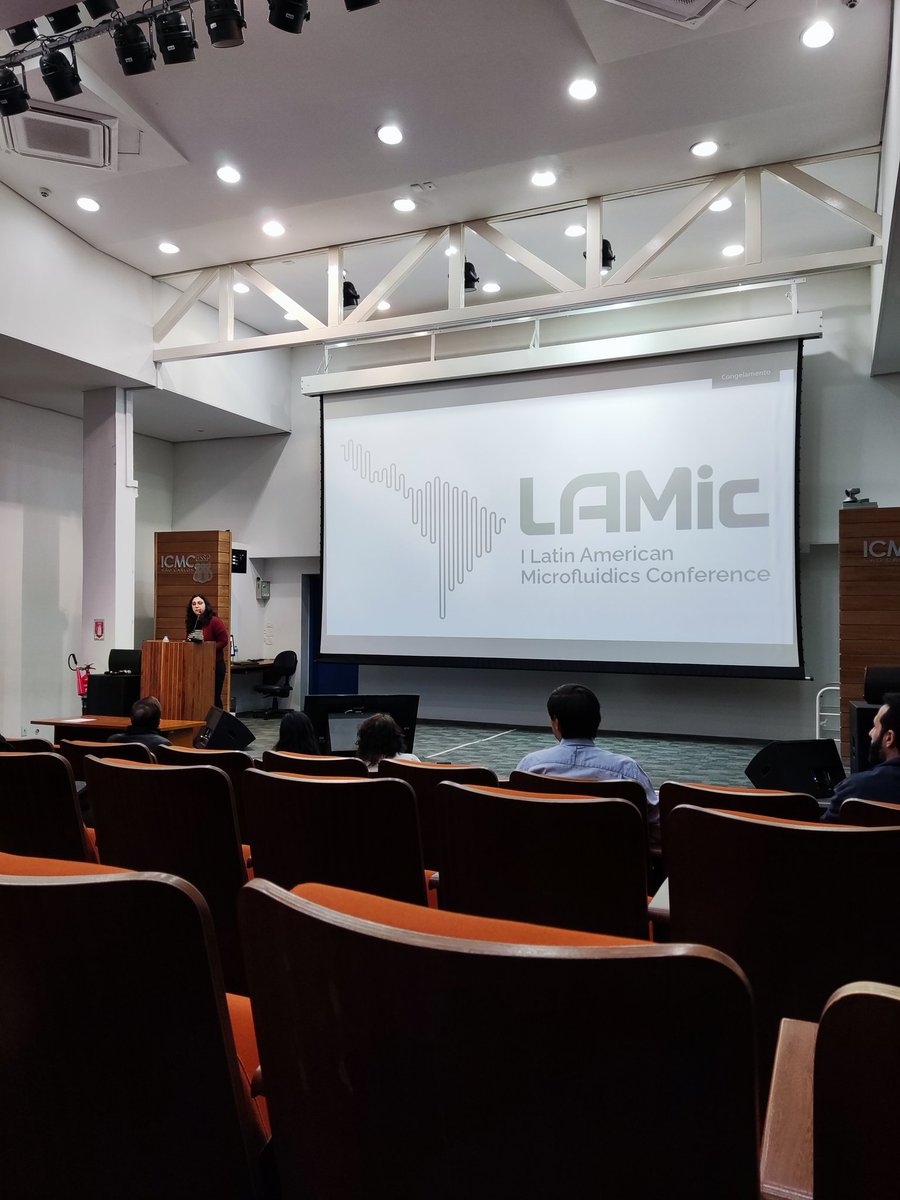
On behalf of @WenzelLab team, I will present the first iteration of our open-source droplet microfluidic workstation in the I Latin American #Microfluidics Conference (Sao Carlos, Brazil)
El proyecto BioArtBot (de @TimSDobbs) que hace pixel art con bacterias coloridas está en campaña para expandir su paleta de colores.
Ping a @alenadra@alfonsosoler79@laola2013 :)
https://t.co/hfJcOfg3Sv
Very happy to have attended the extremely inspiring @NSF POSE workshop on open source lab automation at @UW organized by @lilopozzo, @nadyapeek and their amazing groups! I learned a lot and look forward to working with @naikymen and this great community on new tools
¡Últimos minutos armando los equipos de #herramientaslibres2023! Camila Saveika y Cecilia Carrillo ultiman detalles del conductímetro abierto. Kevin Poveda muestra el colorímetro. @antoni_protoni, @AlejoBonifacio y @naikymen terminan el data logger.
En el #HackerSpace estamos mentoreando a tres programadorxs en el desarrollo de un robot de laboratorio para manejo de líquidos, de software y hardware libre 🦾
En la 1° etapa desarrollamos la interfaz gráfica del robot
Acá pueden ver los avances👉https://t.co/FaqkfTycxh
Ya falta poco para empiece el encuentro Herramientas científicas libres para el monitoreo ambiental participativo #herramientaslibres2023, que organizamos junto a @cosensores en @ehys_unsam: Arranca el próximo martes 27. La inscripción es abierta y gratuita, ¡no te duermas!
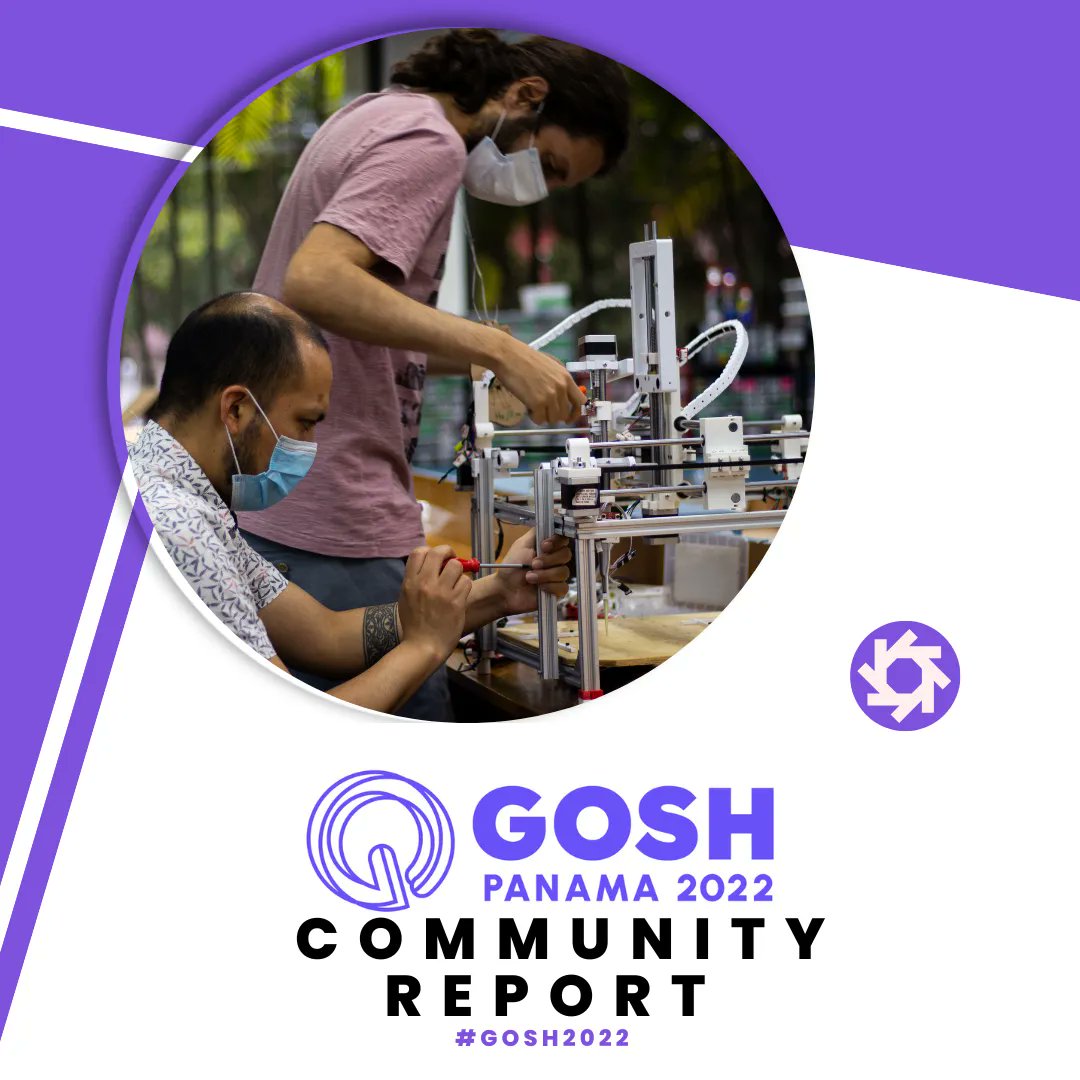
NEW: #GOSH2022 Community Report, detailing the activities that took place at our latest Gathering in Panamá.
You can access the report here: https://t.co/WAAJx1hVdr
@mindnumbed This is an awesome time to work on open source, and Richard's note is one clearly explaining why.
There are better examples than the commercial OT, which (AFAIK) has not released it's hardware source. Only an empty STEP file can be found.
I'd be glad to stand corrected!