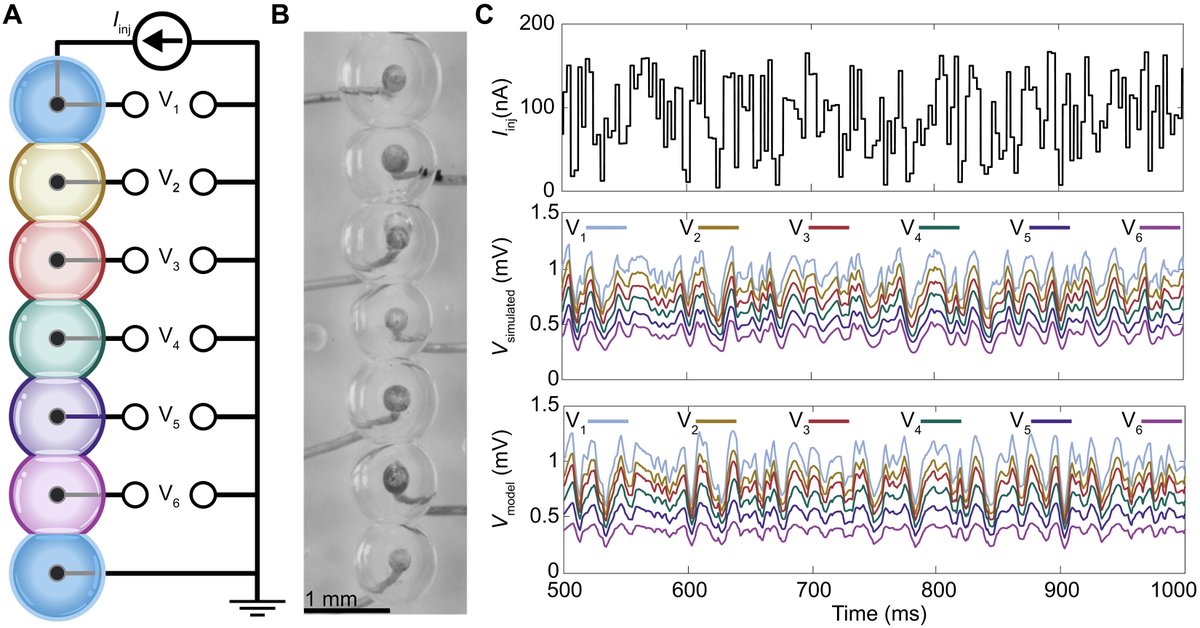
Researchers introduce a class of tissue-like computing materials that allows a new approach to neuromorphic, energy-efficient, and adaptive information processing. @HridMSH@olemissengineer@NajemJS@PSUEngineering https://t.co/sX5g4glQUj
Proud to share that my student Ahmed has published his 2nd paper! 🎉 His novel memcapacitor-based reservoir computing approach predicts complex nonlinear systems with high accuracy, all without traditional input encoding. #Research#ProudMentor
https://t.co/h20O2Al9fr
Excited to see our paper out today in @PNAS with @BhamlaLab!
Our discovery that Cicadas pee in jets helped us develop a framework that unifies excretion across eight orders of magnitude, from cicadas to elephants.
Brief thread below:
https://t.co/5BqfLDnJIn
#LLMs can help us understand the evolutionary design of G protein Coupled Receptors. In our work, we found out the correlation between NPXXY region (XX) and the binding pocket residues using attention mechanisms for protein sequences: https://t.co/5p8Y2GRODM @JCIM_JCTC
Congrats to my student, Nick Armendarez, for publishing his 1st paper! He shows that physical reservoir computing systems, comprising various memristors with distinct dynamics, yield impressive time series prediction accuracy with a single data encoding. https://t.co/Dd555PG6EG
Biomembrane-Based Memcapacitive Reservoir Computing System for Energy-Efficient Temporal Data Processing (Md Sakib Hasan and co-workers) https://t.co/Iw0kerX8cl
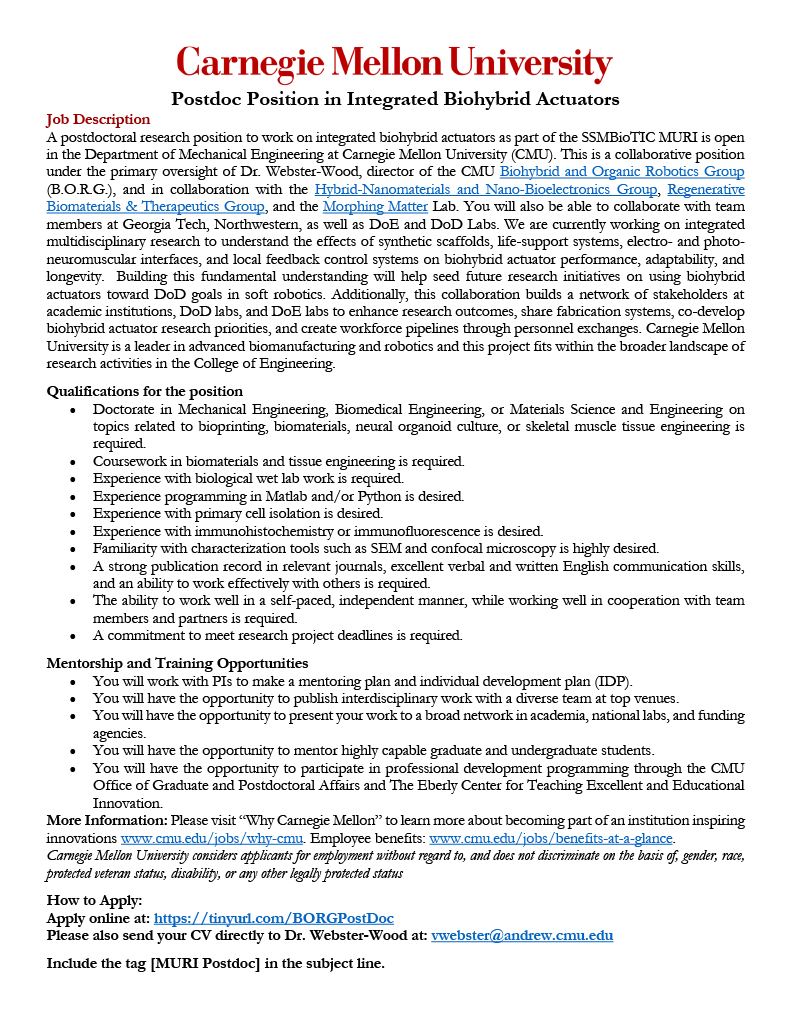
We are looking for a #postdoc to join our awesome new collaboration on #biohybrid actuators with @lining_yao @RegenBio @ProfJosiah@jrivnay @CohenKarniLab!
Please help share and retweet!
Apply online here: https://t.co/k59YtRGBPr
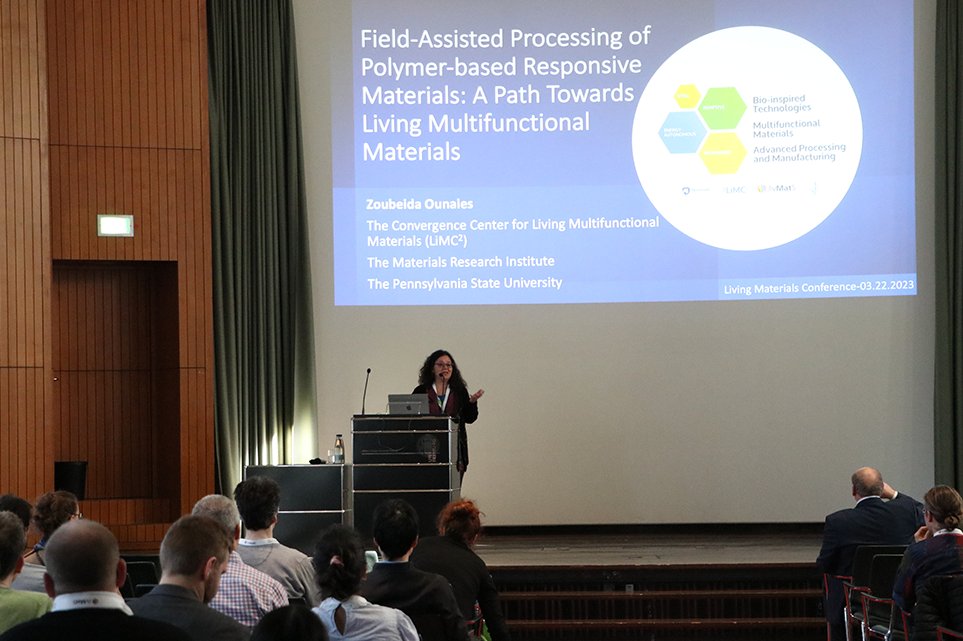
Penn State’s Living Materials team, led by Professor Zoubeida Ounaies, is working across departments and continents to engineer adaptive, self-powering, living materials that respond to their environment.
Learn more about the team's work ➡️ https://t.co/Kl0x4xooIS