Scoped claim:
This is not “Madar wins everywhere.”
It is: on these public TypeScript explain-runtime benchmark rows, with receipts checked into the repo, Madar reduced context waste and still produced proof-backed answers.
https://t.co/bEQZ6BhEzx
I’ve posted about Madar before, but this release is different.
The goal was not to add more features.
The goal was to prove whether Madar actually helps coding agents avoid rediscovering large TypeScript repos from scratch.
The important part for me:
Madar is not trying to replace the coding agent.
It gives the agent a smaller, task-aware context pack before it starts searching the repo.
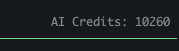
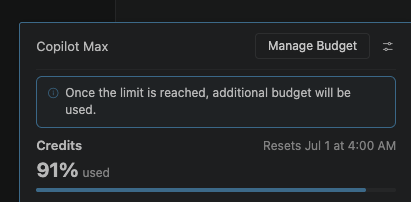
just upgraded my @GitHubCopilot account to Copilot Max on the 1st… it’s ONLY the 8th and i’m already 91% credits used WTF 😤📷10260 credits completely torched in a session. resets july 1st but this is actually ridiculous, @Microsoft got me fucked up with this ai addiction fr
6/
Try it on your repo:
npm i -g @lubab/madar
madar generate . --spi
madar claude install (or cursor / copilot / codex / gemini)
Then ask "how does X work" and watch where it looks first.
https://t.co/dx5qsBpomm
1/Follow-up on Madar. I finally have the number I wanted to show.
Same question, same real backend, two ways: a plain coding agent vs the same agent + Madar.
~78% fewer tokens to land on the exact same answer.
5/What I'm not claiming:
One run. One question, one repo, graph scoped and --spi on. Point it at a giant monorepo and the pack can cost more than it saves.
A real result on a realistic codebase, not a universal promise.
Yeah, that’s the tricky part.
I don’t think the graph alone is enough. It can tell you what is connected, but not always what is actually important for the task.
So I’m trying to treat the graph more like a constraint layer, not the final answer.
The next step is ranking context by the type of task: explaining something, fixing a bug, implementing a feature, reviewing a PR, etc.
Those should not all pull the same files just because a filename or method name matches.
For me the goal is: before the agent starts editing or searching around, give it a smaller set of files, tests, contracts, and runtime paths that are likely relevant — and also show when the context looks weak.
graphify-ts is now Madar.
New package:
npm install -g @lubab/madar
New CLI:
madar generate .
madar pack "how does auth work?" --task explain
madar claude install
Madar is a local context compiler for AI coding agents.
It builds a structural graph of your repo and creates compact context packs so agents stop rediscovering the same codebase every session.
“Madar” means orbit in Arabic.
The idea: give coding agents a structured orbit around your codebase instead of letting them wander through files from scratch.
GitHub:
https://t.co/t0FQAWwIGF
npm:
https://t.co/JrCPgIrawT
Just published graphify-ts v0.22.9.
The goal is simple: stop AI coding agents from rereading half the repo every time.
This release adds:
sample TypeScript workspace
getting-started tutorial
Codex, Aider, OpenCode profiles
strict MCP mode
duplicate context_pack suppression
agent orchestration guide
graphify-ts is becoming a local context compiler for coding agents, not another code search tool.
Repo: https://t.co/4kglr2MM1K
npm: @mohammednagy/graphify-ts
Update on graphify-ts: I’m pushing it beyond “repo graph + retrieval” into a real context compiler for coding agents. The new flow is: Prompt → task intent → context plan → evidence recipe → compact pack → semantic coverage → expandable handles. The goal is simple: Less token waste, but without blindly dropping important context. graphify-ts should not only reduce tokens. It should show what evidence was included, what was omitted, and what can be expanded if the agent needs more. Repo:
https://t.co/4kglr2MM1K
Update on graphify-ts:
I’m pushing it beyond “repo graph + retrieval” into a real context compiler for coding agents.
The new flow is:
Prompt → task intent → context plan → evidence recipe → compact pack → semantic coverage → expandable handles.
The goal is simple:
Less token waste, but without blindly dropping important context.
graphify-ts should not only reduce tokens. It should show what evidence was included, what was omitted, and what can be expanded if the agent needs more.
Repo: https://t.co/4kglr2MM1K
Update on graphify-ts:
I’m pushing it beyond “repo graph + retrieval” into a real context compiler for coding agents.
The new flow is:
Prompt → task intent → context plan → evidence recipe → compact pack → semantic coverage → expandable handles.
The goal is simple:
Less token waste, but without blindly dropping important context.
graphify-ts should not only reduce tokens. It should show what evidence was included, what was omitted, and what can be expanded if the agent needs more.
Repo: https://t.co/4kglr2MM1K