Sir Jim Ratcliffe, the broke billionaire.
MANCHESTER UNITED
He paid $33 a share. It closed at $20.00 this week.
At a $3.44bn market cap, his roughly 29% stake is worth about $1.0bn on the market. Around 39% below what he paid.
Club net debt passed $1bn for the first time. The $425m of 3.79% notes were refinanced into $550m at 5.36%. Cash at 31 March: £60.9m, down from £73.2m.
A £3bn new stadium, "privately financed" with no commencement date in sight.
Until February 2027, if the Glazers accept $33+ a share for the club, Ratcliffe is legally forced to sell too.
OGC NICE
Bought for about €100m in 2019. Asked €200m. Price cut. US sale collapsed in June 2026. Now needs €40m in player sales just to spend.
INEOS AUTOMOTIVE
Built to make 30,000 cars a year at Hambach. 2025 production came in under 7,000, down from 7,500 in 2024. Two straight years of nine-figure losses. Hundreds of job cuts.
PERSONAL FORTUNE
2023: £29.69bn
2024: £23.52bn
2025: £17.05bn
2026: £15.19bn
£14.5bn gone in three years. Down about 50%. From 2nd richest in Britain to 9th.
DEBT
By late 2025, INEOS Group Holdings and INEOS Quattro carried over £18bn of debt, up almost £3bn in a single year.
Annual debt servicing costs: £1.8bn. Up £600m in a year.
Projected Quattro's debt at 16.7x earnings for 2026.
In February 2026, S&P cut Group Holdings to B+ and Quattro two notches to B. No sustained recovery before 2028.
BORROWING
May 2026: €700m of new notes at 7.875%.
Group Holdings paid €474.8m in interest and finance items in just the first half of 2026.
INEOS QUATTRO
Even in the best chemicals quarter in years, Quattro lost money.
Q2 2026 loss: €34.7m
H1 2026 loss: €66.2m
Debt: €7.14bn
Total equity: €1.82bn
Shareholders had to inject €200m of fresh equity to prop it up.
NO DIVIDENDS
INEOS skipped its dividend for a second straight year. Group revenue fell from €16.2bn to €14.3bn in 2025, and European earnings nearly halved, from €470.2m to €252.3m.
Meanwhile, in H1 2026 alone, Group Holdings and Quattro paid a combined €86.1m in management fees to INEOS Services, a company owned by the same parent Ratcliffe controls.
Cash fell from €2.58bn at New Year to €1.85bn by June.
EUROPE
Antwerp: €3.0bn already drawn on its loan facilities. Start-up pushed to 2027 after the final modules got stuck at the Strait of Hormuz. INEOS is now suing Flanders and taking Belgium to international arbitration over about €1.5bn of claimed losses.
Wilcox cv Vs other real DOF.
🟢Hugo Viana (Man City)
Ex-player. Sporting CP DoF from 2018. Two league titles, rebuilt a giant on sales + coaching (including Amorim). Then walked into Txiki’s finished City machine. Already a proven architect before the Etihad.
🔴Andrea Berta (Arsenal)
12 years at Atlético. Two La Liga titles, Europa League, two Champions League finals. Griezmann, Oblak, Rodri-level deals. Arrived at Arsenal in 2025 and helped deliver a first title in 22 years. Knows how a big club actually functions under pressure.
🟥Christoph Freund (Bayern)
17 years inside the Salzburg talent factory. Then Munich. Contract extended to 2029. His job is continuity + pipeline, not learning on the job at a superclub.
🔵PSG — Luís Campos
The closest thing Europe has to a transfer specialist-as-brand. Monaco title squad. Lille title squad. At PSG since 2022 as football advisor/sporting lead. Shifted Paris from ageing superstars to younger profiles (Vitinha, Neves, Pacho, Kvaratskhelia etc.), aligned with Luis Enrique, now on a deal through 2030 after back-to-back Champions League success.
At #MUFC we have Wilcox who has little to no experience. Other top team Have DOF who have the record of buying not only quality players but the right players. Meanwhile Wilcox and INEOS go for the cheapest out there .
Arsenal’s 2026/27 first-team salary table + payroll distribution.
A few figures may be off, but broadly accurate.
With SCR increasingly shaping squad planning, wage-to-output matters more than ever 👀
Source: Capology.
🚨⚖️ La FIFA acaba con las cláusulas abusivas: el nuevo artículo 17 impone la proporcionalidad que el caso Julián Álvarez dejó en evidencia 💥⚽
Cuando Toni Freixa y yo catalogamos públicamente la cláusula de 500 millones de euros que el Atlético de Madrid @Atleti impuso a Julián Álvarez como abusiva y manifiestamente desproporcionada, muchos nos tacharon de exagerados.
Pues bien, dicho sea con los debidos respetos y en estrictos términos de defensa: no íbamos tan desencaminados. Hoy es la propia FIFA quien lo confirma.
El Bureau del Consejo de la FIFA aprobó el 10 de junio de 2026, y la RFEF lo ha comunicado mediante su Circular n.º 12, que traslada la Circular FIFA n.º 1970, la reforma del artículo 17 del Reglamento sobre el Estatuto y la Transferencia de Jugadores, consecuencia directa de la sentencia del TJUE en el caso Diarra.
¿Qué cambia?
El nuevo art. 17.1 somete las cláusulas de rescisión a un control de proporcionalidad: la indemnización pactada será exigible salvo que resulte manifiestamente excesiva e injusta atendiendo a las circunstancias reales de la operación (coste del fichaje, salario pactado, valor residual del contrato).
Y a falta de cláusula, la compensación se calculará con criterios objetivos y tasados: valor residual, remuneración pendiente, coste de reemplazo y daños acreditados.
Traducción: se acabó fijar cifras estratosféricas cuya única finalidad no es indemnizar, sino bloquear de facto la salida del futbolista.
Una cláusula que multiplica por 40 el salario bruto anual del jugador, como la de Julián, es exactamente el tipo de desproporción que el nuevo marco viene a proscribir.
Julián Álvarez no puede acogerse a la retroactividad favorable: la propia Circular FIFA n.º 1970 es tajante al disponer que el nuevo art. 17.1 RETJ solo se aplicará a los contratos celebrados tras su entrada en vigor el 1 de enero de 2027.
Ahora bien, le queda abierta la vía Diarra: invocar directamente ante la jurisdicción ordinaria los arts. 45 y 101 TFUE, derecho primario de la Unión con efecto directo que prevalece sobre cualquier reglamento federativo, alegando que una cláusula equivalente a 40 anualidades restringe desproporcionadamente su libre circulación como trabajador.
A ello se suma el art. 16.1 del Real Decreto 1006/1985: la indemnización por extinción unilateral se fija por el juez, y la jurisprudencia social española ya ha moderado cláusulas de rescisión manifiestamente desproporcionadas por abusivas.
Pero el principio ya está consagrado: la proporcionalidad ha llegado al fútbol para quedarse. Y quienes lo denunciamos a tiempo, hoy podemos decirlo bien alto: el tiempo, y ahora la FIFA, nos han dado la razón.
Seguiremos informando. ⚖️🔴
Acceso a la circular completa 👇
https://t.co/9dOhBSE8ZK
1990'da Japonya Çin'in 6 katı üretiyordu. Bugün Çin Japonya'nın 6 katı üretiyor.
35 yılda ne oldu da tablo bu hale geldi?
Cevap Çin'de değil.
ABD'nin Japonya'ya karşı aldığı bir kararda.
Önce 1980'lere bakalım.
O yıllarda Japonya durdurulamaz görünüyordu.
Sony ve Toyota gibi markalar ABD pazarında Amerikan rakiplerini geriye itiyordu, çünkü Japon malı hem daha ucuzdu hem daha kaliteliydi.
1989'da bir Japon şirketi New York'un simgesi Rockefeller Center'ın çoğunluk hissesini satın aldı. Aynı yıl Sony, Hollywood stüdyosu Columbia Pictures'ı devraldı.
ABD'de konuşulan soru şuydu.
Japonya ABD'yi satın mı alıyor?
ABD Kongresi'nde Japon mallarına yüksek vergi konulması tartışılıyordu.
ABD daha sessiz bir yol seçti.
22 Eylül 1985'te ABD ve Japonya'nın da aralarında olduğu 5 ülke New York'ta bir otelde anlaştı.
Anlaşma basitti.
Hepsi birlikte dolar satacak, yen ve Alman markı alacaktı.
Amaç doları zayıflatıp Japon malını pahalandırmaktı.
Sonuç beklenenden hızlı geldi.
Yen 2 yılda dolar karşısında 240'tan 120'ye geldi.
Japon malları gerçekten pahalandı ve ihracat düştü.
Buraya kadar plan işledi.
Şimdi kimsenin hesaba katmadığı kısma gelelim.
Bir ülkenin parası değerlenince orada üretim yapmak pahalılaşır.
Şirketin önünde 2 yol kalır. Ya fiyatı artırıp müşteri kaybeder, ya da fabrikayı maliyeti düşük bir ülkeye taşır.
Japon şirketleri ikincisini seçti.
Fabrikalar önce Güneydoğu Asya'ya gitti. Sonra daha ucuz bir adres çıktı.
Çin.
Çin o yıllarda kapılarını yeni açıyordu. İşçilik çok ucuzdu, arazi genişti, kural azdı.
Japon üretimi oraya taşındı.
Sonra ABD şirketleri de aynı hesabı yaptı. Ardından Avrupalı şirketler geldi.
Kimse bunu Çin'e yardım olsun diye yapmadı. Herkes kendi maliyetini düşürüyordu.
2001'de kapı tamamen açıldı. ABD, Çin'in Dünya Ticaret Örgütü'ne girmesini destekledi.
Gerekçe o gün mantıklı görünüyordu.
Çin zenginleşirse Batı'ya benzeyecekti.
Çin zenginleşti. Benzemedi.
Peki Çin'e taşınan şey neydi?
Herkes fabrika taşındığını sanıyor. Oysa giden şey fabrikadan fazlasıydı.
Bir malı üretmeyi bilen işçi, o işçiyi yetiştiren usta, yan sanayi ve tedarik ağı, hepsi zamanla orada oluştu.
Bir ustayı işten çıkarırsanız o usta işsiz kalmaz. Rakibinize gider.
35 yıl boyunca olan tam olarak buydu.
Çin başta sadece montaj yapıyordu, parçalar dışarıdan geliyordu.
Sonra parçaları da kendisi yapmaya başladı. Ardından o parçaları üreten makineleri kurdu.
2015'te hedef değişti.
Xi Jinping o yıl robotik ve yarı iletken dahil 10 stratejik sektörde dünya lideri olma planını açıkladı.
Artık amaç ucuza üretmek değildi. En iyisini üretmekti.
Çin 2010'da ABD'yi geçip birinci sıraya oturdu. Bugün ABD'nin 1,5 katından fazla üretiyor.
Peki Japonya ne oldu?
Yen değerlendikten sonra ekonomi daraldı. Faiz düşürüldü, balon şişti, 1990'da patladı.
Japonya o günden sonra eski hızına dönemedi.
Ortaya çıkan sonuç şu.
ABD bir rakibini durdurdu. O rakip gerçekten durdu.
Ama o üretim ABD'ye geri dönmedi. Daha ucuz bir adrese gitti.
O adres bugün ABD'nin karşısında Japonya'dan çok daha büyük bir güç olarak duruyor.
Buradan çıkan kural basit.
Bir ülkede üretim pahalılaştığında yok olmaz. Adres değiştirir.
Adresi seçen de o ülke değil, maliyettir.
Sun Tzu 2500 yıl önce şunu yazdı.
Kendini bilip rakibini bilmeyen taraf, kazandığı her zaferin yanında bir yenilgi de alır.
1985'te ABD Japonya'yı çok iyi biliyordu.
Sırada kimin olduğunu bilmiyordu.
Bu benim şahsi analizim.
Gelişmeleri incelemeye devam ediyorum, sizi bilgilendireceğim.
Not overly enthusiastic about hiring from within 😑
Now also losing Craig McKee (Head of Scouting Operations) & Mark Burchill (Chief Scout), surely it doesn't 𝗔𝗟𝗟 get fixed internally
Fresh faces, Fresh ideas 𝗜𝗦 the way to go 𝗜𝗠𝗢 👍🏻
#LFC
Cách thức đồng vốn ngoại quốc vào Việt Nam.
Nhìn vào báo cáo tài chính hợp nhất của Novaland đến 30/6/2026, có người phải dụi mắt:
Tổng tài sản: ~ 258.700 tỷ đồng; Tổng dư nợ vay tài chính: ~ 72.900 tỷ đồng, toàn khoản nghìn tỷ ở MB, VPBank, TPBank...
Vậy mà tại HDBank, dư nợ chỉ còn đúng... 150 triệu đồng.
Con số bằng một căn chung cư mini ở Cần Thơ, bằng tiền mua một chiếc SH. Tập đoàn 260 nghìn tỷ đi vay 150 triệu làm gì? Đùa à?
Không đùa. Và đây là một case kinh điển đáng chiêm ngưỡng về tài chính dự án ở Việt Nam.
Khoản 150 triệu này có thật không?
Có thật 100%.
Đây không phải khoản vay mới. Đây là phần còn lại của một khoản vay cũ có hạn mức ban đầu chỉ 700 triệu đồng.
Lộ trình trả nợ của nó rất đều và rất... ngoan:
- 31/12/2024: 300 triệu
- 30/06/2025: 250 triệu
- 31/12/2025: 200 triệu
- 30/06/2026: 150 triệu
Mỗi 6 tháng trả 50 triệu gốc. Thời hạn vay 96 tháng, ngày tất toán cuối cùng dự kiến 15/06/2027. Tài sản đảm bảo là quyền sử dụng đất và tài sản gắn liền với đất tại dự án ở Cần Thơ - liên quan đến Azerai Can Tho Resort / NovaWorld Mekong.
Trả đều như vắt chanh, không hề có dấu hiệu nợ xấu hay dư nợ ảo.
Vì sao tập đoàn lớn lại vay 700 triệu?
Mấu chốt nằm ở 20 triệu USD của người Đức. Đây mới là phần hay nhất.
Năm 2019, DEG - Deutsche Investitions- und Entwicklungsgesellschaft mbH, tổ chức tài chính phát triển thuộc ngân hàng KfW của Đức, đã ký thỏa thuận tài trợ 20 triệu USD (hơn 500 tỷ đồng) cho dự án Azerai Can Tho Resort.
Nhưng có một rào cản pháp lý: Theo Luật Đất đai Việt Nam, "tổ chức tín dụng nước ngoài không được phép nhận thế chấp trực tiếp quyền sử dụng đất tại Việt Nam." Chỉ ngân hàng được cấp phép hoạt động tại Việt Nam mới được làm điều đó.
Vậy phải làm sao để DEG dám cho vay 20 triệu USD khi không được giữ sổ đỏ?
Thông lệ quốc tế được áp dụng là: HDBank đóng vai trò "người gác cổng pháp lý". Cụ thể, HDBank đứng ra nhận thế chấp QSDĐ tại Cần Thơ. Để hợp thức hóa việc nhận thế chấp đó, HDBank cho Novaland vay một khoản vay nhỏ song song bằng VND - chính là khoản 700 triệu đồng kia. Nó được gọi là "local facility / parallel facility - khoản vay cầu nối."
Khi có sự cố, HDBank sẽ đóng vai trò đại lý tài sản bảo đảm (security agent) để xử lý tài sản, đảm bảo quyền lợi cho cả mình và cho DEG.
Nói nôm na: HDBank giữ sổ đỏ dùm, cho vay tượng trưng 700 triệu để có cớ giữ sổ đỏ, còn tiền thật - 20 triệu USD - là của người Đức bơm vào.
Hai khoản vay cùng chung một tài sản đảm bảo, cùng chung thời hạn, càng chứng minh cấu trúc này.
Hợp lý nhưng tại sao vẫn làm người ta dụi mắt?
Hợp lý về mặt luật và thông lệ: Đây là cấu trúc chuẩn mực khi IFC, ADB, DEG... tài trợ dự án tại Việt Nam. Không có ngân hàng nội địa đứng ra giữ đất, không ông Tây nào dám cho vay. Con số 700 triệu so với 20 triệu USD và so với 260 nghìn tỷ tổng tài sản là quá nhỏ - đúng với vai trò phụ trợ, không phải nguồn vốn chính.
Song nó vẫn khiến có người phải dụi mắt về mặt cảm nhận. Đó là lỗi của cách đọc báo cáo tài chính. Một người bình thường lướt qua bảng vay nợ, thấy MB nghìn tỷ, VPBank nghìn tỷ, tự nhiên thấy HDBank 150 triệu thì chắc chắn nghĩ là lỗi đánh máy.
Và trong bối cảnh Novaland đang gồng mình tái cấu trúc hơn 59.000 - 72.000 tỷ nợ vay, một khoản nhỏ xíu như vậy bỗng thành "điểm nhấn" gây tò mò.
Chúng ta không có hợp đồng tín dụng gốc giữa HDBank - DEG - Novaland để đọc do nó không được công bố công khai, nên mọi giải thích trên đây vẫn là suy luận logic dựa trên thông lệ. Nhưng đây là suy luận được một số nhà đầu tư đánh giá có độ tin cậy rất cao.
Đây không phải chuyện "tập đoàn nghìn tỷ vay tiền lẻ cho vui". Đây là một bài học tài chính rất mềm mại về cách vốn ngoại vào Việt Nam.
Khoản vay 150 triệu ở HDBank thực chất là "chiếc chìa khóa pháp lý" để mở két 20 triệu USD của người Đức. Nhỏ nhưng có võ.
Và nó cũng nhắc chúng ta một điều: Đừng bao giờ chỉ nhìn con số trên báo cáo tài chính. Phải đọc cả thuyết minh phía sau con số đó..( Loi Phan Mai )
50 websites that can turn a “quick visit” into hours of exploring 🌍
1. https://t.co/HtwPZm3Bhc — Live satellite views
2. https://t.co/JdESDAJiAm — Track planes worldwide
3. https://t.co/ddes55PpM1 — Track ships in real time
4. https://t.co/1kf109CuFM — Live weather & storms
5. https://t.co/W5cJkfls6Z — Live lightning strikes
6. https://t.co/vojHfcAGCm — Recent earthquakes
7. https://t.co/TmLb9oES7Z @sauda_coder — Explore internet cables
8. https://t.co/mkl4KB0P96 — Monitor global forests
9. https://t.co/NQQ6xrZwGQ — Live world statistics
10. https://t.co/K0GyDBA9pF — Live internet stats
11. https://t.co/OD1yMHOIHe — Compare country sizes
12. https://t.co/klQCtktnhT — Explore historical maps
13. https://t.co/CxT8tAmVbM — Historical map archive
14. https://t.co/EmcsYf5AtP — Community-built world map
15. https://t.co/RFUeRT8XpX — Windows around the world
16. https://t.co/tUTHXxgsME — Virtual city walks
17. https://t.co/fe3HjnkxEI — Random places worldwide
18. https://t.co/ryQ0b6jqjx — Strange places worldwide
19. https://t.co/0OFo26HsDG — Fun interactive experiments
20. https://t.co/1OTWKFZne4 — Atom to universe
21. https://t.co/RcZktQYSBN — Explore space in 3D
22. https://t.co/a4MGFSFMcS — Interactive sky map
23. https://t.co/cmJx9jX83B — NASA’s daily space image
24. https://t.co/u1cu4rdUJS — NASA image archive
25. https://t.co/kila8UO1aS — Interactive data stories
26. https://t.co/OhwNAk0Pu7 — Global data & insights
27. https://t.co/zO1iedaH19 — Understand global trends
28. https://t.co/3bqQ6uuh6z — Data visualizations
29. https://t.co/trXhRwKYgR — World Bank data
30. https://t.co/RO8rKo86bV — Turkey’s official statistics
31. https://t.co/CIv7mQbqtj — Massive digital archive
32. https://t.co/IvZEc63oma — Free classic books
33. https://t.co/eQZJvOFAEL — Explore millions of books
34. https://t.co/bCzFVInUNA — Library of Congress archive
35. https://t.co/CwjnPcjOev — Europe’s cultural archive
36. https://t.co/BdxdbyU83u — America’s digital library
37. https://t.co/AcaDLBqtxn — Virtual museums
38. https://t.co/I06pgHg42y @sauda_coder High-res artworks
39. https://t.co/eYfavepQ1X — Online art collection
40. https://t.co/L6f2yMj5zM — Historical treasures
41. https://t.co/wvBDEG1qcS — Free culture & education
42. https://t.co/yBiO88EemN — Explore the Met collection
43. https://t.co/IQTlMlcd9k — Explore music genres
44. https://t.co/1Z70z37Jy3 — Music by country & decade
45. https://t.co/SwKeeGoARl — Wikipedia edits as audio
46. https://t.co/4hOjnwrMFr… — Random knowledge
47. https://t.co/RIBw4XgHze — Time & astronomy tools
48. https://t.co/TI2DQmFGr7 — Latest science news
49. https://t.co/caeywCkajd — Free research papers
50. https://t.co/Bl21M1J4HG — Interactive data visualizations
The internet is much bigger than your usual feed.
🔖 Bookmark this for later.
Follow @premtechAI for more useful websites & AI tools. 🚀
If you have a Gmail account, you need to read this.
Google's AI now scans your emails and attachments, bank statements, tax files, medical letters, all of it. It turned on by default, and there's a class-action lawsuit over how.
Here are 5 moves to shut it off, the switch is hidden in two places:
1. The Main Switch
This is the main setting Google shows you, but it's not the only one.
Gmail (Desktop):
⚙️ Settings → See all settings → Smart features and personalization → Uncheck "Turn on smart features in Gmail, Chat, and Meet" → Save Changes.
2. The Hidden Switch
Turning off the first setting isn't enough. Most people stop there.
On the same settings page: Google Workspace smart features → Manage Workspace smart feature settings → Turn off both checkboxes → Save.
Both settings need to be turned off.
3. Your Phone
The settings don't always sync between devices, so check the Gmail app separately.
Gmail app → Menu (☰) → Settings → Select your account → Turn off "Smart features and personalization" → Confirm.
4. Delete Gemini History
If you've used Gemini before, your chats may be saved, and some could be reviewed by humans.
Go to https://t.co/L7GOsTS1wM
→ Turn off Gemini Apps Activity → Delete Activity → All Time.
This removes your past Gemini chat history and stops future conversations from being saved.
5. Move Sensitive Emails
Turning off Gmail's smart features helps, but for truly private emails, consider using a separate service.
For medical, legal, or financial emails, use a free Tuta Mail account. It offers end-to-end encryption and doesn't use AI to scan your emails.
Keep Gmail for newsletters, promotions, and less sensitive messages - if you must.
More: https://t.co/WypCappyfa
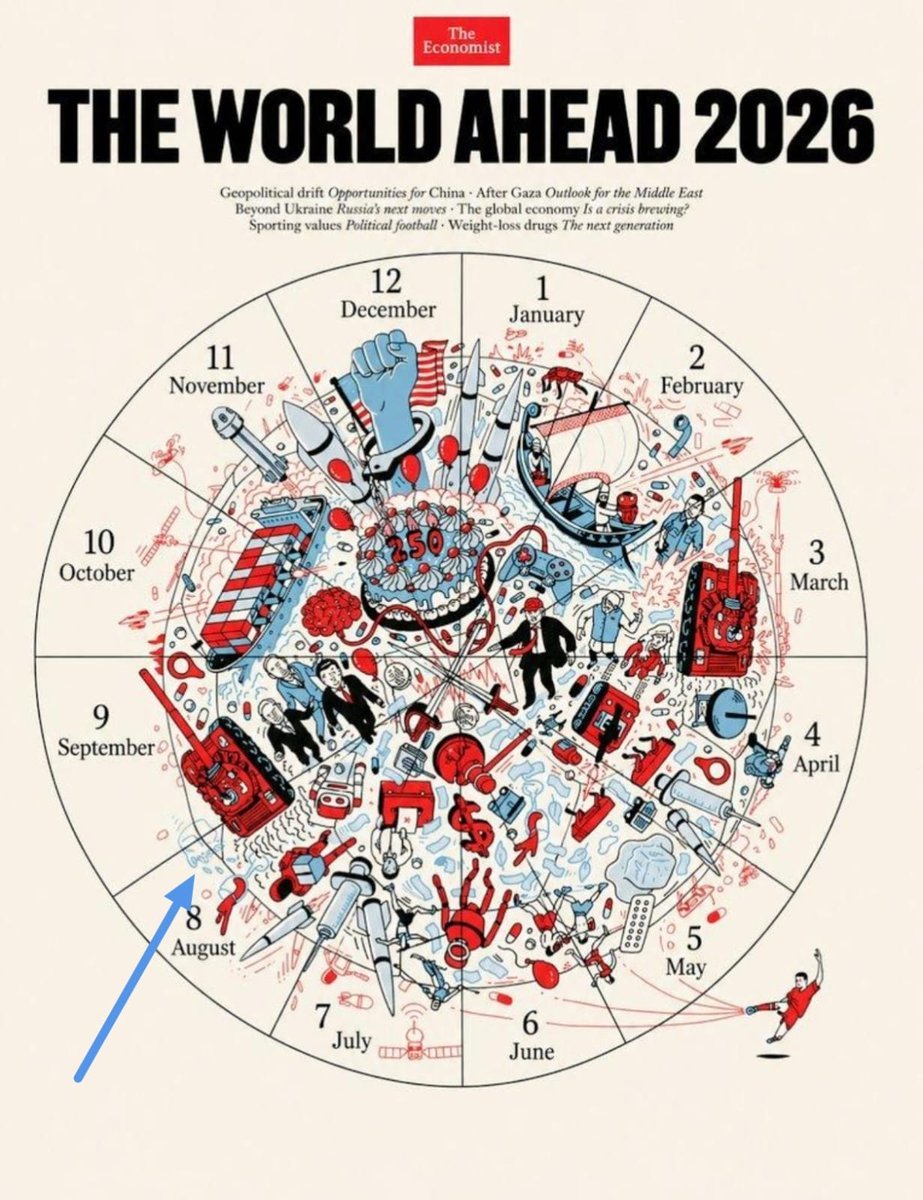
Go ahead and zoom into September. The tank that's present in March with its turret starting at the end of Feb and body finishing into April is also present in Sepember with back starting end of August.
This means September will be a month of intense war starting end of Aug. And in October container ships will be used to fight the war? Anyway a shipping crisis seems imminent again.
See, predicting DS run geopolitics isn't that difficult. Just need to look into the clues they hide and publish for their elite friends using their media for them to make money of every event.
So many Man City fans in denial. Here are the facts. Your club is state owned in all but name. And the UK Government’s desire to preserve business ties with Abu Dhabi has compromised the premier league. Why do you think there has been no conclusion to the 115 charges?
1/ Manchester City is owned by City Football Group (CFG), which is 81% owned by Newton Investment and Development LLC.
2/ Newton is a private company wholly owned by Sheikh Mansour bin Zayed Al Nahyan. Case closed, right? A private individual using private money. Except, it isn't that simple.
3/ Sheikh Mansour isn't just a random billionaire. He is the Vice President and Deputy Prime Minister of the UAE, and a member of Abu Dhabi’s ruling royal family.
4/ In absolute monarchies like Abu Dhabi, the line between personal royal wealth and state wealth does not exist. The state's assets and the royal family's assets flow from the same pipeline.
5/ Look at the sponsors. City’s biggest deals—Etihad Airways, Etisalat, and Experience Abu Dhabi—are all UAE state-owned or state-backed enterprises.
6/ This creates a closed loop: A top UAE state official buys a club, and UAE state companies pump hundreds of millions into it. It functions entirely as a soft-power vehicle for the nation.
7/ Calling City "privately owned" is a corporate fig leaf. When the owner is the state leadership, and the funding comes from state companies, it is a state-run project in everything but name
Chỉ vài ngày trước khi xảy ra thảm hoạ, một vlogger đã chia sẻ thông tin về các dự án thủy điện đại quy mô mà Trung Quốc đang xây dựng ở phía Nepal.
Đây chính là vùng biên giới Tây Tạng (thuộc TQ) và Nepal bị thảm hoạ lũ lụt ngày hôm qua, và hình ảnh này cũng có thể là một trong những nguyên nhân chính.
Việc xây dựng công trình diễn ra với những vụ nổ mìn liên tục, thiếu các biện pháp an toàn và hoàn toàn phớt lờ các quy chuẩn về môi trường.
Trung Quốc cũng đã xây dựng hàng trăm con đập theo cách thức tương tự tại vùng Tây Tạng mà họ đang kiểm soát.
Ngày hôm qua, chính phủ Nepal tuyên bố nguyên nhân chính là do "một trận động đất 4.4 richter đã làm vỡ hồ chứa băng trên thượng nguồn khiến dòng nước khổng lồ từ trên cao ập xuống gây thiêt mạng và mất tích hàng trăm người." Liệu có đáng tin ???
Trong khi đó New York Times đưa tin Một khối băng rộng~600m tách khỏi sông băng ở độ cao 5.200m, rơi gần 1km xuống thung lũng và cú va chạm mạnh đến mức máy đo ghi nhận rung chấn tương đương động đất 5.2 độ.
Băng+đá chặn dòng sông Lhende Khola. khiến nước dồn ứ, rồi vỡ, một bức tường bùn và mảnh đá quét sạch làng mạc, cầu, thủy điện... ở Rasuwa (Nepal) và Gyirong (Tây Tạng).
Nhiều clip cho thấy có sự tác động chặn các đập đầu nguồn để sửa chửa mở rộng các đập thủy điện ở phía dưới.
Rung chấn do nổ mìn - Lượng nước tích tụ vượt quá sức chịu đựng của các hồ thiên nhiên lâu đời trên đỉnh núi khiến nó bị vỡ (clip 2) chú ý trong clip này có tiếng người theo dõi hồ chứa và la hét khi hồ chứa trên đỉnh núi bị vỡ.( Anh Huy )
"CHINA IS BUILDING A GEOLOGICAL TIME BOMB ABOVE INDIA"
China is currently building the world's largest super-dam just kilometers from the Indian border. But now, even Chinese scientists are raising the alarm. If this $167 billion megaproject fails, it could unleash a catastrophic "water bomb" on Northeast India and Bangladesh. Follow for more videos
#ChinaDam #Geopolitics #IndiaChina #Brahmaputra #currentaffairs
Sources: A study published in Sedimentary Geology and Tethyan Geology found that the Medog Dam site sits directly above the active Paizhen Fault.
Moore's Law is dead. China just buried it.
CHINA has just crushed the MICROCHIP industry and western industry is trying to suppress the news
>>
At ISCAS 2026, Huawei dropped a bomb on the global chip
industry: a new physics law called "t Scaling"
Here's the genius part
For 60 years, chipmakers shrunk transistors flat. At 3nm, quantum tunneling kills the game. Even Apple and Nvidia hit a wall.
Huawei's answer? Don't shrink. FOLD. Stack transistors vertically. Crush signal distance by 90%. Make geometry irrelevant - make TIME the new metricswer?
Receipts 381 chips already shipped
Current density = 2nm equivalent
2031 target = 1.4nm (5-10 years ahead of West)
$20 BILLION saved per fab
NO EUV machines required
Translation: Every US sanction. Every Dutch EUV ban.
Every chip war headline. Just became obsolete.
They blocked the road. China built a highway.
Quiero que le deis la máxima difusión posible al mayor ROBO de Argentina de la historia.
4 minutos y 21 segundos de vergüenza.
QUE VEA TODO EL MUNDO COMO AYUDAN A LOS ARGENTINOS. https://t.co/ZEhZTKj7W6