Hallo! Buat temen temen yang mau delivery barang dari china ke indonesia atau domestic cargo dan trucking bisa menghubungi layanan berikut ya. Boleh tanya tanya dlu. Kalau mau pembelian barang dari china, bisa juga tanya tanya🥰 pengiriman cepat gak bikin degdegan🥰 thankyou
Pretty insane PhD job market spillover problem in China.
Shenzhen Middle School has over 100 teachers with a PhD, and 150 graduates of Tsinghua/PKU, 100+ alum of Harvard, Oxford, Cambridge
You don’t need a PhD in Electrical Engineering from Tsinghua to teach middle school math…. but the job market in China basically forces that lol
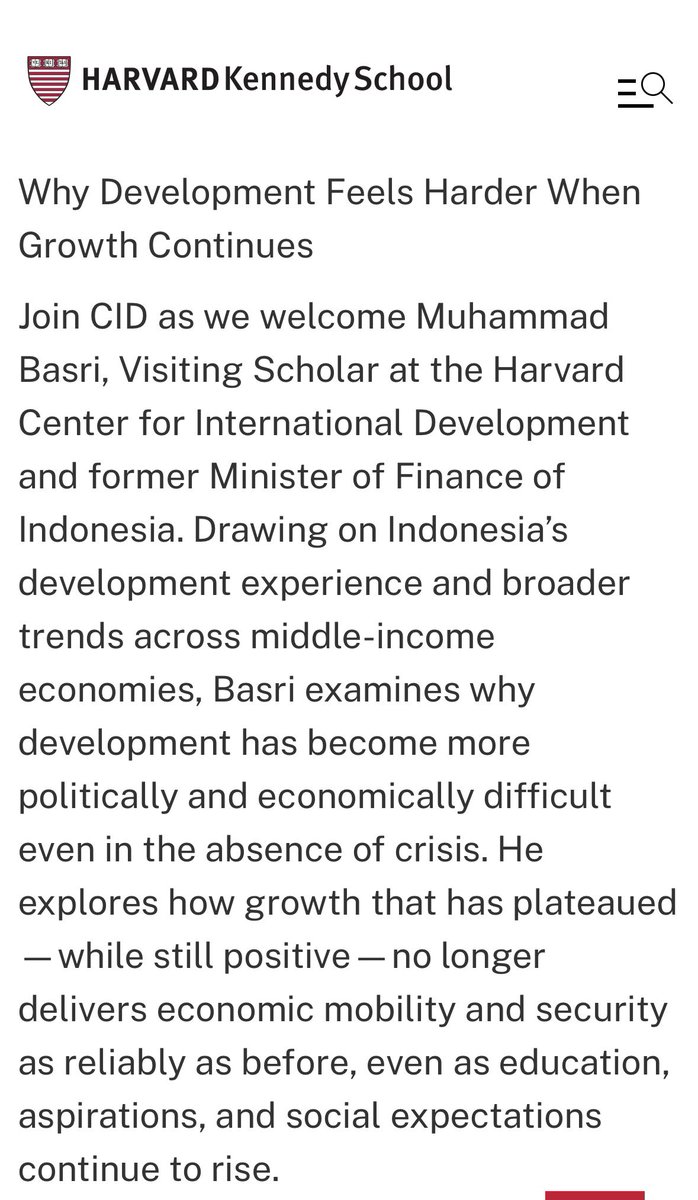
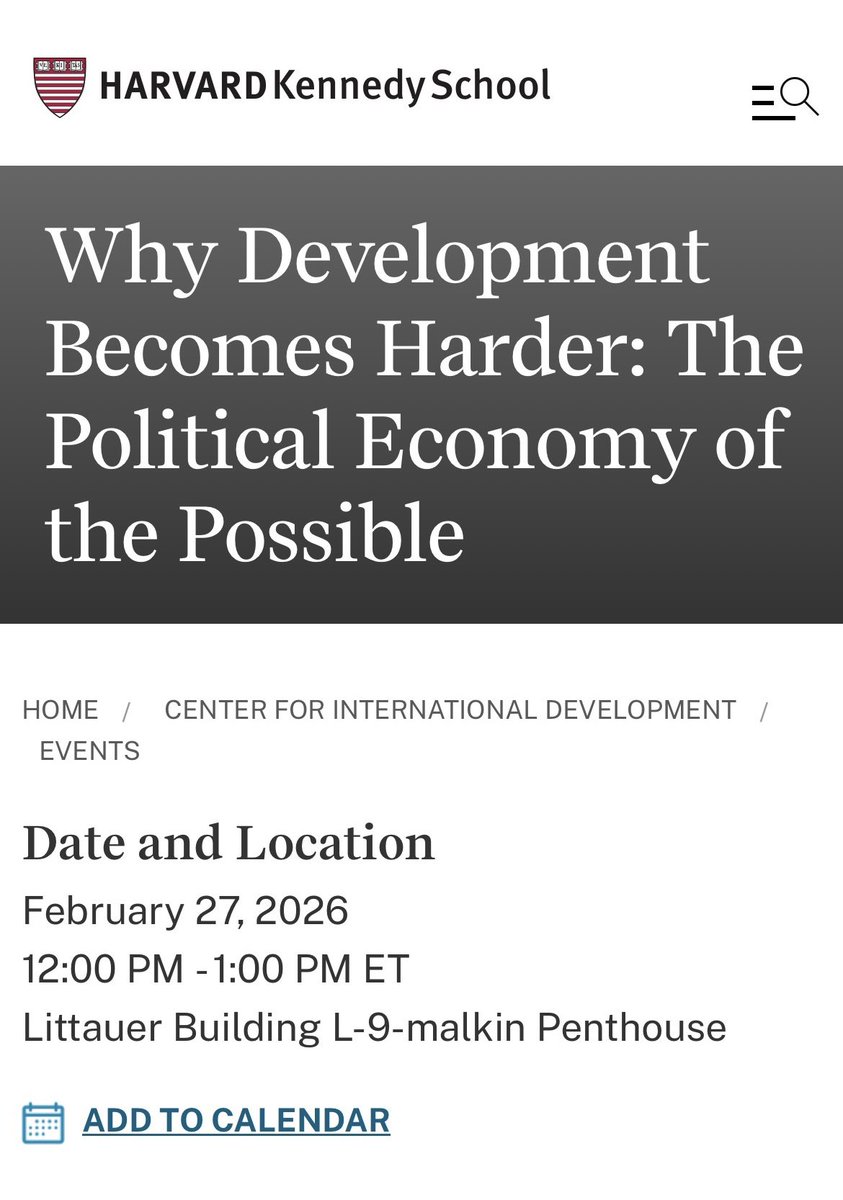
Bagi mahasiswa ekonomi yang tertarik, saya akan memberikan seminar di Harvard CID speaker series Feb 27, jam 12-1pm EST. Topiknya: Why Development Becomes Harder: The Political Economy of the Possible. Untuk yang tidak di Harvard bisa mengikuti secara virtual . Registrasi: https://t.co/ceJbL2A73p
🚨 BREAKING NEWS :
Setelah beberapa waktu lalu NASA berhasil menangkap gambar objek luar angkasa 3I/ATLAS dan merekam frekuensi suara, akhirnya NASA berhasil mengenkripsi gelombang suara tersebut
SOUND ON 🔊
use headphones for better experience
📦 Can industrial policy work? Yes—the East Asian experience shows it can (at least partially).
But its success rests on a key condition: labor control.
🇯🇵🇰🇷🇹🇼 Japan, South Korea, and Taiwan industrialized rapidly under authoritarian or semi-authoritarian regimes. Wages and labor rights were systematically repressed to favor capital accumulation and export competitiveness.
This was especially stark in South Korea during the 1980s–1990s, when unions clashed with the state and business. (If you’ve watched Squid Game, it’s in the backstory of Seong Gi-hun.)
⚠️ Authoritarianism wasn’t incidental—it was functional.
Not all authoritarian regimes succeed with industrial policy, but successful cases relied on the ability to suppress real wages and labor rights.
🇦🇷 This is why Latin America’s Big Push programs failed: their political base—urban working-class voters (e.g., Peronistas)—couldn’t sustain the wage repression required. The strategy collapsed under its own contradiction.
💥 You can’t push industrialization with cheap labor and depend politically on those who demand higher wages. The internal logic breaks. Latin America’s populism was a road to nowhere.
As far as I can tell, there are no examples of country-wide industrial policy success where real wages (and consumption) were not kept relatively low.
🇨🇳 China is not so different today.
🧾 Consumption as a share of GDP remains exceptionally low—even compared to countries at similar stages of development.
That wouldn’t be the case if China were a democracy. High savings and low consumption are features, not bugs, of its growth model.
🤔 That’s why I’m puzzled when advocates defend industrial policy from a progressive position that favors high wages and democratic institutions. You can’t have your cake and eat it too.
📚 This point isn’t new: @pseudoerasmus has made it for years. And long before him, it was central to Marx, Gerschenkron, and Dobb—and deeply embedded in the logic of socialist Big Push programs, from Stalin to Mao.