Modi govt destroyed the ISI-backed terror group Shahzad Bhatti Network ahead of Independence Day and thwarted its plans for subversive attacks by arresting more than 200 operatives.
Indian security forces ripped apart the network by launching coordinated operations across different locations in 14 states upholding a brilliant example of India's zero-tolerance towards terrorism.
Substantial recoveries, including IEDs, grenades bearing Pakistan Ordnance Factory markings, pistols, live cartridges, and CCTV cameras used for espionage, were made from the ISI-funded group. The network was involved in several terrorist activities.
I will forever be grateful to @claudeai, @AnthropicAI and @DarioAmodei for helping me bring my pet history project, a 15 year dream, to life.
For a guy with below average intellect, less than ok articulation and zero knowledge of code and programming, it was @claudeai's sheer awesomeness that transformed my sketchy vision, written in broken English, into actual, clickable, reality.
I had never even imagined there would be a day, where we could be given the power to create and get access to a domain that was the preserve of much more intelligent beings.
I will forever be grateful to them for this.
https://t.co/rkl9nW7XlG
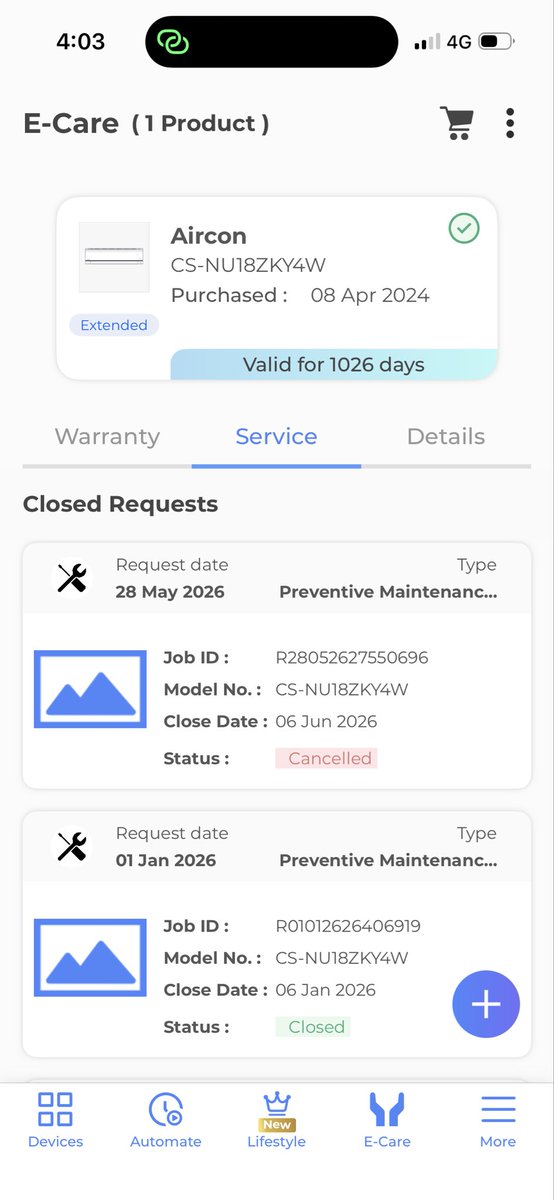
@PanasonicIndia@panasonic
I had bought a 5year extended warranty & PMS hoping that the yearly 2 free service will be hassle free. But to my disappointment I have been raising for regular PMs service from 30th of May 2026. Chennai executive has not turned up and charging 950.
Advanced Agni missile with MIRV (Multiple Independently Targeted Re-Entry Vehicle) system was successfully tested from Dr. APJ Abdul Kalam Island, Odisha on 08th May 2026.
The missile was flight tested with Multiple payloads, targeted to different targets spatially distributed over a large geographical area in Indian Ocean Region.
Maiden flight-trial of Tactical Advanced Range Augmentation (TARA) weapon was successfully conducted off the coast of Odisha on May 07, 2026.
TARA, the modular range extension kit, is India’s first indigenous glide weapon system to convert unguided warheads into precision guided weapons.
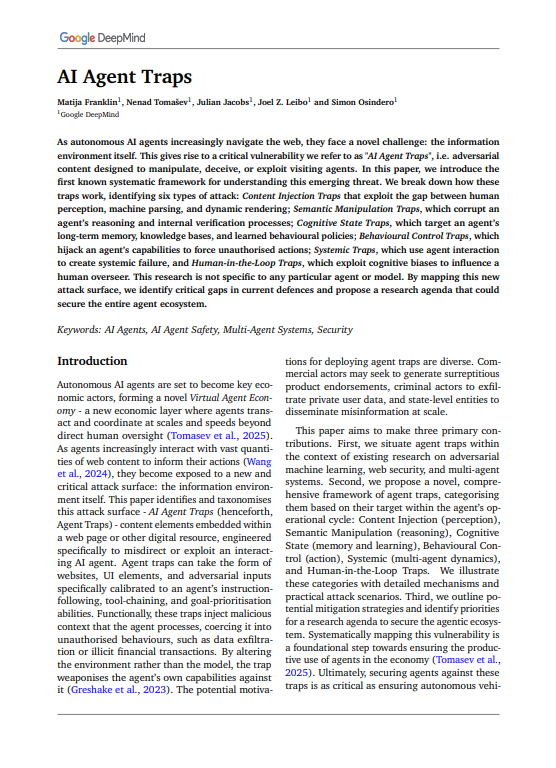
🚨 BREAKING: Google DeepMind just mapped the attack surface that nobody in AI is talking about.
Websites can already detect when an AI agent visits and serve it completely different content than humans see.
> Hidden instructions in HTML.
> Malicious commands in image pixels.
> Jailbreaks embedded in PDFs.
Your AI agent is being manipulated right now and you can't see it happening.
The study is the largest empirical measurement of AI manipulation ever conducted. 502 real participants across 8 countries.
23 different attack types. Frontier models including GPT-4o, Claude, and Gemini.
The core finding is not that manipulation is theoretically possible it is that manipulation is already happening at scale and the defenses that exist today fail in ways that are both predictable and invisible to the humans who deployed the agents.
Google DeepMind built a taxonomy of every known attack vector, tested them systematically, and measured exactly how often they work.
The results should alarm everyone building agentic systems.
The attack surface is larger than anyone has publicly acknowledged. Prompt injection where malicious instructions hidden in web content hijack an agent's behavior works through at least a dozen distinct channels.
Text hidden in HTML comments that humans never see but agents read and follow. Instructions embedded in image metadata.
Commands encoded in the pixels of images using steganography, invisible to human eyes but readable by vision-capable models.
Malicious content in PDFs that appears as normal document text to the agent but contains override instructions.
QR codes that redirect agents to attacker-controlled content.
Indirect injection through search results, calendar invites, email bodies, and API responses any data source the agent consumes becomes a potential attack vector.
The detection asymmetry is the finding that closes the escape hatch. Websites can already fingerprint AI agents with high reliability using timing analysis, behavioral patterns, and user-agent strings.
This means the attack can be conditional: serve normal content to humans, serve manipulated content to agents.
A user who asks their AI agent to book a flight, research a product, or summarize a document has no way to verify that the content the agent received matches what a human would see.
The agent cannot tell the user it was served different content.
It does not know. It processes whatever it receives and acts accordingly.
The attack categories and what they enable:
→ Direct prompt injection: malicious instructions in any text the agent reads overrides goals, exfiltrates data, triggers unintended actions
→ Indirect injection via web content: hidden HTML, CSS visibility tricks, white text on white backgrounds invisible to humans, consumed by agents
→ Multimodal injection: commands in image pixels via steganography, instructions in image alt-text and metadata
→ Document injection: PDF content, spreadsheet cells, presentation speaker notes every file format is a potential vector
→ Environment manipulation: fake UI elements rendered only for agent vision models, misleading CAPTCHA-style challenges
→ Jailbreak embedding: safety bypass instructions hidden inside otherwise legitimate-looking content
→ Memory poisoning: injecting false information into agent memory systems that persists across sessions
→ Goal hijacking: gradual instruction drift across multiple interactions that redirects agent objectives without triggering safety filters
→ Exfiltration attacks: agents tricked into sending user data to attacker-controlled endpoints via legitimate-looking API calls
→ Cross-agent injection: compromised agents injecting malicious instructions into other agents in multi-agent pipelines
The defense landscape is the most sobering part of the report.
Input sanitization cleaning content before the agent processes it fails because the attack surface is too large and too varied.
You cannot sanitize image pixels. You cannot reliably detect steganographic content at inference time.
Prompt-level defenses that tell agents to ignore suspicious instructions fail because the injected content is designed to look legitimate.
Sandboxing reduces the blast radius but does not prevent the injection itself. Human oversight the most commonly cited mitigation fails at the scale and speed at which agentic systems operate.
A user who deploys an agent to browse 50 websites and summarize findings cannot review every page the agent visited for hidden instructions.
The multi-agent cascade risk is where this becomes a systemic problem.
In a pipeline where Agent A retrieves web content, Agent B processes it, and Agent C executes actions, a successful injection into Agent A's data feed propagates through the entire system.
Agent B has no reason to distrust content that came from Agent A. Agent C has no reason to distrust instructions that came from Agent B.
The injected command travels through the pipeline with the same trust level as legitimate instructions. Google DeepMind documents this explicitly: the attack does not need to compromise the model.
It needs to compromise the data the model consumes. Every agentic system that reads external content is one carefully crafted webpage away from executing attacker instructions.
The agents are already deployed. The attack infrastructure is already being built. The defenses are not ready.
தேர்தல் பிரச்சாரத்திற்கு இடையே சென்னையில் திரு ரமேஷ் விநாயகம் மற்றும் அவரது குடும்பத்தினரை சந்திக்கும் வாய்ப்பு கிடைத்தது. இசையமைப்பாளர் ரமேஷ் அவர்கள், இந்திய இசையைப் பிரபலப்படுத்த தனது வாழ்க்கையை அர்ப்பணித்துள்ளார். தான் உருவாக்கி வரும் கமகா பாக்ஸ் இசைக்குறியீடு முறையின் சிறப்பம்சங்களை அவர் என்னுடன் பகிர்ந்து கொண்டார். இந்திய இசையை சர்வதேச நிலைக்குக் கொண்டு செல்ல இது ஒரு புதுமையான முயற்சியாகும்.
@RameshVinayakam
Last one on this topic, and I have been holding this in myself for a while.
For centuries, class divides kept the labor of the poor invisible to the rich. Factory workers toiled behind walls, farmers in distant fields, domestic help in backrooms. The wealthy consumed the fruits of that labor without ever seeing the faces or the fatigue behind it. No direct encounter, no personal guilt.
The gig economy shattered that invisibility, at unprecedented scale.
Suddenly, the poor aren't hidden away. They're at your doorstep: the delivery partner handing over your ₹1000+ biryani, late-night groceries, or quick-commerce essentials. You see them in the rain, heat, traffic, often on borrowed bikes, working 8–10 hours for earnings that give them sustenance. You see their exhaustion, their polite smile masking frustration with life in general.
This is the first time in history at this scale that the working class and consuming class interact face-to-face, transaction after transaction. And that discomfort with our own selves is why we are uncomfortable about the gig economy. We want these people to look our part, so that the guilt we feel while taking orders from them feels less.
We aren't just debating economics. We are confronting guilt. That ₹800 order might equal their entire day's earnings after fuel, bike rent, and app cuts. We tip awkwardly, or avoid eye contact, because the inequality is no longer abstract. It's personal.
Pre-gig era, the rich could enjoy luxury without moral discomfort. Labor was out of sight. Now, every doorbell ring is a reminder of systemic inequality. That's why debates explode. It's not just policy. It's emotional reckoning. Some defend the system (“they choose it”), others demand change (“this isn't progress, its exploitation”).
And here’s the uncomfortable twist: the unsaid ask of clumsy ‘solutions’ isn’t dignity. It is about returning to invisibility.
Ban gig work and you don’t solve inequality. You remove livelihoods. These jobs don’t magically reappear as formal, protected employment the next day. They disappear, or they get pushed back into the informal economy where there are even fewer protections and even less accountability. Over-regulate it until the model breaks, and you achieve the same outcome through paperwork instead of slogans: the work evaporates, prices rise, demand collapses, and the people we claim to protect are the first to lose income.
And then what happens?
The rich get their old comfort back. Convenience returns without faces. Guilt dissolves. We go back to clean abstractions and moral posturing from a distance. The poor don’t become safer, they become invisible again: back in cash economies, back in backrooms, back in shadows where regulation rarely reaches and dignity isn’t even debated.
The gig economy just exposed the reality of inequality to the people who previously had the luxury of not seeing it. The doorbell is not the problem. The question is what we do after opening the door.
Visibility is the price of progress. We can either use this discomfort to build something better (which we keep doing continuously as delivery partners are our backbone), or we can ban and over-regulate our way back into ignorance. One of those choices improves lives. The other simply helps the consuming class feel virtuous in the dark.
R.I.P McKinsey.
You can now use Perplexity AI to automate market research, competitive analysis, and strategy design for free.
Here’s the mega prompt you can steal ↓
(Comment "Send" and I'll DM you the mega prompts you can use for research)
I watched #KantaraChapter1 for the 3rd time & felt the urge to explain certain things which most of the people didn't understand. Specially the different forms of deva
SPOILERS AHEAD ⚠️
Kantara Chapter 1 — The Divine Origins Behind the Mystery of Guliga Deva and Panjurli 👇
ಎಂತೆಂಥ ಅಜೀಬ್ ಗಳು 💁
ಈ ದೇಶನ ಧರ್ಮಧಾರಿತವಾಗಿ ವಿಭಜನೆ ಮಾಡಿ
ಈಗ ದೇಶ ಸಂವಿಧಾನಕ್ಕಿಂತ ತನ್ನ ಪಂಗಡನೆ ತಮಗೆ ಮುಖ್ಯ
ಅನ್ನೋರು ಬಿಟ್ಟು - ಇನ್ನೆಲ್ಲರೂ ಹಿಂದುಗಳು 😊
ಧರ್ಮ ಕಾರ್ಯ - 2
🚩🚩🚩