@ahadsoab Both Dedhmari (1747) and Hasan (1887) feature detailed accounts of Tahir Rafiqi, as well as the story of his father about how he secured his initiation in absentia into the Suhrawardi Order in Lahore from where the descendants of Bahauddin Zakariya sent him investiture robes.
"In his search for stories within the Valley’s history that has never stopped wounding, Umair Ahmed Khan has written something quietly necessary – a novel that listens where others have only mourned," Usaid Rehmani reviews.
https://t.co/eGrp3QrofU
Translation- "For its date, cross over the water and say: it's the bridge of Saif Khan, whose heart is generous like a river.
I asked Khizr about its year of foundation. He replied: It's the straight path of the people of faith
1081 AH (1670 CE)" 3/3
When Safa Kadal (the fifth bridge on River Jhelum in Srinagar) was first constructed in the 17th century, its foundation stone was laid by the then Mughal governor of Kashmir Saif Khan. The versified Persian inscription on the stone likened the bridge with the metaphorical 1/3
'sirat-ul-mustageem' or the straight path mentioned in the Quran.
Upon the bridge's reconstruction, the foundation stone was removed and relocated to a safe place and no one seems to have photographed it (or at least shared its picture publicly) until today. 2/3
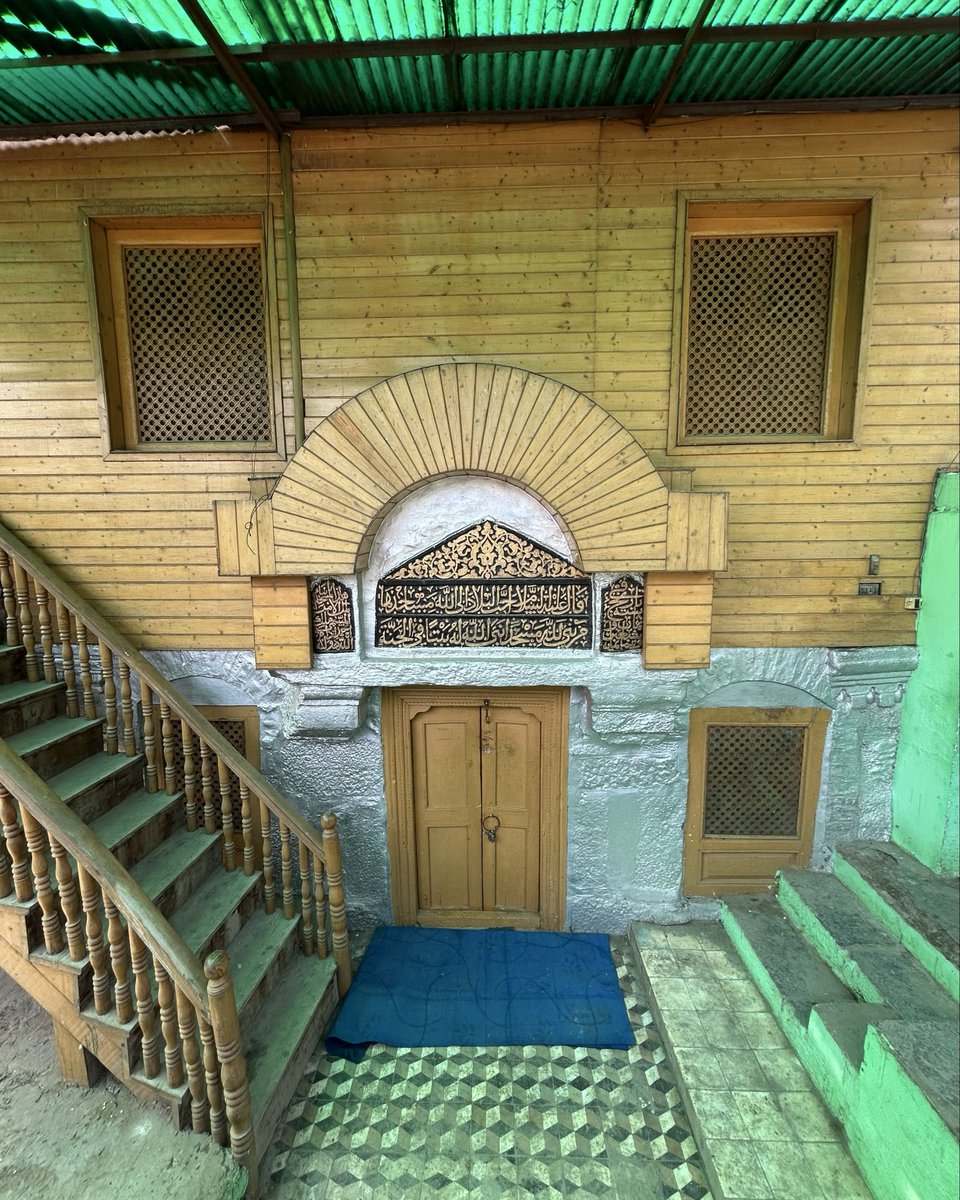
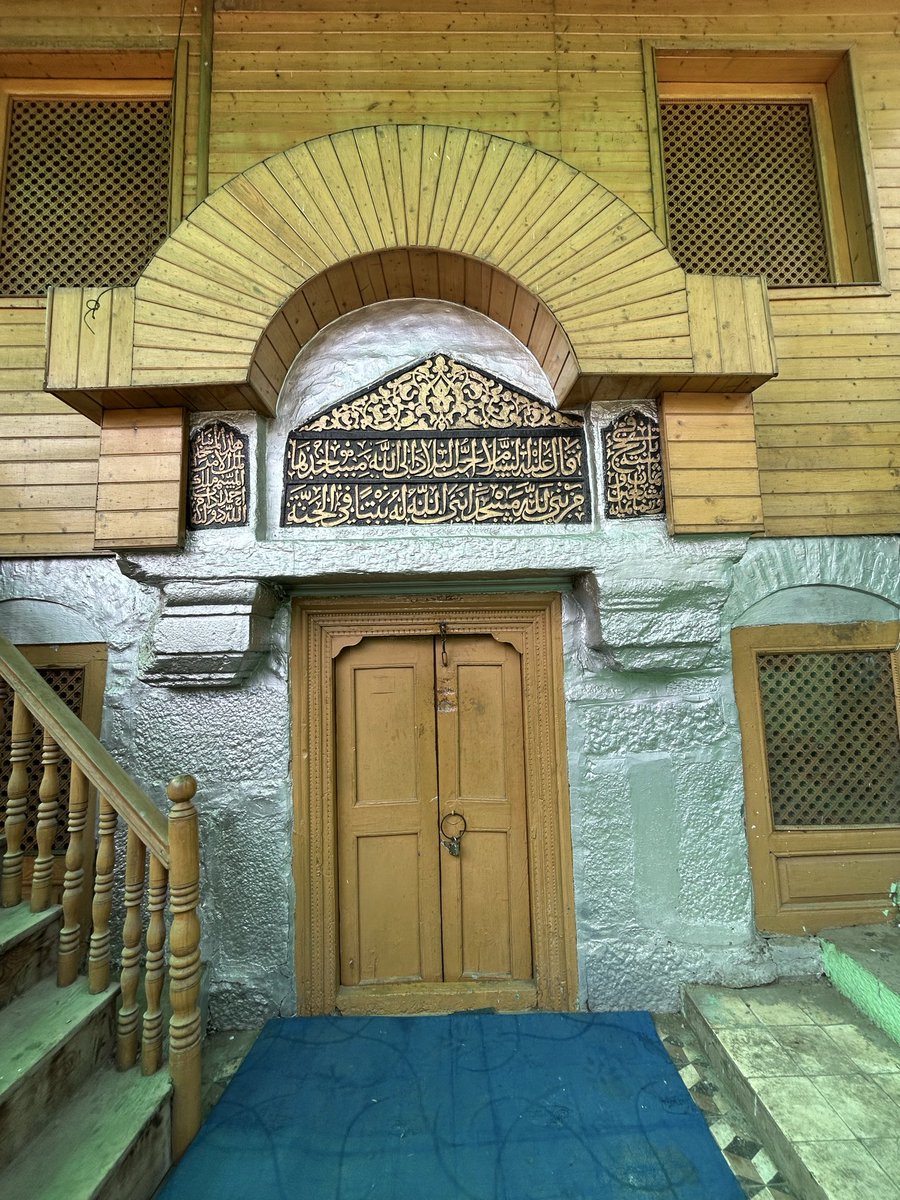
allegiance to Suharwardi Order. Previously, he had been associated with Kubrawi Order of Mir Sayyid Ali Hamadani. The verses engraved on the tympanum above its door are among the earliest hadith inscriptions found in Kashmir. There’s too much history packed in this small hospice.
This small prayer room is likely to be the earliest surviving lodges where the Sufi saints of Kashmir would retreat into a mystical seclusion and perform self-abnegation and penances. It was also among the favourite haunts of Hamza Raina (Makhdoom) in Srinagar
after he left his ancestral home in Tujjar, Sopore. It was here that he met the famous Jalaluddin Bukhari, the towering Sufi figure associated with the Suharwardi Order. Bukhari had come from the town Uch Sharif in Multan, Pakistan. In this room, Hamza (ra) pledged ‘bayat’