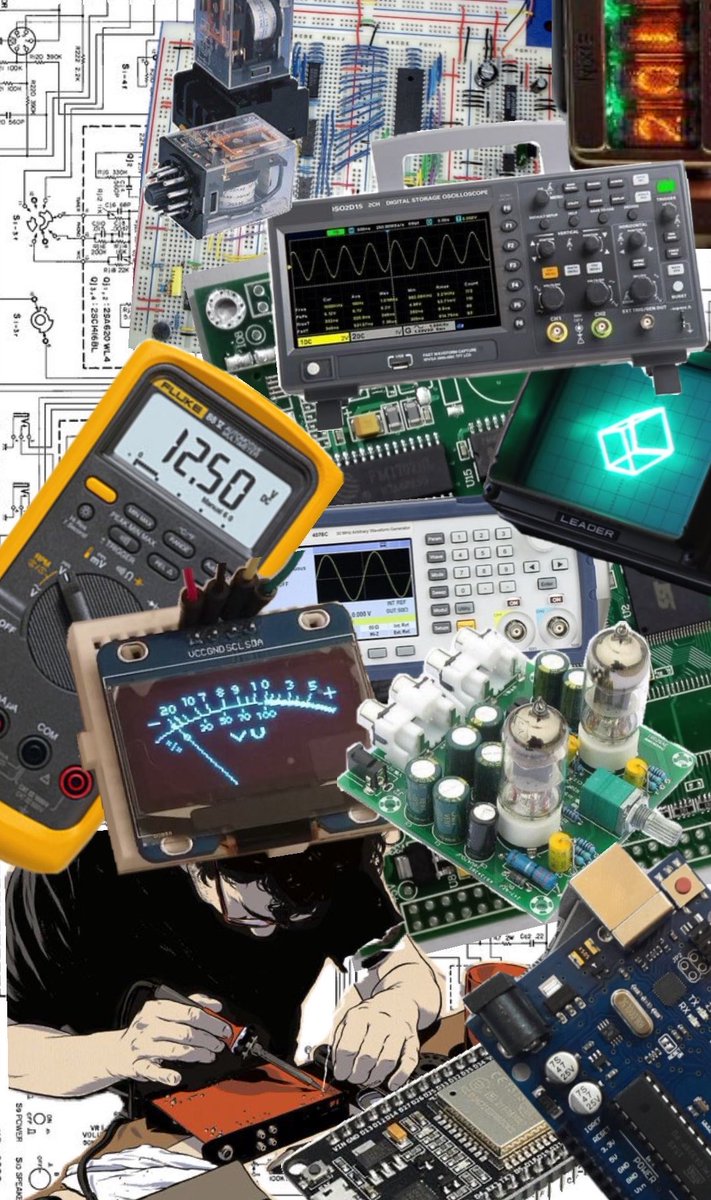
study electronics.
especially if you already know software.
because electronics is where code starts touching reality.
start with the fundamentals:
• voltage + current → understand how electrical energy actually moves
• resistors + capacitors + inductors → the basic building blocks of circuits
• diodes + transistors → learn how we switch, amplify, and control signals
• digital logic → gates, registers, clocks, state machines
• microcontrollers → make sensors, motors, displays, and machines respond to code
• communication → uart, i2c, spi, can. learn how hardware talks
• power electronics → mosfets, converters, motor drivers, power supplies
• pcb design → turn breadboard experiments into actual hardware
then stop studying and build.
> read a sensor.
> drive a motor.
> design a power supply.
> build an esp32 board.
> burn a mosfet.
> figure out why.
> build it again.
electronics changes how you look at technology.
• a robot stops being a black box.
• a drone becomes motors + escs + sensors + compute.
• a battery system becomes cells + bms + power electronics.
• a computer becomes billions of tiny switches manipulating signals.
software teaches you how to control information.
electronics teaches you how to control electrons.
learn both and you can start building machines.