@drbetulsayan Ben Kürşat Tüzmen geldiğinde Burhan Kuzu geldiğinde ve İlknur İnceöz geldiğinde de Türk heyetlerinin rehberliğini yaptım ama onların hepsi kibar ve makamlarını taşıyan kimselerdi. Bu gerçekten bambaşka biriydi. Siz olumsuz cevap verirseniz kinle bir bakışı varki görmeniz lazım.👇
BIG MOMENT FOR AMD🚨THIS WEEK: AMD HAS REACHED ABOVE 90% PARITY ON UPSTREAM vLLM GATING TEST GROUPS!
This was after months of hard work from AMD maintainers, specifically Andreas, and also vLLM CI Lead Kevin, along with SemiAnalysis getting vLLM enough CI AMD GPUs after months of upstream maintainer complaints about not having enough AMD GPUs on vLLM and AMD CI fleet-wide stability issues. (1/3)🧵
Look who showed up as another AMD Helios system enters the wild! 👋 @OpenAI
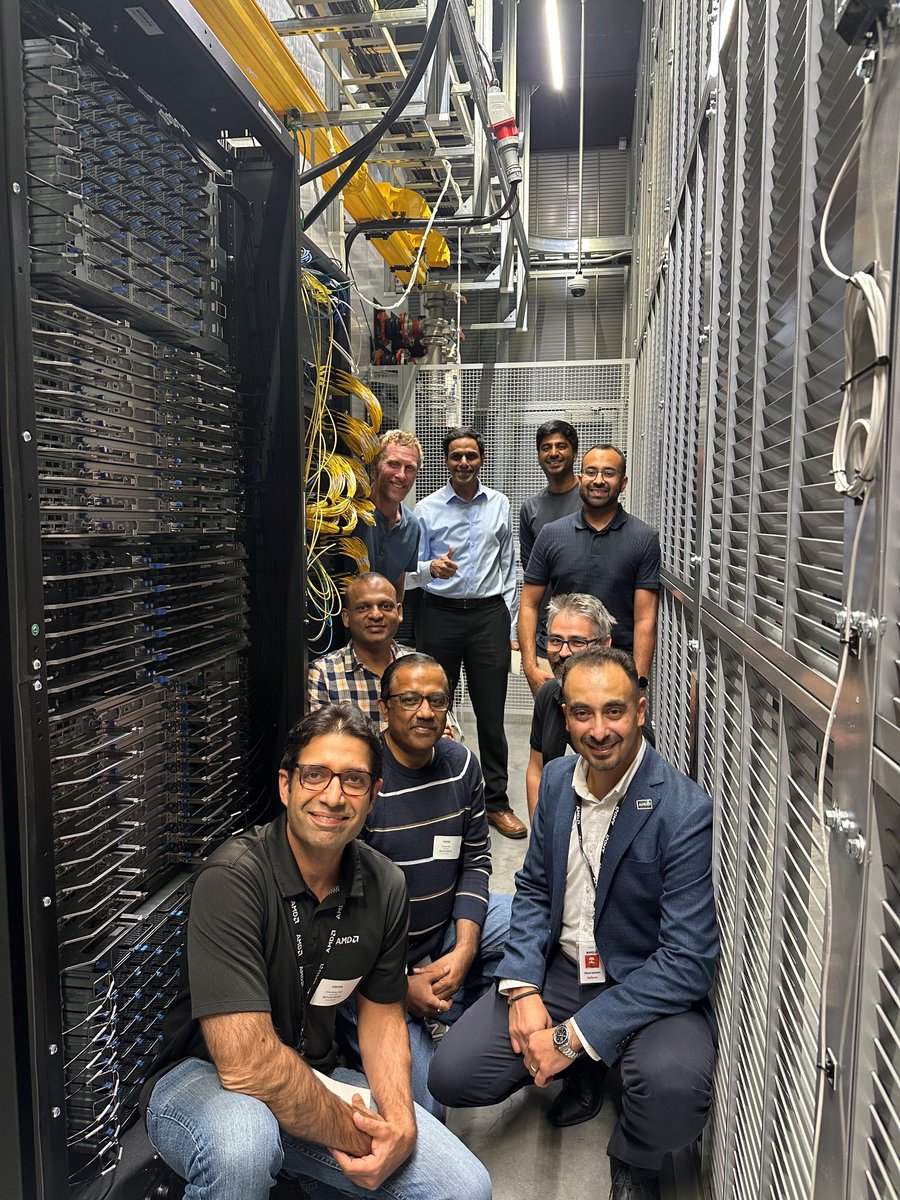
Last week, Vamsi Boppana and @udayruddarraju joined the team for a lab tour as we continue pushing the frontier of AI infrastructure, together.
Edgewater channel checks claim AMD is working with Marvell on a TPU v10 design.
AMD would provide the compute die, Marvell would provided the I/O.
Targeting sometime late CY28 or CY29 as a competitive alternative to Broadcom.
$AVGO $AMD $GOOGL
MI355X IS UP TO 1.7X BETTER 💰️PERF PER DOLLAR 💰️THAN DGX B300. The AMD Mainland China UMBP team co-designed, in collaboration with Alibaba & the @sgl_project community, a new feature in SGLang that removes the duplicated KVCache contained between local L2 DRAM & distributed L3 DRAM, allowing for up to 2x more KVCache to be stored in DRAM. This feature is called UnifiedRadixCache external cache.
But importantly, this marks the trend of AMD increasingly being first-class co-designed for new features in widely used top production engines like SGLang.
AMD has followed up its Advancing AI data release with a new blog and a white paper on EPYC Venice that attempts to put real detail behind the claims first made on stage in July. The 2.24x platform and 1.2x per-core advantages over NVIDIA Vera in SPECrate 2026 Integer now come with estimated scores, compiler versions, memory configurations, and all 14 subtests broken out.
The generational data is impressive, with the 256-core EPYC 9996 landing between roughly 1.5x and 1.8x over the 192-core Turin flagship across Redis, NGINX, MySQL, MongoDB, and server-side Java, all measured by AMD on Venice silicon.
@AMD also rebuilt its 100 kW rack model around SPEC CPU 2026, which moved Venice to 3.4x over Vera and nudged its own Turin figure down slightly.
The core story is the same one AMD told at Advancing AI, now with some supporting detail. The agents-per-watt and performance-per-watt claims from the keynote have no backing data in this paper, interestingly. All of it is AMD internal testing or estimates, so independent results on shipping systems from both vendors are what will settle the debate.
Blog: https://t.co/hJPGcnQMeI
White paper: https://t.co/0gDtBG1Jq9