I am thrilled to share the 2nd chapter of my PhD with @ADSteinbrenner. In collaboration with @TiszaPatrick, we demonstrated that the LRR-RLP INR is the missing molecular link between caterpillar recognition and predatory wasp recruitment in the field. A thread 1/6
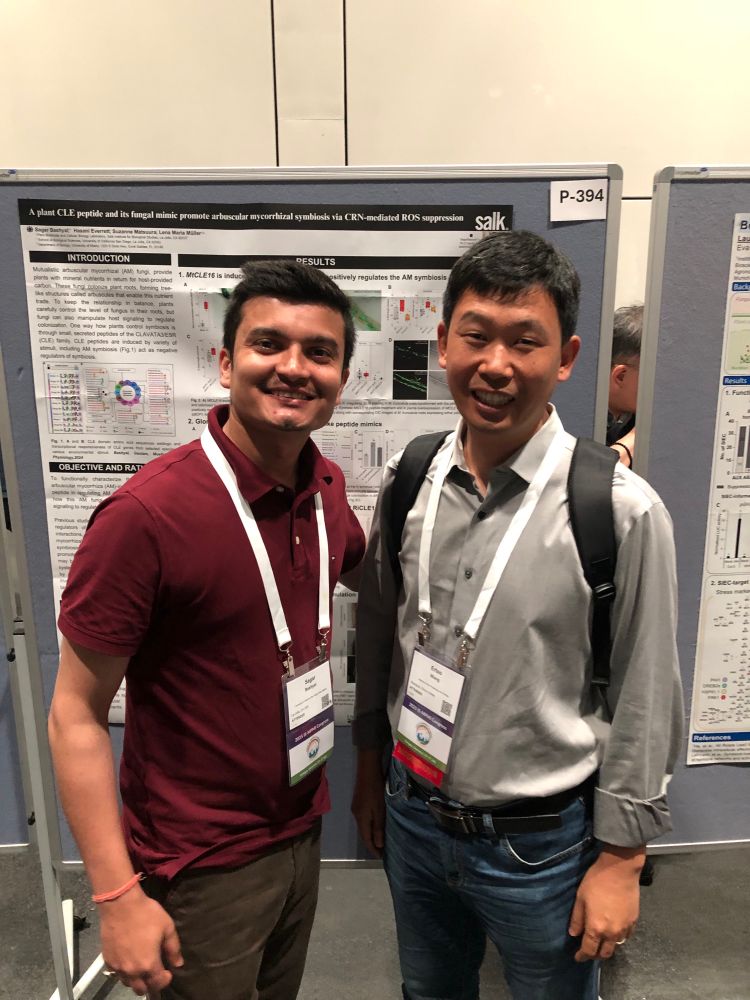
Now that Im finally here, Im excited to announce I've joined @salkinstitute as a postdoct with Dr. Lena Mueller. Keep your eyes open for everything AMF symbiosis, peptide biogenesis, and the apoplast!
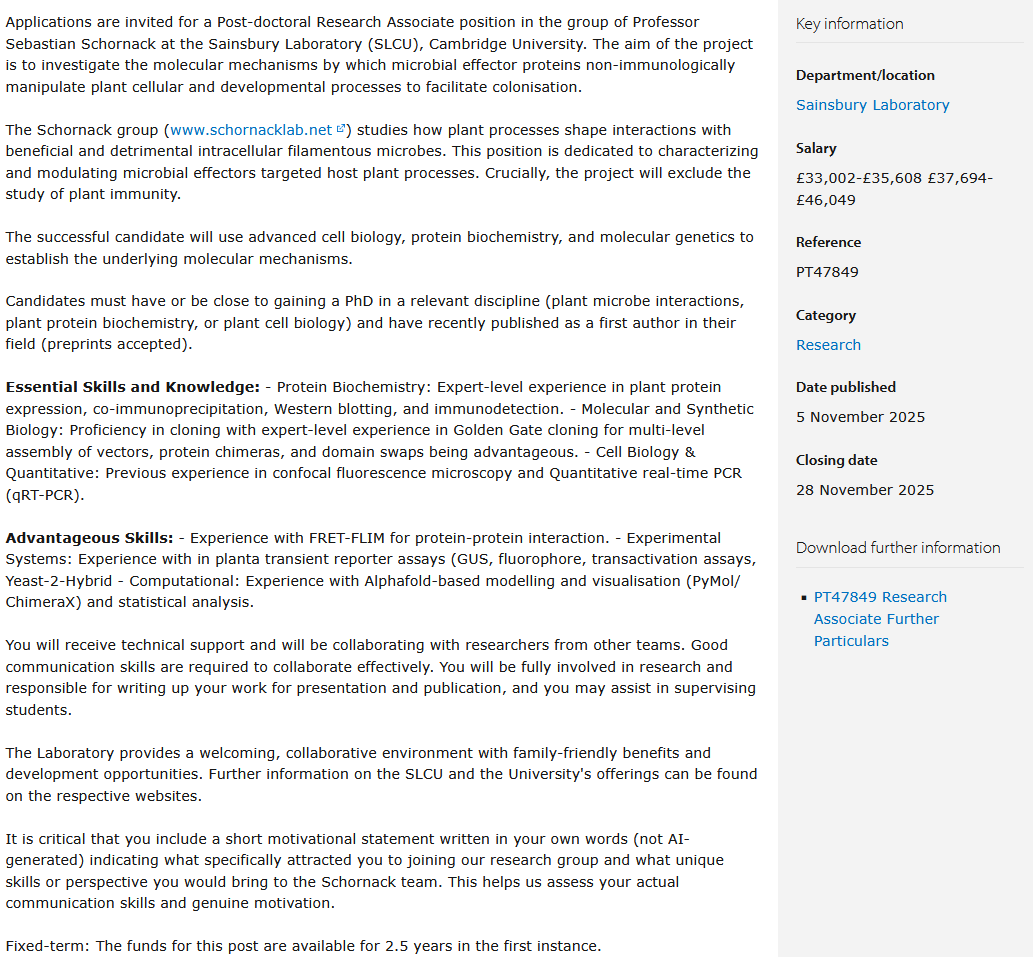
Plz RP. Come join us as (soon-to be) postdoc @slcuplants@Cambridge_Uni to study effector-targeted plant processes impacting plant cell biology and development.
https://t.co/csNTyCTK2d
https://t.co/GsUdcCfyNK
I am thrilled to share the peer reviewed version of our work on how the circadian clock gates In11-induced responses to tightly regulate induced antiherbivore responses. https://t.co/95jb3dwjpO
I am excited to share the first chapter of doctoral dissertation. Have you ever wondered how is time-of-day information integrated into the immune response? We did! A thread 1/13
New opportunity to undertake a PhD in my group @JohnInnesCentre - if you’re interested in plant immunity and evolution check out the link! https://t.co/I6XqUAXY4z
The work from my MSc with @srestrep & in collaboration with @dromius is finally out. We used an integrative approach to follow Phytophthora betacei along while infecting tree tomato. This was in my back burner during my Ph.D, and it materialized thanks to @epiplantpath 🥳
Microscopical and molecular characterization of the infection cycle of Phytophthora betacei during disease development on tree tomato ... https://t.co/E91w7jwqkN #biorxiv_plants
More fruits of studying natural variation in common bean (Phaseolus vulgaris) -- an interesting genetic basis for insensitivity to caterpillars' In11 elicitor 🐛
Our new bioRxiv preprint from star technicians Brian Behnken and Wesley George below 🧵
https://t.co/6euVnsUDVC
I am incredibly proud of this work that was the result of collaborative science with chemical ecology experts Betty Benrey and Ted Turlings at @UniNeuchatel!
I am thrilled to share the 2nd chapter of my PhD with @ADSteinbrenner. In collaboration with @TiszaPatrick, we demonstrated that the LRR-RLP INR is the missing molecular link between caterpillar recognition and predatory wasp recruitment in the field. A thread 1/6
We recently wrote two Preview articles of exciting MPMI papers in Mol Cell and Dev Cell.
Two surprising cases showing different ways to regulate immune receptors in plants -- the cell surface LRR-RK, SYR1 and the intracellular NLR DM2
Short summaries below 🧵🌱 #2025ISMPMI
I'm trying my hardest to post across platforms, but if i can't keep up, please go to @nataliagupa.bsky.social if you want to experience #2025ISMPMI through my lens!
Grateful to be at #2025ISMPMI . Reconnected with my former mentor @carogutj and met Maria, my current PIs mentor-so many cool stories🌱 Loved the energy at the poster session and great chats, including with Ertao Wang whose AMF work continues to inspire.
See our latest work on an LRR-RLP receptor and plant-caterpillar interactions this Wed at #2025ISMPMI
INR attracts predatory wasps in the field!🍀🐛 💀
@nataliagupa presents in CS: Microbe-mediated impacts on plant-parasite interaction (we sneak in among the microbes)
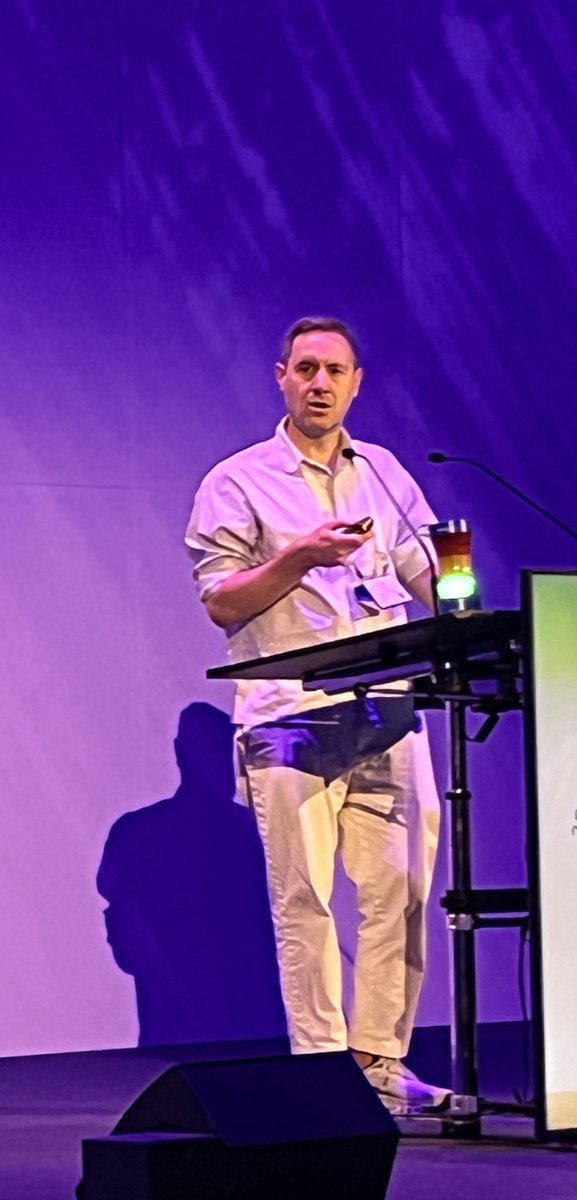
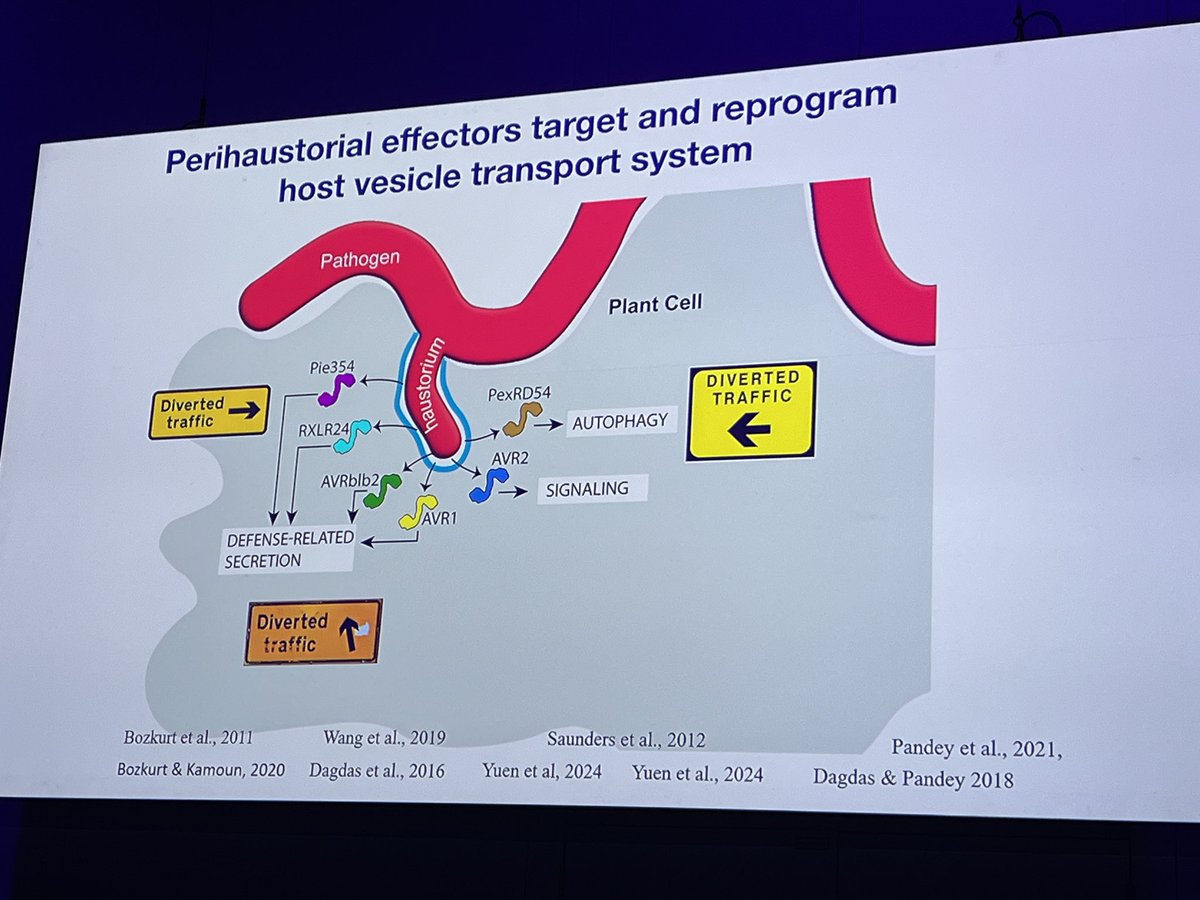
#2025ISMPMI@Tolga_Bzkrt introduces the effector and immune processes occurring at Phytophthora haustoria. The helper NRC4 localises to haustoria and upon activation inserts itself into the extrahaustorial membrane forming punctuate foci.
It seems activated NLRs beep annoyingly.
Day 2 of #2025ISMPMI closing with two of my favorite: cell surface receptors and Phytophthora. Vivianne Vleeshouwers talks about the combined use of effectoromics, PRRs, and intelligent receptor design to enhance plant protection against pathogens.