The first copies of my next book, Principles of Economics, have just rolled off the press!
Preorder yours now to get yours as soon as they ship!
RT & follow to win a free copy!
https://t.co/qHb7lc29Sz
All the books you’ll ever read are but a drop in the ocean of the books you’ll never read.
As Musashi said: “Think deeply of the world, and lightly of yourself.”
After all, you’re just a single node on a really big network…
Thrilled to announce I have finished my third book, Principles of Economics!
Preorder now to receive your copy this May!
Retweet to win a free hardcover copy!
https://t.co/kYe5V737Nz
@EpsilonTheory How tf did Bitcoin cause a world war? You are aware of the endless wars under fiat / central banking right? You understand how creating more money from thin air can help fund wars longer than a sound money would.
Also, how does it impoverish the world?
@OfficialSPGB@odawgfan By this logic, real Capitalism hasn’t been tried before then too since we don’t have true free markets anywhere in the world.
The difference is that almost-Capitalism has resulted in prosperity whereas almost-Socialism has resulted in atrocities over and over again.
@OfficialSPGB@joelcomm “where work was voluntary, and where everyone had free access to what they needed”
So according to your logic, Socialism will never exist as long as scarcity exists. Sounds like Socialism can never exist then, since scarcity is an ever-present economic principle.
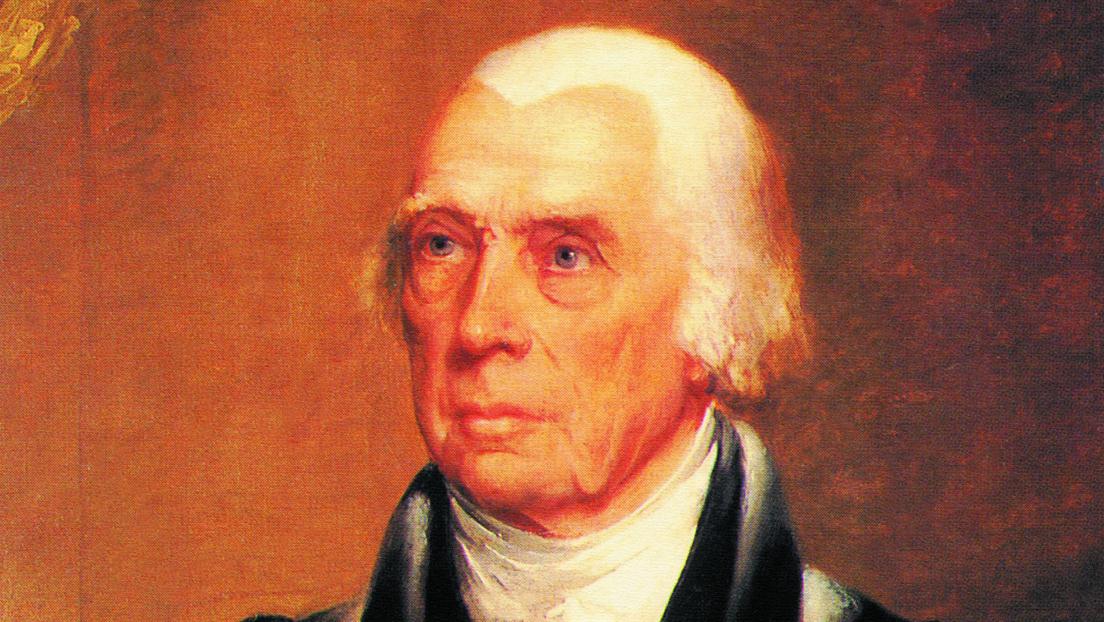
Today in 1817, President James Madison vetoed the Bonus Bill of 1817 – a plan that called for the federal construction of various roads, bridges, and canals throughout the country. In a letter to Congress, the president explained his rationale. Out of all historical writings on constitutional interpretation, I believe it stands today as one of the most important.
Madison’s reasoning was simple - although he personally favored the idea of infrastructure construction, writing that he was “not unaware of the great importance” of such things, he denied the policy’s constitutionality on a federal level. Instead of upholding his own personal proclivities and allowing the Constitution to be undermined, he maintained that the Constitution was one of specific enumerated powers, and the document contained no expressed power for the federal government to do such a thing. “The legislative powers vested in Congress are specified and enumerated in the eighth section of the first article of the Constitution,” he said, “and it does not appear that the power proposed to be exercised by the bill is among the enumerated powers.”
According to Madison, using the Commerce Clause, General Welfare Clause, and Necessary and Proper Clause as justification for the law “would be contrary to the established and consistent rules of interpretation, as rendering the special and careful enumeration of powers which follow the clause nugatory and improper,” adding that an alternative view “would have the effect of giving to Congress a general power of legislation instead of the defined and limited one hitherto understood to belong to them.” Madison was well aware of this fact, as his original proposal for government in the Philadelphia Convention, a set of resolutions known as the “Virginia Plan,” called for a general legislative power rather than a limited array of enumerated powers. By the end of the convention, however, the delegations settled on specific list of powers instead of the plenary alternative.
Believing that the power to build the infrastructure the bill called for “can not be deduced from any part of it without an inadmissible latitude of construction and reliance on insufficient precedents,” Madison insisted that the federal construction infrastructure would necessitate the addition of a constitutional amendment that allowed for the authority. “I have no option but to withhold my signature from it” until such a time, he wrote.
In retrospect, this juncture demonstrates the extent to which the federal government has abandoned the Constitution, making it effectively dead. To come to the same position as Madison on the federal construction of roads in the contemporary would brand one a lunatic or an apostate. This is despite the fact that such an opinion would align exactly with the so-called “Father of the Constitution.”
To fully appreciate the brilliance of @saylor’s “digital energy” description of #bitcoin, one must first understand not only how proof of work gives energetic properties to the digital world, but how the heart of the problem with fiat is that it lacks these properties:
@JoelHeyman It’s almost like we need an alternative system that isn’t centrally controlled by any of these clowns who run our current system. Maybe something decentralized; out of the hands of central bankers and politicians. It would be pretty wild if we had something like that.
@RBReich Folks, this is what the Pareto distribution combined with ungodly government spending (with money that didn’t exist 2-3 years ago) looks like.
@genjitsu_88 💯% especially when “what is absolutely necessary” is somewhat subjective. The threat of tyranny is always present, even within people “trying to do the right thing / looking out for everyone’s safety”. The limits put on the governing body is more important than the body itself.
@genjitsu_88 I don’t think that you need socialism or big government to address this problem, you just need government to act as a referee in the free market. Big government / socialism tends to push for government being an active player (or only player) in the market.
@NEEDcreations The free market will decide if Bitcoin succeeds or not. The greatest threat to Bitcoin is simply convincing people they don’t need/want it (bad for the environment, only criminals use it, not real money, [insert FUD here]).
@BTCnHODL I think that you’re underestimating people’s desire to abdicate personal responsibility. I’ve had multiple people irl ask me to buy and hold bitcoin for them, but not a single person actually wanted to buy and self-custody. They just don’t trust themselves enough. It’s a shame.