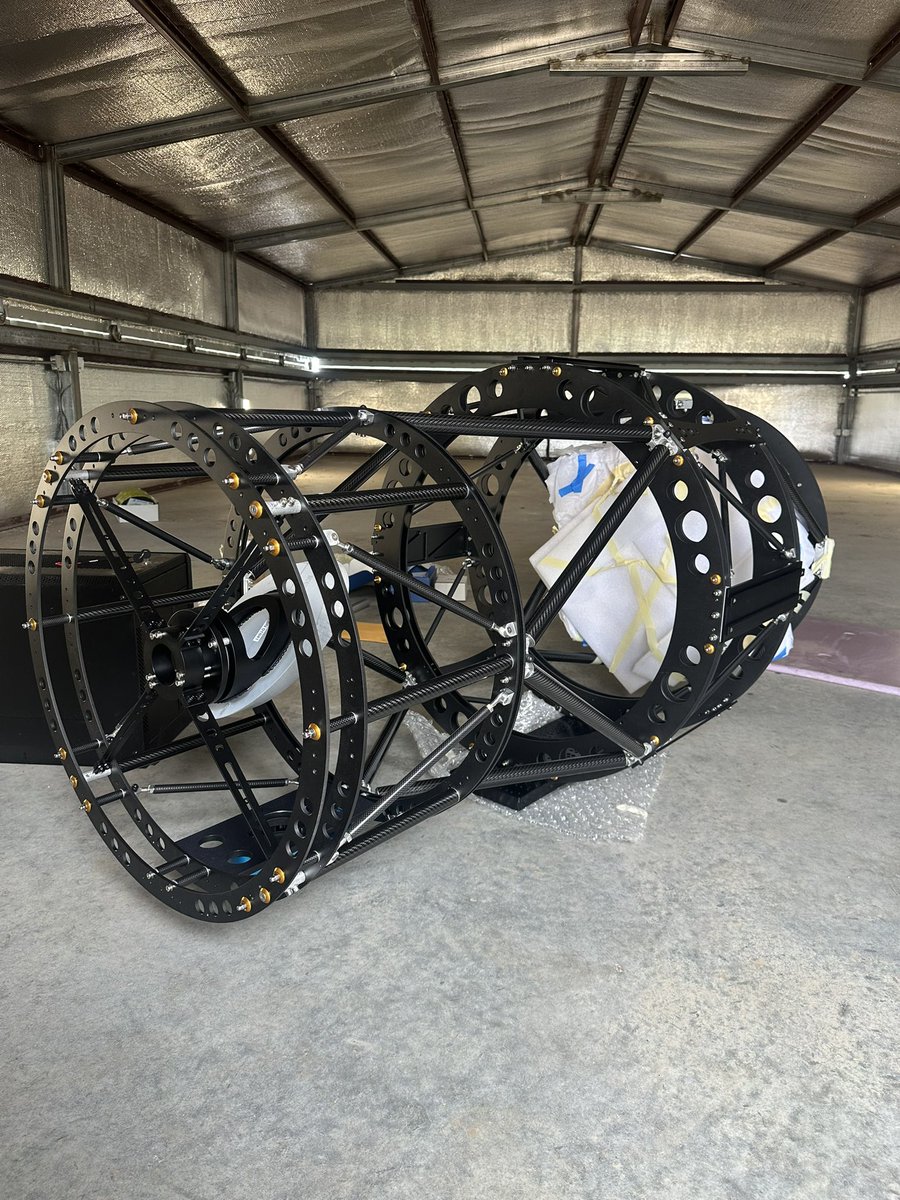
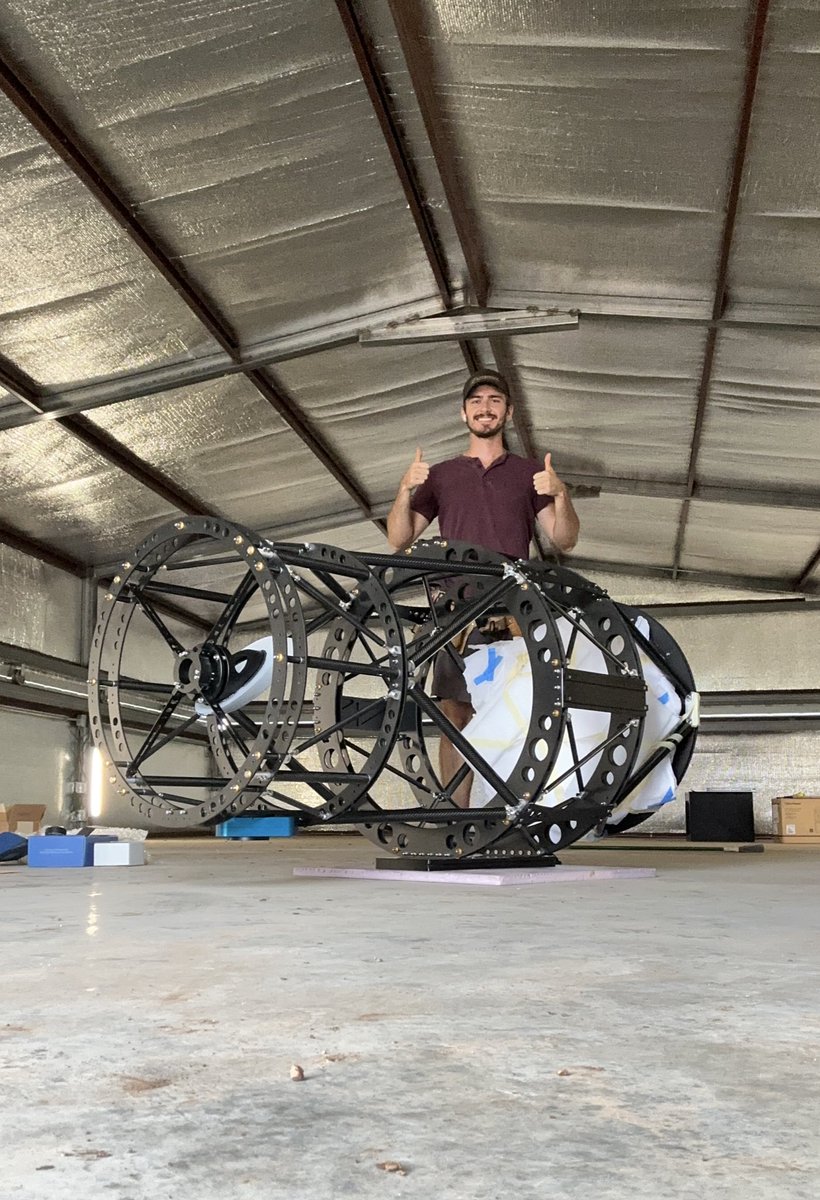
Since a lot of people are confused about what this is, every telescope here is owned by a person. Each person can log in remotely to use their telescope to capture photos of space from our dark skies!
One big question I got about the observatory is if we have ever pointed all the scopes at one spot? The answer is yes!
This is the result of one such effort, 1650 hours of exposure in Ursa Major!
A fund that was supposed to be a “first-of-its-kind” program to address the climate crisis instead acted as a slush fund, funneling $20 billion dollars to progressive nonprofits. @Maddie_Rowley_ has the story: https://t.co/rKzLKLGPuu
Credit to Jake Paul + Mike Tyson for pulling off one of the great cons of century. I shoulda put 10 million on Jake. Not cause he's good but cause he fought a senior citizen. I would say everybody involved should be ashamed but I'd take the money it too if I could. #TysonPaul
If you DO NOT mow your grass, trim your bushes, take care of your flower beds, and tend your garden, your home will return to the wild and you won’t eat.
The same is true of the economy…we have to work, take personal responsibility, and serve others in order to grow and eat.
The government doesn’t produce…it just takes. It doesn’t tend, it ravages. And those who look to the government to take care of them, become less personally responsible.
If you want to know why it seems the economy isn’t working for you, it’s because the government is trying to run it, and the government is the worst gardener in the world. Always has been.
Whenever it is in charge of too much, the average human suffers, the jungle returns.
🚀 Exciting news! @OurSky just raised $9.5M in seed funding! 🌌 Their innovative platform is revolutionizing space data access for developers. Congrats to CEO Dan Roelker and team for this milestone! 🎉 We are so excited to be on this journey with you. #SpaceTech#SeedFunding #OurSky
https://t.co/MYaqnZL03J
A young statistician saved their lives.
His insight (and how it can change yours):
During World War II, the U.S. wanted to add reinforcement armor to specific areas of its planes.
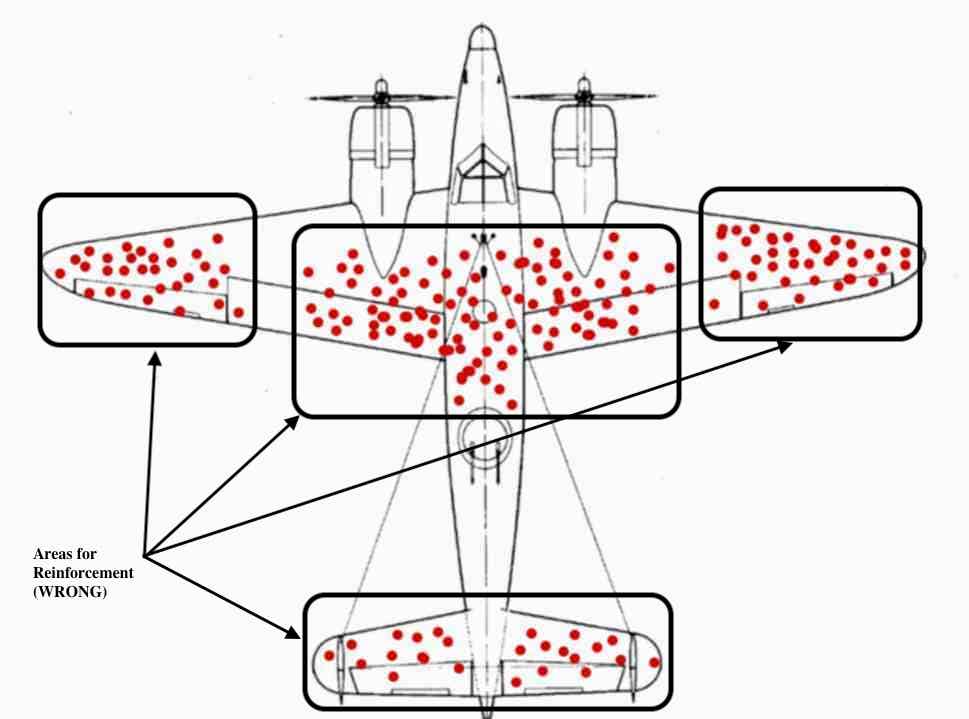
Analysts examined returning bombers and plotted the bullet holes and damage on them (as in the image below).
Based on this analysis, they came to the conclusion that adding armor to the tail, body, and wings would improve their odds of survival.
But a young statistician named Abraham Wald noted that this would be a tragic mistake.
By only plotting data on the planes that returned, they were systematically omitting the data on a critical, informative subset:
The planes that were damaged and unable to return.
Abraham Wald recognized a key fact:
• "Seen" planes had sustained damage that was survivable.
• "Unseen" planes had sustained damage that was not survivable.
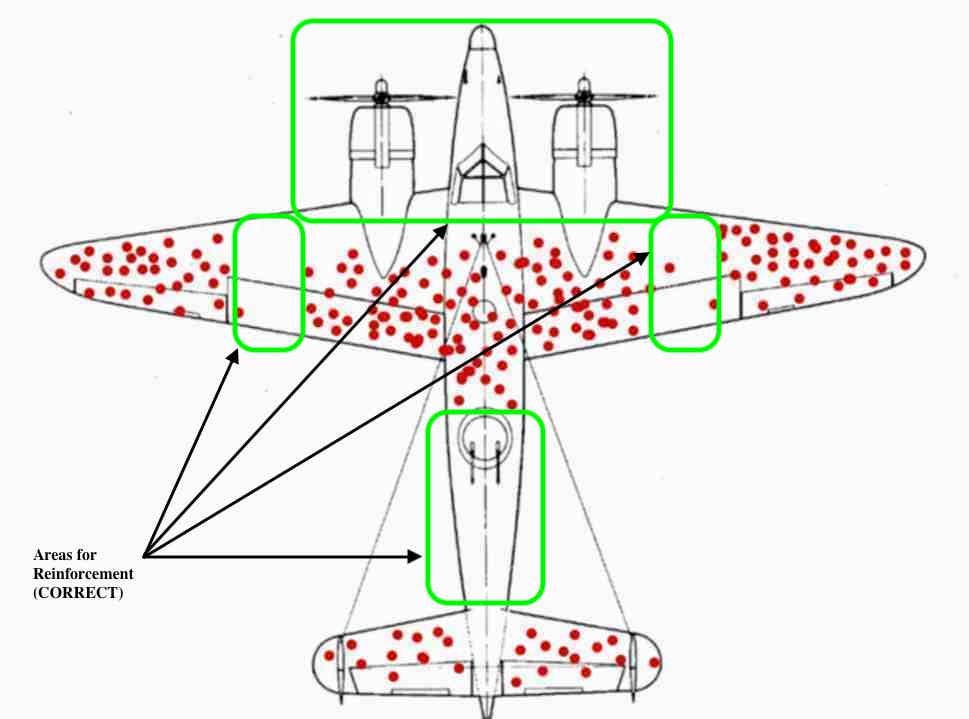
Wald concluded that armor should be added to the *unharmed* regions of the returning planes (the areas without bullet holes on the image below).
His profound logic:
Where the survivors were unharmed was actually where the planes were most vulnerable.
Based on his insight, the military reinforced the engine and other vulnerable parts, significantly improving the safety of the crews during combat and saving thousands of lives.
Abraham Wald had identified a cognitive bias called "Survivorship Bias":
The error resulting from systematically focusing on survivors (successes) and ignoring casualties (failures) that causes us to miss the true base rates of survival (the actual probability of success) and arrive at flawed conclusions.
We see examples of Survivorship Bias all around us:
1. We read books on the common traits of successful people, but fail to consider all of the unsuccessful people who possessed those same traits.
2. We applaud the belief when we hear that an entrepreneur took out a second mortgage and succeeded, but fail to consider all of the entrepreneurs who did the same and went bankrupt.
3. We study the cultural strategies of the most successful companies, but fail to consider all of the companies that followed those same strategies and fell apart.
When we fail to consider the range of outcomes and the hidden evidence, we develop a skewed (and often incorrect) view of reality.
It cannot be avoided altogether, because the vast majority of books and history are written by and about the survivors and victors, but wherever possible, consider the unseen evidence.
Remember: What is unseen often has just as much value as what is seen.
***
If you enjoyed this or learned something, follow me @SahilBloom for more in future!
I arrived at the address and honked the horn. After waiting a few minutes I honked again. Since this was going to be my last ride of my shift I thought about just driving away, but instead I put the car in park and walked up to the door and knocked.. 'Just a minute', answered a frail, elderly voice. I could hear something being dragged across the floor.
After a long pause, the door opened. A small woman in her 90's stood before me. She was wearing a print dress and a pillbox hat with a veil pinned on it, like somebody out of a 1940's movie.
By her side was a small nylon suitcase. The apartment looked as if no one had lived in it for years. All the furniture was covered with sheets.
There were no clocks on the walls, no knickknacks or utensils on the counters. In the corner was a cardboard box filled with photos and glassware.
'Would you carry my bag out to the car?' she said. I took the suitcase to the cab, then returned to assist the woman.
She took my arm and we walked slowly toward the curb.
She kept thanking me for my kindness. 'It's nothing', I told her.. 'I just try to treat my passengers the way I would want my mother to be treated.'
'Oh, you're such a good boy,’ she said. When we got in the cab, she gave me an address and then asked, 'Could you drive
through downtown?'
'It's not the shortest way,' I answered quickly..
'Oh, I don't mind,' she said. 'I'm in no hurry. I'm on my way to a hospice.’
I looked in the rear-view mirror. Her eyes were glistening. 'I don't have any family left,' she continued in a soft voice.. ‘The doctor says I don't have very long.' I quietly reached over and shut off the meter.
'What route would you like me to take?' I asked.
For the next two hours, we drove through the city. She showed me the building where she had once worked as an elevator operator.
We drove through the neighborhood where she and her husband had lived when they were newlyweds. She had me pull up in front of a furniture warehouse that had once been a ballroom where she had gone dancing as a girl.
Sometimes she'd ask me to slow in front of a particular building or corner and would sit staring into the darkness, saying nothing.
As the first hint of sun was creasing the horizon, she suddenly said, 'I'm tired. Let's go now'.
We drove in silence to the address she had given me. It was a low building, like a small convalescent home, with a driveway that passed under a portico.
Two orderlies came out to the cab as soon as we pulled up. They were solicitous and intent, watching her every move.
They must have been expecting her.
I opened the trunk and took the small suitcase to the door. The woman was already seated in a wheelchair.
'How much do I owe you?' She asked, reaching into her purse.
'Nothing,' I said.
'You have to make a living,' she answered.
'There are other passengers,' I responded.
Almost without thinking, I bent and gave her a hug. She held onto me tightly.
'You gave an old woman a little moment of joy,' she said. 'Thank you.'
I squeezed her hand, and then walked into the dim morning light.. Behind me, a door shut. It was the sound of the closing of a life..
I didn't pick up any more passengers that shift. I drove aimlessly lost in thought. For the rest of that day,I could hardly talk. What if that woman had gotten an angry driver, or one who was impatient to end his shift? What if I had refused to take the run, or had honked once, then driven away?
On a quick review, I don't think that I have done anything more important in my life.
We're conditioned to think that our lives revolve around great moments.
But great moments often catch us unaware-beautifully wrapped in what others may consider a small one.
PEOPLE MAY NOT REMEMBER EXACTLY WHAT YOU DID, OR WHAT YOU SAID ~BUT~ THEY WILL ALWAYS REMEMBER HOW YOU MADE THEM FEEL.
🙏🏼🥰✝️
Having career convos in the new year. One consistent theme:
Early-career folks are often mad that their careers don't have more "liquidity"
They want a direct and immediate connection btw output and compensation/title. Essentially, they want to be "priced" in real time...
@elonmusk .@Snowden sacrificed his future to reveal surveillance abuses by the U.S. gov. Courts affirmed the NSA/FBI practices he exposed were illegal.
Assange’s prosecution under the Espionage Act for publishing materials on war abuses endangers all journalists & threatens press freedom.
Tyler Adams mispronounced Iran and was called out by an Iranian journalist - who followed up with a question on discrimination in the United States.
His response: An all time classy answer- Captain & Leader. #USMNT 👏
@stephjantzen@elonmusk This is true as the law may apply differently in each jurisdiction. And some set of standard rules of service should apply generally to the platform (and be fairly enforced).