The second edition of our book, Build: Elements of an Effective Software Organization, is now live on our website and available on Amazon! 🥳
Grab your copy: https://t.co/M7qPgv64yb
🎁 Before we put a bow on 2023, we wanted to thank our amazing customers and the team for another great year, during which we:
· Shipped 9 major features
· Welcomed a record number of new customers
· … and much more!
Check out our full year in review: https://t.co/pkPbNr8m0f
@tindn Forked a tsserver-example on github and modified it for the test (including the example files and documented output in README) https://t.co/IArrrCdo1v
So the hints are coming from tsserver, which (I guess) is also how TypeScript interprets them
@tindn Haha. I now couldn't go to sleep without thinking about it, so went to do some research instead😂
I'm using emacs, but looks like both emacs and vscode typescript support use tsserver under the hood. If you have typescript installed, the binary is in ./node_modules/.bin/tsserver
@tindn So, here's my theory 😆 :
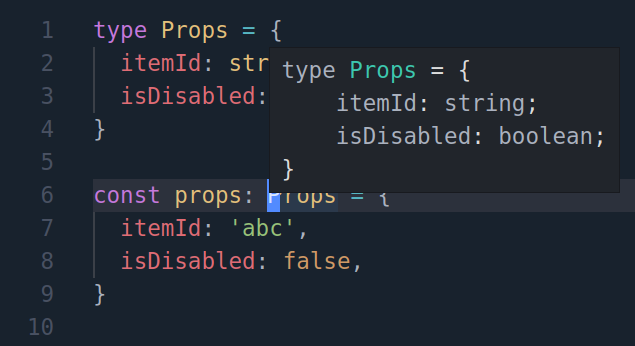
In the first case, `type Human` aliases Person interface, that's why the hinter only shows that, while in the latter example, `type Props` aliases an anonymous object, that's why hinter displays the anonymous object type in full.
@tindn I'm actually not sure myself : D
Although it's mentioned here https://t.co/Ki7WMYgln5 that Types are just aliases of other types, while Interfaces are, well, named Interfaces :D So my guess is the hinter tends to display Type's full declaration while only name for interfaces? 🤔