Free scientific illustrations for biologists! 😍
@NIH has released a library of 500+ free scientific illustrations to create figures, presentations, and illustrations!
all freely available in the public domain.
Retweet and spread the message!
https://t.co/p1bD1kxO7H
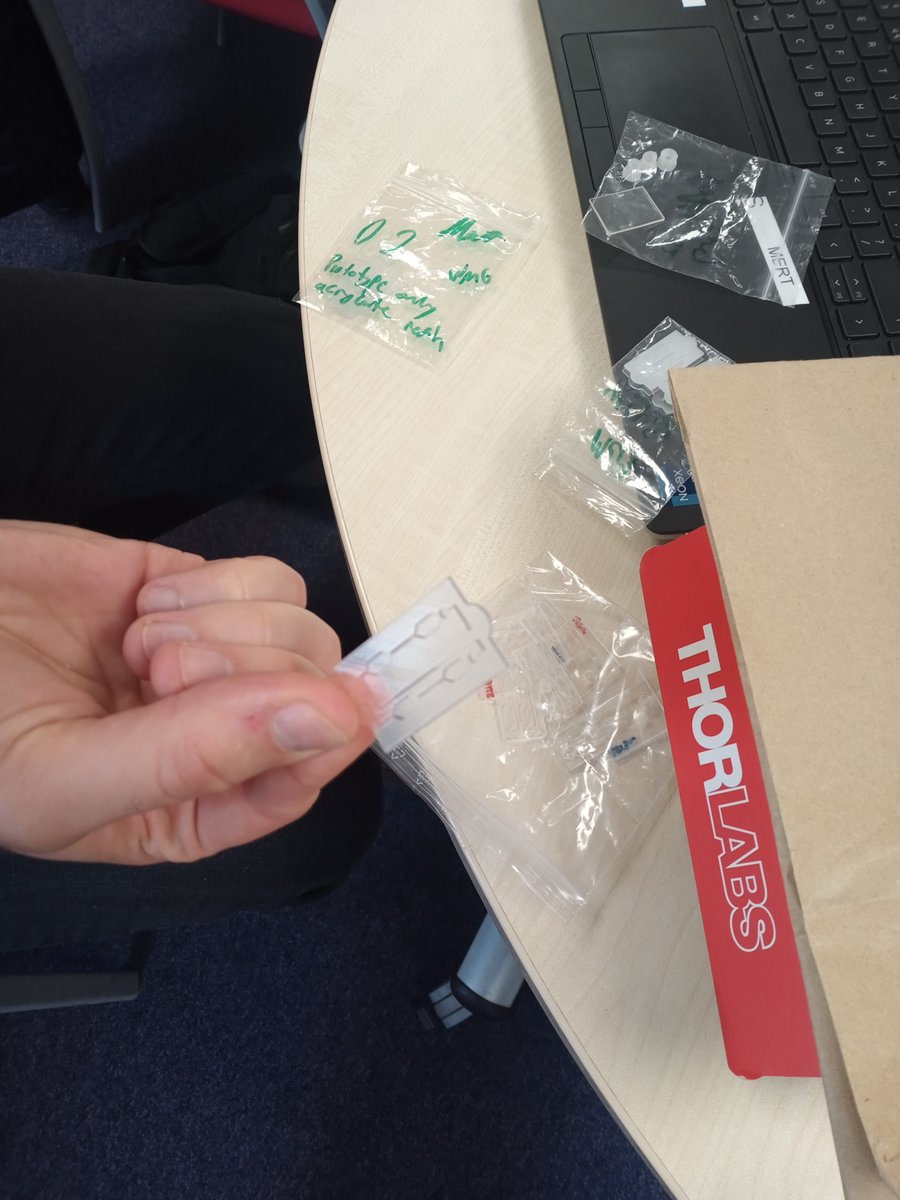
Today Nick Leslie and I have hosted our collaborators @glcr_mert and Greg Gibbons from @wmgwarwick as part of our @EPSRC project '#MicroSNARE' - Nice to have new recruit @NathanJWu and Linda Marriott joining in as well! Good discussion around #micromoulding of microfluidic chips
Really looking forward to the next few days hearing about some amazing research! Come by poster S12 tonight to hear about our work on biocompatible hydrogenation in E. coli. Many thanks to @IBioIC for making it possible for me to be here! #simb2024#industrialbiotech
If you’d like to get high-quality Sanger sequences of short PCR amplicons (<100 bp) without cloning into plasmids, here’s an interesting and relatively low-tech approach to consider: use "squirrel primers" to pad your sequence ends & improve sequence quality! 🐿️👇
The “squirrel primer” method comes from Ebili et al. (2017), who wanted to address the problem that Sanger sequencing is not very good at producing high quality sequences of very short PCR amplicons.
This problem arises because Sanger sequences are usually poorer quality at the very beginning of the sequence (the upstream or 5’ end) and the very end of the sequence (the downstream or 3’ end), and sometimes these noisy regions can last up to 50 bp.
Together, these noisy ends can result in a short (<100 bp) sequence being unreliable or completely unusable.
Ebili et al. (2017)’s solution was to increase the length of their amplicons by doing a second round of PCR, using extremely long primers that contained the original primer sequence as well as a long tail of 40-65 nucleotides (designed not to match anything likely to be present), making each primer sequence around 80+ nucleotides in length.
The authors called these primers “squirrel primers" — not to be confused with primers that amplify DNA from squirrels, of course.
The method work as follows:
🐿️ First, do a normal PCR using normal primers, producing a very short PCR amplicon.
🐿️ Then, do a second PCR using the first PCR product as a DNA template. During this second PCR the “squirrel primers” become incorporated into the resulting amplicon and and substantially increase its length. The authors found an annealing temperature of 60 °C worked fine for their squirrel primers despite their length.
🐿️ Once amplified, the much longer amplicons can then be Sanger sequenced using a third shorter primer pair targeting the outer ends of the squirrel primers.
The result is that any poor quality reads at the ends of the sequence are restricted to the “squirrel primer” regions, and the original region of interest can be read cleanly without any issues.
The drawbacks of this approach are that three sets of primers are needed overall; and due to their length, the “squirrel primers” will cost more money to synthesise and may need to be synthesised at a larger and more expensive scale.
However, these are comparatively minor costs, especially if they allow you to produce high quality sequences of your target short DNA region!
You can read this article here:
Ebili et al. (2017). “Squirrel” primer-based PCR assay for direct and targeted sanger sequencing of short genomic segments. Journal of Biomolecular Techniques: JBT, 28(3), 97.
https://t.co/8DcRrCTHYy
It may also be worth knowing that another similar method was previously described by Binladen et al. (2007), who used 40-60 bp long tails on their sequencing primers rather than in a second round of PCR.
However, although they achieved better results than normal sequencing for short fragments, they appear to poorer quality sequences than those achieved by Ebili et al. (2017):
Binladen et al. (2007). 5′-tailed sequencing primers improve sequencing quality of PCR products. Biotechniques, 42(2), 174-176.
https://t.co/dOwQ2KQ8qq
Another approach would be to use shorter primer tail modifications such as M13F and M13R-tailed primers, although these would only be able to extend the amplicon by ~40 bp and may not be sufficient. There is a nice description of this process here: https://t.co/vMFKlolSV1
If you know of any other methods for Sanger sequencing short (<100 bp) PCR amplicons, or if you've used the methods above, we'd love to hear how they worked for you!
***
https://t.co/8DcRrCTHYy
🧬🧬🧬Booking is open for the 20th RSC Nucleic Acids Forum which will be on the 5th July 2024.
Please book early to avoid disappointment as last year we sold out 🧬🧬🧬
https://t.co/JCNuQb2J0q
We are looking to establish a DNA origami synthesis core facilty @UniHeidelberg. If worked with #DNAorigami in your PhD, have experience with chemical synthesis and good organizational skills, please get in touch! RT appreciated.
Our monthly #DNA#nanotech webinar series is back on the 27th February! Mahipal Ganji @iiscbangalore, and Luzia Kilwing @LMU_Muenchen will present their work on Dissecting dinucleotide base-stacking energetics using DNA-PAINT and DNA nanostructures, and Multilayer DNA Origami
We were about to exhibit renowned local artist, Max Ayres’ art collection before a fire took hold in his Leigh flat.
A @gofundme has been set up to help restore some salvaged paintings and get Max doing what he loves most, painting!
https://t.co/4flzQVwiyx
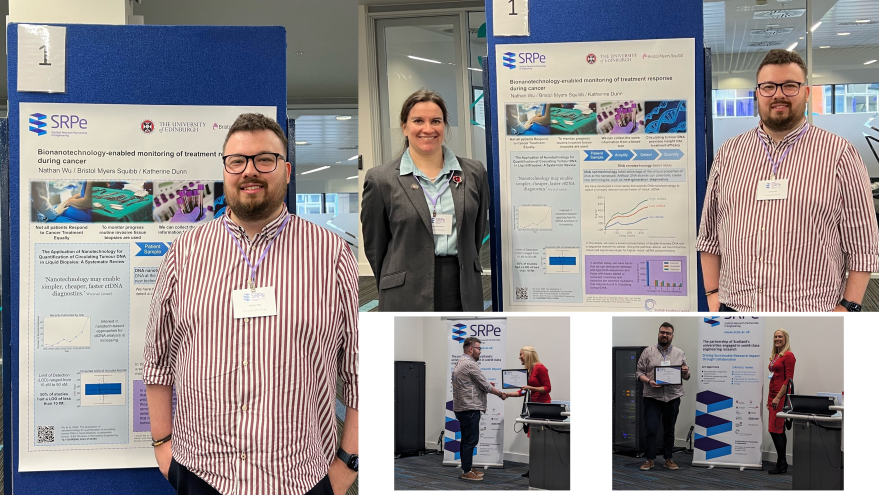
My PhD student @NathanJWu won 1st prize in @SRP_engineering Industry Doctorate Poster Competition! Nathan’s working on bionanotech & cancer diagnostics. Congratulations to Nathan for the prize. Thanks to SRPe & Bristol Myers Squibb @bmsnews for funding his @SchoolOfEng_UoE PhD.
Apologies for the delay. Our monthly #DNA#nanotech webinar is back on the 24th October! Ben Shirt-Ediss @DIPCehu, and @ipmartinenko@LMU_Muenchen will present their work on Reverse engineering DNA origami nanosteucture designs, and Site directed placement of 3D DNA origami
Our monthly #DNA#nanotech webinar series is back on the 12th October! Ben Shirt-Ediss @DIPCehu, and @ipmartinenko@LMU_Muenchen will present their work on Reverse engineering DNA origami nanosteucture designs, and Site directed placement of 3D DNA origami
Our monthly #DNA#nanotech webinar series is back on the 6th September! Chalmers Chau @UniversityLeeds, and Myoungseok Kim @UCBerkeley will present their work on Automated Purification of DNA Origami with SPRI Beads, and a paper-folding mechanism for reconfigurable DNA origami
Our monthly #DNA#nanotech webinar series is back on the 2nd August! Hemani Chhabra @UofIllinois, and Simon Vecchioni @Columbia will present their work on Elastic-Mechanical Properties of DNA Nanotubes, and Metal-Mediated Base Pair Programming in 3D DNA Architectures
A biological camera that captures and stores images directly into DNA 🧬
https://t.co/uNoTF6F7ty
Capturing 2D light patterns into DNA, by utilizing #optogenetic circuits to record light exposure into DNA, encoding spatial locations with #barcoding, and retrieving stored images.
Our monthly #DNA#nanotech webinar series is back on the 6th July! Ivan Barišić and Fabian Schroeder @AITtomorrow2day, and Minke Anne Door Nijenhuis @AarhusUni will present their work on a modeling environment for proteins and nucleic acid nanostructures, and Triplex origami
New job opportunity in my group at @SchoolOfEng_UoE! Research associate (postdoc) – 6 months – #dnanano + cyanobacteria + biophotovoltaics. Collaboration with @McCormick_Lab. Funded by @Accenture. Application deadline=12th July. More details:
https://t.co/qSIZ6bSykt