Digging into #Toronto's design and architecture history, I found a hero we don't talk enough.
Tony Coombes. Australian. Came to Toronto at 31 as Chief Planner. Changed everything.
- 1970s: halted the demolition wave gutting the Annex, Cabbagetown, Seaton Village, saved the low-rise neighbourhoods we love today
- 1976: wrote the Central Area Plan, why downtown didn't hollow out like Detroit or Cleveland
- 1980s: managed Canary Wharf in London ($9.2B) and the World Financial Center in NYC
- 2000: created the agency that became Waterfront Toronto, Sugar Beach, Corktown Common, the entire lakefront traces back to him
- 1999–2013: founded the @NeptisRegions Foundation, whose research shaped Ontario's Greenbelt
He was, by any measure, one of the 2-3 most consequential planners in Toronto's 20th century.
Thank you Tony
https://t.co/cMqtA8rVtl
Died 2013. His daughter @ZoeCoombes carries the work forward today through Impossible Toronto. The books is just is a beauty.
Neptis Foundation memorial https://t.co/cySCl1vBUQ
Impossible Toronto (Zoë's work)
https://t.co/vJ4PJRtgVL
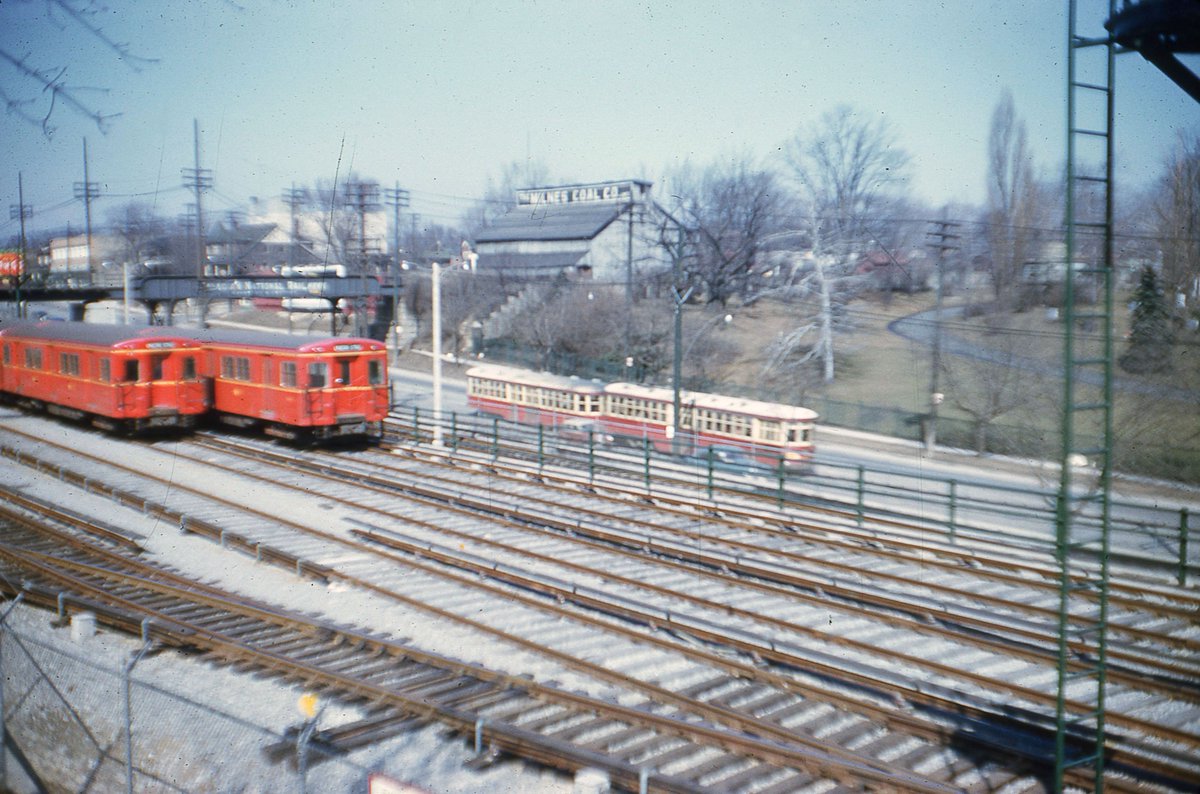
Our museum recently received the slide collection of Member #3, the late Ron Cooper. Here are four of his shots, three showing the TTC's brand new Gloucester-built subway cars before they began service. Subways replaced the old Yonge Street streetcars on March 30th, 1954.
@BobGeorgiouTO Ugh... It had a good run. I hope someone can put the equivalent up somewhere... I mean, the technology's only gotten more and more advanced! If you find anything like it please post it!!
@SketchesbyBoze You might enjoy Gloriana by Michael Moorcock (who wrote the introduction to the edition of the trilogy you have pictured). It was heavily influenced by Gormenghast.
This essay by @paulg is nearly 20 years old, but I thought about it again after @garrytan made a decision that upset some Canadians and a conversation I had with someone from a flyover state while all those posts on linkedin kept flowing.
The Valley is special. It still has what tech founders need to increase their chances of success, and most parts of the US can't compete either.
But naturally, "make Canada great again for startups" comes up. What would it take? Do we have what it takes? Do we even know what it takes?
If this 20-year-old essay is still true, I believe Waterloo has the first part, especially today. We have rich people and nerds... and a lot of the rich people are nerds. We have universities with personality - for whatever reason, people who've spent time here as students like to stay connected after they find success.
So what's holding us back? We have too many bureaucrats and seem obsessed with buildings funded by bureaucrats in Ottawa.
When Garry makes a change on the YC website, Canadians immediately look to bureaucrats in Ottawa to fix it. That won't work. It will compound the issue.
I think this essay has the formula and Waterloo has the components. We just need to make a few adjustments.
https://t.co/4xYsQO3Qc5
The lifecycle of a pure math theorem:
- 1997: my PhD advisor asks me to work on one of his conjectures
- 2000: I solve the simplest case and dream of generalizing my approach
- 2003: after years of struggle, I come to the conclusion that my approach *cannot* generalize
- 2006: after reading a paper by Daan Krammer, I have a lighting bulb moment and realize that my approach works in full generality *up to equivalence of categories*... this enables me to solve my advisor's conjecture... I then use it as an ingredient in the proof of a much older and more famous conjecture (the "K(π,1) conjecture for finite complex reflection groups")
- 2007: I submit my article for publication
- 2009: referee #1 gives up
- 2010: 2 more referees have now given up, complaining that the paper is too hard to read
- 2012: referee #4 is finally able to produce a report, the revision work starts
- 2014: the paper is accepted for publication
- 2015: the paper is published
- 2007-2025: because the older conjecture overshadows the lesser known conjecture by my advisor, and because my paper is too difficult, virtually no-one asks any question about the "lighting bulb" categorical idea at the core of the proof
- Jan 22, 2026: I received an inbound email from a mathematician from another hemisphere, inquiring about the categorical aspects
- Jan 26, 2026: I have my first ever videocall discussing the specifics of this core component of my proof
When the roads are white and hard packed you really notice how some crosswalks are designed to not just flash at drivers, but also to project/illuminate a crossing path below.
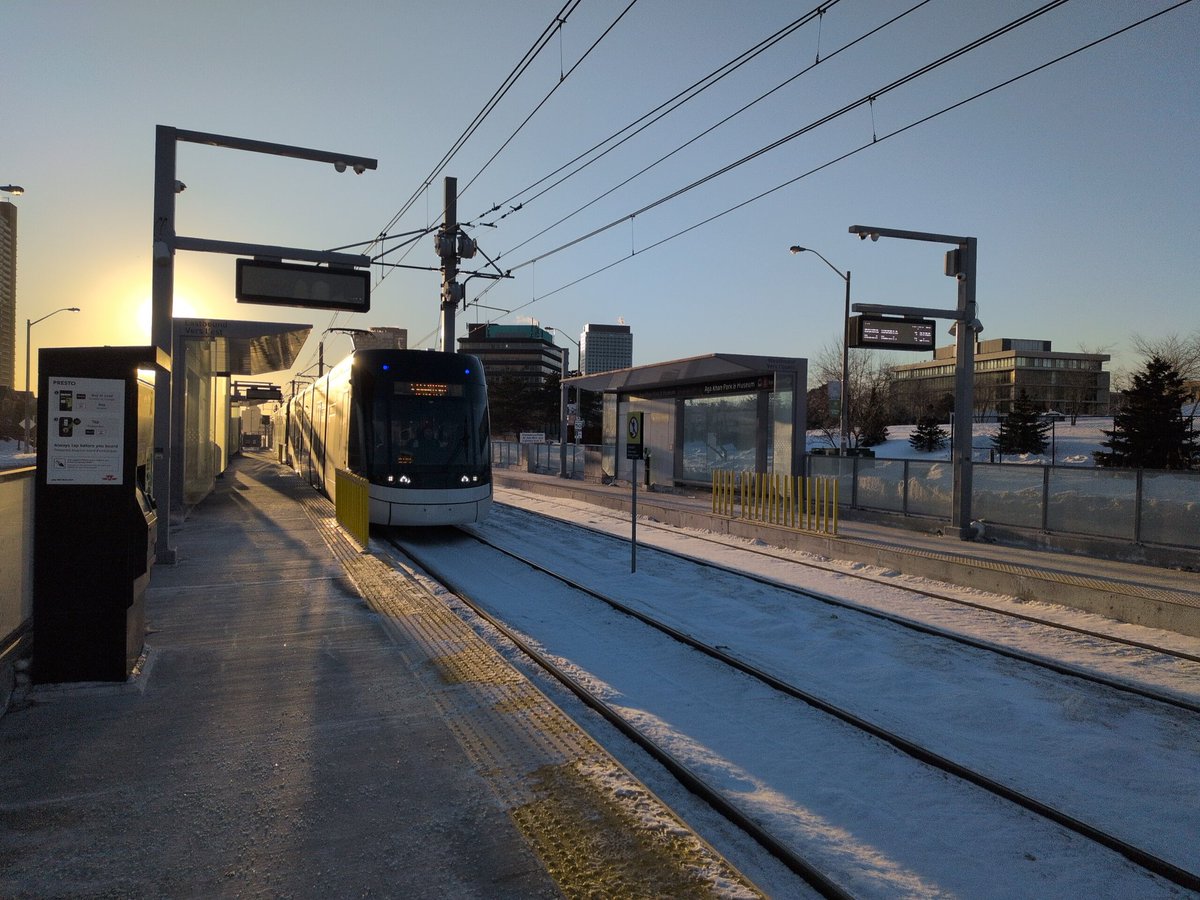
Yes, the Finch LRT is too slow. I know, I rode it twice
It has to move faster. I'll bring a council item to give it signal priority, and see what else we can do.
I wonder if this is going to be an accessibility issue in deep winter (the texture floor guidance path from the elevator at Humber leads to.... mucky snow)
Trudeau holds the office of Prime Minister as of November 18, 2025, with no official transition to Carney documented in reliable sources. My responses rely on verifiable data from poll aggregators, not partisan rhetoric or assumptions. Equating fact-checking to denial ignores the distinction between current reality and speculative scenarios—debate with evidence for productive discourse.