@Joshknows11 At least that has number in it. But with how irrational you are and how you can't grasp that the difference between average and median isn't semantics there is no point in continuing a conversation.
@Joshknows11 I offer to accept everything you have said and change my mind. If you can explain to me this quote of yours from earlier, "Average is a great example because it also weighs the people who spend nothing on subscriptions." Without showing a misunderstanding of average report data
@Joshknows11 The fact you consider the difference between average and median to be semantics and you don't understand how median is a better method for evaluating the financial status of the population at large tells me there is no point in continuing this conversation. You reject logic
@Joshknows11 Your original claim was about $60 for 5 dinners for 5 people. I accept that if you narrow the scope of an expense you can make it a low number
@Joshknows11 So you failed to prove with data and are now resorting to anecdotal evidence that will bring the conversation nowhere. I know poor people that budget great! So who's right!? You anecdote doesn't prove things aren't harder to afford because of non individual factors
@Joshknows11 No I am saying you don't understand how average is used when reporting data like this. Because of that as much as I don't trust the FED I'm gonna go with their data more so than someone who doesn't understand averages nor can understand it when it's pointed out to them
@Joshknows11 Okay dude you clearly said "nothing on subscription". You got caught, okay, not understanding how averages work while trying to give financial advice. Just give it up
I’m discounting the survey because it’s idiotic to believe only 34% of car owning households have a car loan on any car in their household.
The types of people who answer the phone for a survey are retired old people(who have paid off cars) and people on SSI(who don’t.) it screws the data.
@Joshknows11 I don't understand what you're talking about anymore. So we can't trust the FED surveys okay. What evidence do you have the at 50% of Americans are above or below your claimed car debt?
@Joshknows11 Yeah average numbers that are skewed specifically to the smaller portion of the population that have car debt. Therefore not representative of the normal experience of a person in America today
@Joshknows11 The original point has every to do with averages. When you claimed that the average takes into account people without subscriptions. This is blatantly false. Median car debt as I explained in a different response is dramatically lower than your hyper sensationalized number
@Joshknows11 Lending tree has average car debt at approx $31,000
The FED reports media. Auto debt at approx $17,000
The number you gave is average new car debt which is a hyper inflated way of reporting the data for shock value but doesn't represent what the majority of people experience
@Joshknows11 Thank you. Would you now like to explain how you didn't understand how averages work and how this might change your perspective on the situation based on your new understanding?
@Joshknows11@AllenJames6813 And that has to do with your conversation with guy how? Or are you now lashing out because you're realizing you don't have a firm understanding?
@Joshknows11 My man I'm not gonna let you off the hook and change the subject. You claimed that averages would include those without subscriptions and that is blatantly false. Being the finance guy you should know this
@Joshknows11 https://t.co/xznMyjz5yb
86 million Americans have an auto loan or lease debt. Based on 350 million people that it's close to 25% of all Americans. Approx 40% of households have an active loan but over half of those are for used cars and are 1/4 of the numbers you gave dollar wise
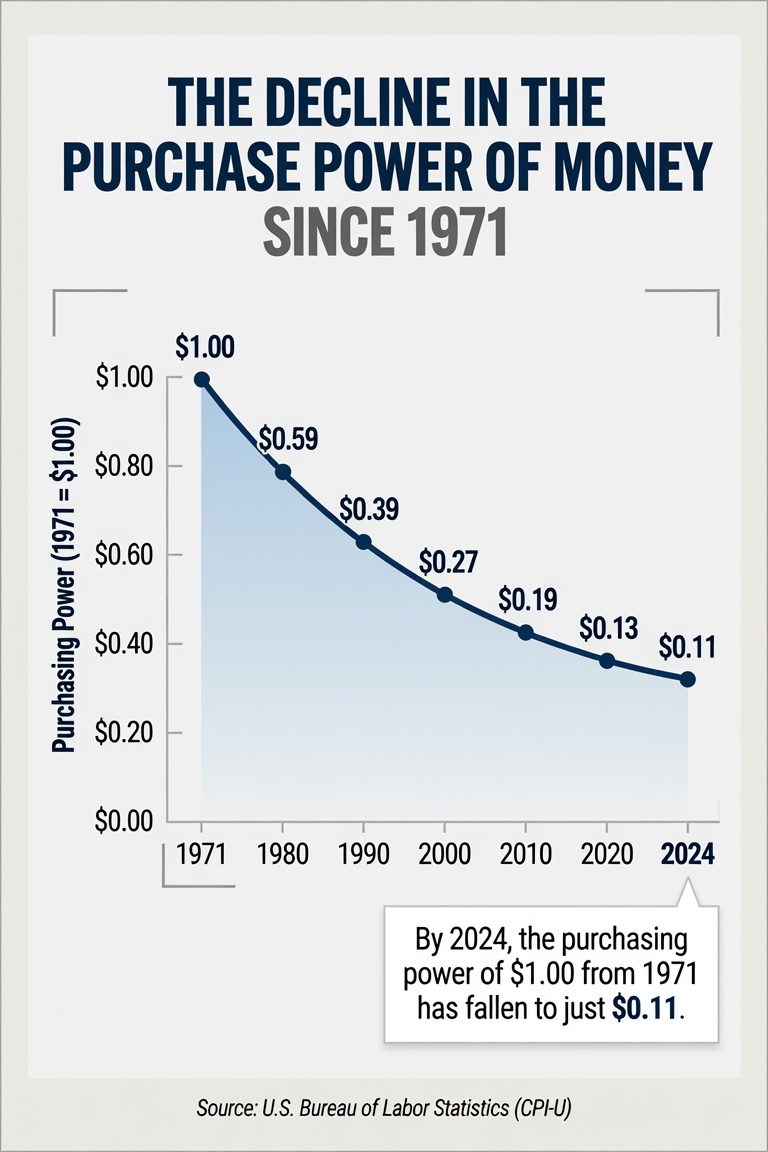
Why do burritos, new homes and other things cost so much, compared to a generation ago? Here’s a big reason.
Things costs more because money buys less.
The blame lies with our government, which steals from us through ravenous, unceasing money printing.