Medical profession came to know about skeletal fluorosis only in 1937. 2009, the Govt of India admitted 275 dists, 20 states and 66 mill people are affected by fluorosis. 6 mill are crippled. 2016 I photographed an elderly woman at her home in Nalgonda Dist crippled by fluorosis.
In Indargachhi, East Champaran, Bihar, Rubi Devi, is making a mat from locally sourced Sabai grass (Eulaliopsis binata). These are environment friendly and life of the mat is about 6-7 years. It’s cool during the summer months and warm in winter.
#biodiversity#indigenous
MGNREGA's purpose is to provide min 100 days of wage employment in a financial year. This needs be strengthened by adding days and increased wages, and see more participation by the communities in protecting their commons and meaningful employment for people with disabilities.
In the early 2010s I worked with people with disabilities and the various initiatives that would protect their livelihood. As we know, a lack of income in rural areas is driving farmers to cities, hoping for better opportunities, and ending up in gig jobs.
When it comes to people with disabilities in rural areas, the situation becomes even worse, and reliance on the National Rural Employment Guarantee Act of 2005 (MGNREGA) becomes important in providing wage employment opportunities.
The changes that happen in forests or the agricultural landscape has a direct impact on us and our biodiversity and that is a part of our consumption pattern as well. Children are perceptive and we certainly can learn a thing or two from them.
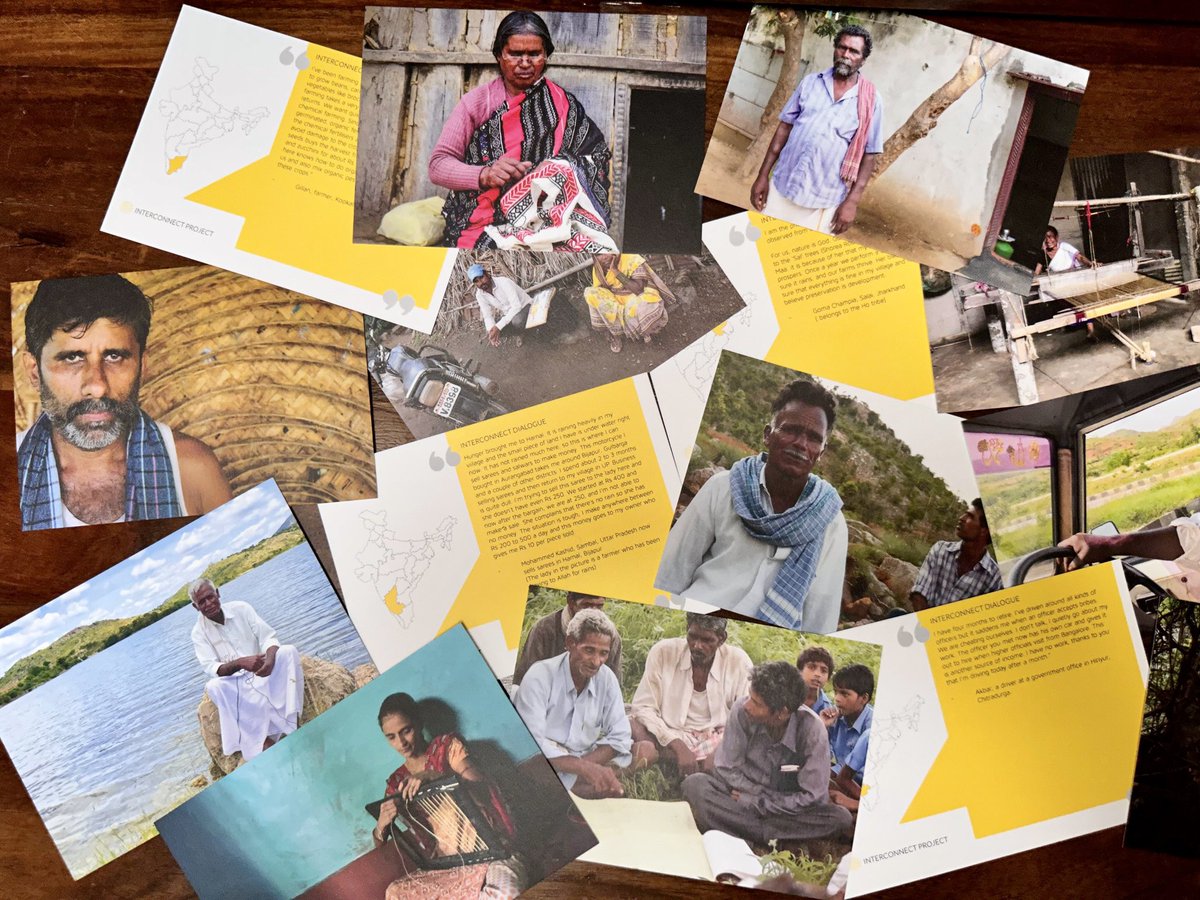
Interconnect Project is now going to schools. These stories from the farmer and Adivasi communities will be a part of discussions with children to sensitise them about how interconnected we are.
#project#schools#biodiversity#education#interconnect#curriculum
Interconnect Project brings stories about indigenous and local communities where you are a part of the story, a story you’re connected to, a story where you play a part.
Take a look, it's all around us. A real, authentic, living, breathing story. A story that we have met days, weeks and years ago. A story that makes us all think and wonder about our lives, our choices.
https://t.co/pYT6DFDUaz
Rainfed Agriculture: Towards a paradigm shift
~~~~~~~~~~~~~~~~~~~~~
A paradigmatic shift in #rainfedagriculture needs to embrace the #diversity of #rainfedareas by providing location-specific solutions and institutional support for the same.
Read more: https://t.co/bUe9Vzy2Mg
Indigenous people around the world use ecological indicators to predict seasonal variation and practice agriculture.
The Bhils of Madhya Pradesh observe the rate at which bamboo turns yellow and the direction of its incline to forecast rainfall and the movement of the clouds.
In the face of climate change, diminishing soil health, and biodiversity loss, revitalising rainfed agriculture provides a strong solution to ensuring the country’s nutritional security.
What is rain fed agriculture in India? Follow the thread
Diversity is the one word that characterises the rainfed agricultural areas of India, spread over 77 million hectares of the country. Diversity of the cultures and cuisines of the indigenous communities that live there.
Millions of landraces with diverse nutritional properties have all but disappeared since the introduction of the Green Revolution’s hybrid varieties. How can India restore the abundance and diversity of its agricultural systems?
Diversity of flora and fauna. Diversity of crops and cropping patterns. And diversity in topography, rainfall patterns and soils.
@network_rra@nraa_dac
Inequality is a beast of many shapes. To comprehend it is a constant challenge and requires us to be attuned to hearing the voices of those on the margins.
Read full article 👇🏻https://t.co/XNU3EQ0R6n
#nativepicture