highly recommend watching the documentary “the language you cry in” where researchers used his work to trace down the origins of a song he recorded by Amelia Dawley of coastal Georgia to a village in Sierra Leone. come to find out it was actually a funeral rites song.
'AI tools are built on Eurocentric datasets. For Brazil’s Afro-descendants—whose histories were already marginalised from literature, academia, and media—it poses the threat of industrial-scale erasure.'
My mother’s buried story | Guido Melo
https://t.co/ifvl75rskg | @africasacountry
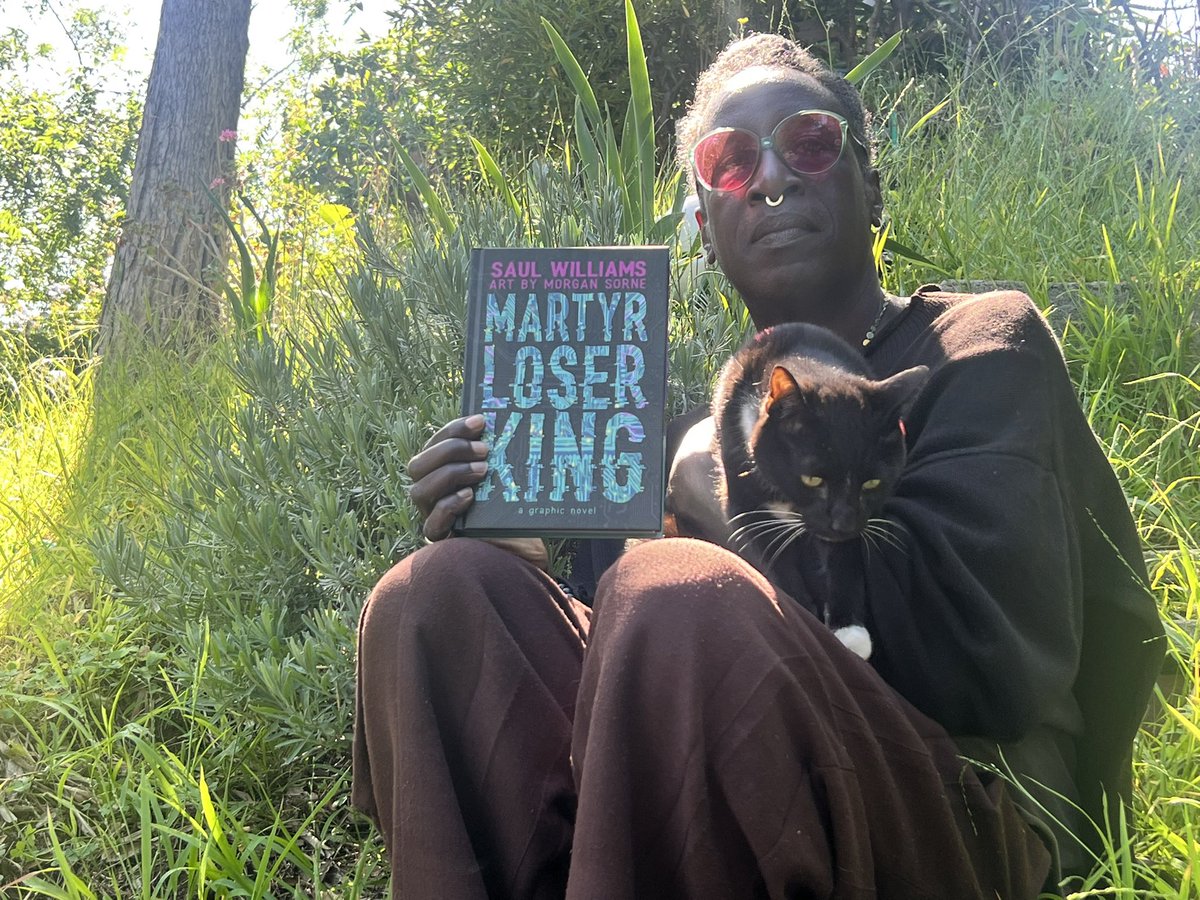
Read banned books by Black authors.
Read them because they told you not to. Read them because they carry memories they don't want you to know.
Read 'Beloved by Toni Morrison.'
Read 'Native Son by Richard Wright.'
Read 'The Bluest Eye.'
Read 'Their Eyes Were Watching God.'
They banned them because they were too true.
My latest: on Global Reparations’ “Africa Exception”— global reparations’s “sovereignty trap” and why we must move from moral suasion to geopolitical cost imposition
https://t.co/gininR9FO2
A Conversation with Rebecca Gayle Howell
"I will find some language that surprises me, and then I’ll just sing it back to myself until I find the next piece of language that sounds to me like a revelatory truth."
Read here:
https://t.co/p1yPe34LLU
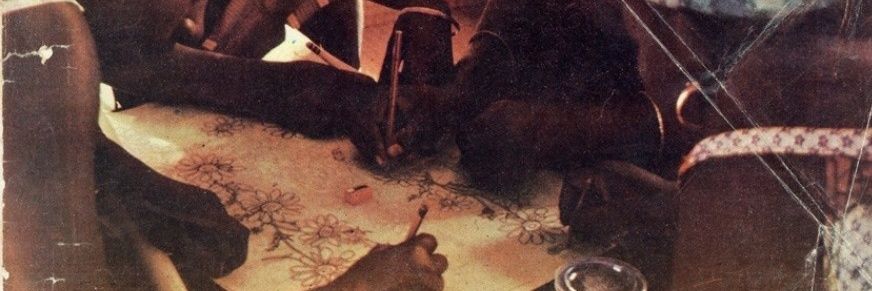
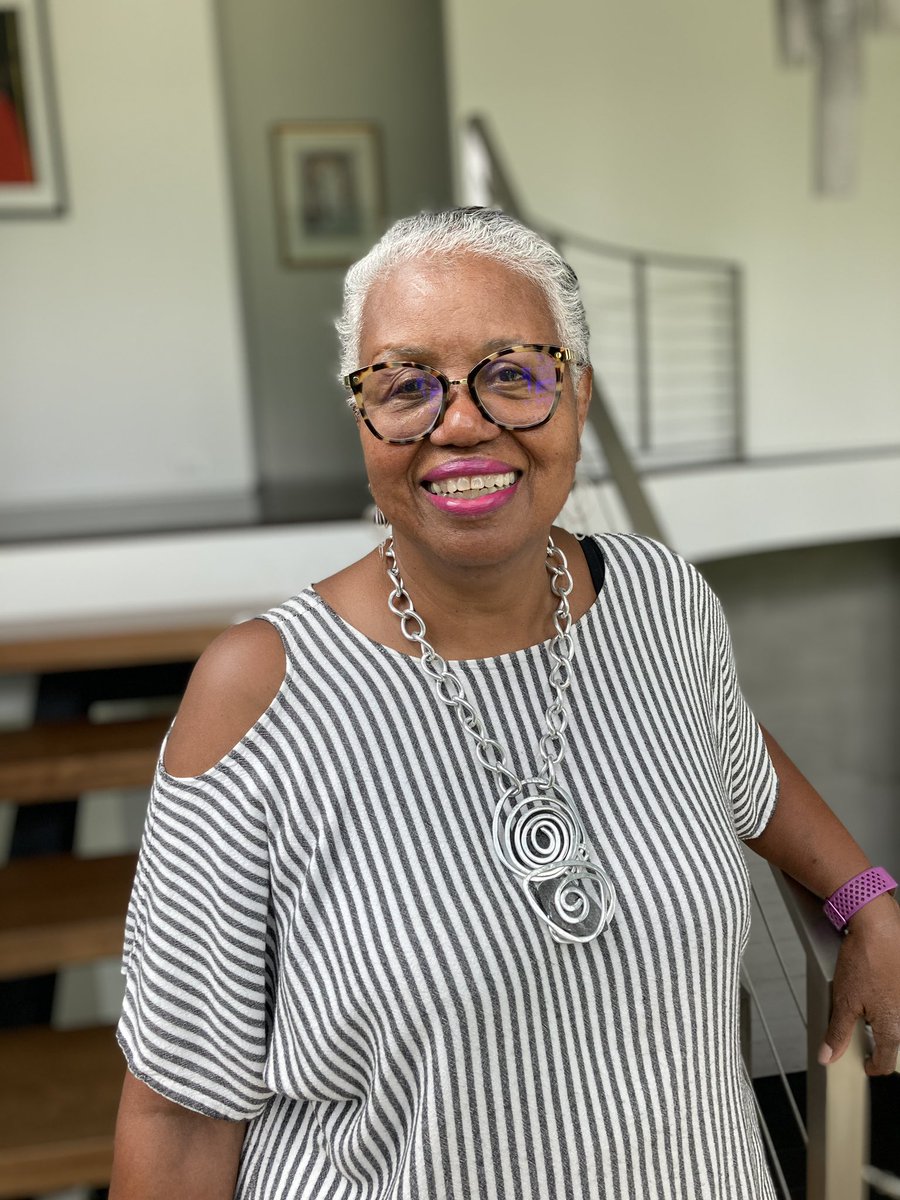
My mom -featured on the book cover below- whose spirit and example has inspired me my entire life is still alive and fighting the good fight. Happy Mother’s Day 🖤✨✨✨
Project a Black Planet: The Art and Culture of Panafrica is an exhibition coming to the Barbican in June. I’ve been co-curating the public programme to sit alongside the exhibition: workshops, listening sessions, discussions & gatherings. Pls come 🫶🏿
https://t.co/2wErc2Rv6x
There are atleast over a million africans at the bottom of the atlantic oceans.
These were not Americans or Brazilians, etc they were yoruba, fulani, Igbos, Mandika men and women who were thrown overboard by european slave traders.
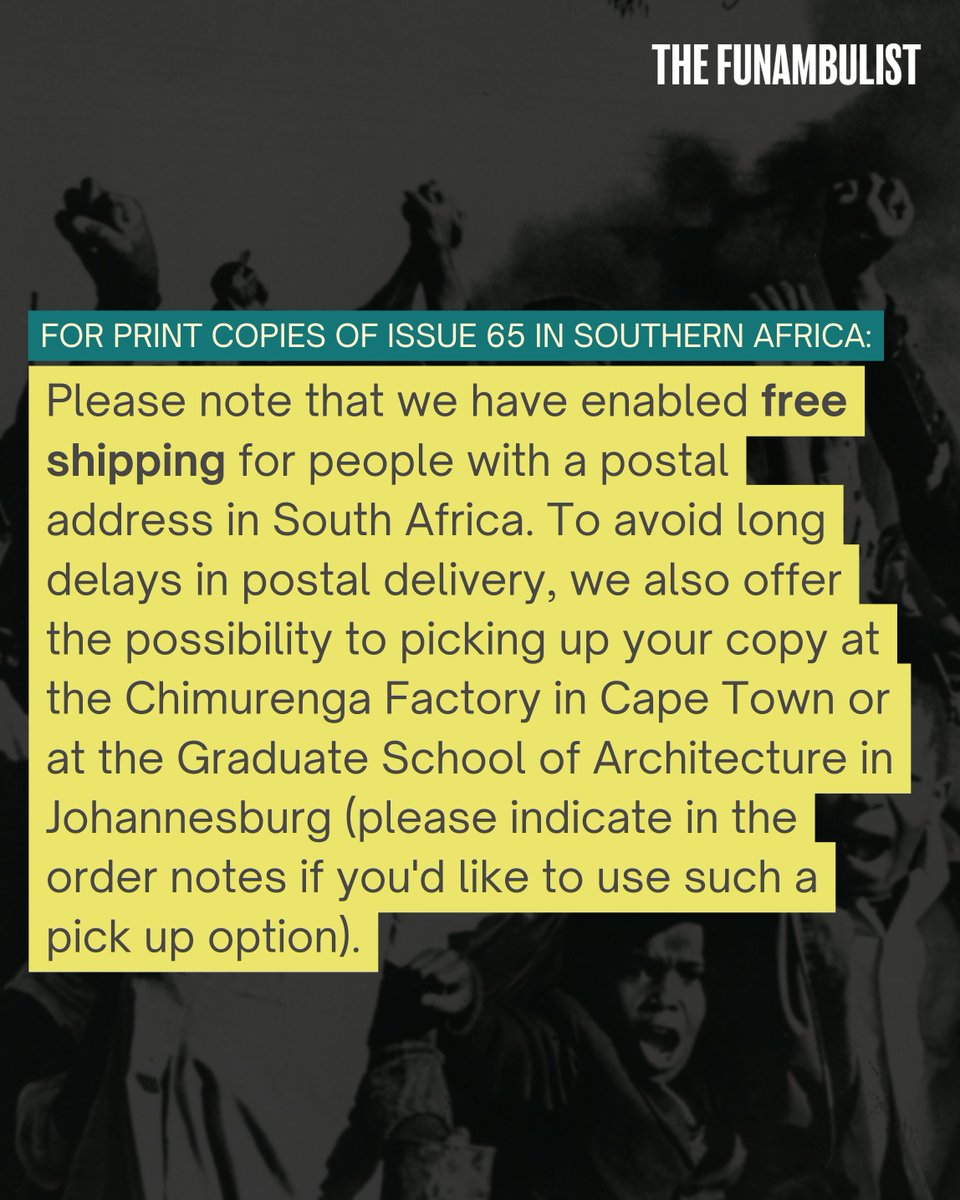
If you are based in Southern Africa and you wish to order a copy of our new issue "Fifty Years After Soweto" (May–June 2026), please note:
- Print copies have free shipping!
- Digital copies are free!
ORDER HERE: https://t.co/qmQg6ebn3F
Xenophobia is a direct indicator of social decay. In every African country where you see populations turning violently against foreign nationals, what you are actually seeing is a population that is drowning financially, struggling to find work, struggling to eat, watching their living conditions deteriorate with no credible explanation from the people responsible for governing them.
The foreigner becomes the easy explanation and excuse for a failing state.
What makes it particularly revealing is who they target. They never target the foreign corporations extracting resources at below-market prices. Not the foreign financial institutions whose conditionalities have gutted public spending for decades, not the foreign governments whose diplomatic protection keeps predatory local elites in power election after election. Those actors are too distant and too legally armoured, living behind gates in neighbourhoods that the angry and the desperate cannot reach. So they go after the ones they can reach: the street vendor from a neighbouring country, the migrant worker who is every bit as broke and as desperate and as abandoned by power as they are.
The poor man’s oldest and most reliable mistake is to see his enemy in his fellow poor person. It requires a macroscopic reading of how power actually operates to understand that the Malawian vendor and the South African unemployed youth are not each other’s problem. They are both products of the same system of extraction, the same manufactured scarcity, the same political class that needs them fighting each other precisely so they never turn around and face the right direction.
Xenophobia is never a spontaneous eruption of hatred. It is what manufactured poverty looks like when it finally needs somewhere to go.
The Tragedy of Macbeth (2021) was shot almost entirely on a soundstage to create a world “untethered from reality.”
Everything was built, with virtually no exterior shots, allowing Joel Coen to craft a dreamlike atmosphere with painted shadows.
I can’t believe I watched all 23 minutes of this girl confronting her family about being racist but it was fascinating to witness. They use every trope in the book to deflect and gaslight her. But she stood her ground.