Following today’s Govt announcement https://t.co/6ZodlnkwAA we can confirm applications for Coronavirus Community Support Fund will open on our website at 10am Friday 22nd May to support communities through COVID-19. https://t.co/nUstHwFBMS
I'm engaging in outstanding discussions with leaders of change in health & care from across the globe at #Quality2024. A big theme is how relationships & relatedness are increasingly becoming the primary focus of change methodologies. Read this blog from @NENC_NHS on how a theory of change was co-created with its learning & improvement community, based on building relationships for change across a big system: https://t.co/uaSYKl2ZWq. Thank you @annielaverty & @SHamiltonCPFT for your leadership. PS: follow the International Forum on Quality & Safety in Healthcare at #Quality2024.
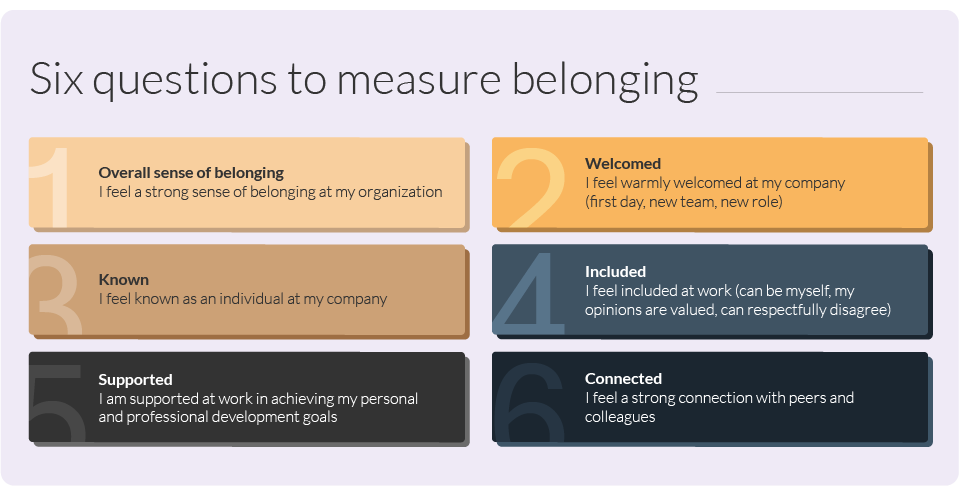
Belonging at work really matters. Employees with a strong sense of belonging outperform others on almost every metric, from engagement & retention to performance & wellbeing. Good leadership supports belonging: People with an effective manager are 6X more likely to feel this sense of belonging. Six ways to gauge belonging at work based on research:
1) Overall sense of belonging: I feel a strong sense of belonging at my organisation
2) Welcomed: I feel warmly welcomed at in my organisation (first day, new team, new role)
3) Known: I feel known as an individual at work
4) Included: I feel included at work (can be myself, my opinions are valued, can respectfully disagree)
5) Supported: I am supported at work in achieving my personal & professional development goals
6) Connected: I feel a strong connection with peers and colleagues
Download a great free toolkit ("blueprint") for building belonging: https://t.co/omyRE2aFku Thank you @Achievers
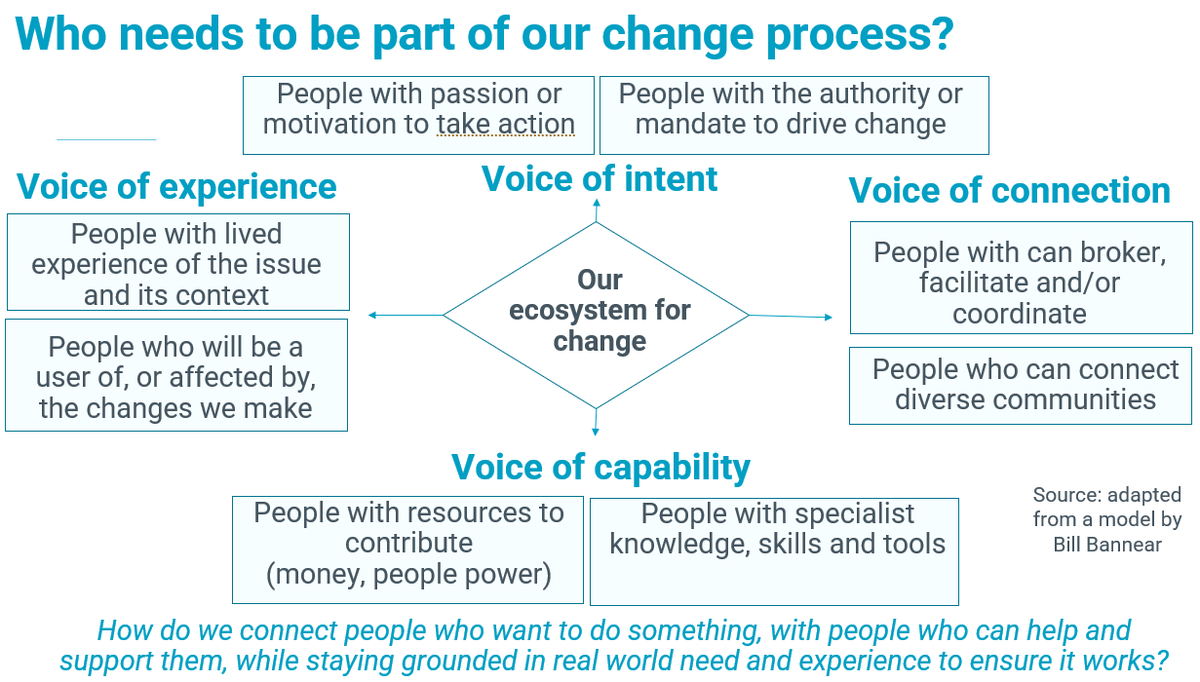
One of the most impactful new change models of 2023 comes from Bill Bannear of @ThinkPlace. We create value & make breakthroughs in our systems through the strength, number & quality of relationships. In complex change, we cannot design the model or predict the outcomes in advance. But if we build these relationships, we create the conditions for impactful new solutions to emerge & be implemented: https://t.co/CL8n05oUZY
Our evidence team hosted a fantastic webinar today on the latest evidence for social prescribing.
This year we have published 4 evidence publications and we are resharing them today.
Here's one, 'Building the economic case for social prescribing': https://t.co/a2H7VDHMfZ
Ten key elements to create a social movement to spread change on a massive scale. Here the methodology is applied to "Grand Challenges" - collaborative responses to significant social problems that demand large-scale change. The approach can be used for other kinds of social change on a smaller scale: https://t.co/JDcGoU2Tl8 By @21stCenturyAssn
Addressing inequalities in health between socioeconomic groups is one of the most important challenges for public health. Commissioned by @PublicHealthW this report brings together synthesised evidence about the effects of interventions, programmes & policies on inequalities.
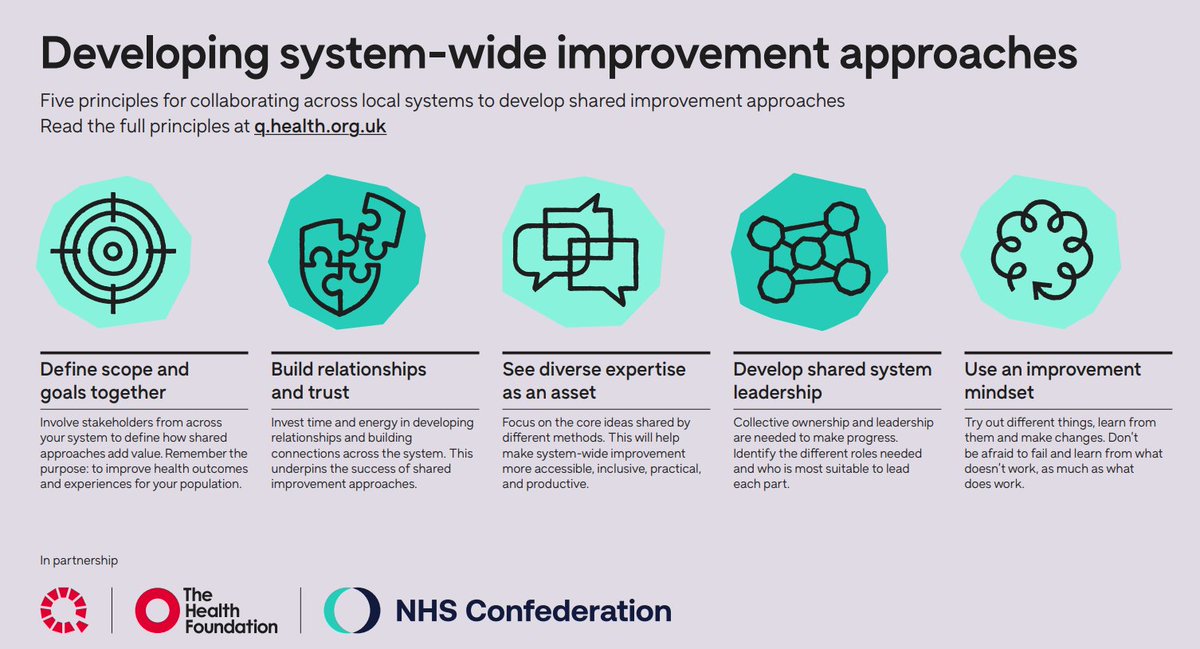
Five principles for developing improvement approaches across a system that create the conditions for effective and sustainable change:
1) Define scope and goals together.
2) Build relationships and trust.
3) See diverse expertise as an asset.
4) Develop shared system leadership.
5) Use an improvement mindset.
https://t.co/3qfycaxZbf By @theQCommunity@HealthFdn@NHSConfed
We recently updated our #HealthInequalities web resource.
It now includes valuable insights on tackling health inequalities in children and young people, as well as a comprehensive section mapping NICE guidance against @NHSEngland's #Core20PLUS5⬇️
https://t.co/O8EgXHDmBd
RPS and NALW webinar: Improving health and wellbeing through #socialprescribing
October 17 @ 7:00 pm - October 18 @ 8:00 pm
The webinar is free for RPS Members and APTUK members.
Registration here https://t.co/zXKdTsLFES…
Discover 12 examples of how population health management is used in primary care from across the World Health Organisation European Region in this paper co-authored by @DrDanAlton (NHS England PHM Clinical Advisor). https://t.co/gg0VXZLB8N
#PopulationHealth#PrimaryCare
#PopulationHealth initiatives can't rely solely on clinicians’ goodwill at a time of a workforce crisis. We spoke to ten clinicians to hear about what helps and what hinders their efforts in implementing a population health approach. Read more: https://t.co/0xIf2RT6Wg
The NHS Long Term Workforce Plan, backed by more than £2.4 billion investment, sets out a series of interventions to train, retain and reform the workforce, and put the NHS on a sustainable footing into the future.
See details in our media factsheet 🔻
https://t.co/8m4JClvjkM
Great article! Be great to see ICSs develop a system shift to prevention strategy. We know it works! I think the analysis is spot on - some ICSs acting as a commissioning/monitoring function rather than strategically shifting towards tackling inequality, prevention & social care.
New! A short guide: "Developing a systems thinking lens for collective leadership". It shows how we need to work with diverse opinions what the problem is/what we should do about it. It also encourages us to think critically about what we're including/excluding in the boundary we draw around the problem: https://t.co/vK0VOc1uwo By Joan O'Donnell @CollectiveScot #Quality2023
@HelenBevan This brings affirmation - there are layers of value in relation to those with the lived experience of a ‘wicked issue’ and the connectivity of those who can bring them together to explore how to tackle it with those within the system
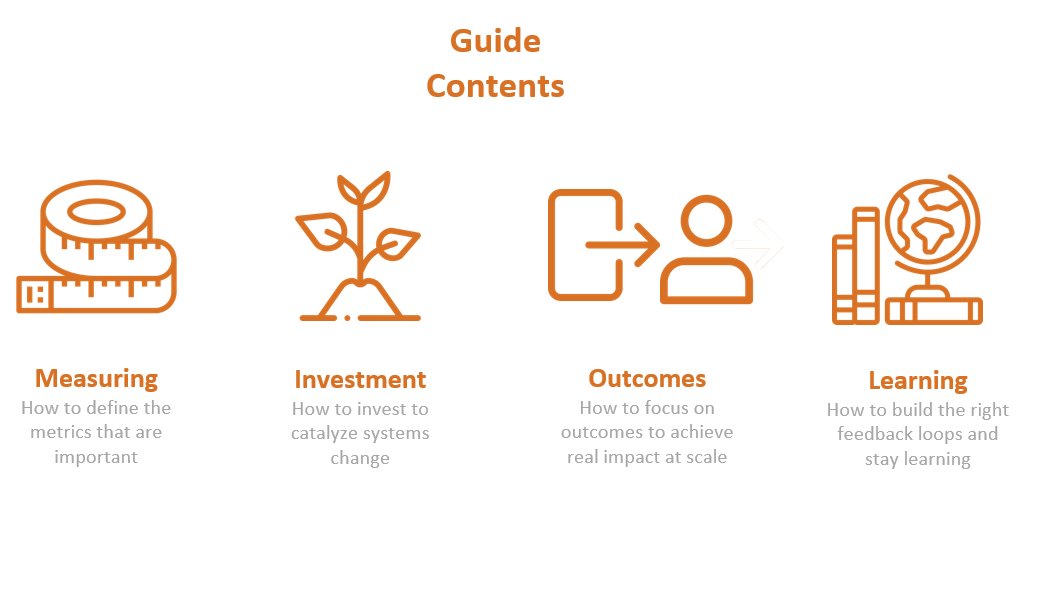
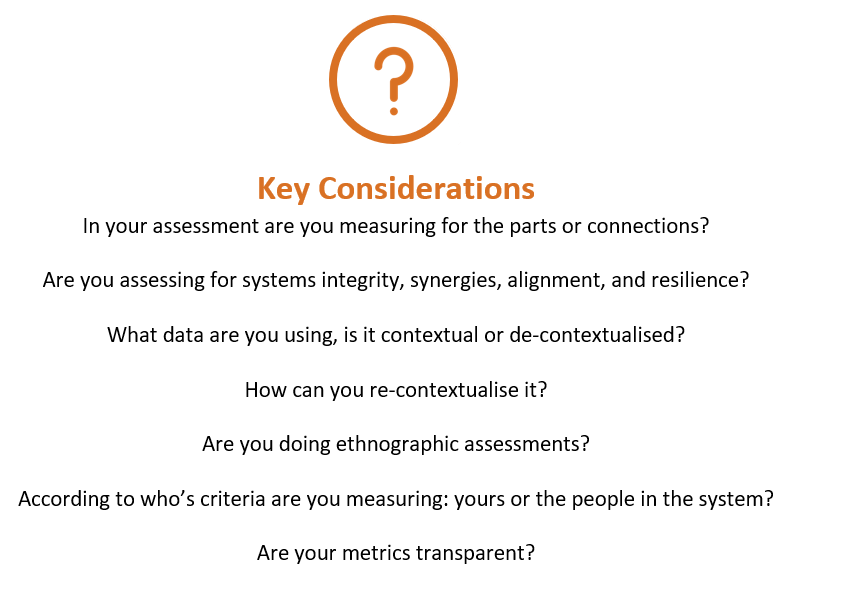
A brilliant (& challenging) guide & slide deck on how to measure/demonstrate the impact of system change from @Sys_innovation. Measuring system change requires a paradigm shift in our thinking, moving away from linear thinking about measuring "parts" of a system to understanding how well the system functions within its broader environment. To access these materials you have to join a network but it's very quick & there are other outstanding free resources on the site: https://t.co/opnS7SB2HR
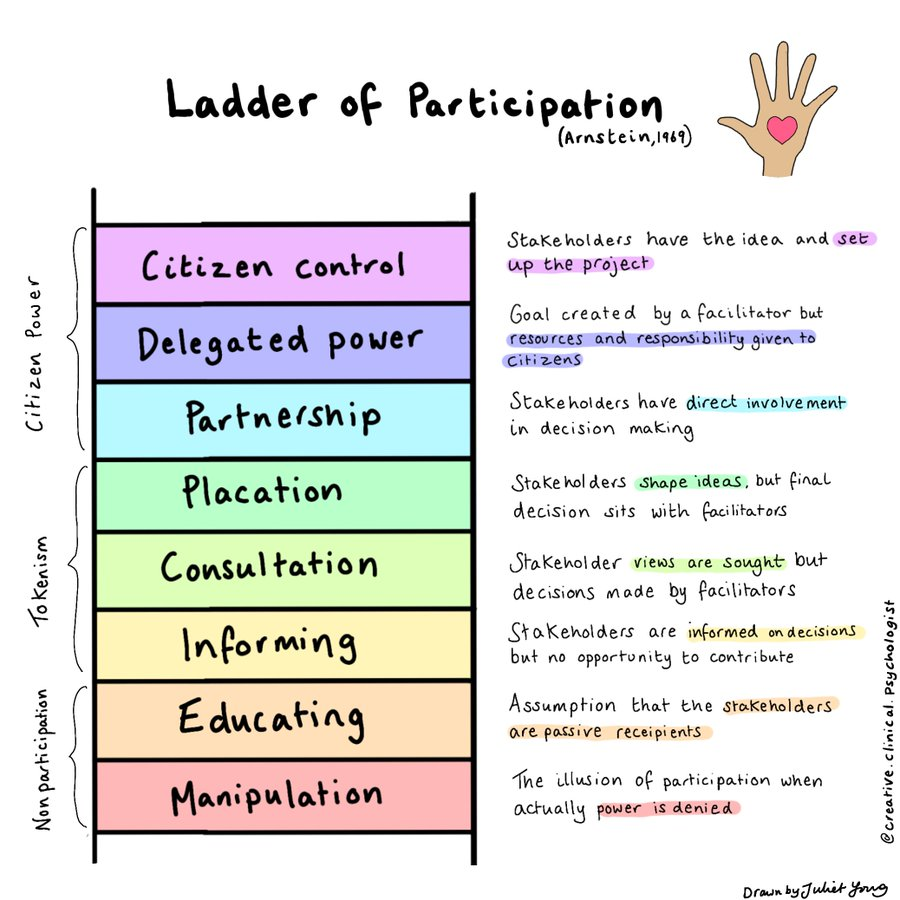
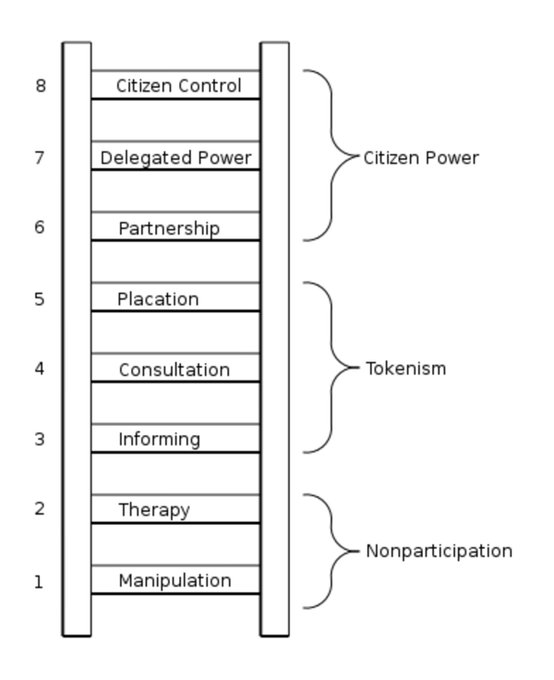
A ladder of participation is a model showing how we move up a spectrum from doing change "to" and "for" people to change "with" and "by" people. Here is a collection of participation frameworks, brilliantly collected and curated via Twitter by @noelito: https://t.co/lRUnXinTKw