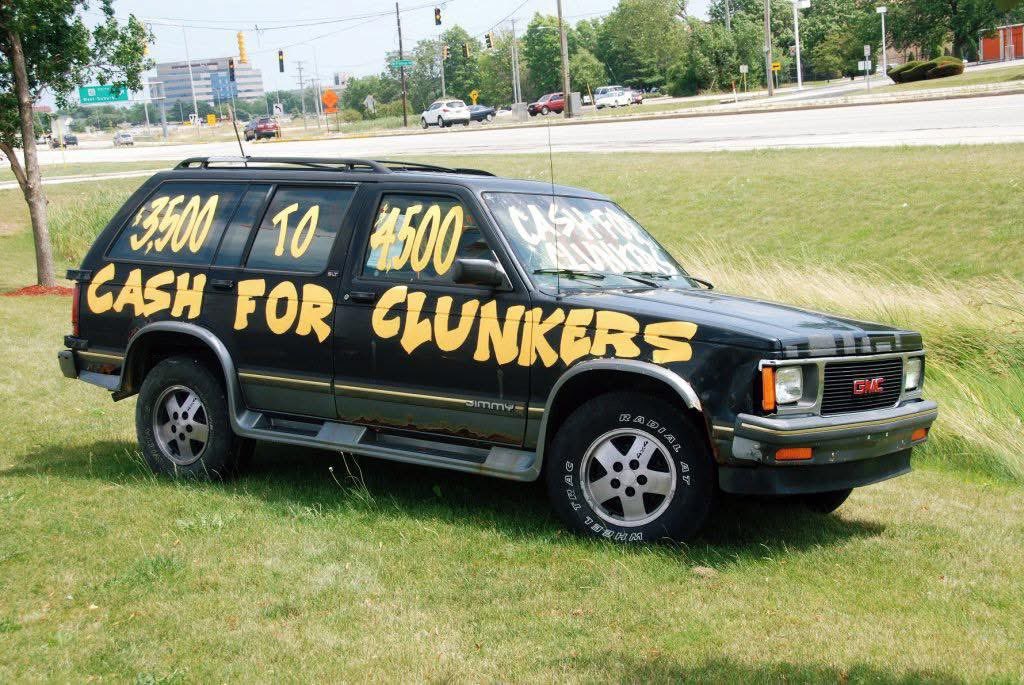
In 2009, the government took 690,000 perfectly good cars and destroyed them on purpose.
Not recycled. Not resold. Wrecked beyond repair. Dealers were forced to pour sodium silicate straight into the engines so they’d seize up and never run again. Cars that a single mom could have bought for $3,000 got turned into scrap metal because Washington decided they knew better.
They called it Cash for Clunkers. $3 billion of your money. Sold to you as saving the planet and helping the economy. What it actually did was wipe out the bottom of the used car market overnight.
That reliable $3,000 Honda Civic? Gone. Now it’s $7,000 if you can even find one. The working people this program was supposed to help got priced out of owning a car at all. Single moms. College kids. Guys working minimum wage trying to get to their shift. The exact people politicians pretend to care about in every campaign ad.
Used car prices jumped 30% between 2009 and 2014. That’s not an accident. That’s what happens when the government destroys half a million vehicles and then acts surprised when the price goes up.
And the environmental win they bragged about? The old cars got around 15 to 17 MPG. The new ones got 24 to 25. You wiped out 690,000 cars to bump the average up 8 miles per gallon. That’s not saving the planet. That’s central planning with a green bumper sticker.
But here’s the part nobody talks about. Cash for Clunkers is the reason your car payment is what it is today. It normalized 84-month loans. Seven years of payments on something that starts losing value the second you drive it off the lot. Turned cars into anchors chained to working people’s paychecks.
Bureaucrats popped champagne because dealer lots cleared out. Meanwhile a whole generation got locked out of affordable transportation and locked into debt they’re still paying on. 🇺🇸
Every time the government says they’re here to help, check your wallet before they leave.
Sources: The NCAA has initiated the final steps to expand the men’s and women’s NCAA basketball tournaments to 76 teams. The expansion is on track to be formalized in the upcoming weeks, with mid-May as the target. The 76-team tournaments begin next year. https://t.co/2ZGUjZR0uJ