Recently I've been reading about the history of Southern Ming, and I've found that China after 1644 and China after 1937 have a great many similarities.
The Japanese who took Nanjing in 1937 are the same as the Manchus who took Beijing in 1644. To China at the times, they were both foreign invaders—brutal, genocidal massacres, fierce, and with highly combat-effective armies. But their weakness was also obvious: they both came from small countries, with far fewer population and resources than China.
Chinese people at both times fell into three categories. One was Han traitors—Wu Sangui (吴三桂) and others in 1644, as Wang Jingwei(汪精卫) and others in 1938. One was the remnants of the old Chinese government—the Southern Ming regime after 1644, as the KMT regime that moved its capital to Chongqing after 1937. One was the peasant rebel armies—Li Zicheng(李自成), Zhang Xianzhong(张献忠) and others in 1644, as the CPC in 1937.
Facing pressure from the Manchus, the Southern Ming and the peasant armies after 1644 reconciled and joined forces to resist Manchus; in 1937, the CPC and the KMT also reconciled and joined forces to resist Japan.
But there are three key differences:
1. In 1644 there was no America or Soviet Union—no power outside of China is strong enough to change the course of the war.
2. The CPC of 1937 were more capable thanpeasant rebel armies in 1644. They carved out large base areas in Japanese-occupied territory and waged constant guerrilla warfare against the Japanese, so that the Japanese could not effectively use the manpower and resources of the occupied areas. The peasant armies of 1644 could not survive at all in Manchu-occupied territory, nor could they hold any ground when facing Manchus attrack.
3. The Japanese were strategically far stupider than the Manchus. The Manchus in fact treated Han traitors like Wu Sangui(吴三桂) very generously, giving them very high positions, which made these Han traitors very loyal—they were in fact the main force in the Manchus' unification of the rest of China. But the Japanese distrusted traitors like Wang Jingwei(汪精卫), and because of racial discrimination they held these traitors in deep contempt, so these people just went through the motions for the Japanese and were not loyal at all; they could not play any critical role in the war.
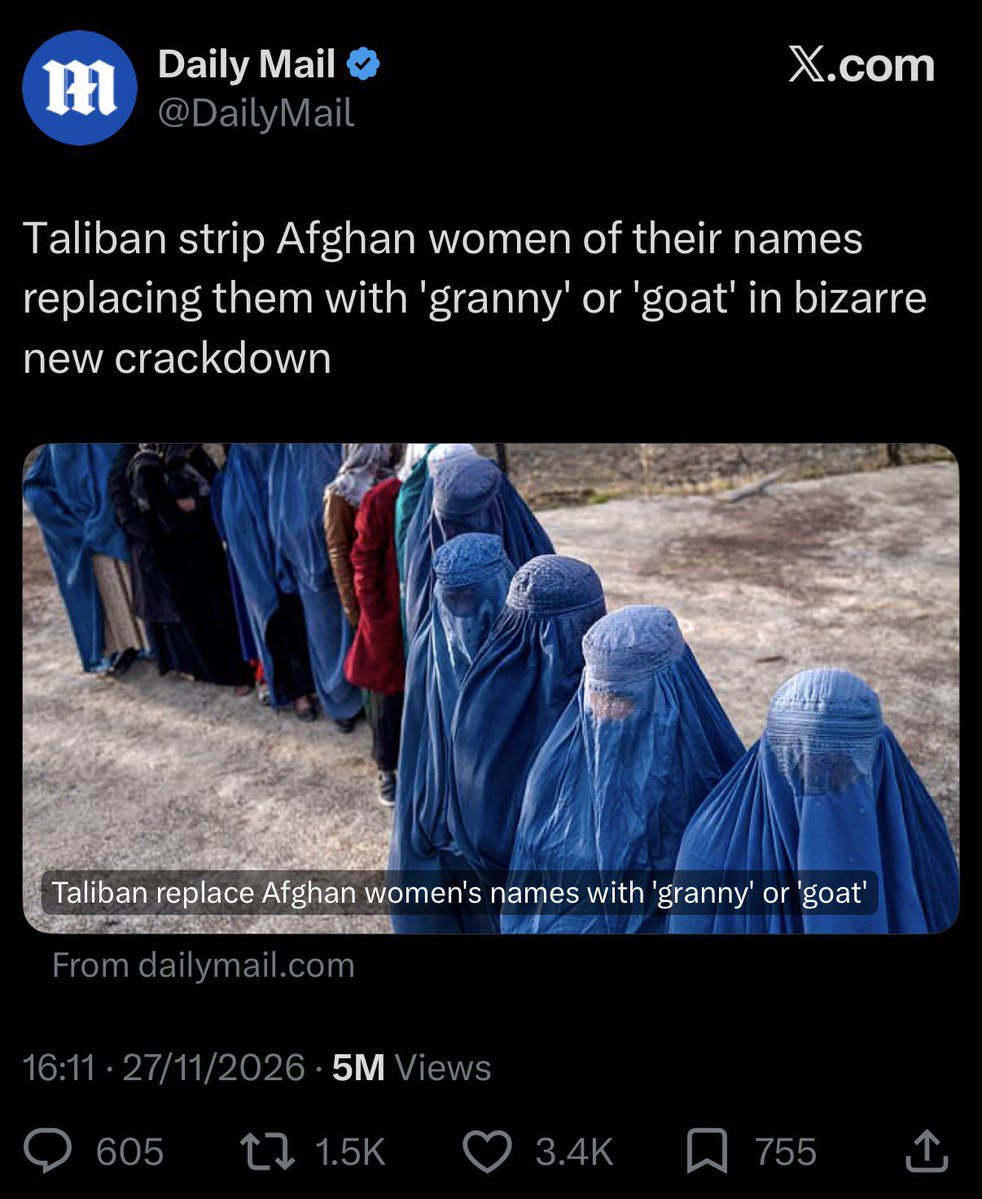
BREAKING: 🇦🇫 The “source” of the “news” that Afghan women are being renamed to “goat” or “cow” has just come out and said it’s not true.
That didn’t stop the biggest names in western media printing it as a fact, which is genuinely stunning, but not surprising.
The Daily Fail has already deleted their article which was immediately and uncritically shared by @piersmorgan (a supposed “journalist”) and Elon.
@no_way_home04 “라틴아메리카의 대미종속적 우파“가 비슷한 듯. 밀레이, 보우소나루, 후지모리.. 개신교 우익이 설쳐대고 이스라엘 빠는 것도 닮았고. 사��� 일본도 예전에는 일정한 세력이 있던“반미우파“가 날이 갈수록 쇠락해지고 지금은 오키나와에서 미군이 범죄 저지르면 피해자 욕하는 부류들이 주류라..
In Vietnam, a man taught his daughter how to bathe a newborn baby. Since he didn't have a doll on hand, he used a very cooperative cat that stayed calm throughout the entire demonstration
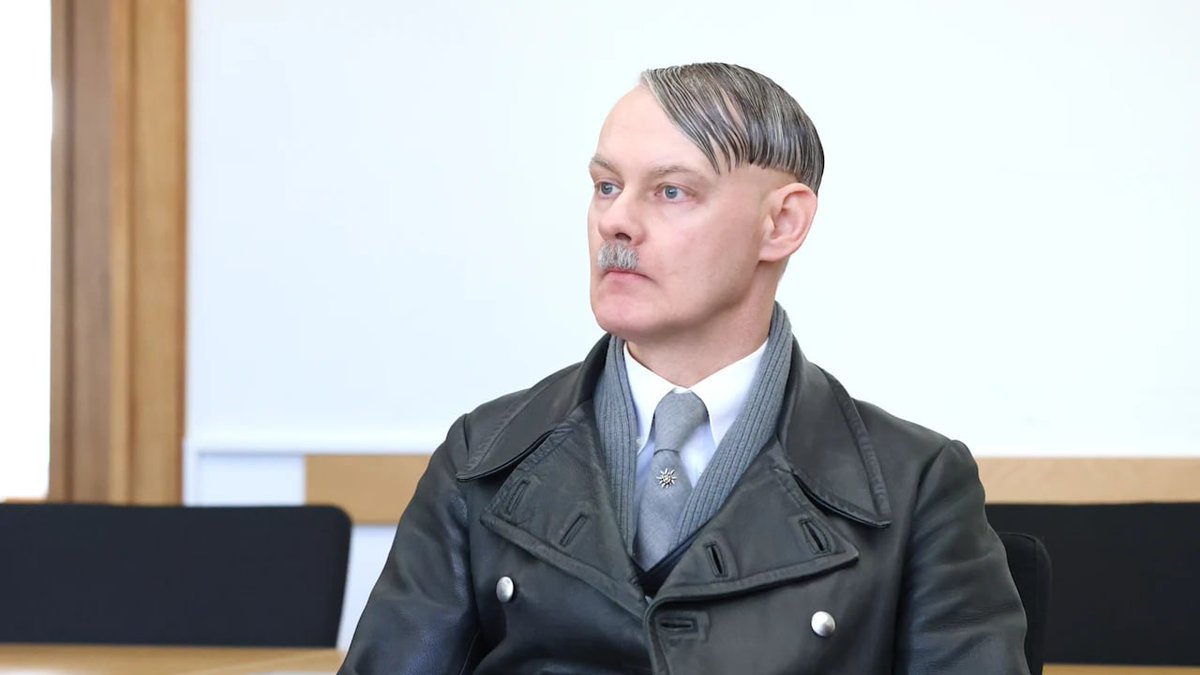
Hitler lookalike convicted in Germany for glorifying Nazism.
A court in the German city of Münster has sentenced Dutchman Stefan Wijkamp, known as the "Dutch Hitler", to eight months in prison, suspended, for incitement to hatred.
He must also pay a €1,000 fine and cover court costs.
The case stems from statements he made at a far-right rally in July 2025. Wijkamp called Hitler a "genius" and declared: "My love for Germany is called Adolf Hitler."
Wijkamp has long been associated with neo-Nazi movements in Germany and the Netherlands. In 2017, he was part of the leadership of the German neo-Nazi party Die Rechte.
The verdict is not yet legally binding. Wijkamp plans to appeal.
The US ironically proves Lenin right.
Many people think - wrongly - that free market competition and capitalism go hand in hand. What Lenin argued in his book "Imperialism, the Highest Stage of Capitalism" is that, ultimately, capitalism detests competition and seeks to capture the state to prevent it.
As he put it, "the striving [is] for domination and not for freedom."
It was always the case but wasn't visible as long as American companies were winning. When you're stronger, you want "free market" so others open themselves: the goal is the same - you ALSO want to destroy competition - but the way to do it is through the market itself. And once you're weaker, the market becomes the threat and the state your weapon.
Which means, interestingly, that capitalism isn't even synonymous with the market: the market is but a tool that may be used, or shut down, depending on the situation.
And right now, when it comes to this car "deal", or AI and chips, American capitalism is becoming hostile to the market.
All resulting in the ironic situation where the foremost capitalist country out there is now championing state control over markets, while "Communist China" has become the flag bearer for free (and ruthless) competition.
@Vajrahomo 공산당 1당통치 시스템이라는 건 다름없는데 왜들 그러는 걸까? 통치체제나 ���압의 정도의 변화가 문제가 아니라 중국 국력의 극적인 부상과 그에 따른 미국 패권에 대한 위협의 가시화 때문이다. 충직한 개는 주인이 규정한 적에게 열심히 짖어대는 법이다.
@Vajrahomo 그래서 같은 사람이 “천안문 학살”을 규탄하며 한편으로는 개혁개방을 찬양하는 행태를 보이기도 했다. 요점은 덩샤오핑, 장쭤민, 후진타오 집권기까지 보수 우파가 지금처럼 일관되고 강력하게 중국에 적대적이지 않았다는 얘기다. 그 시절이나 시진핑 체제인 지금이나 중국이 권위주의 체제이고
@Vajrahomo 그래도 “호치민의 군대와 싸우다 목숨을 잃은 국군 장병들에 대한 모독이다!“는 반응이 어느 정도는 있어야 되는거 아닌가? 단순히 진영논리에 따른 것도 있지만 “중공“과 “월공“에 대한 이런 이중기준은 베트남이 중국과 지정���적으로 충돌한다는 이유에서 비롯된 것이고 이게 그들의 “멸공“이다