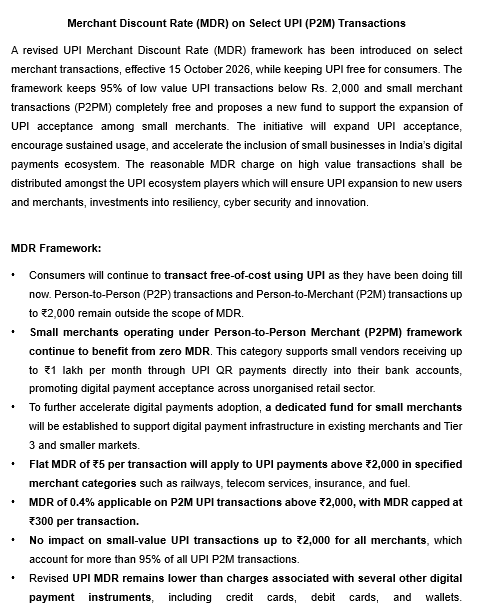
Speculation and claims that the MDR will be charged on UPI transactions are completely false, baseless, and misleading.
Such baseless and sensation-creating speculations cause needless uncertainty, fear and suspicion among our citizens.
The Government remains fully committed to promoting digital payments via UPI.
Bengalis are the ones who flaunt their tolerance, only to be disrespected by people who don’t even know a single good thing about Bengalis & don’t think twice before disrespecting Bengalis & Bengali women.
Every Bengali should refuse to speak Hindi with those who try to impose Hindi.
Researchers at Oxford argue that LLMs can't invent anything.
It's impossible mathematically.
The paper is called "Theory Is All You Need."
Teppo Felin and Matthias Holweg take the famous "Attention Is All You Need" title and flip it. Their argument is that AI predicts from the past, while humans reason forward into the future, and those are two different kinds of thinking.
Start with the numbers. The authors estimate a large language model trains on roughly 13 trillion tokens. A human reading at 150 words a minute would need about 164,000 years to get through that. A child hears around 20,000 words a day and roughly 36.5 million words in their first five years. It's the same task with wildly different data, and the child still ends up with language that goes far beyond anything they heard.
Their point is that the model learns which words tend to follow other words. It becomes a mirror of what people have already written. It doesn't build a theory of how the world works, so it can't step outside its training data.
The paper's sharpest thought experiment makes this painful. Imagine an LLM trained in 1633 on every scientific text ever written up to that point. Ask it about Galileo and heliocentrism. Thousands of years of geocentric texts would swamp Galileo's ideas, so the model would tell you he's wrong. It would also rate Tycho Brahe's astrology as more credible than the idea that the Earth moves, because more people had written about astrology.
Then there's flight. In 1888 the scientist Joseph LeConte looked at bird data, noted that no bird above 50 pounds could fly, and concluded humans couldn't either. Lord Kelvin, then president of the Royal Society, said he had not the smallest molecule of faith in aerial navigation.
The New York Times estimated in 1903 that flight was one to ten million years away.
Nine weeks later the Wright brothers flew.
The Wrights didn't have better data. They had a theory. They broke flight into three problems, lift, propulsion, and steering, built their own wind tunnels, and generated the data that didn't exist yet.
Wilbur wrote in 1900 that he had been "afflicted with the belief that flight is possible to man."
Every prediction machine on Earth would have told him no.
The authors call this the data belief asymmetry. Every real breakthrough starts with someone believing something the existing data says is wrong. A system trained to minimize surprise can't do that by design.
They're not anti AI. They say AI will win at routine, repetitive decisions that extrapolate from the past, which is most decisions. They're just pushing back on the idea that you should replace humans with algorithms whenever possible, which is a direct quote from Kahneman.
I use these models every day and this matches what I see. The new stuff comes from the human at the keyboard who decides the data is wrong.
LLMs don't think, you do!
And if someone thinks that the Tax oh sorry MDR+GST will affect only merchants, I want to remind you guys that Zomato, Swiggy etc charges rain fees😂. So you know who will be affected from this.
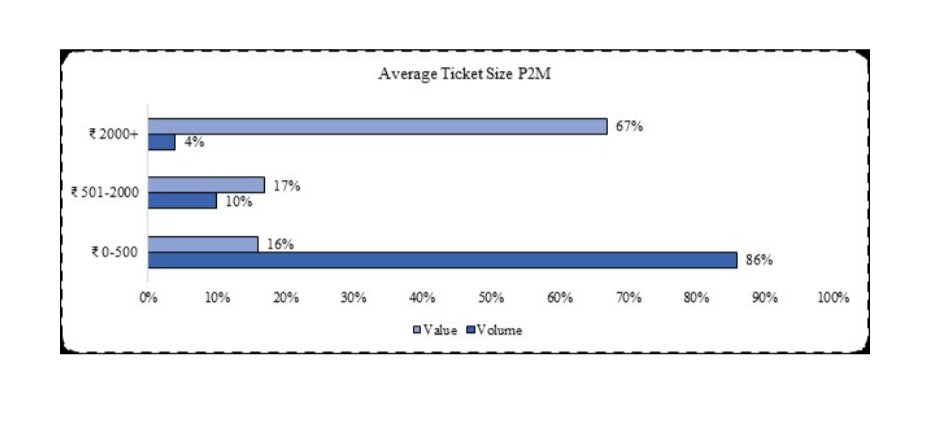
Yes 96% of P2M payments are under ₹2000 but only with the volume of 33% of the P2M. And the other 4% of payment which is ₹2000+ take the volume of 67% of the P2M payments.
This data is from pib: https://t.co/xULiC9bnJh
Is UPI no longer free❓
Let’s separate facts from confusion!✅
▪️Person-to-person UPI payments remain completely free, irrespective of the amount transferred.
▪️For merchant payments, transactions up to ₹2,000 remain free of MDR.
🎥 Watch the video to know the facts about the new UPI framework.
#UPI #DigitalIndia @FinMinIndia
The most expensive part of a hospital bill may never touch the hospital at all.
A patient admitted for care has no way of knowing whether the price on a medical consumable reflects its actual cost or a markup fixed long before it ever reached the ward. That gap in information is, at its core, a public health issue.
A survey of hospital consumables in Maharashtra found an IV infusion set with a trade price of ₹11.05 carrying a printed MRP of ₹325 ; a markup of 2,841%. A syringe procured at ₹6.75 carried an MRP of ₹57.20. A catheter procured at ₹29.41 carried an MRP of ₹310.
These are not elective purchases. Patients cannot compare prices, seek alternatives, or question a number printed on a box while receiving care and the MRP itself is often fixed upstream by manufacturers and distributors, disconnected from the trade price by a wide, unexplained margin. The result is a system where the party bearing the cost has the least information to evaluate it.
The regulatory gap is structural: scheduled medicines are capped under the Drugs (Prices Control) Order, 2013. Most medical devices and consumables are not leaving both the pricing and the information around it almost entirely unmonitored.
A review of these findings and clear guidelines on the permissible gap between trade procurement price and declared MRP have been recommended to the Department of Pharmaceuticals and the NPPA ; a step toward closing not just a pricing gap, but the information gap patients are left to bear alone.
#PublicHealth #GoodGovernance #Leadership #TukaramMundhe
https://t.co/Ye9CVzr8qU
Yes 96% of P2M payments are under ₹2000 but only with the volume of 33% of the P2M. And the other 4% of payment which is ₹2000+ take the volume of 67% of the P2M payments.
Source: https://t.co/xULiC9bnJh
In a civilized country this man would be hanged for his crimes, in a barbaric country this man would be hanged for this crime , in a lawless country, he would be lynched and hanged for his crime,
except in ours..... Here keep your fingers crossed.
#amitkilhor#kilhor #veereshjain
Govt has introduced UPI charges, Ignorant people believe that it will be charged by from merchant, they don’t understand that merchant never pays himself, he will charge from Customer only… See less
@_kumbhkaran You need a debit card or a credit card to enable upi. As some people are saying debit card and credit card fees are charged by banks. Now UPI also charge fees or MDR.
Imagine a scenario. You finish dinner and the bill is ₹2400. You pick up your phone and scan the QR the same way you have done for years.
From October that payment is no longer fully free for the shop. The owner now pays a small charge of about ₹10 on your bill. He will not take that loss. So either the food becomes a little costlier next week or he simply tells you to pay in cash.
When enough shops start doing this, people get used to carrying notes again. Buying tea or vegetables still works fine on UPI. But the bigger bills slowly push everyone back toward cash. The easy digital habit starts breaking.
First people leave UPI because of charges. Then cash floods back. Then the same cycle of sudden change can start all over again.
From a cashless economy to a cash plus economy.
7.8% growth, strong numbers, stronger confidence… meanwhile government schools are still waiting for basic classrooms and toilets.
Maybe the growth report forgot to visit them. Lol🤡