How to become AI engineer in next 6 months:
By the end, you want to be able to:
- build LLM apps end-to-end
- use APIs from OpenAI / Anthropic / open-source stacks
- design prompts and context properly
- add tool calling and structured outputs
- deploy real projects
So, let’s discuss your roadmap month by month
Month 1: Get solid enough in coding and fundamentals
What to learn:
- Python really well
- Git + GitHub
- CLI / terminal basics
- JSON, APIs, HTTP, async basics
- basic SQL
- basic data handling with pandas
- virtual environments, package management, error handling
- FastAPI or Flask
Month 2: Master LLM app development
What to learn:
- prompting fundamentals
- system vs user instructions
- structured outputs / JSON schemas
- function/tool calling
- streaming responses
- conversation state
- cost / latency / token basics
- failure handling
- prompt injection awareness
Month 3: Learn RAG properly
What to learn:
- embeddings
- chunking
- vector databases
- metadata filtering
- reranking
- retrieval quality issues
- hallucination reduction
- citations and grounding
Month 4: Agents, tools, workflows, evals
- agent loops
- tool selection
- state management
- retries
- when NOT to use agents
- multi-step workflows
- evaluation harnesses
- task success metrics
Month 5: Deployment, product thinking, and reliability
What to learn:
- FastAPI production patterns
- Docker
- background jobs
- queues
- auth + API key security
- logging
- observability
- prompt/version management
- eval dashboards
- cost monitoring
- rate limits
- caching
Month 6: Specialize and become hireable
these knowledge and skills you gained can be applied in three directions
you need to choose one of them and focus on practice
although everything mentioned above is also best learned purely through practice
Direction 1: AI product engineer
Best if you want startup jobs fast
Focus on:
- LLM apps
- RAG
- agents
- deployment
- product UX
Direction 2: Applied ML / LLM engineer
Focus on:
- fine-tuning
- when to fine-tune vs prompt
- evaluation
- inference optimization
- open-source models
- training pipelines
Direction 3: AI automation engineer
Focus on:
- workflow orchestration
- business process automation
- multi-tool systems
- CRM, docs, email, support, ops use cases
This roadmap will help you go through a practical path, and the key is to study each of these points and then test them in real work
By month six, you will already have several built products or examples of completed tasks
And it will be much easier to get a job as an AI engineer
Save it so you don't lose it and can return to study later
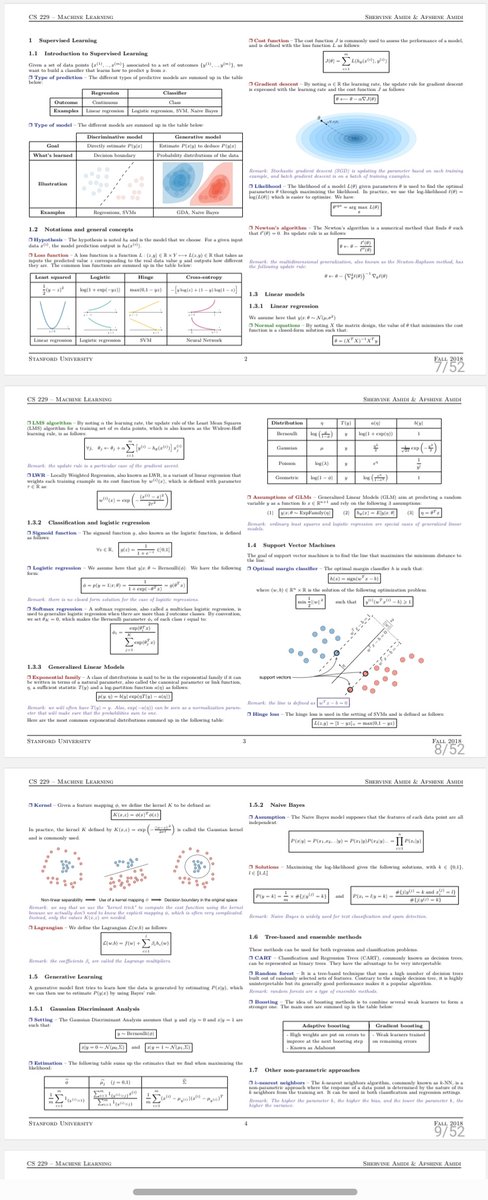
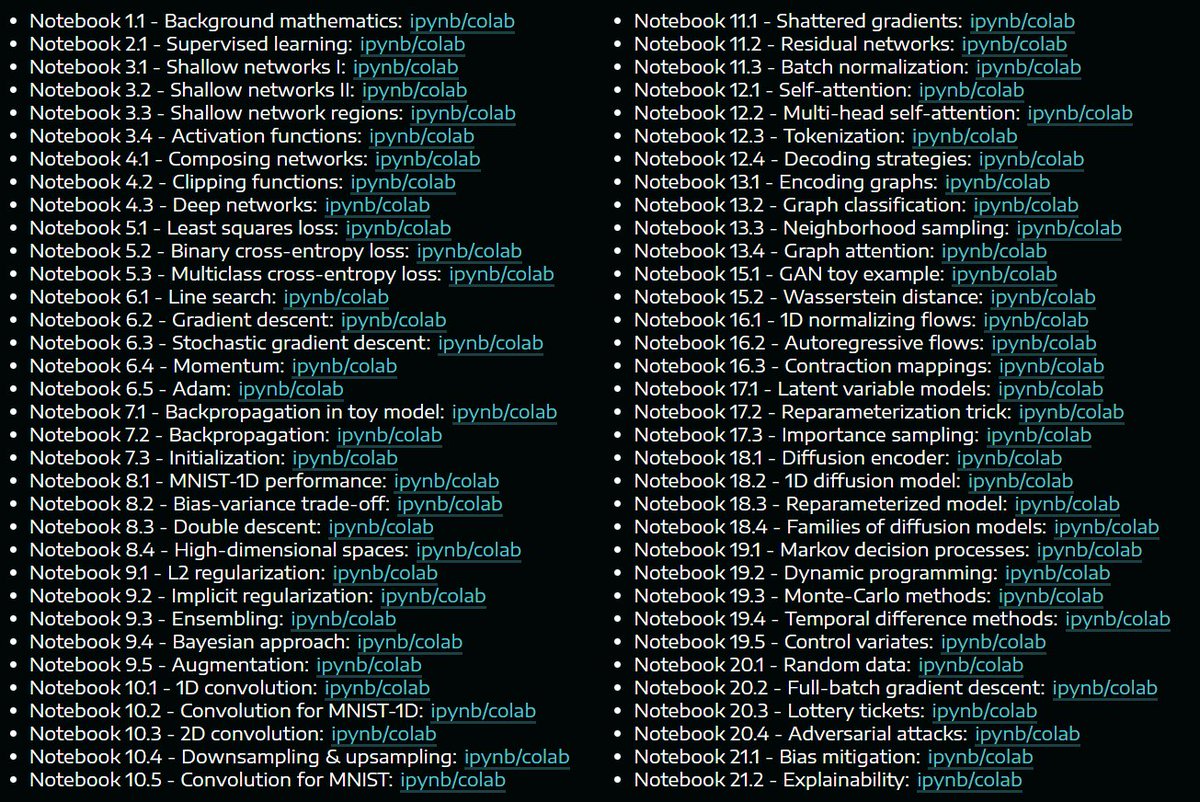
Les dejo un pdf que es una joya para aprender ML, DL e IA.
Incluye material de Stanford + MIT.
Si lo abren y no entienden nada, van a su IA favorita y le piden que les explique lo que necesiten paso a paso.
Traten de no saltarse tanto la parte de matemáticas porque aunque es la más difícil, es muy interesante aprenderla para que así no sean alguien que simplemente usa funciones de sklearn y ya.
Les dejo el link abajo 👇
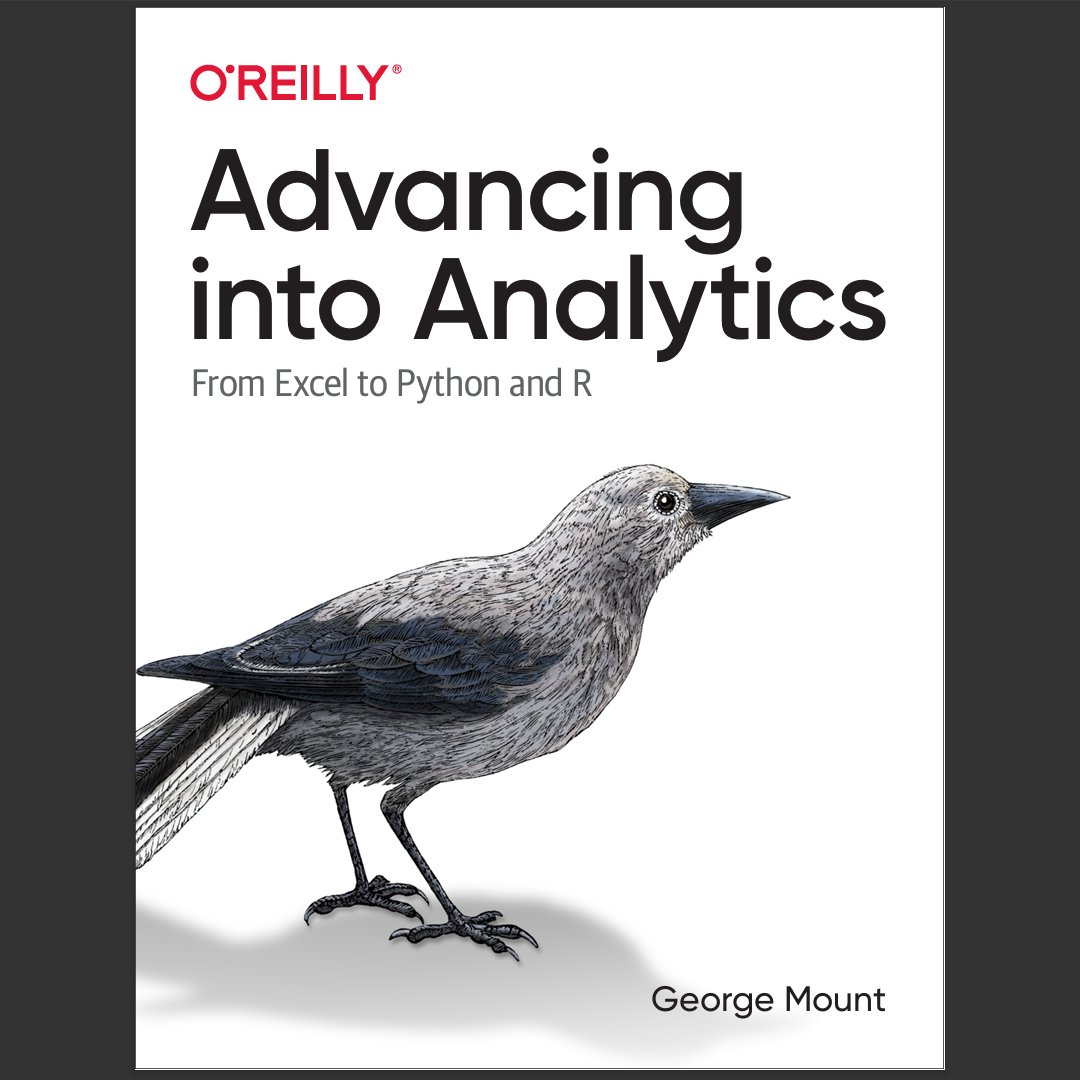
Want to make $4,000+ per month leveling up your analytics game?
Move beyond Excel master Python and R for serious data work and USD-paying gigs.
I’m sharing a FREE guide inspired by “Advancing into Analytics”
Learn how to go from spreadsheet basics → analytics expert
Perfect for career growth, freelancing, and remote jobs
No coding experience needed!
To get your guide for free:
𝐋𝐢𝐤𝐞 𝐭𝐡𝐢𝐬 𝐩𝐨𝐬𝐭
𝐑𝐞𝐩𝐨𝐬𝐭
𝐅𝐨𝐥𝐥𝐨𝐰 𝐬𝐨 𝐈 𝐜𝐚𝐧 𝐃𝐌 𝐲𝐨𝐮
Drop “𝗜𝗢” below and I’ll DM your FREE copy!
1) Learn Python and its frameworks like Fastapi.
2) Learn Linux basics
3) Practise DSA in Python
4) Write some python programs
5) Write some python automation scripts
6) Learn system design. Recommending @gkcs_ course.
7) Build small-small projects and record it using Loom.
8) Post it everywhere.
9) Learn in Public Build in Public should be the Mantra.
Add more...
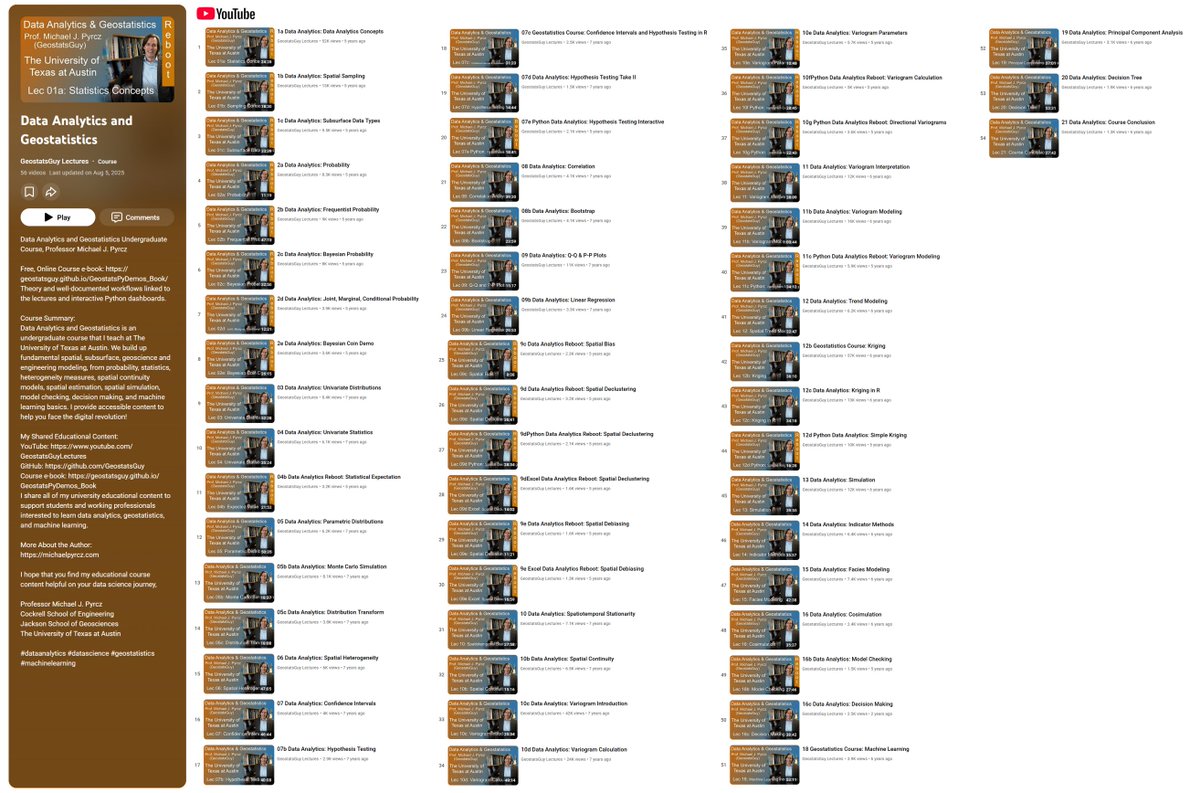
🚀 When I say I’m sharing my entire #DataAnalytics and #Geostatistics course with anyone eager to learn — I’m not joking! 😀📊
🎓 Here it is! Imagine, every lecture is paired with a free online e-book, plus hands-on, well-documented #Python workflows and interactive dashboards that make data and methods come alive! 🐍💻📈
🌍 @GeostatsGuy is here to guide you on your #DataScience journey — because the world’s biggest challenges are spatial, and mastering #Geostatistics is how we’ll tackle them together! 💪🌐
Let’s make an impact. 🔥I'm stoked!
#WhatStartsHere Open, accessible, actionable education is my raison d'être!
👉 Watch the full course here:
🎥 https://t.co/HGqqHDQKcu∀.
Reinforcement Learning of Large Language Models, Spring 2025(UCLA)
Great set of new lectures on reinforcement learning of LLMs. Covers a wide range of topics related to RLxLLMs such as basics/foundations, test-time compute, RLHF, and RL with verifiable rewards(RLVR).
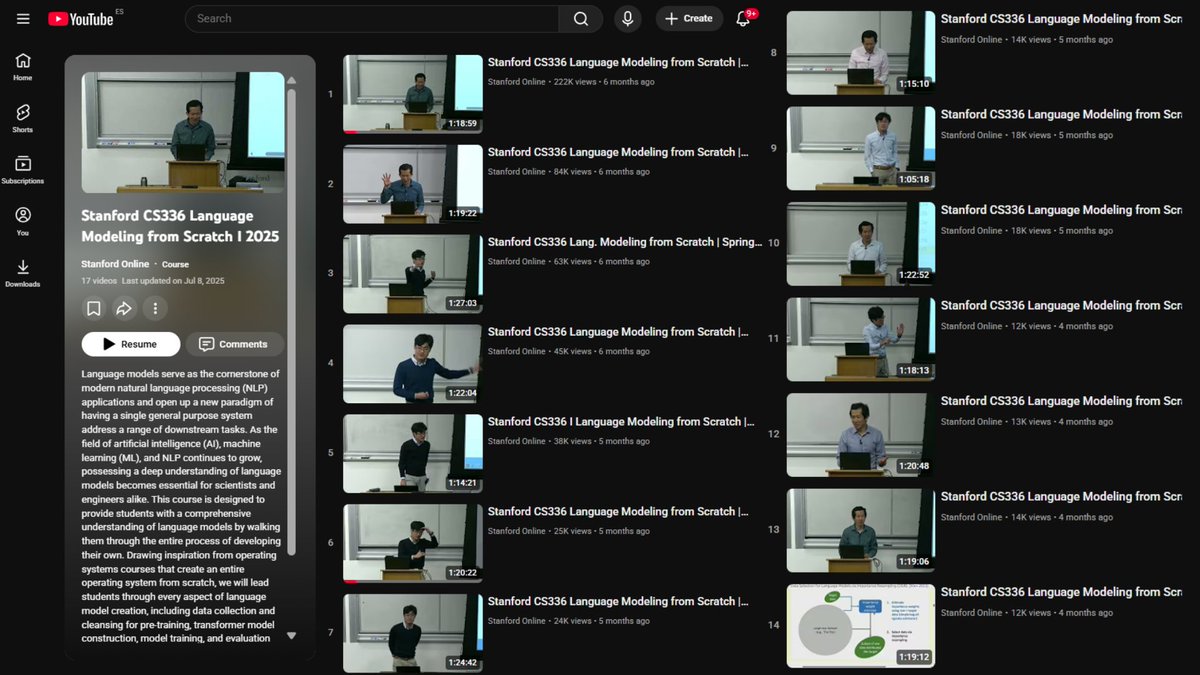
Stanford just did something wild. They put their entire graduate-level AI course on YouTube. No paywall, no signup. It’s the exact curriculum Stanford charges $7,570 for ❱❱❱❱ watch free now
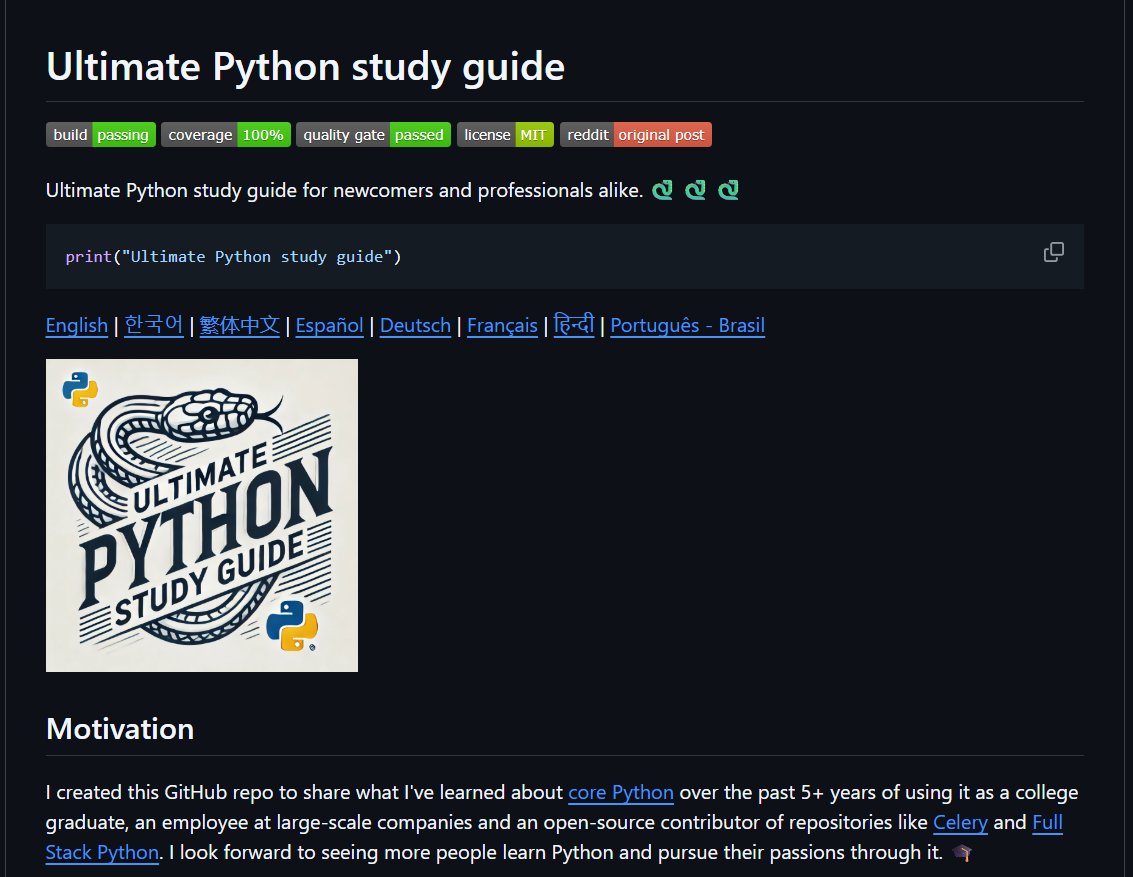
This is the Github repository I would start with if I was to start learning Python in 2025
'The ultimate Python study guide' is a curated repository which is
• has a collection of standalone modules which can be run in an IDE like PyCharm and in the browser like Replit
• Has carefully crafted comments which guide a reader through what the programs are doing step-by-step.
• Only builtin libraries are leveraged so that these concepts can be conveyed without the overhead of domain-specific concepts.
Link in image description
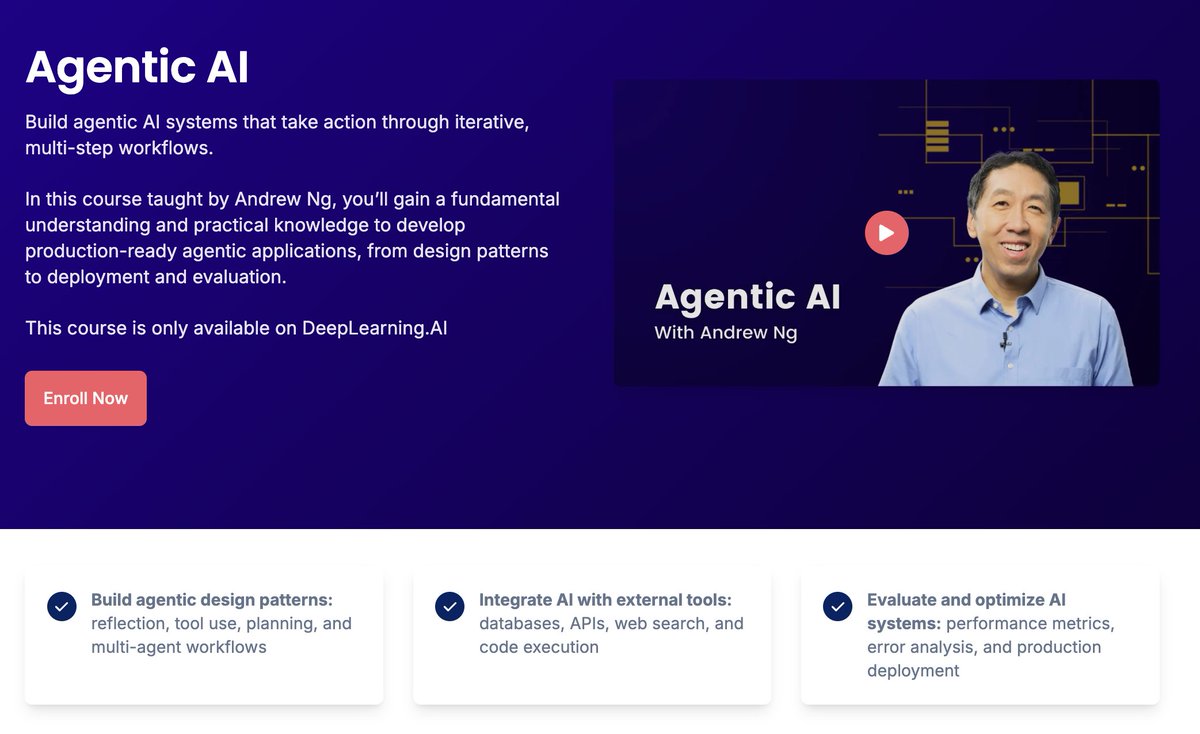
Andrew Ng just dropped a new free course on Agentic AI!
This course teaches you how to build agentic systems that take action through iterative, multi-step workflows.
100% Free
AI/ML Engineer Roadmap (30 Days) 🔥🔥
Fundamentals -> Maths & Stats -> Programming -> Data Processing -> Machine Learning -> Deep Learning -> Specialized in NLP & CV -> Advanced ML -> MLOps -> Advanced ML with ML System Design & Architecture Pattern
I know it's hard to cover everything in 30 days but atleast we can start....make progress than what we are today!! 👍👍