Head of Drug Discovery & Development Research @AnthropicAI | previously CTO & Co-Founder @CoefficientBio (acq. by @AnthropicAI) | ex-@Genentech | @MIT @Penn
Today we’re sharing an update on Claude’s protein design capabilities.
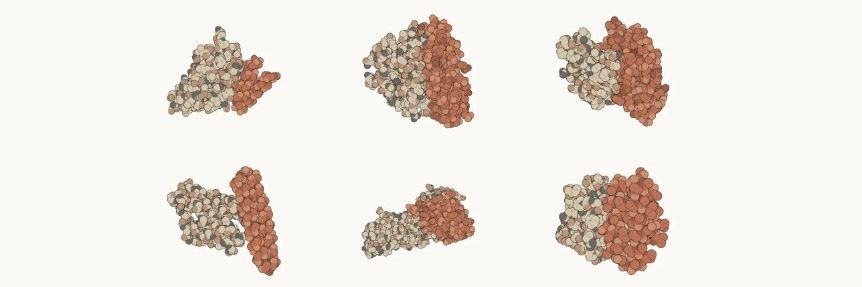
Working with Adaptyv Bio and Twist Bioscience, Claude designed de novo protein binders against 14 of 15 targets. With a 30k token prompt written by a human expert, Claude achieved hit rates up to 28.2% when designing against all targets simultaneously over 48 hours, with no human intervention or steering. When designing against a single target in a 24 hour campaign, Claude achieved an overall hit rate of 35%.
We included all targets in Adaptyv’s BenchBB, and novel targets 15-PGDH and GDF-8. Claude performs at or beyond the level of the top competition participants in both hit rate and binding affinity.
Career update/news including that I'm hiring!
Late in the summer, I made the jump to @AnthropicAI to help co-lead a moonshot effort in genetic medicine.
I'm hoping to have a proper update to share publicly fairly soon, but if you know my collection of interests (AI, clinical genetics, therapeutics, rare disease non-profits), you are unlikely to be surprised. Much of the upfront effort here requires infra for moving atoms as well as bits, and we explicitly want to lean deeply into collaborations with academics, non-profits, and key industry partners in the space. If either of the below roles sound like you, please apply through the link. More to come!
Program Manager:
https://t.co/GHmp3S5fEw
CMC and Manufacturing Lead:
https://t.co/97teIeHPmK
We’re hiring on Anthropic’s Discovery team!
Research scientists in the applied sciences and engineering fields:
- Domain scientists: https://t.co/yROrqBnOF3
- ML researchers: https://t.co/wWHRWXWDwR
We’re also hiring for a science strategy role, working broadly across Anthropic and with scientific communities: https://t.co/ws04ZPI3QD
Our goal is to safely increase the pace of scientific and technological progress. Come be my colleague!
Introducing Claude Meetings: add Claude to your team’s video call and it builds docs, whiteboards, and other artifacts with you while you’re still talking.
Starting to roll out in beta on Team and Enterprise plans.
Starting to roll out today: Claude Whiteboards, Claude Sheets and Claude Data.
Think a plan through on a board, build a tracker in a sheet, and tell a story with your data.
Mythos 5.2 devised a creative (and compute-efficient) solution to folding AAVs using OpenFold3-p2 and ESMFold2! I used to work on these molecules a few years ago @Dyno_Tx so I appreciate the review from @samsinai and the Dyno team. Thank you as well to @MoAlQuraishi and the @open_fold team as well as @ebetica and the @biohub team for developing and releasing these great folding models.
With this model release, Claude is beginning to feel like a very capable assistant for research. One exercise I can recommend is sharing an older paper or draft, and asking the model to reimplement or extend it in some way. Claude Mythos 5.2 excels on long-horizon research tasks.
I ask all our models to hypothesize about the function of vault particles now. Here’s what Mythos 5.2 thinks:
Introducing Claude Fable 5.2 and Claude Mythos 5.2, designed to tackle the most daunting technical challenges.
They’re capable collaborators on ambitious projects in many fields, and show improvements in areas like coding, reasoning, and vision.
I'm Sam, one of Anthropic's co-founders, and I lead much of our safety work. I'm going to have more to share on that work over the coming months.
I thought I'd start by sharing a few thoughts on the latest report from @METR_Evals.
The speed of progress in model capabilities is one of the most important questions in AI safety, and METR’s work here provides the public with an independent, external view into how this is happening inside Anthropic. I’ll talk more about some of the details below, but first some context for those new to this work.
How quickly AI progress is accelerating has many important safety implications, since it determines how quickly the risks from advanced models increase. But, because most research happens within the frontier labs, it’s difficult for external observers and policy makers to get a strong sense of what that rate is. We kicked off the process with METR that led to this report earlier in the year, in anticipation of progress continuing to accelerate.
For this report, we gave METR access to a range of sensitive internal data, including benchmark scores for unreleased models, estimates of how models are progressing, and interviews with our researchers. They had complete independence to form their own conclusions.
Many of their conclusions match my own. AI is speeding up our research, but it’s hard to say exactly how much. While they conclude AI can't yet make the most important contributions to model training on its own, they think the pace of development could, by default, accelerate further.
This work began well before and is separate from the embedded third-party evaluators that are part of our commitment to pacing the frontier, but it’s a good illustration of why we think evaluators are a good idea. The more access reviewers have, the clearer a picture they can form of the situation and the better-positioned they are to highlight situations like this one.
We redacted a lot, and I accept that this makes it harder for others to check METR’s work. But we determined that sharing exactly what is driving the speedup isn’t the right thing to do, both because it’s commercially sensitive and because it risks handing out a roadmap for others to go faster. That would make the risks METR is worried about worse. That’s a tradeoff. I think we made the right call, though we’re continuing to assess the pros and cons here.
In the coming weeks, we plan to share a report with our own analysis of the speed of AI progress within Anthropic, including where we stand against our Responsible Scaling Policy, plus new steps we’re taking to strengthen our safety and security practices as AI keeps improving quickly.
Vault particles are in most cells in your body and they're still a big mystery. Our biology research team showed that vault proteins from bacteria and their phages assemble into real vaults that are bigger than human vaults. They solved the first structure of one, from a bacteriophage.
We’re sharing how our biology research team worked with Claude to map the first 3D structure of a vault particle from bacterial life.
Vault particles are a longstanding mystery. They are barrel-shaped objects, among the largest protein structures found in our cells. They were first discovered by Leonard Rome and Nancy Kedersha in 1986, but their function remains unknown.
With Claude, we’ve found results that might bring us closer to solving that mystery.
Until now, vaults were only known in the cells of complex things like animals and plants. We have shown that similar proteins from bacteria (and the viruses that infect them) can also assemble into vaults. Finding the structures in these simpler forms of life may make it easier to investigate their function in our own cells.
For our life sciences team, the project was also a demonstration of the potential (and the limitations) of using AI to accelerate science.
In our full piece, we discuss how Claude was able to dramatically speed up some stages—manually determining the vault particle’s structure would have taken weeks to months of painstaking work, but here it took days. We also discuss how Claude made some simple mistakes along the way, and how we collaborated with our machine learning researchers to address them.
Read more: https://t.co/KowVVCSPp8
hey! wait! don't go out! it's unsafe! biotech is a woodchipper built to ingest souls and shred them! you need your own pipeline-in-a-person for your protection.
Surprise 1: Anthropic acquired a one-person biotech
.
.
.
Surprise 2: that person is me
Surprise 3: I’m here to tell you all about it
Yes, this is what you think it is; after 6 yrs of increasingly loose anonymity: the Professor Oak reveal post
…and yes, it has gotten so boring around here that I’m literally doxxing myself to spice up the timeline
-------
Ok, allow me to introduce myself. My name is Cody Tranbarger. I mostly tweet, but occasionally find time to dabble in drug dev & starting/building biotechs. My past lives span the VC, crossover, startup continuum; Prof Oak has been my way of keeping a digital foot in those worlds, despite having my physical feet planted elsewhere.
The past 18 mo, ‘elsewhere’ was Mithril Medicine, a co. I founded to develop bsAbs for LAMA2-CMD & other ECM-related genetic diseases.
Mithril was born out of hands-on building with @MikeNGladstone, @JasonPaulRhodes, @LifeSciVC, & team @atlasventure. Somehow, I made enough half-decent calls along the way (even a broken clock is right twice a day, eh?) to convince them Mithril/I warranted a small seed. While I can hardly rationalize such an outrageously cavalier bet, I’m grateful for it, & I'd partner with Atlas again in a heartbeat.
In typical AV fashion, Mithril’s primordial form was virtual, decentralized, & ultra-lean. This stage tends to be short-lived, but for Mithril, it worked surprisingly well, for surprisingly long, thanks in part to the rapid maturation of the AI tools I used liberally.
Eventually, Mithril became a bit of an experiment itself - to find the upper bound of how far it could scale as a single operator + a bunch of Claude (+ a stellar bench of part-time consultants).
In parallel, I started spending time with @nc_frey, @an1lam, & @CoefficientBio team; and promptly experienced, for the 1st time, AI at the frontier. Soon thereafter, Mithril stopped looking like an experiment, & started looking like a preview of an entirely new operating model.
From that spark came “Pipeline-in-a-Person.” The idea immediately resonated when we shared it here back in April; and it was central to the shared vision that led to Anthropic’s acquisition of Mithril, & my joining the team.
Why join Anthropic? Three reasons.
(1) For Mithril, the programs continue, with more resources & infrastructure behind them, and as much Claude as I can put to work.
(2) For me, the chance to start several more programs, & find out how many one person can actually run in parallel - an almost unprecedented luxury for a curious drug hunter.
(3) For our mission, a path to institutionalize & scale this new way of working, then put it in the hands of all of biopharma, all over the world - which, candidly, I find the most energizing.
Will AI x Bio cure diseases? Unequivocally yes, imo… but not by the route that gets the most airtime. Rather than timeline acceleration & compression, I see orchestration & parallelization as today's low-hanging fruit.
Most drug hunters see a handful of go/no-go calls in a career, & spend entirely too much of the rest trading emails (my inbox can attest).
Give them the bandwidth to run several programs at once, and the time to focus on scientific judgment, and I’m willing to bet they’ll make better calls. And at scale, better calls translate to more drugs, higher hit rates, broader patient impact, & likely, a disease or 10 or 100 cured. I couldn't be more excited to build toward that future @AnthropicAI.
Finally, a heartfelt thank you to BioTwitter/X. The end of anonymity is bittersweet, but if anyone’s earned a proper introduction, you all have.
It’s difficult to overstate how much this app has done for me: a decade of education, plenty of friends, many job opportunities, several mentors, a few investors, even a co-founder (fmr). It was the generosity of this community that inspired me to start posting 6 years ago, after just as many years lurking. I hope I’ve been able to pay it forward, in my own small way.
But, to be clear, Prof Oak isn’t going anywhere. Same beat, same themes, and now, a front-row seat to drug development at the frontier. Stay tuned for dispatches from the trenches; and remember...
Gotta Cure 'Em All
The best way to identify and work through the bottlenecks of drug development is to get deeply involved in real drug programs, across many different therapeutic areas and stages of development. Over the past several months, our scientists have engaged in deep research partnerships with six organizations developing new medicines: The Column Group, Generate Biomedicines, BigHat Biosciences, Divergence Labs, Enveda, and Bristol Myers Squibb. We’ve also begun our own drug discovery efforts through the acquisition of Mithril Medicine, a single-person biotech company co-founded by @atlasventure.
Today we’re sharing early progress in accelerating drug discovery from these research collaborations. With Claude, we are streamlining operations and working to derisk novel targets with TCG, redesigning lab protocols with BigHat, designing CAR-T cell therapies with Generate, and multi-specific therapeutic antibodies with Divergence, drafting regulatory filings with Enveda, and supporting portfolio-level decision making with BMS. Our early collaborations span pre-clinical and clinical work on potential treatments for cancer, allergies, rare genetic diseases including forms of childhood muscular dystrophy, and more.
My team has been working with @Prof_Oak_ , founder of Mithril Medicine, for the past year. Jason Rhodes, General Partner @atlasventure and Chairman of the Mithril Board said this about Mithril: “We prioritized LAMA2-Related Congenital Muscular Dystrophy (LAMA2-RD) as the lead indication, in part, because of the enormous unmet need. These patients present with the disease at birth, spend their lives in wheelchairs and on ventilators, and rarely live past their mid-twenties; yet no therapy is available, and few are in active development. We believed Mithril would be the company to change that.” Anthropic acquired Mithril and we are pushing the frontier of how a single skilled operator, with Claude, can run an entire pipeline of drugs.
We’re working with these teams to show how AI can assist drug developers at many stages of the process already, and to prioritize improvements to our models based on the benchmarks we’re building with collaborators. Our blog includes links to technical reports written with our partners: https://t.co/xGG6tJGMPJ
Our last challenge in the Anthropic x Adaptyv Protein Design Competition is about immunotherapy, one of the most important ways of treating cancer.
Immunotherapy helps the immune system attack cancer cells, but distinguishing them from healthy cells isn't always easy. In some cancers, the difference can be as subtle as a single amino acid in a small protein fragment.
That's the case with KRAS, a protein that works like a growth switch in our cells. In many cancers, a mutation leaves the switch stuck on, and the cell keeps multiplying itself and grows into a tumor.
In Challenge 5, you need to design a binder that sticks to the mutated piece of KRAS, but not to the healthy version, so that the immune system can find and attack the cancer cells.
The deadline to submit protein designs for this challenge is November 8. Then, we'll pick the best designs and test them in our lab.
Can we track how the virus is spreading in the Ebola outbreak in DR Congo? Claude Science is providing bioinformatics support to scientists at @inrb_kinshasa responding to one of the most pressing global health challenges right now:
https://t.co/RiBKgQSqRS
Drs. Placide Mbala Kingebeni, Tony Wawina Bokalanga, Collins K. Tanui, Emmanuel Lokilo, Princesse Paku, their team, and I used Claude Science to analyze >800 virus genomes and infer the most likely ‘virus family tree’ to reveal when the outbreak started, how and where the virus is spreading, and whether spread is increasing or slowing.
Claude Science enables researchers to run complex bioinformatics workflows, including Bayesian phylodynamic inference, and go from sequences to public health insights in minutes (or hours for BEAST X analyses). It also allowed us to compare how stable the results are across >20 different phylodynamic workflows and data subsets, and easily rerun analyses as new data comes in: our current report shows results for genomes released up to last Saturday.
Our results are further corroborated by this preprint, posted one day after the initial Claude Science results, which independently estimated the viral effective population size for genomes collected through mid-August and finds the same early growth rate and slowdown since June: https://t.co/JK0do0W5LL
Today, we’re announcing an open call for guest investigators in life sciences. Over 8–12 weeks, guest investigators will work directly with my team and other Anthropic researchers to produce analyses and tools for their work. We’ll run our models and harnesses, at no cost to them. We’ll work together to open-source the resulting data, artifacts, and code, and write preprints about what we find.
We want humans to remain at the center of scientific discovery, deciding what questions to pursue, and how to pursue them. Those decisions are not ours to make alone. This open call is part of our ongoing efforts at Anthropic to support researchers and accelerate scientific discovery.
I’m looking for principal investigators and their research groups at academic institutions, nonprofits, or government labs, working in causal human biology, structural and computational molecular biology, medicinal chemistry, drug discovery, and clinical science.
Applications are open for about 14 days: https://t.co/bCcrKjB3W7
We’re opening a research preview of Claude Duet, a new app where Claude works as a proactive agent.
It comes to you with what needs your attention, completes tasks you ask of it, keeps working when you step away, and checks with you before it acts on your behalf.
Where do you go next after reporting from the Strait of Hormuz? For the past three months, Citrini Research, an independent research firm, has been working with our team and an internal research model to see if they could use AI to create a new drug. What follows is an entertaining, candid, and humbling account of a group of motivated nonexperts (or “filthy casuals”, as Citrini would say) trying to tackle a real problem in human health with Claude.
We landed on scorpion neurotoxins, which kill over 3,000 people a year. Of the 211 designs we produced and tested, 17 met our criteria for a binder. None of the designs bound more than one toxin and none have been tested for neutralizing a toxin.
One of my favorite quotes from the piece is: “Our virtual biologist may have compressed a year's worth of work into a couple days, but biology works at the speed of life…Over two days, we watched Claude work through problems at a speed that was difficult to comprehend. For the next two months, we spent much of the time becoming familiar with laboratory turnaround times (This mostly involved sending memes in Slack).”
What is AI really capable of in bio?
To separate hype from reality, we spent 3 months working firsthand with @AnthropicAI's internal research model to see if it could create an experimental scorpion antivenom.
Introducing Citrini Therapeutics.
https://t.co/VAUBSi7sNy
We’re committing a portion of Anthropic’s shares to the Anthropic Public Benefit Fund, a new wholly owned entity dedicated entirely to the public benefit.
It will start off with 5% of our shares. For every 50% increase in the company’s value over a set baseline, we can contribute up to an extra 2%, subject to our board’s discretion.
In total, this means that roughly 20% of Anthropic’s shares are committed to the public good. Our co-founders have already pledged to donate 80% of their equity, and around half our employees are donating a portion of their equity as part of a donation matching program we’ve run since our founding.
In the post below, we share more details about our new fund.
https://t.co/XzDntVH0vH
Join us for four months at Anthropic as a STEM fellow. You'll work directly with our research team on ambitious, open-ended problems in your field of expertise.
I encourage you to apply even if you don't think you meet every single qualification.
https://t.co/WEsSCzbsoO