What does it mean for Nigeria to be in the world?
Our May–July 2026 issue, Nigeria in the World, explores how Nigeria moves through the world—and how the world shapes, interprets and often misreads Nigeria. Across Africa, Asia, Europe and the Americas, these essays examine the political, cultural and economic encounters that continue to define the country.
Shop our latest issue at the link: https://t.co/ZcZELDkYue
Wrapped in the language of sovereignty and African values, the Draft African Charter on Family, Sovereignty and Values is drawing sharp legal rebuke — with analysts warning it would gut existing continental human rights protections rather than defend them https://t.co/ug87hmxfmi
Day 44 🚶🏾♂️
Today I was hosted by two professors who helped shape my life long before I knew where my journey would lead.
Professor Debbie Whelan and Professor Robynne Hansman taught me as a first-year student. Years later, they welcomed me into their homes as I walked through Oudtshoorn and Calitzdorp.
Debbie once connected me with a student from Poland named Wera. That single introduction helped shape Ubuntu Design Group and gave me a lifelong friend.
As we explored Oudtshoorn, we reflected on a town of beauty, history, and contradiction. Grand ostrich-feather mansions stand alongside communities still carrying the scars of apartheid, inequality, and the dop system.
This walk keeps teaching me that every town has a story. The question is whether we’re willing to listen.
Thank you Debbie and Robynne for opening your homes, sharing your wisdom, and reminding me that some teachers never stop teaching. ❤️
#DurbanToCapeTown #Day44 #Ubuntu #Karoo #SouthAfrica
Nationalist & first president of independent Nigeria, Nnamdi Azikiwe, had a deep influence on Kwame Nkrumah. Azikiwe first met Nkrumah when he was a student at Achimota Teacher Training College; at the time, Azikiwe was a journalist. Read Nkrumah's autobiography, titled 'Ghana'.
"Critical Thinking in Qualitative Research: A New Compilation" — A selection of 9 articles appearing from 2017-2025 emphasizing the essential role that critical thinking — from the human mind — plays in the quality and integrity of qualitative research. https://t.co/ZSIFHY9o7c
One of the most balanced assessments I've read on South Africa's migration challenge.
South Africa hosts an estimated 3 million migrants, roughly 90% of them Africans. Many arrived fleeing war, persecution, state collapse, and economic hardship. They didn't come to destroy South Africa—they came to rebuild their lives, raise families, start businesses, and contribute to society.
The uncomfortable truth is that millions of South Africans benefit from migrant labour every day. Migrants drive Ubers, staff restaurants, build homes, run spaza shops, care for children and the elderly, and fill critical gaps in the economy. For many middle-class households, life without them would be unimaginable.
Yet the same country that champions Pan-Africanism and African solidarity continues to witness periodic eruptions of violence against fellow Africans.
The deeper problem is not migration. It is the unfinished legacy of apartheid, decades of economic stagnation, mass unemployment, corruption, failing public services, and a state that has too often failed its poorest citizens. In communities where opportunities are scarce, it becomes politically convenient to blame the foreign shopkeeper, the day labourer, or the street vendor.
A dysfunctional Home Affairs system has only made matters worse—leaving many migrants trapped in bureaucratic limbo while failing to maintain an orderly, credible immigration system.
Let's be honest: Zimbabweans did not create load-shedding. Nigerians did not create state capture. Mozambicans did not create corruption. Congolese refugees did not create South Africa's unemployment crisis.
When a nation starts blaming the vulnerable for failures created by political and institutional decay, it risks losing sight of the real causes of its problems.
South Africa's greatness has never come from exclusion. It came from its ability to overcome division and build solidarity against injustice. The violence directed at African migrants is not just a threat to them—it is a betrayal of the very ideals upon which the democratic South African project was built.
Time to confront the facts. Time to reject scapegoating. Time to live up to the promise of the Rainbow Nation.
Family, if you are interested in knowing the history, successes and benefits of Pan-Africanism; I highly encourage those that haven’t already to start off with these classics.
They will get you right and motivated!
Studied East African politics for like 3 years and post-2011 Somali politics literally might be where I draw the line, this shit is genuinely mind-boggling
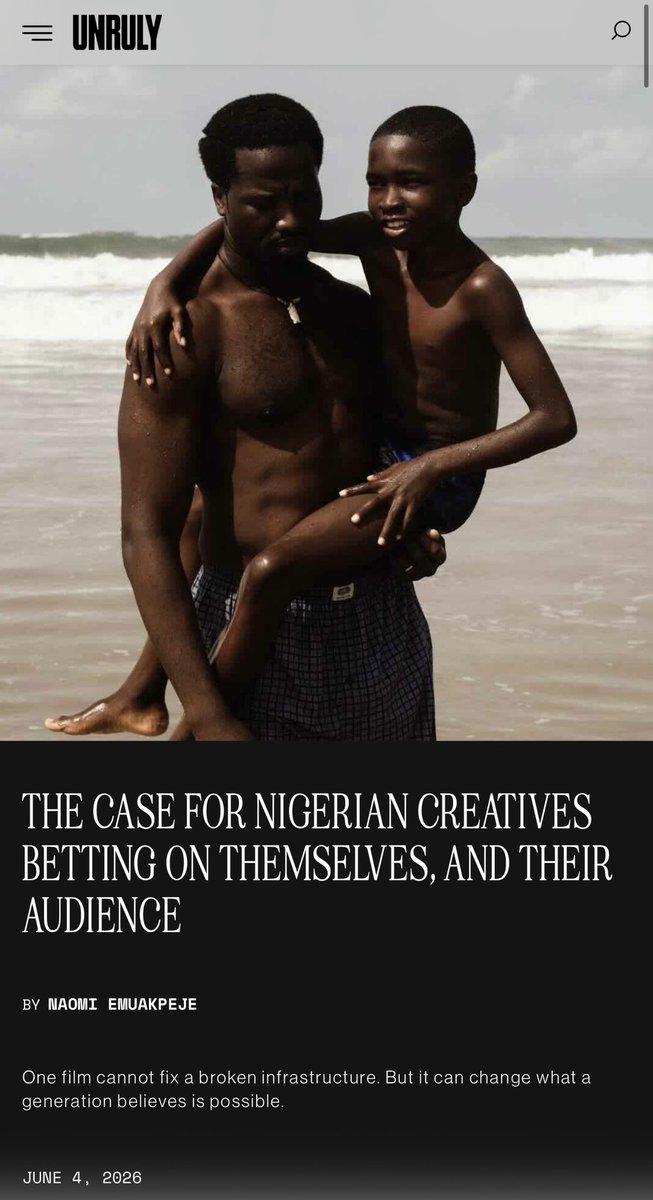
Published my first feature essay with @getunruly! This piece means so much to me, and is what I’ll consider a beacon of hope to every creative doing their thing!
Please read, like, comment, and I can’t wait to hear your thoughts.
https://t.co/XfoLJh7Qb1
"The Martyrs of the South are Roses"
Beautiful painting by my fav Lebanese artist Ayman Baalbaki from his acclaimed "Al-Mulatham" series. These large-scale, expressionist paintings feature anonymous "fida’i" with their faces obscured by the keffiyeh & masks.
Nudes are overrated. Send me a video of you reading so that I can see if you’re literate enough to fight against the technofascist wave of illiterate anti-intellectualism.
Good day. I’m Luyanda Kazi, a qualified Medical Technologist. I need R2,814 for HPCSA registration to work in Medical Laboratories. I’ve created a BackaBuddy campaign for anyone who wishes to donate & I will share any proof for verification. Thank you. https://t.co/1mCPtOrR5r
It's a terrible, tempestuous phase of a teenage democracy we're going through. Really sorry about that. You folks need to teach us how to get over it. Sorry again.
In Port Sudan, young women displaced by war are filming in 113-degree heat, wrapping overheating phones in wet cloth and working in whatever shade they can find.
Mohammed Ahmed Wad Al Sak reports, their films are documenting survival on their own terms.
https://t.co/EH6u9m7qzS
Twelve-year-old Fatima is dropped off in a market wearing an explosive belt, ten minutes on the clock, programmed to kill the enemies of Allah. For nine of those minutes, the film becomes an inner journey.
Amina Abdoulaye Mamani's 23-minute short — a Niger–Burkina Faso–Rwanda co-production, shot in Hausa — screened in Locarno's Open Doors Screenings.
It is now free to stream until July 4.
→ Watch it on the Locarno website: https://t.co/yHJwaLRbeL
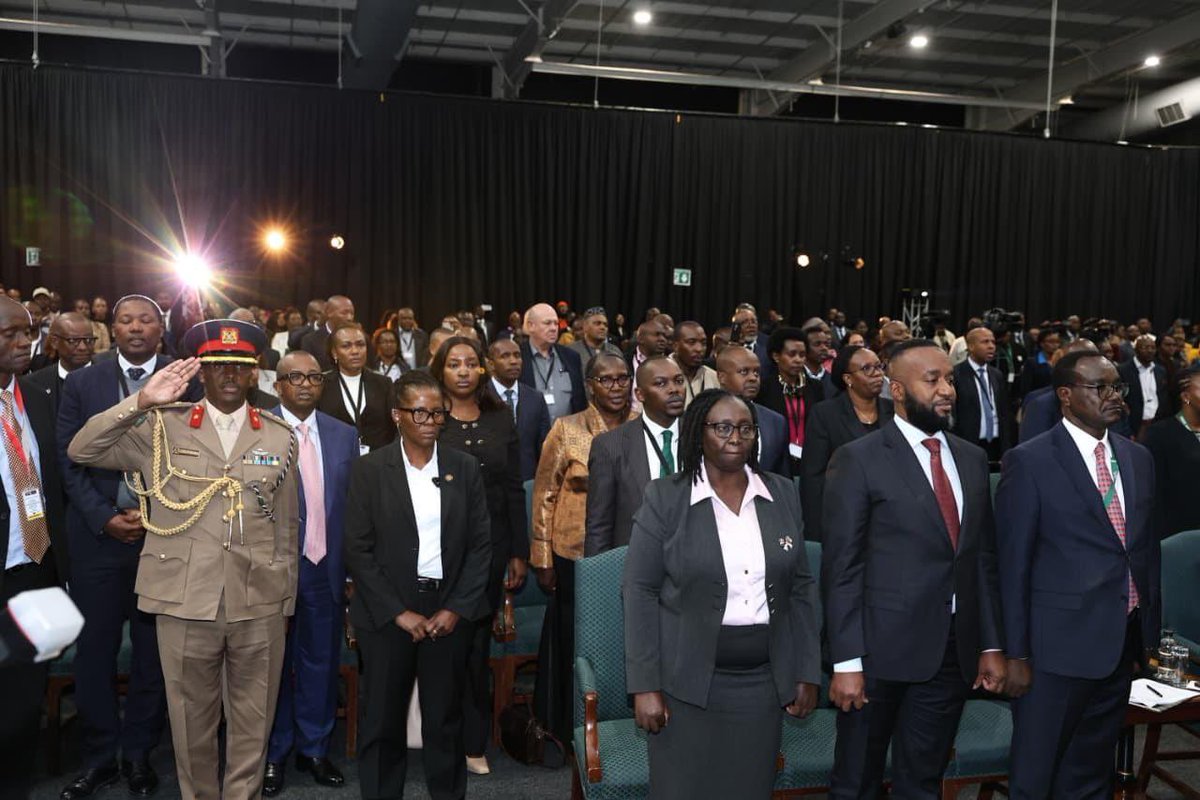
South africa has lifted the suspended duties on Kenyan tea, coffee and spices that were imposed in November 2025, giving market access to the products under the SACU tarrif offer.
The concession is intended to strengthen trade ties between the two countries and reduce the trade imbalance that currently favours South Africa.
The announcement was made by President Cyril Ramaphosa during the Kenya–South Africa Business Forum. The forum was hosted on the margins of the State Visit by His Excellency President @WilliamsRuto
Principal Secretary Regina Ombam joined Cabinet Secretary for @MITI Lee Kinyanjui, among other dignitaries at the forum.
We have no provider left to support our family. Every day brings new worries about food, safety, and survival. If you can help, even a small donation can ease some of our hardship and remind us that we are not alone 💔🙏https://t.co/Pqi4iyecWl