Public service center @NCStateSciences -- climate services, research, extension, outreach and education for NC citizens, businesses and local governments
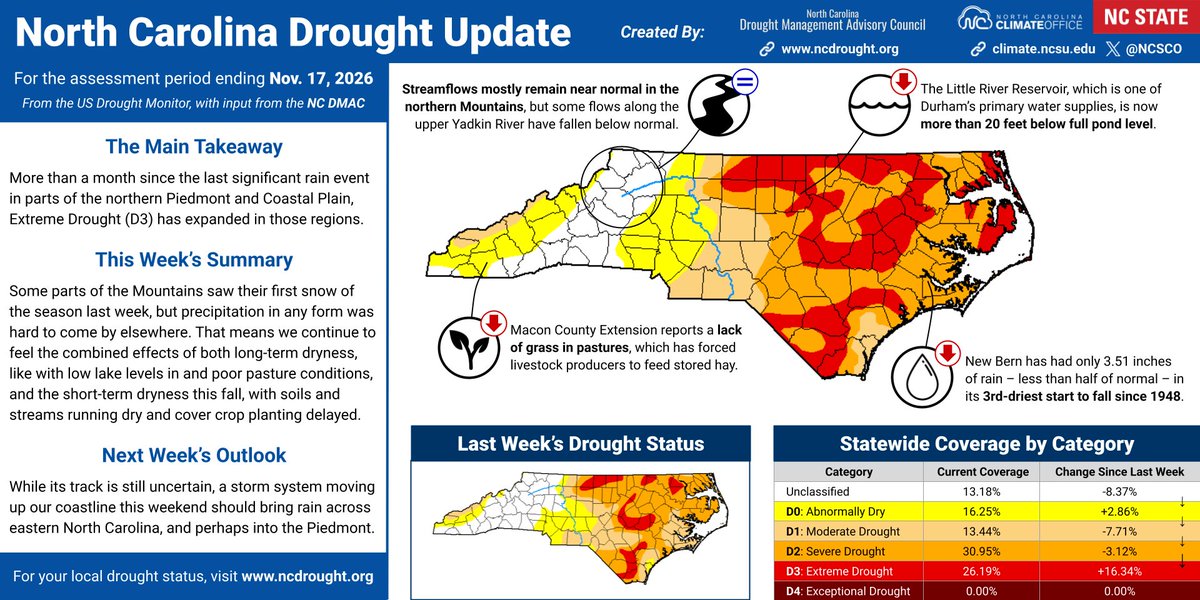
Extreme Drought (D3) continues to expand in northern and eastern North Carolina, but this weekend's rain event could at least break the month-long dry spell in some of those areas. #ncwx
It still feels like fall in the Piedmont and Coastal Plain, but the cold air has made it into the Mountains! Current temperatures are 37°F on Mount Jefferson, 34°F on Grandfather Mountain, and 30°F on Mount Mitchell. 🥶 #ncwx
Last week saw a solid rain event in the southern Mountains, but shorter and spottier showers farther east, which limited improvements there and even led to drought degradations in coastal areas that missed out. #ncwx
Our winter outlook is here, with a look at how the strong El Niño may affect North Carolina, and what we expect from our weather, including potential snow chances and drought relief. #ncwx
📰: https://t.co/a3DDbWAHHB
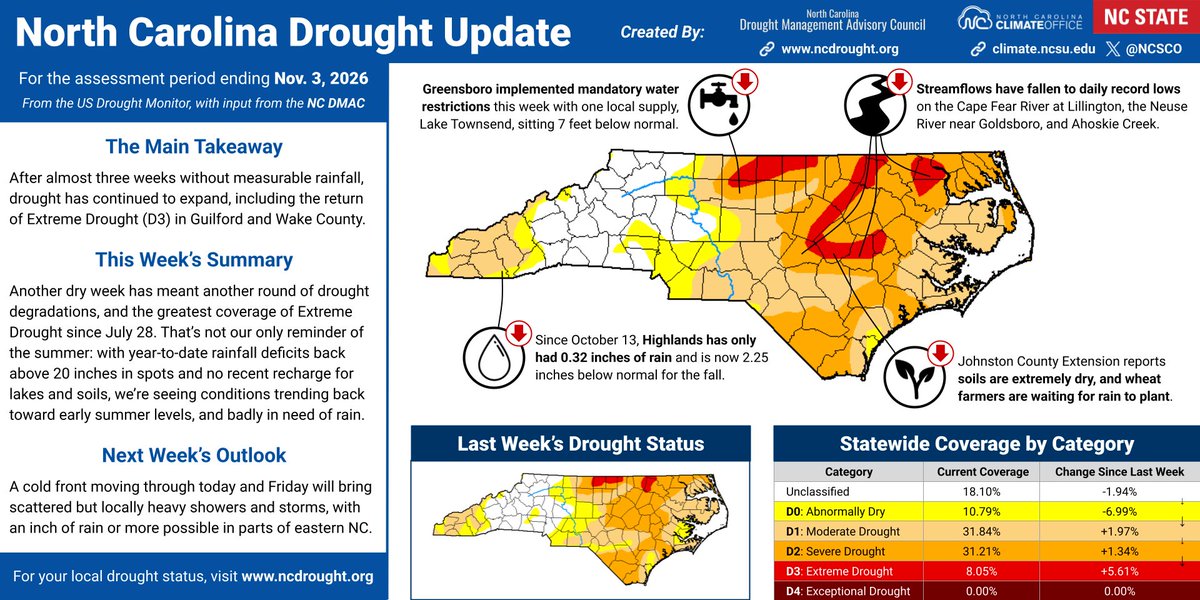
Nearly three weeks of dry weather since mid-October has led to more drought degradation and the greatest coverage of Extreme Drought (D3) in North Carolina since July. #ncwx
October featured record-setting heat, hurricane impacts, and a two-week dry spell that led to eastern drought expansion. #ncwx
Our latest climate summary has more on the past month, and how November could be different.
https://t.co/137nwDjMaZ
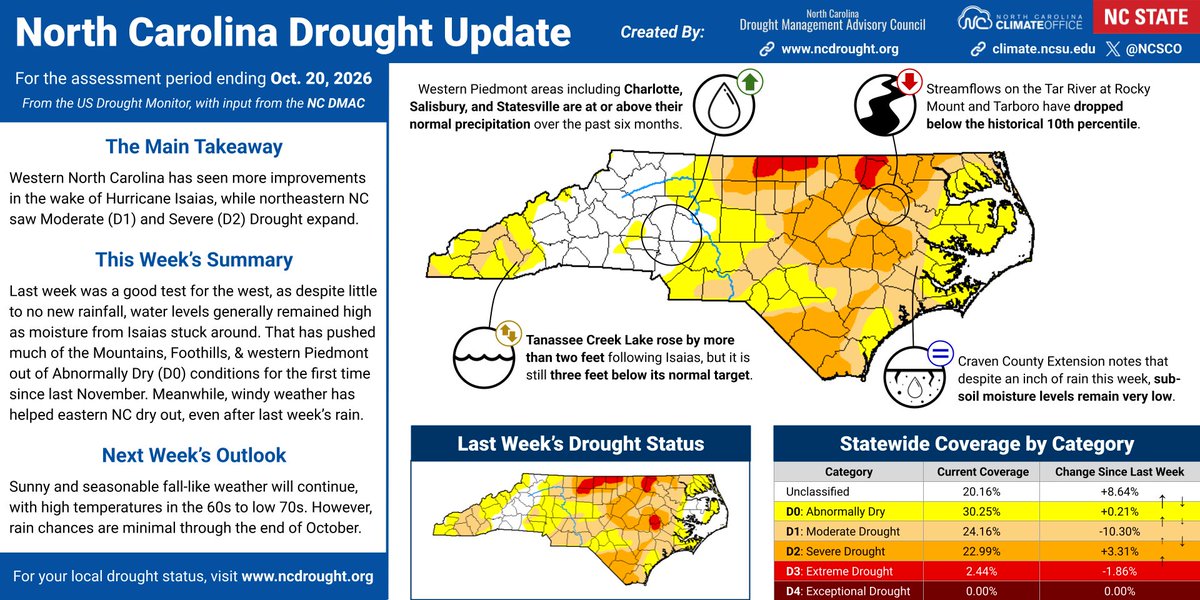
Moderate (D1) and Severe (D2) Drought expanded in eastern North Carolina this week as water levels in that region continue to feel the effects of a dry fall. #ncwx
@TimBuckleyWX Yes, we should be able to hang onto more water in the lakes, streams, and soils with those lower evaporation rates and decreasing demands for things like irrigation. Even with a dry week ahead, we hope we won't see too much of a decline with these nice fall-like temperatures.
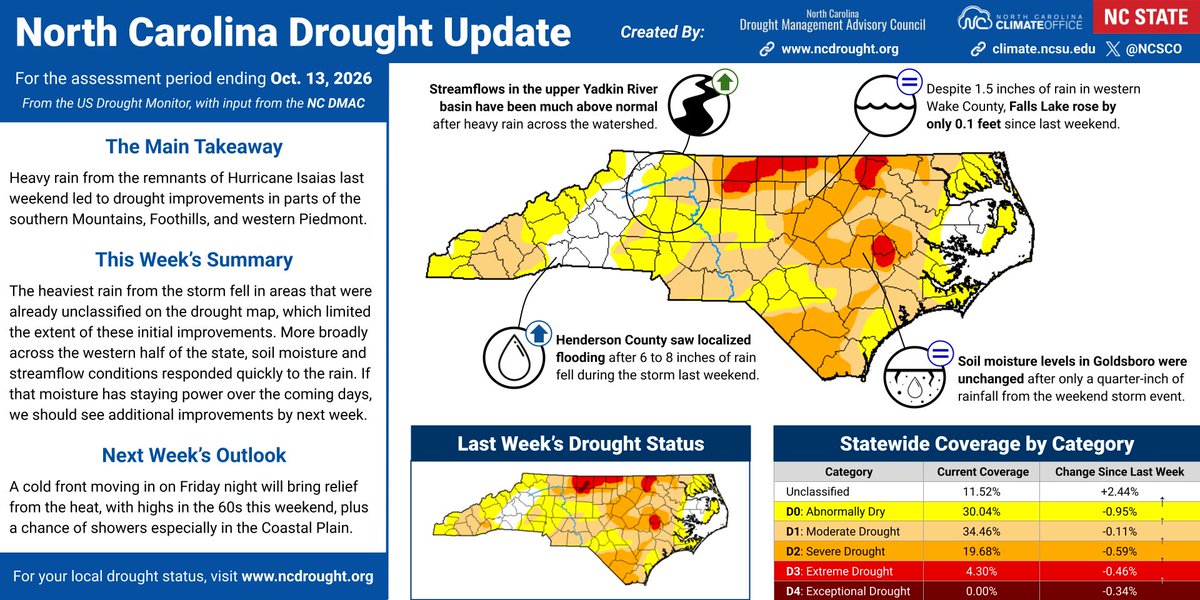
For the first time since last November, much of western North Carolina is UNCLASSIFIED on the latest drought map thanks to ongoing improvements after Isaias.
In the northeast, drought has slightly expanded amid dry and windy weather so far in October. #ncwx
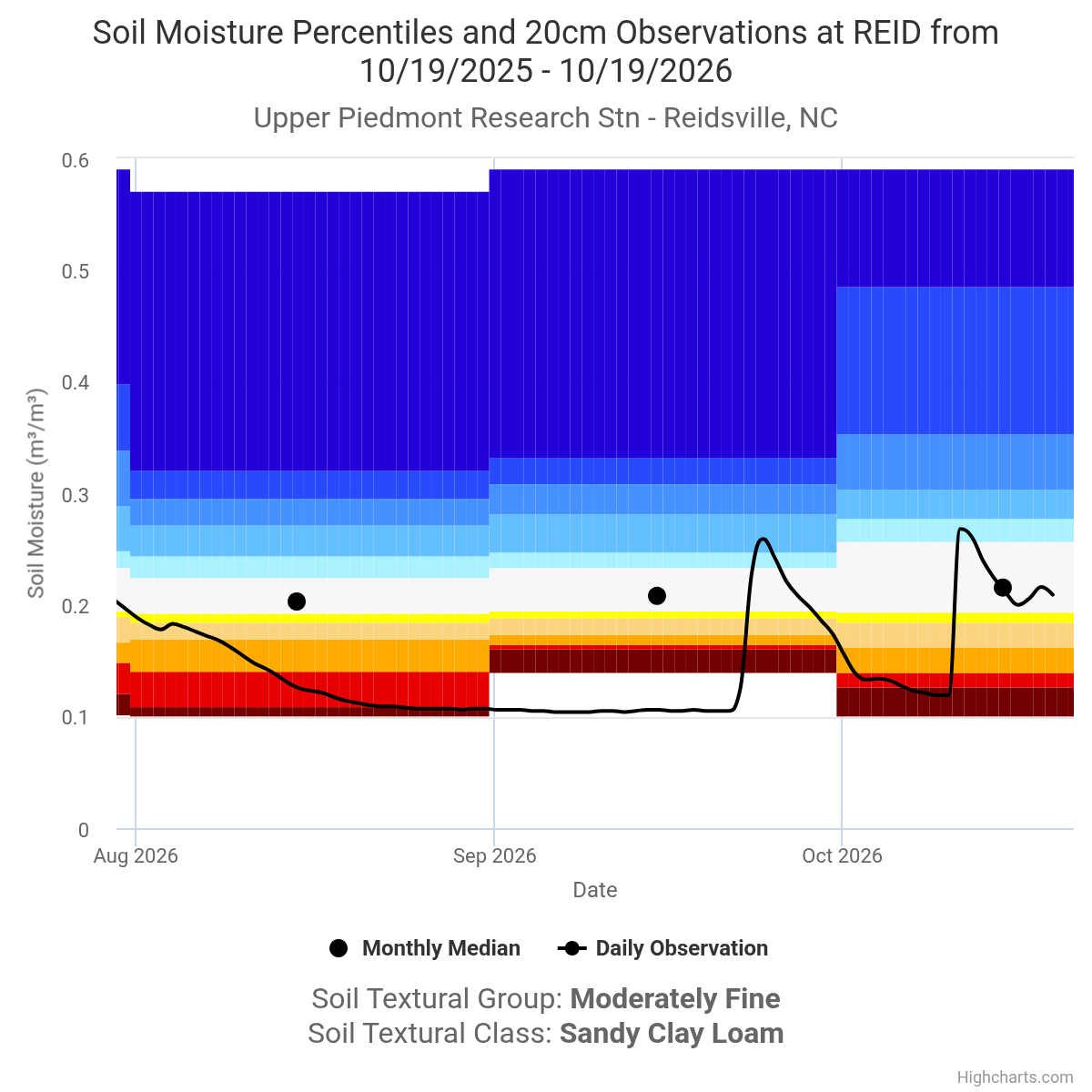
@TimBuckleyWX We've seen nice improvements in the short-term rainfall deficits: PTI is only 1.68" below normal in the past three months, while that deficit had been ~3" in September. Also, soil moisture levels at our ECONet station in Reidsville have stabilized near normal over the past week.
The rain from Isaias has led to an initial round of drought improvements from the southern Mountains through the Triad, with more changes likely next week once the moisture has soaked in and its lasting impacts are more apparent. #ncwx
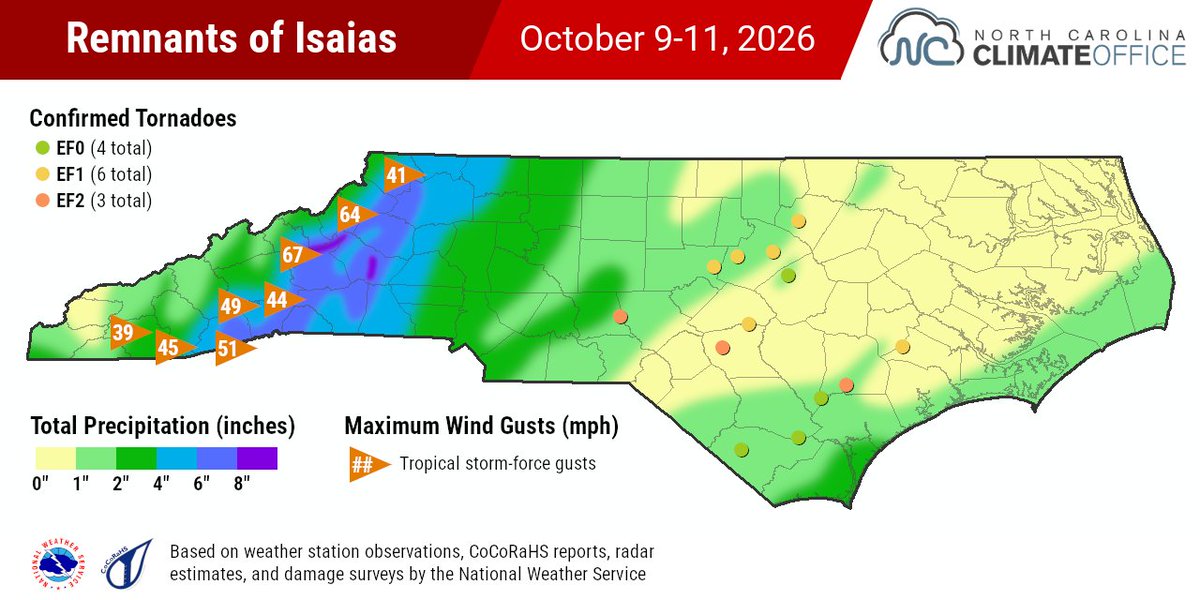
After the latest damage surveys by @NWSRaleigh, we're now up to 13 confirmed tornadoes in North Carolina on Sunday.
That's the most tornadoes in the state in a single day since Hurricane Isaias — the previous one, on August 3, 2020. #ncwx
The remnants of Hurricane Isaias affected North Carolina last weekend, bringing heavy rain and high winds in the west and severe weather farther east. #ncwx
Our latest blog post has more on this storm and its wide-reaching impacts across the state.
📰: https://t.co/H9bEfALx7p
Some locally heavy showers in eastern North Carolina last weekend brought a bit of drought improvement, but elsewhere, conditions are largely unchanged after a cooler but drier fall week. #ncwx
Thanks to three weeks of heat early in the month, this September was one of the top five warmest on record in North Carolina. #ncwx
Our latest climate summary has more on the heat, drought, and tropical activity over the past month.
https://t.co/EuVzE2R7fk
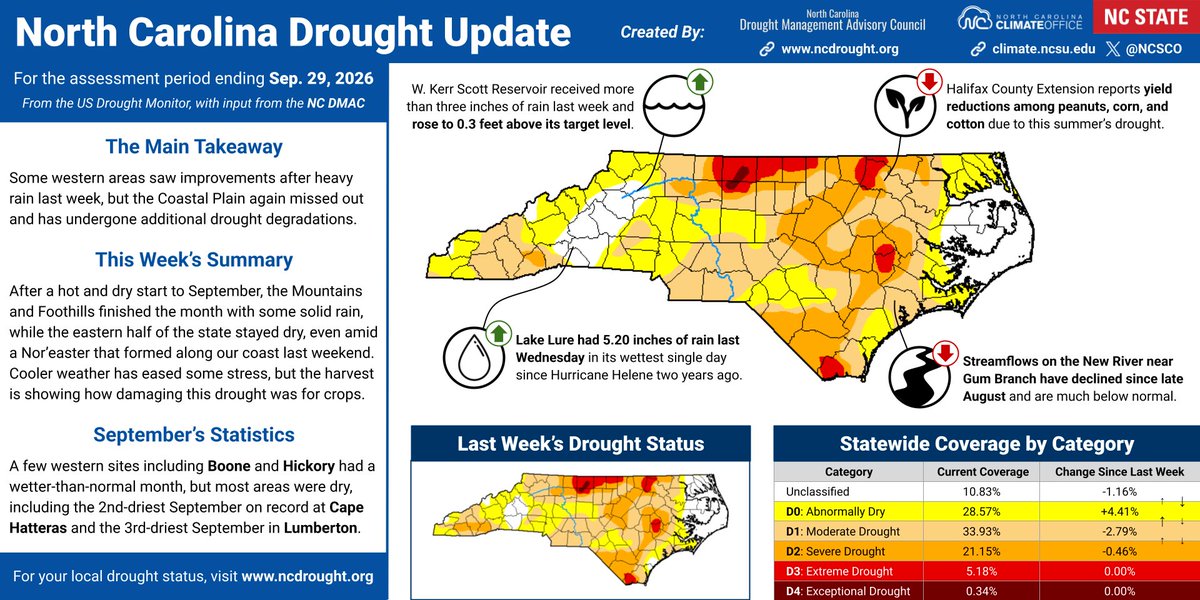
Last week's rain helped chip away at drought conditions in the west, while eastern areas saw more degradation as the weekend Nor'easter brought limited rainfall. #ncwx
More heat last week helped drought continue to expand, especially in parts of eastern North Carolina. #ncwx
Note that the rain received since Tuesday will be factored into next week's assessment.
Global vital signs show a strengthening El Niño, and the prognosis for North Carolina looks wet in the months ahead.
Our latest blog post checks up on El Niño and previews its potential local impacts, which may begin this fall. #ncwx
https://t.co/bhQfIU9Pmp
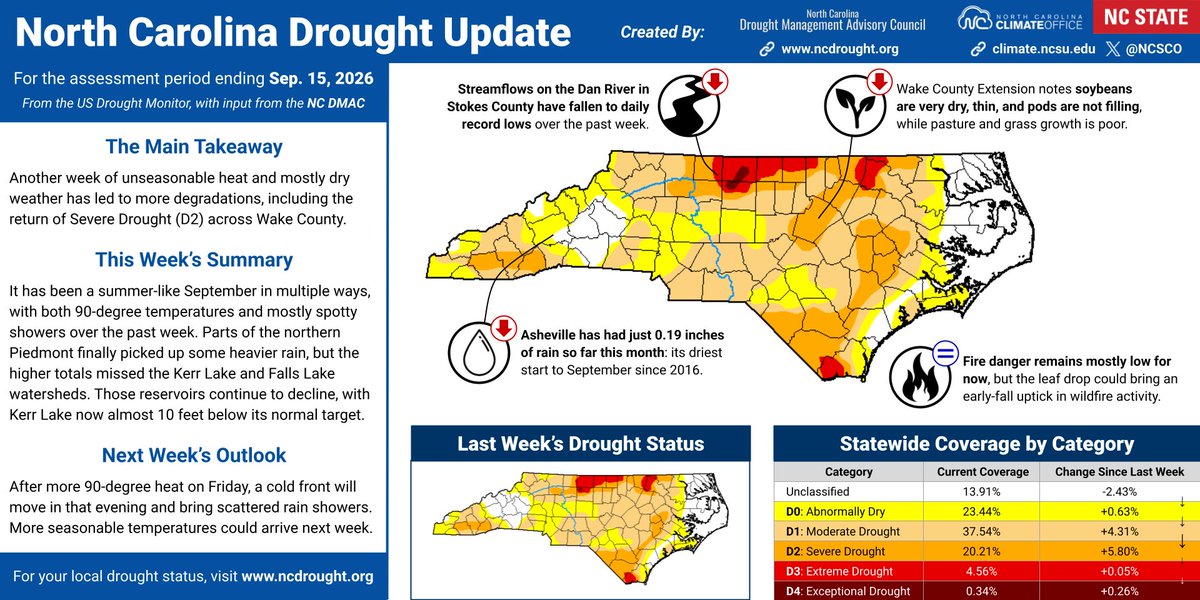
As summer weather stretches into September, we've seen more drought degradations this week, including the return of Severe Drought (D2) in Wake County. #ncwx