Public service center @NCStateSciences -- climate services, research, extension, outreach and education for NC citizens, businesses and local governments
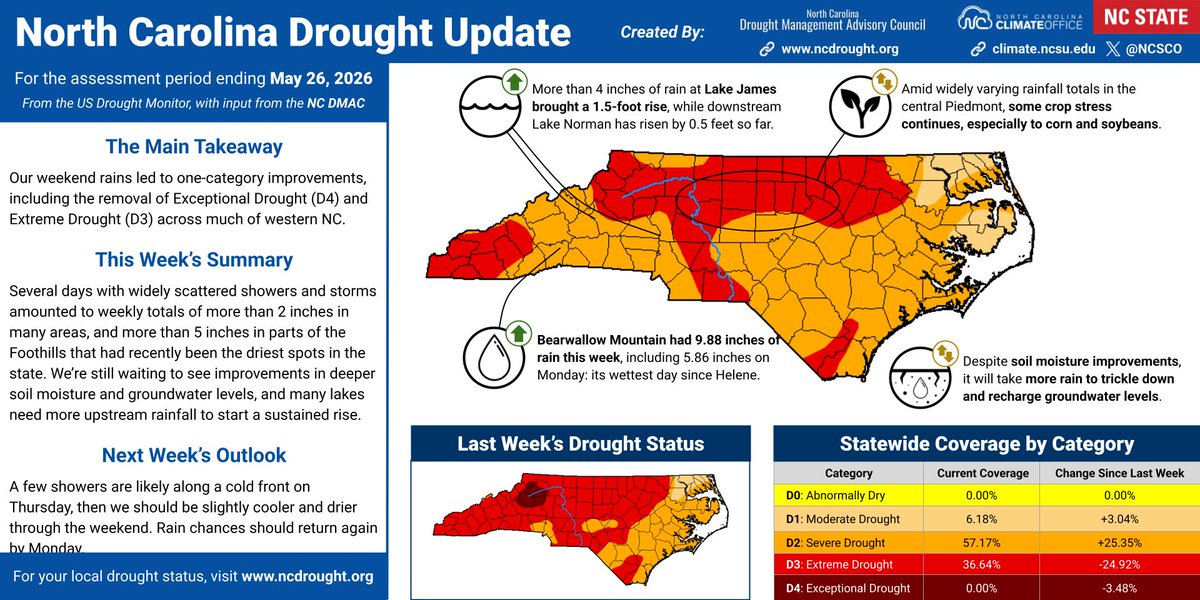
Last weekend's rainfall brought a round of widespread improvements on the latest drought map, including the removal of Exceptional Drought (D4) and a reduction in Extreme Drought (D3). #ncwx
With hurricane season on the horizon, we're taking a closer look at the current outlooks, including the tug of war between a warm Atlantic and an emerging El Niño, plus what's at stake for North Carolina. #ncwx
https://t.co/JtQIPgE4tJ
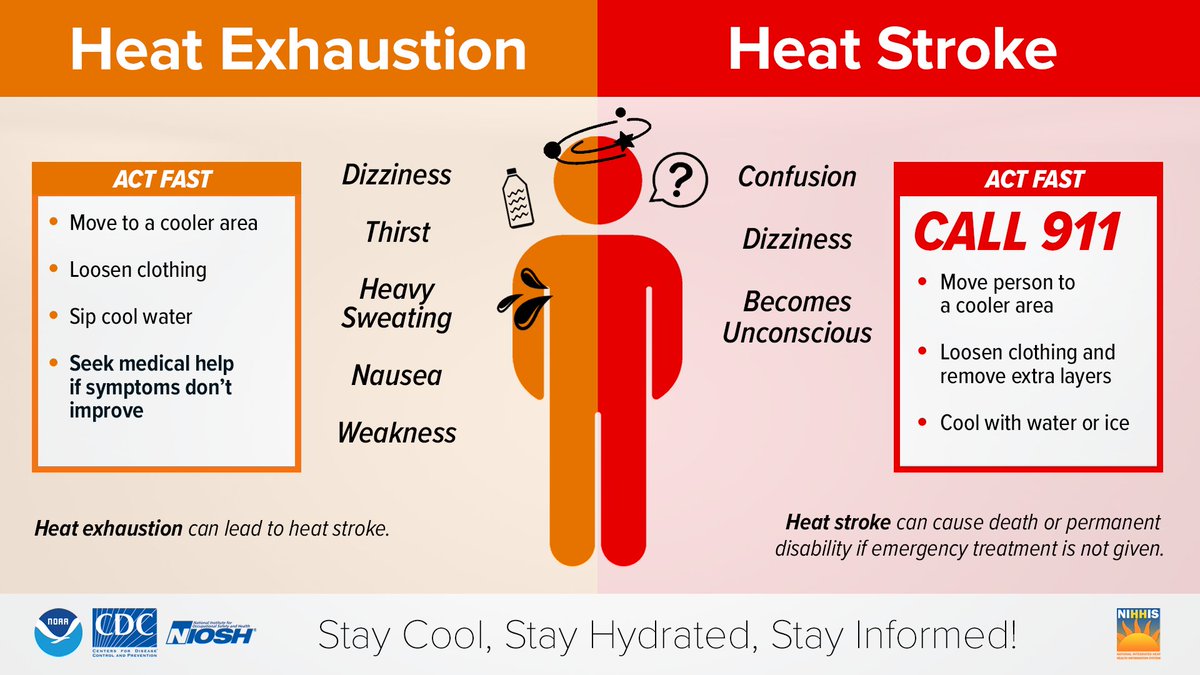
Heading outdoors for the holiday? 🏃♂️ Don't wait until you're thirsty to hydrate! Schedule workouts for cooler times of day and take frequent breaks in the shade. #HeatSafety
This week's hot, dry weather brought more expansion of Extreme Drought (D3) in the east and the emergence of Exceptional Drought (D4) in the northwest amid a record dry start to the year there. #ncwx
Be a good neighbor. 🏘️ Check on the elderly, those with underlying health conditions, and outdoor workers during periods of extreme heat. A quick check-in can prevent a heat-related crisis. Learn more about who’s most at risk: https://t.co/gS08itKAB9 #HeatSafety
👍The Good News: Exceptional Drought (D4) is gone after last week's heavy rain in the southern Piedmont.
👎The Bad News: Improvements elsewhere were hard to come by, and we've got a hot, dry week ahead. #ncwx
We're pleased to officially announce our new director and North Carolina's next state climatologist, Dr. Jared Bowden!
Jared is a North Carolina native and NC State graduate who has more than 20 years of experience with climate research in the state.
📰: https://t.co/ljCdfENa7F
More widespread rainfall over the past week helped slow the expansion of drought, but we still saw a slight increase of Extreme Drought (D3) coverage in parts of northwestern and central North Carolina. #ncwx
Heat season is here! Join us next Monday, May 11 from 1 to 3 pm for North Carolina’s 2026 Heat Season Kickoff Meeting. Get a 2026 heat outlook from @NWS and learn about tools and resources to support community readiness.
ℹ️: https://t.co/FsWgSo1p2c
April finished as our 2️⃣nd warmest and 5️⃣th driest on record in North Carolina, and that combination led to intensifying drought and newly emerging impacts, as our monthly climate summary details. #ncwx
https://t.co/HjwUOaHILV
The current drought is bad, but 100 years ago, we had it even worse during the historic 1925-26 drought. #ncwx
Our latest blog post tells the story of that event, including the changes it inspired in our state and takeaways for today.
https://t.co/Wb077O7mun
Rain returned to parts of the state this week, but the Piedmont remained mostly dry and saw an expansion of Extreme Drought (D3) and the emergence of Exceptional Drought (D4) for the first time since March 4, 2008. #ncwx
As drought continues to degrade, it's now causing water restrictions, increased fire danger, and bone dry soils.
For more on this drought's origins, intensity, and impacts, check out our latest blog post and summary from today's webinar. #ncwx
https://t.co/01aPCjUjVM
NWS Raleigh's Hydrologist Barrett Smith will participate in a panel to discuss the expanding and intensifying drought across North Carolina.
You can join a webinar sponsored by the State Climate Office of North Carolina on Thursday, April 23rd at 11am.
https://t.co/VcfmzQTtb1
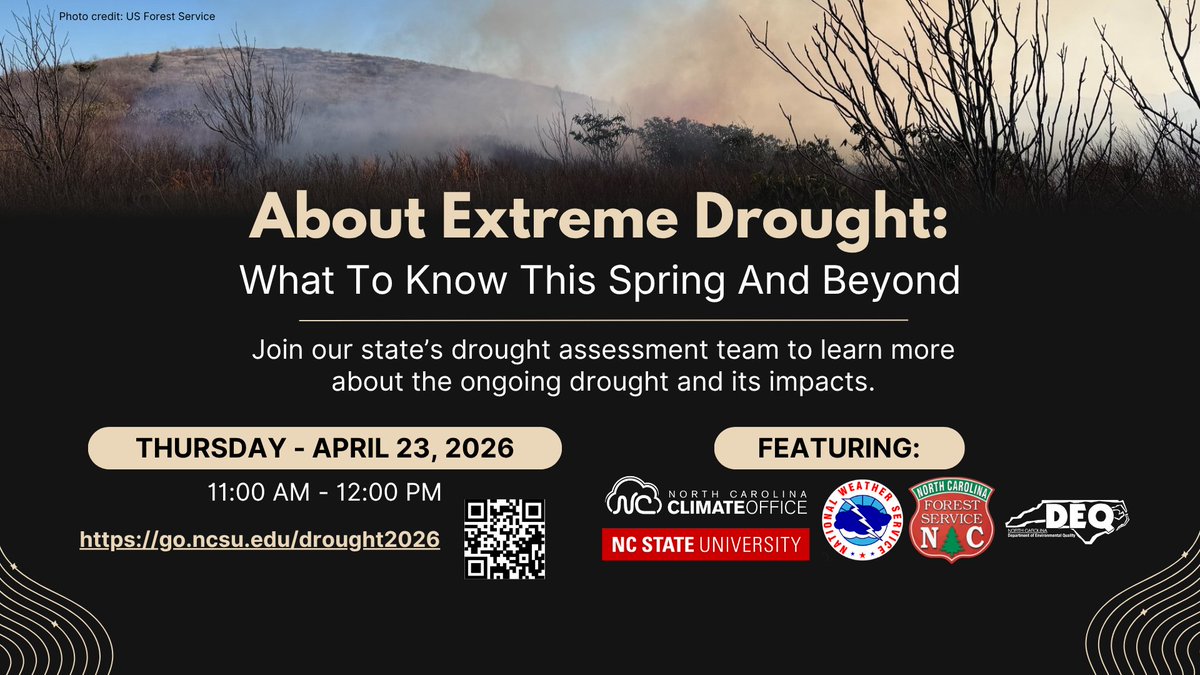
For more about this ongoing drought and its impacts, join us for a webinar with state drought experts on Thursday, April 23rd at 11 am.
Registration is required but free at the link below. A recording and blog summary will be posted afterwards.
➡️ https://t.co/1kwLQIxXN8
Drought continued to degrade this week, now reaching Extreme Drought (D3) levels in parts of the southern Mountains, western Piedmont, and northern Coastal Plain. #ncwx
We just wrapped up one of North Carolina's top five warmest and driest Marches on record, and it saw proliferating pollen, deepening drought, and the start of our springtime severe weather in 2026. #ncwx
https://t.co/MX4HOWLLy1
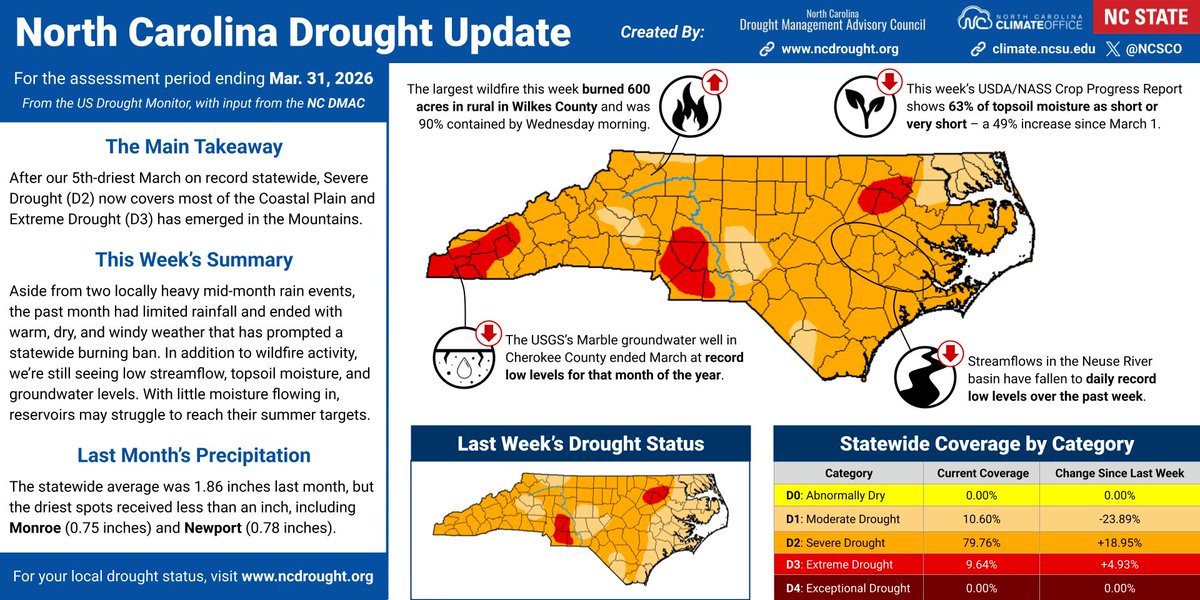
In addition to the implementation of a statewide burn ban, this week saw expanding drought, with Severe Drought (D2) now covering most of the Coastal Plain and Extreme Drought (D3) emerging in the Mountains. #ncwx