New NCTQ data out today shows good news and bad news.
The good: More teacher prep programs are preparing future elementary teachers to teach reading well.
The bad: Nearly half of the programs we reviewed still aren't fully aligned to reading research.
https://t.co/0AgtikPs4W
NCTQ data shows that more prep programs align with the science of reading, but half still fall short. This week, @RonNobleJr joins @kymyona_burk along with state and prep leaders to discuss strategies to help programs implement evidence-based instruction. https://t.co/ybU4MjGM66
Teacher prep reform works best when it's part of a coherent policy ecosystem.
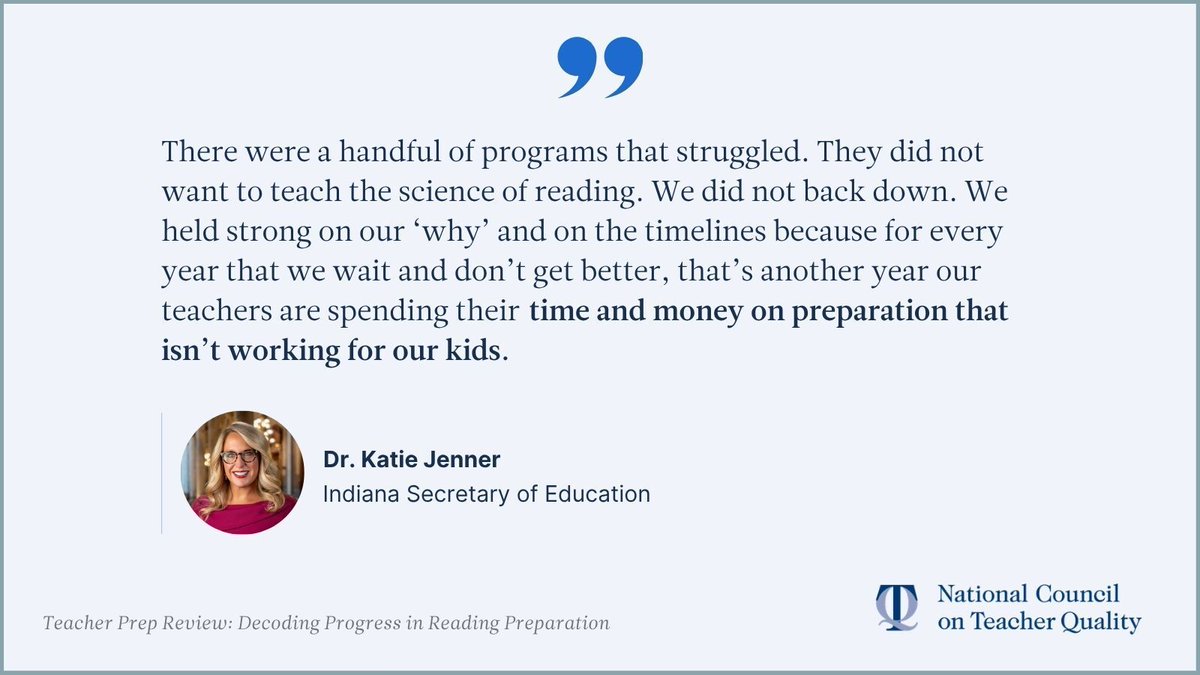
Indiana defined the science of reading in law, @SecJennerIN and @EducateIN held prep programs accountable, funded the transition, and aligned district curricula. https://t.co/H3KrKUGILi
Teacher prep programs are preparing teachers for public classrooms. States authorize them to recommend candidates for licensure. That authority comes with a responsibility to be transparent about how they prepare teachers to teach reading.
464 programs refused to provide course materials for @NCTQ’s 2026 Teacher Prep Review, which looks suspiciously like they’re trying to hide something. Here’s why:
1) Nonparticipating programs use misaligned reading textbooks at the same rates as programs that earned Ds and Fs. Professors typically anchor their courses to a core textbook, so this signals the quality of preparation these programs provide, even if we can’t evaluate their syllabi.
2) Most of the programs that participated in our 2023 review but refused to do so this time earned a failing grade in 2023. Hiding doesn’t mean you improved.
As you can see, program participation varies significantly by state. Our state data profiles list all of the programs in your state that opted out. https://t.co/1YmlBSzN8J
Children must develop phonemic awareness before they can reliably connect sounds to written letters. It's one of the most foundational steps in learning to read, and the component teacher prep programs consistently address the least. More in our report: https://t.co/0AgtikPs4W
In 2023, less than a quarter of Tennessee prep programs earned an A on our Teacher Prep Review for preparing teachers in the science of reading. In 2026, more than half do. @SCORE_TN dug into our new data to track the state's progress and remaining gaps. https://t.co/EBm8kkGXwU
Reading is the gateway to learning, opportunity, and success. Last week, U.S. senators introduced the READ Act with bipartisan support, representing a national commitment to helping every child learn to read. Read more about it here, via @NationalParents: https://t.co/7w963qSBsI
Strong student teaching experiences help new teachers succeed. If you're at @NASDTEC this morning, don't miss @hjputman and @RonNobleJr's session (G-4) with leaders from @teainfo and @PADeptofEd, where they'll share how states can use data to improve clinical practice!
District leaders make big decisions about their teaching workforce every day. We examined state collective bargaining laws that influence which policies they can set, down to the specific topics allowed at the bargaining table. https://t.co/YBV7dO41aG
Our 2026 Teacher Prep Review on reading has new data on how well programs align with the research on how kids learn to read.
The work's far from over, but this is progress. 👇 https://t.co/0AgtikPs4W
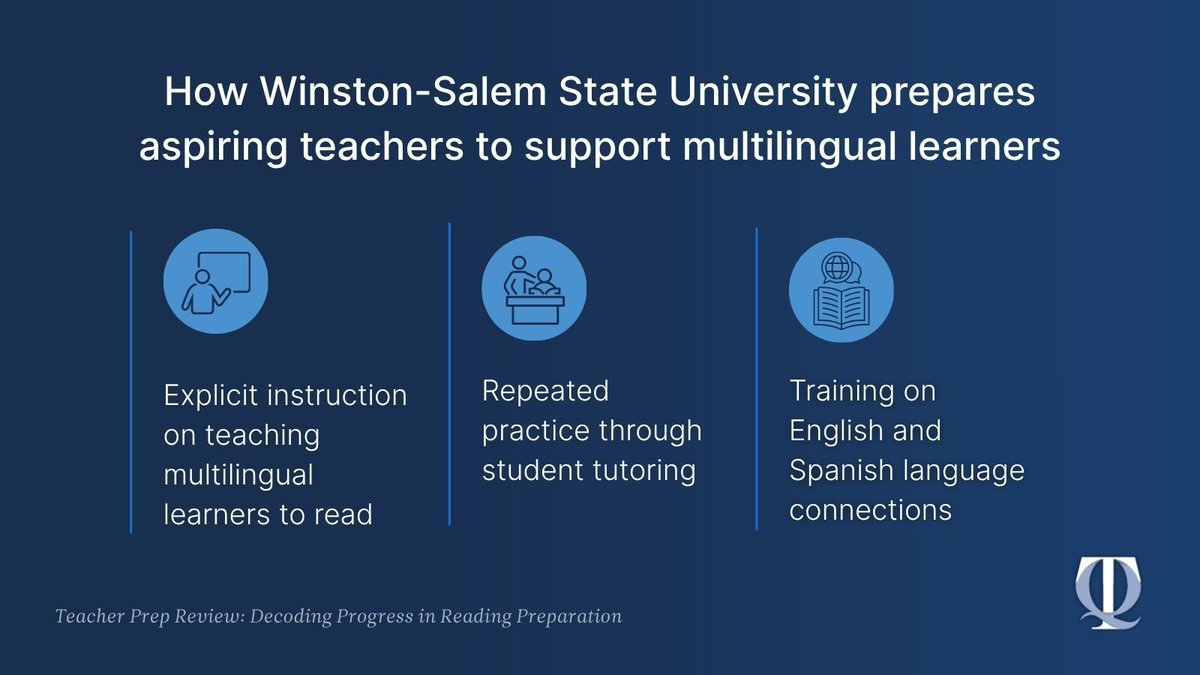
English learners make up a growing share of students, yet most prep programs provide little time or practice in teaching them to read.
@WSSURAMS stands out for embedding reading instruction for multilingual learners into coursework and practice. 👏 https://t.co/5spTtc0Klk
Practice is how aspiring teachers turn what they learn into what they *can do.* Our new report found that one in five prep programs offers zero practice opportunities across any of the five components of scientifically based reading instruction. https://t.co/0AgtikPs4W
Transparency matters.
Our new report grades prep programs on how well they align with the science of reading. Through college bookstore listings, we find that nonparticipating programs use misaligned textbooks at the same rates as D- and F-rated programs. https://t.co/0AgtikPs4W
A great piece from @SCORE_TN reflecting on the improvements teacher prep programs are making to align to the science of reading. Thanks for digging into @NCTQ's latest data! Congrats to SCORE’s Lead in Literacy Network for leading the way.
Aspiring teachers need to practice what they learn. @NCTQ's new report found 1 in 5 prep programs offers zero practice in any of the 5 components of scientifically based reading instruction - not to mention Language Development & Writing. https://t.co/srWezEgWg9
Two out of every five fourth graders in the U.S. can't read at a basic level. Teacher prep plays a key role in changing that.
Yesterday, we released a new report examining how well prep programs align with scientifically based instruction. Check it out: https://t.co/0AgtikPs4W
Changing how prep programs teach reading is hard. Dean McIntyre of @UTKnoxville has done it three times now using this playbook: confront long-held beliefs, invest in faculty, and make hard calls to protect students.
Here's what other programs can learn. https://t.co/aAD4TtPFiq
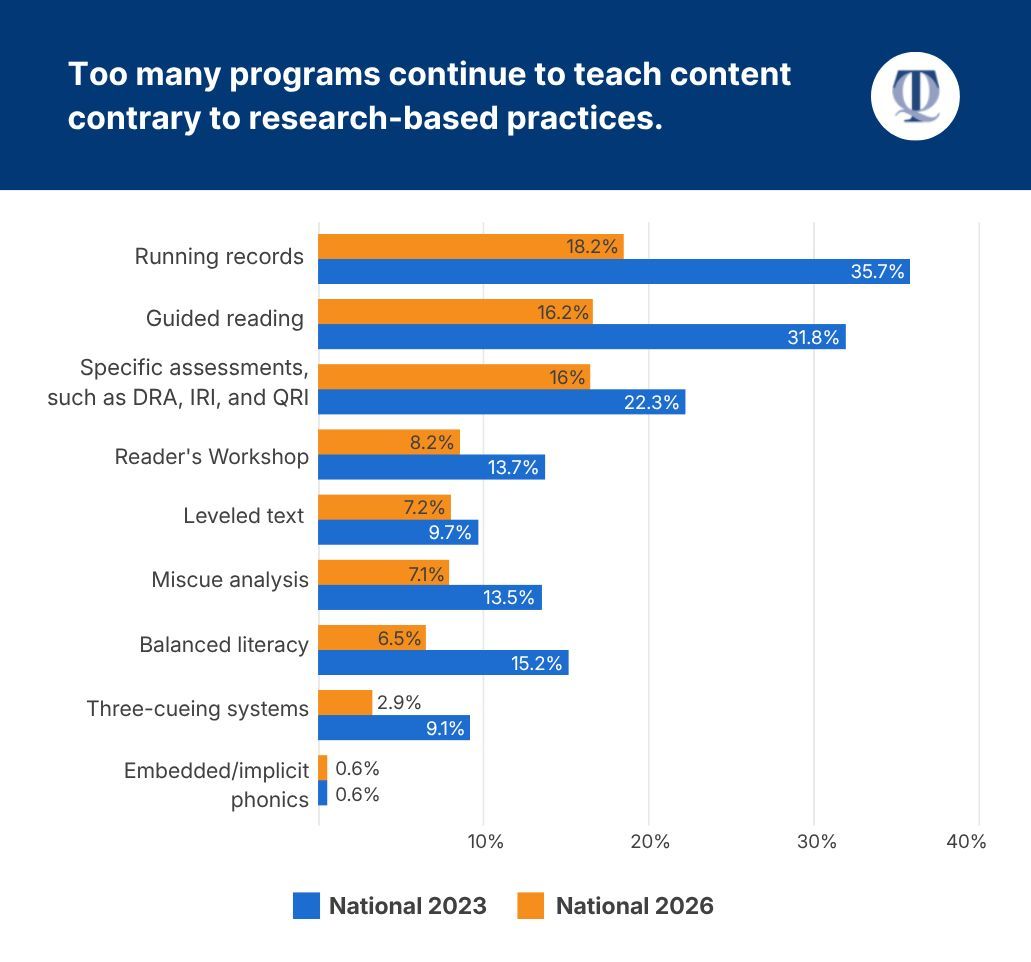
New data: One in five teacher prep programs still teaches debunked reading methods. Teachers then enter classrooms with strategies that don't work, and students pay the price. States can fix this by holding programs accountable for teaching them. https://t.co/0AgtikPs4W
Improving reading outcomes for English learners, struggling readers (such as those with dyslexia), and students who speak English language varieties starts with how prepared their teachers are to support them. Most programs fall short on this front. https://t.co/0AgtikPs4W
Four in ten fourth graders in the U.S. can’t read at a basic level. We shouldn't accept that stat as inevitable. Research is clear that when teachers have a strong foundation in the science of reading, more children learn to read. Therefore, reading outcomes aren’t going to improve unless teacher prep does.
@NCTQ’s new data shows that despite progress, more than half of prep programs still aren’t fully aligned with scientifically based reading instruction. One in five still teaches methods that research has already discredited. And most programs spend too little time and attention preparing teachers to support struggling readers (like students with dyslexia) and English learners.
The progress is worth recognizing, but so is the urgency to make sure all programs are teaching what we know works. I hope you'll dig into the report and pass it along to the advocates, researchers, prep program faculty, and policymakers in your network who need to see it. https://t.co/1rVHrEtDSQ