This simple activity encourages deep thinking and meaningful learning.
-Identify 3 key facts learned.
-Summarize the lesson in one sentence.
-Connect the lesson to the real world
-Share something they enjoyed about the learning experience.
https://t.co/Kl4dzaMKbY
🚨 Spoiler: Teaching like it’s 1995 won’t cut it.
What does modern pedagogy look like in 2025 and beyond?
Time to rethink how we define great teaching.👇
https://t.co/tYsFMo4Hc5 via @TeachThought#education#learning#k12
"Dr. Tiffany Hogan explains the quadrant model derived from the Simple View of Reading. She describes how this continuum is helpful for educators and administrators to understand student data and to make instructional decisions across a MTSS model
https://t.co/rhh8Xbis1R
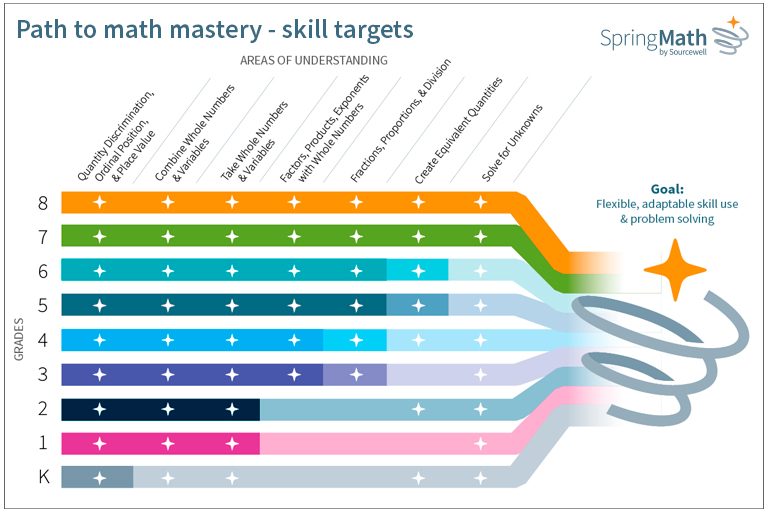
Here is my version of a reading rope for math. Open link in a browser and you can click/hover on stars to see which skills are targeted by grade & area of understanding. https://t.co/tvoySSYdbo Also, here is a table showing skills by grade level https://t.co/PUhy0eLnYb
For any teachers wanting to understand cognitive load theory, this is a great introduction from John Sweller speaking with @CritiSpeak https://t.co/aFDcKaljK8
How learning happens in seven general principles ⬇️
1. Working Memory Capacity is Limited: Our working memory, responsible for holding and processing information in real-time, has a limited capacity. This limitation means that when learners are exposed to large amounts of new information simultaneously, they may struggle to process it effectively. Focusing attention is essential because distractions or overload can lead to cognitive strain, reducing the ability to learn. Teachers can support this by breaking information into manageable chunks, allowing students to engage deeply with smaller parts before moving on to the next concept.
2. We Learn Through Meaning and What We Already Know: Learning is enhanced when new information connects to existing knowledge. When learners relate new content to things they already understand, they create a stronger foundation for retention and comprehension. This process, known as schema-building, helps students make sense of complex ideas by fitting them into an established framework. Teachers can facilitate this by introducing new concepts through familiar examples or linking them to relevant prior knowledge, making learning more meaningful and long-lasting.
3. Novices Think Differently Than Experts: Novices often approach tasks with means-end analysis or trial-and-error methods or simple strategies because they lack the knowledge to recognize patterns or apply sophisticated approaches. In contrast, experts draw on rich mental models, using prior experiences and refined techniques to solve problems more efficiently. This difference means that novices need structured guidance to develop these mental models over time. Teachers can help by gradually introducing students to expert strategies, enabling them to progress from basic skills to more advanced understanding.
4. To Remember, We Need to Forget: Storage strength is the measure of how well information is embedded in long-term memory, indicating its durability over time.
Retrieval strength is the ease with which information can be accessed from memory at a given moment, which fluctuates based on recent use and context. Unlike storage strength, retrieval strength is influenced by context and interference from other information. To remember something long-term, it’s essential to boost its retrieval strength, which can be achieved by actively retrieving the information. Unlike passive studying, retrieval requires you to recall the item on your own, strengthening memory more effectively, especially when the retrieval is challenging. This principle explains why strategies like interleaving (alternating topics) and spacing (spreading out sessions) are so effective. By allowing time for slight forgetting, these methods make retrieval harder, ultimately enhancing memory retention. This “adaptive forgetting” is crucial for retaining core concepts.
5. Learning ≠ Performance: A high test score or good performance in the classroom doesn’t necessarily mean that true learning has occurred. Learners might perform well temporarily by memorizing facts or rehearsing specific methods without understanding the underlying concepts. This principle highlights the difference between short-term performance and deep, long-term learning. Effective assessment should look beyond scores to evaluate true comprehension. The rate of assessment matters which is why regular checking for understanding is so important. Teachers can use open-ended questions, application tasks, and reflective discussions to gauge whether students genuinely understand the material.
6. Achievement Leads to Motivation: Success in learning (however small) can foster a positive cycle of confidence, self-efficacy, and motivation. When students achieve their goals, even in small steps, they are more likely to believe in their ability to succeed in future learning tasks. This sense of accomplishment encourages them to take on new challenges and persist through difficulties. Teachers can support this cycle by setting attainable goals, providing regular feedback, and celebrating incremental progress to reinforce students’ confidence and motivation.
7. Learners Are Bad at Knowing How to Learn: Many students are unaware of effective learning strategies, often relying on passive techniques like re-reading, highlighting, or cramming. These methods feel productive in the short term but are less effective for long-term retention. Evidence-based strategies like retrieval practice, spaced learning, and interleaving have been shown to improve memory and understanding, but students may need guidance to adopt these methods. Teachers can enhance learning outcomes by teaching students about these techniques and encouraging their use, helping students develop more efficient and powerful study habits.
(Thanks to @MrAlexKoks for the design)
Keeping up with Ed-Tech is really hard, but this should help 😀
Last week we asked 175 Tech coaches and leaders, "What's your one best thing in Ed-Tech right now?" Here are their responses all organized and cleaned up! 🔥🔥🔥
https://t.co/JlSH9affi4
#edtech#teachertwitter #edchat #teachersoftwitter #teachers #teacher
@quizizz@ForwardEdgeOH
Sweller's Cognitive Load Theory (CLT) has significant implications for multilingual learners as they face unique cognitive challenges during the learning process.
Here's how to manage them ⬇️
#edutwitter#EAL#multilingual#MLs
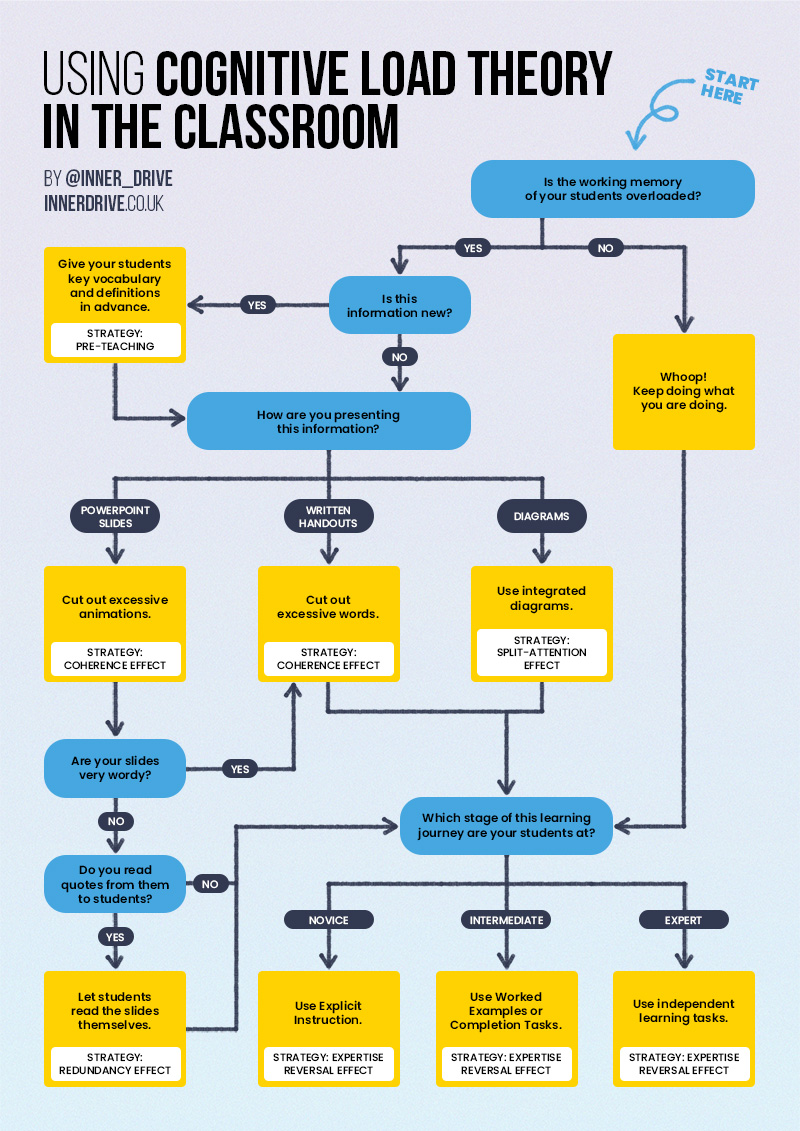
🧠 Cognitive Load Theory has become increasingly popular in education, with many teachers using its principles in the classroom.
But if you're not already familiar with this theory, here's a quick guide on applying its key principles in your classroom ⬇️
https://t.co/MZZNFWjH30
Being "nice" is hurting your leadership -
Nice leaders want to be liked.
Kind leaders build trust
Choose the harder path.
Be kind.
Please repost to help others out there! ♻️
"The current rate of #chronicabsenteeism is challenging even the most prepared school districts," says @JHU_EGC's @bobbalfanz on today's webinar. But there are steps school districts can take to respond. Use our new tool to craft your approach: https://t.co/d9s7PXS4gE
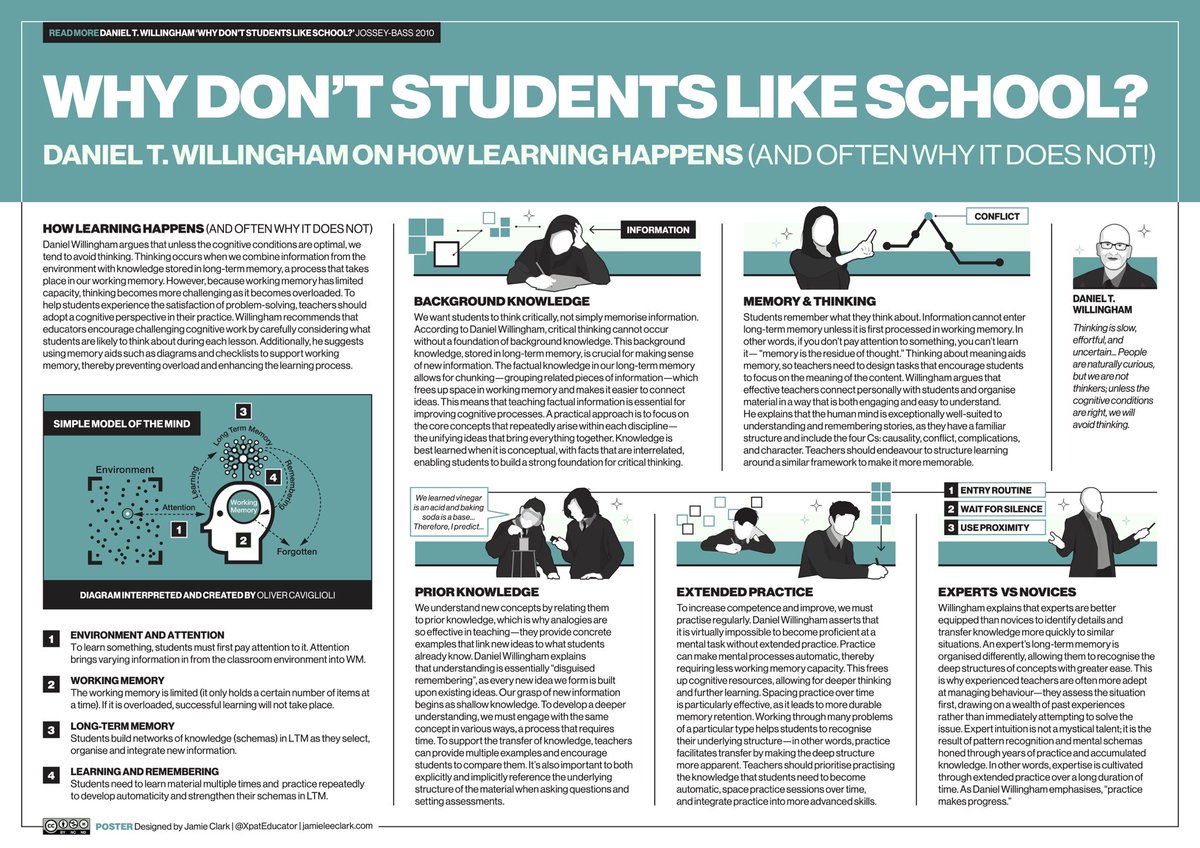
🧠 ‘Why Don’t Students Like School?’ by Daniel Willingham is one of the most influential books for teachers on cognitive science. It explores how students’ minds work and how to use this knowledge to be a better teacher.
🧵THREAD! Here are some of my main takeaways…
Thanks again to @olicav for the excellent learning and memory diagram! 🙌
When might a school-wide SEL walk-through slot into your fall calendar?
Bookmark this guide from @caselorg to focus your observations and spark conversation.
https://t.co/rdlYzxW1xh