Check out Micro in the news: https://t.co/GN5OjhNery
@TN_Marine_Micro , @negilbert2, & Gary LeCleir show how ocean microbial communities may avoid direct competition by taking up scarce nutrients at different times of the day!
Publication: https://t.co/neFmO1zyhG
This award is proof that with patient mentors, great students, amazing colleagues and collaborators, anything is possible. Thank you all...this award is just as much yours. #COEE2024
Mitomycin C eliminates cyanobacterial transcription without detectable lysogen induction in a Microcystis-dominated bloom in Lake Erie https://t.co/57VJFGrclA #biorxiv_micrbio
First, we learned that diatom physiology may change as winter ice is no longer on #LakeErie. Now @denison_liz provides insight that virus predation on plankton may also be altered.
with @ZepernickBN@McKayGLIER
https://t.co/vv1AAfLB9p
If any PhD or Postdoctoral researchers are interested in joining the lab to work on Aquatic Microbiology in the Great Lakes region, let me know! The Walder Foundation Biota Postdoctoral Fellowships are now open https://t.co/PUuNGrWQyv
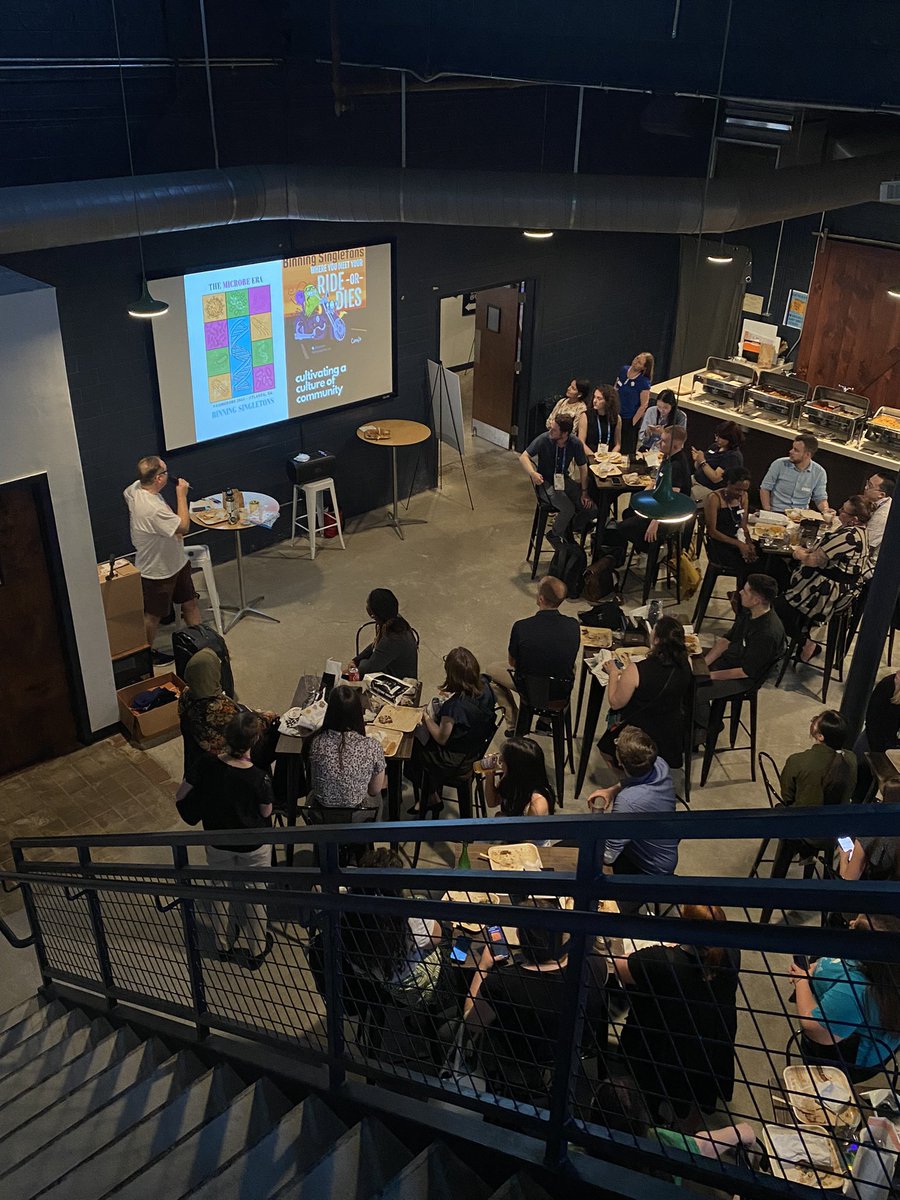
If you’re still around by Monday (the 17th) at #ASMicrobe come over and hear me talk for 10 min about my PD project on algal-bacterial interactions, iron, & exometabolomics! @ASMicrobiology@Livermore_Lab
Check out our new preprint describing the ecological impacts of an algicidal bacterium! It was fun analyzing this cool dataset collected back in 2015 at the Texas A&M algal raceway ponds. Also did a little experiment (my first true lab culturing experiment ☺️☺️) 🦠
Cristina Howard-Varona (@OhioState) etal used a systems biology approach to show how virocells (virus-infected cells) reprogram their metabolism according to different nutrient conditions, & how these responses depend on which #phage is infecting the cell
https://t.co/mOsGO4rcgJ
🚨New Review!
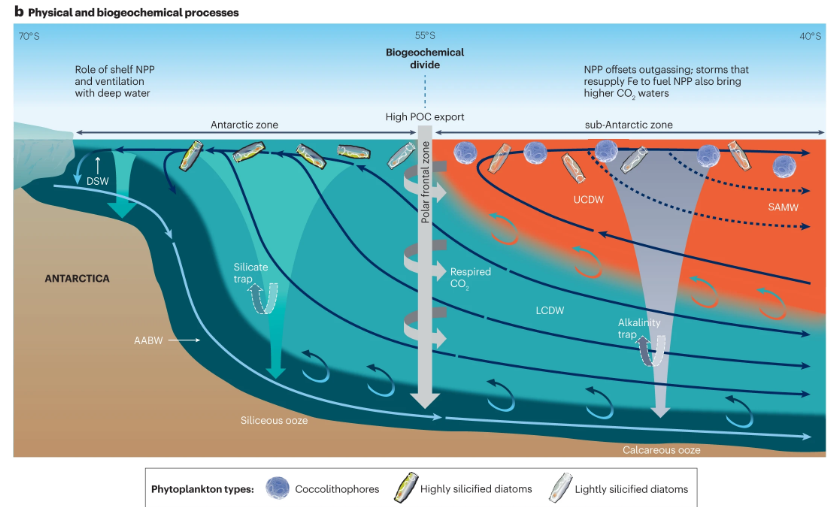
The Southern Ocean represents a substantial carbon sink.
Boyd et al. describe how expanding observations are providing increasing insight into the contribution of biota to the carbon cycle in the Southern Ocean
https://t.co/Yii1njRBwL (https://t.co/w8x1qAl5lP)
Sharing this great new book chapter on aerobic carbon monoxide dehydrogenases written by @Gillett_DG. These widespread enzymes regulate air pollution and support soil/marine biodiversity by using carbon monoxide as an energy source. https://t.co/2NlvHCfqTk