SCC states
Independent SUMMARY Scotland’s
Day‑1 Balance Sheet
CategoryValue
Assets £700–900 billion
Liabilities£215–225 billion
Reserves£30–45 billion
Net
Position£600–650 billion positive
Scotland begins independence as.
a wealthy country
with low debt relative to assets
with massive energy potential
with strong infrastructure
with positive net national wealth
This is a strong starting position. This is the foundation of the entire independence economic plan.
Every currency, tax system, central bank, and projection depends on this.
Below is the Day‑1 Balance Sheet Scotland would realistically start with, based on publicly available economic data, international norms, and standard state formation accounting.
This is not political spin.
This is statecraft.
STEP 1 SCOTLAND’S OPENING BALANCE SHEET (DAY 1)
A national balance sheet has four sections
1. Assets
2. Liabilities
3. Reserves
4. Net Position
We build each one.
1. ASSETS
What Scotland Owns
These are Scotland’s national assets on Day 1.
A. Natural Resources
Renewable energy potential.
Scotland holds 25% of Europe’s wind resources.
Valuation: £300–350 billion (long‑term generation value)
Oil & gas (remaining reserves).
Conservative valuation: £60–80 billion
Water resources.
Scotland exports water and has vast reserves.
Valuation: £20–30 billion
Land value (public + crown estate):
Valuation £80–100 billion
B. Infrastructure
Roads, bridges, ports, airports, rail, digital networks.
Valuation: £120–150 billion
C. Public Buildings
Schools, hospitals, government buildings.
Valuation: £40–50 billion
D. Energy Infrastructure
Grid, pipelines, offshore platforms, renewables infrastructure.
Valuation. £40–60 billion
E. State Owned Enterprises
Water, transport, energy holdings.
Valuation. £10–15 billion
F. Financial Assets
Public pension funds, investment holdings.
Valuation £60–70 billion
TOTAL ASSETS (Day 1)
£700–900 billion
(Realistic, conservative, internationally comparable)
2. LIABILITIES
What Scotland Owes
A. Share of UK Public Debt
This is negotiated, not automatic.
Two realistic models
Model 1 Population Share (8.2%)
UK debt £2.7 trillion
Scotland share £220 billion
Model 2 GDP Share (7.5%)
Scotland share £200 billion
Model 3 Zero Debt Transfer
International precedent
Czech/Slovak split
Baltic states
Ireland 1922
Many post colonial transitions
Scotland could assume no debt in exchange for
lower share of UK assets
negotiated settlement
political agreement
For realism, we use £200 billion as the working figure.
B. Public Sector Pensions (Transition Liability)
These are not “debts”
they are obligations.
Scotland already pays most of these through taxation.
Transition liability £10–15 billion
C. Long Term Infrastructure Commitments
Contracts, maintenance, procurement.
Liability. £5–10 billion
TOTAL LIABILITIES (Day 1)
£215–225 billion
3. RESERVES
Scotland’s Starting Cash Position
A. Foreign Currency Reserves
Scotland would negotiate a share of UK reserves or build its own.
Expected starting reserves.
£20–30 billion
B. Sovereign Wealth Seed Fund
From energy revenue + asset transfers.
Starting seed
£5–10 billion
C. Central Bank Capitalisation
Required for the Scottish Pound.
Starting capital
£5–7 billion
TOTAL RESERVES (Day 1)
£30–45 billion
4. NET POSITION
Scotland’s Day‑1 National Wealth
Formula
Using conservative numbers
Assets. £800 billion
Liabilities £220 billion
Reserves. £35 billion
—————————————-
800 - 220 + 35 = 615
NET NATIONAL POSITION (Day 1)
≈ £600–650 billion positive
This is Scotland’s starting national wealth.
This is not political optimism.
This is standard sovereign accounting.
🏴🤔☮️⚖️🌎
A request to Liberation Scotland Members and Supporters.
In early June this year, the Liberation Scotland Committee wrote to the 73 independence supporting SNP & Green MSPs who had been elected or re-elected in the May Holyrood election, congratulating them on their success and wishing them well in their new post.
We explained briefly the findings of the legal case we have worked on now over the past two years, our UN engagement, its far-reaching implications for Scots sovereignty and our right to restore Scotland's statehood (which exists entirely independently of any domestic law or British government impediment to a fair and free vote to international standards on external self-determination of the Scottish nation). We pointed out that in international law this is a jus cogens matter and therefore non-derogable, and that by refusing, the UK Government is in breach of its international obligations. Not one of those ‘pro-independence’ MSPs replied with so much as an acknowledgement of receipt.
You can read here our correspondence here:
https://t.co/UHYvJ671XV
which includes a summary of our extensive activities at the United Nations to date, together with a single generic reply that arrived last month from a Briefings Office at the Scottish Government, acknowledging the letter's arrival with Scottish Government ministers, but crucially omitting to mention or acknowledge the LS legal case currently progressing at the UN.
We believe there is obligation on MSPs to return correspondence only with their constituents, and not with organisations such as ourselves. We however feel that we raise matters which critically impact on the impasse that exists between the Scottish and UK Governments regarding a self-determination vote. This is clearly causing independence supporting voters to show frustration, such that independence backing MSPs might be expected at a personal level to show sufficient interest to acknowledge receipt of matters the substance of which is gaining much traction, and exchange with us their views or comments.
Included in this document is a list of those 73 MSPs. Their email addresses can be found at: https://t.co/Xwl1Jq0ogj
We would ask of our members and supporters that, if they too would wish to hear from their MSP on this, they should consider emailing them and asking them for meaningful comment. It will be of great help to us if you will share the response with [email protected]
@JimHagart He gave lot to many charities... Especially remember the left over cash from his Court of Session crowd funder - one was Bethesda Hospice in Stornoway.
Where have all our treasures gone? Part one.
.
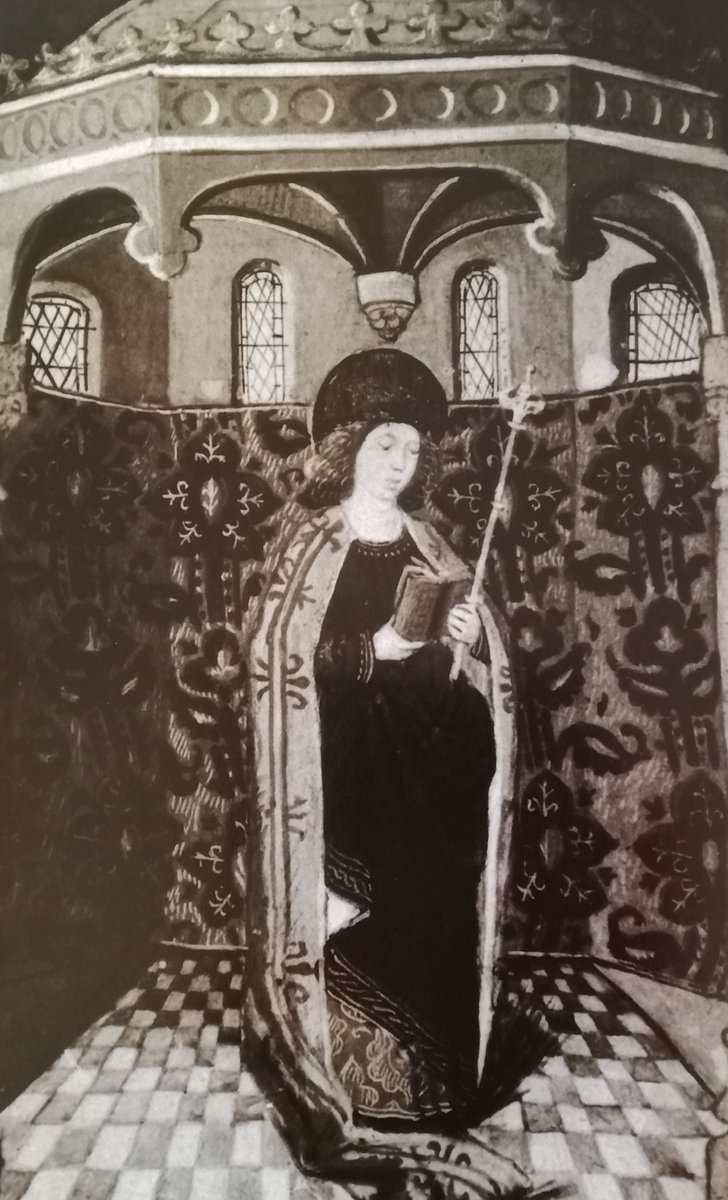
The Black Rood of Scotland, a venerated and awe-inspiring crucifix, holds a fascinating place in the annals of Scottish history. This ancient treasure, once cherished by the entire Scottish nation, found its way to Scotland in the possession of Princess Margaret, a Saxon princess who married Malcolm Canmore in Dunfermline around 1069. Margaret, fleeing the Norman conquerors of England alongside her brother, Edgar the Atheling, arrived in Scotland with a trove of riches, including the Black Rood, a sacred relic of unparalleled significance.
The origins of the Black Rood can be traced back even further, to a papal gift exchange in 883 between Pope Marinus and Alfred the Great, Margaret's ancestor. among the gifts bestowed upon Alfred was a portion of the most Holy Cross on which Jesus Christ was crucified for the salvation of humanity. It is believed that this wooden relic was used to craft the cross that would later become known as the Black Rood of Scotland, a symbol of the monarch's loyalty to the Church.
Abbot Aelred of Rievaulx, a 12th-century churchman, provided the most detailed description of the Black Rood. He described it as a palm-length cross, exquisitely crafted with gold and designed to open like a chest. Within this ornate exterior lay a piece of the True Cross, a relic whose authenticity had been repeatedly confirmed through numerous miracles. The figure of the Saviour, carved from solid ivory and adorned with intricate gold decorations, added to the Black Rood's aura of divinity and reverence.
Tragically, the Black Rood fell victim to the relentless ambition of Edward I, known as the Hammer of the Scots. In his determined effort to strip Scotland of its identity and treasures, Edward I looted the Black Rood, along with many other Scottish prizes. Unlike the Stone of Destiny, which was eventually returned after 700 years in Westminster Cathedral, the Black Rood remains lost, its whereabouts shrouded in the mists of history.
The disappearance of the Black Rood is a poignant reminder of the cultural and spiritual losses that Scotland has endured throughout its tumultuous history. This sacred crucifix, once a symbol of national pride and religious devotion, now exists only in the pages of historical accounts and the collective memory of the Scottish people.
As we reflect on the legacy of the Black Rood, we are reminded of the importance of preserving and protecting our cultural heritage. The loss of this precious relic serves as a clarion call to safeguard the remaining treasures that define our national identity and connect us to our rich past.
📺This is the ALBA Broadcast that @STVNews don’t want you to see tonight, and that Twitter (@X) have tried to delete.
🗳️Make your cross count for Independence.
#VoteALBA#ALBAforIndependence
Over 50,000 people watched the Election Broadcast that STV didn’t want you to see last night. Not seen it yet?
Watch now 👇
https://t.co/s0Diu8n77N
🗳️ Alba Party: Yes to Scottish Independence
#VoteALBA#ALBAforIndependence 🏴
⚠️WARNING⚠️
For the love of God, dear Scots do not vote Scottish Labour.
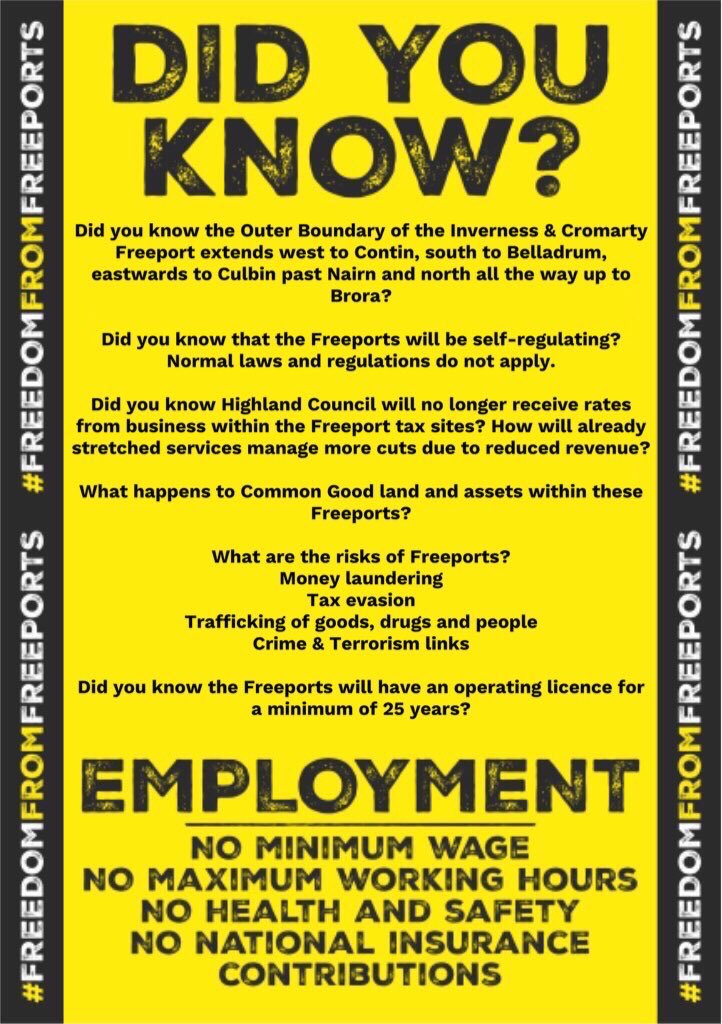
Scotland is unique in that it has a legal get-out clause from Westminster's power grab over Scottish sovereignty and its territories in the form of 2 deregulated Brexit entrenched Freeports and 18 Special Economic Zones (SEZs)
This letter represents formal notice that the proposed Green Freeports and Special Economic Zones, (including the Inverness & Cromarty Firth Greenport and the Forth Greenport), depend on the negotiation of assets, rights and revenues which, in our opinion, are not lawfully within the territorial jurisdiction of the UK state or its executive bodies.
Scotland entered a political and economic not a territorial union. It remains in law a sovereign territorial nation.
There is no ‘UK Crown’. The addition of Scotland to the English Crown is without legal foundation obviating ‘UK’territorial authority in Scotland. The territorial assets of the extant Scottish Crown remain the exclusive property of the nation of Scotland. We submit that the negotiation of sale,lease or transfer of control and sovereignty over these assets through any third party, English Crown or ‘UK’ government,therefore, is unlawful.
SALVO ACTS ON FREEPORTS
https://t.co/fBbAIY2dp6
https://t.co/PwqqhAiQnp
The Picts - Part 2 of 2.
.
By the year 550 the chaos surrounding the fall of Rome had slowed down. The eastern half of the island from the Forth southwards had become the territory of the Angles and Saxons, who were rapidly merging in the west, the Britons still held out but
I was delighted that @ScotNational contacted me to share this .
The @SalvoFreeports team have worked day on day out informing the public about #Freeports /SEZ’s and our hard work looks to be paying off, but still do much more to do .
It’s obvious it’s up to us, the people of Scotland to try and save our beautiful country .
Please fill this in and share
https://t.co/ftO9qwj4LG
Going to keep sharing what freeports mean for Scotland & why we may be unable to get rid of them even with independence. Btw, scotgov *could* have fought for our territorial rights if it had any real interest in challenging the colonisation of Scotland.
https://t.co/pcv2pyy9fM
UK Gov shut down INEOS in Scotland.
Yes they could have stopped it.
UK Gov opens up INEOS in Belgium.
Hands up if you are Scottish and too stupid to see it.
Retweet if you are Scottish and can see it.
https://t.co/gfqoJs6QB1
"And this union, brought about by a forced treaty that the English establishment had no intention of honouring, has never had the lawful right to touch the Crown of Scotland, or anything it owns.
"Some people say this is all ancient history, all over and done with. If you believe that, I have news for you. Scotland's oil and gas, our water and our renewables are plundered, now, today, 'in right of the Crown'. Not some joint Crown, created for the brand new 'Union' - United Kingdom in 1707, but the same old English crown, that has always coveted Scotland.
"That Crown says it all belongs to His English Majesty, not the Scottish Crown, which is the people. That's how they take our oil, and gas, and renewables, and water, and all the rest today. And that's why we're paying so much for what we already own.
"But hold on. Scotland never came under the rule of the English Crown in 1707, because no queen or Parliament, English or Scottish, and no treaty they made had the power to extinguish the Scottish Crown or replace it with England's.
"And the British establishment knows that - 300 years of military control, cultural, legal, social and physical genocide, has been trying to wipe out Scotland's collective memory, wipe out the record of the terms and limits of a bogus treaty, but one England agreed to and is bound to. Wipe out the memory of a people, that they were and are, the Crown of Scotland.
"But I've news for that establishment. Scotland is waking up. Scotland remembers, and Scotland is rising." @SSalyers2 @TheScotCongress @ScotSalvo@ILawson27@Broonpot
Maybe @_KateForbes will attend our meeting on 23rd March in Inverness, it’s her constituency after all , I am sure her constituents would like to hear from her