𝘏. 𝘱𝘺𝘭𝘰𝘳𝘪 infection is an infectious disease, and treatment regimens should ideally be guided by antimicrobial-susceptibility testing whenever possible. 🔗 https://t.co/rMlsoi2ATy
Both phenotypic (culture-based) and molecular methods of antimicrobial-susceptibility testing are available (seen in figure). Culture-based testing remains the reference standard because it is the only method that can ascertain the susceptibility of isolates to all antibiotics commonly used for eradication. Molecular antimicrobial-susceptibility testing offers greater efficiency than culture-based testing by eliminating the need for 𝘏. 𝘱𝘺𝘭𝘰𝘳𝘪 culture. Molecular-based testing can be conducted with fresh or formalin-fixed gastric-tissue samples (used for histopathological examination) and successfully cultured isolates. More recently, gastric-fluid samples obtained from a swallowed gastric string have emerged as a cost-effective alternative culture-based testing method. Stool-based molecular antimicrobial-susceptibility testing is now available, which avoids invasive endoscopy. Commercial polymerase-chain-reaction–based kits are now available for identifying 𝘏. 𝘱𝘺𝘭𝘰𝘳𝘪 resistance to clarithromycin and levofloxacin by detecting specific mutations in the 𝘏. 𝘱𝘺𝘭𝘰𝘳𝘪 23S ribosomal RNA and gyrA genes, respectively. A meta-analysis reported high accuracy of these molecular methods for detecting antibiotic resistance in gastric-biopsy samples, with sensitivity and specificity of 96% and 96%, respectively, for clarithromycin resistance and 97% and 99% for quinolone resistance.
Learn more in the Review Article “𝘏𝘦𝘭𝘪𝘤𝘰𝘣𝘢𝘤𝘵𝘦𝘳 𝘱𝘺𝘭𝘰𝘳𝘪 Infection — Advances, Challenges, and the Road Ahead” by Hong Li, MD, PhD, Francis Megraud, MD, and Barry J. Marshall, MD: https://t.co/rMlsoi2ATy
Outcomes with pembrolizumab plus platinum-based chemotherapy and permetrexed — the current first-line treatment for PD-L1–negative NSCLC — remain suboptimal. Research findings from the phase 3 OptiTROP-Lung06 trial are summarized in a new Quick Take video. https://t.co/t6nWxZuskb
𝗖𝗹𝗶𝗻𝗶𝗰𝗮𝗹 𝗦𝗽𝗲𝗰𝘁𝗿𝘂𝗺 𝗮𝗻𝗱 𝗣𝗿𝗲𝘀𝗲𝗻𝘁𝗮𝘁𝗶𝗼𝗻 𝗼𝗳 𝗚𝗶𝗮𝗻𝘁-𝗖𝗲𝗹𝗹 𝗔𝗿𝘁𝗲𝗿𝗶𝘁𝗶𝘀
The clinical manifestations of giant-cell arteritis are heterogeneous and reflect the distribution and extent of vascular inflammation. Manifestations may be systemic, ischemic, or both. Constitutional symptoms such as fatigue, malaise, weight loss, anorexia, and low-grade fever are common when patients first present and may precede focal ischemic complications, although they are less frequent in patients with ischemic manifestations. Vascular imaging has delineated three patterns of arterial involvement: cranial disease, extracranial large-vessel disease, and combined cranial and extracranial large-vessel disease. In cohorts undergoing systematic assessment of both arterial territories, combined involvement is the most frequent (in approximately 30 to 75% of cases), followed by isolated cranial disease (in approximately 20 to 50% of cases) and isolated extracranial large-vessel disease (in approximately 10 to 20% of cases). The most common clinical manifestations of giant-cell arteritis are summarized in this figure.
Learn more about giant-cell arteritis in a new review by Frank Buttgereit, MD, and Cristina Ponte, MD, PhD: https://t.co/ofQtaebuuG
Amy L. Fairchild, PhD, MPH, discusses the history — and the future — of the Epidemic Intelligence Service as it turns 75. Listen to the full interview with NEJM Executive Managing Editor Stephen Morrissey (@srm128): https://t.co/gJvOJn7W5G
Case Record of the Massachusetts General Hospital (@MassGeneralNews): A 73-year-old woman presented with fever, weight loss, and leg weakness. A chest radiograph showed biapical pleural and parenchymal scarring and diffuse reticular opacities. 👉 https://t.co/DIxumV4tvX
The patient’s age, constitutional symptoms, and subacute process suggestive of mononeuritis multiplex, glomerulonephritis, and interstitial lung disease make a rheumatologic disease the most likely cause of her condition.
Antineutrophil cytoplasmic antibody (ANCA)–associated vasculitides, particularly eosinophilic granulomatosis with polyangiitis (EGPA), granulomatosis with polyangiitis (GPA), and microscopic polyangiitis (MPA), are well-known causes of systemic symptoms with involvement of the peripheral nerves, kidneys, and lungs. EGPA is unlikely in this patient because of the normal eosinophil count and absence of antecedent atopic features. With GPA, kidney involvement is commonly manifested by glomerulonephritis, but the peripheral nerves are involved in only approximately 20 to 25% of patients; by contrast, approximately 40 to 50% of patients with MPA have peripheral-nerve involvement. Furthermore, this patient did not have sinus symptoms, ulcers, or palpable purpura, which are common features of GPA. Both MPA and GPA can cause glomerulonephritis; however, GPA is usually associated with a more aggressive course of disease. Pulmonary manifestations are common in all ANCA-associated vasculitides but may not be prominent early in the disease course. Given this patient’s age and syndrome of constitutional symptoms, including mononeuritis multiplex, glomerulonephritis, and interstitial lung disease, an ANCA-associated vasculitis is the most likely diagnosis, with MPA (seen in figure) being more likely than GPA.
Read the full case details in “A 73-Year-Old Woman with Fever, Weight Loss, and Leg Weakness,” a Case Record of the Massachusetts General Hospital, by M.P. Janjigian et al.: https://t.co/DIxumV4tvX
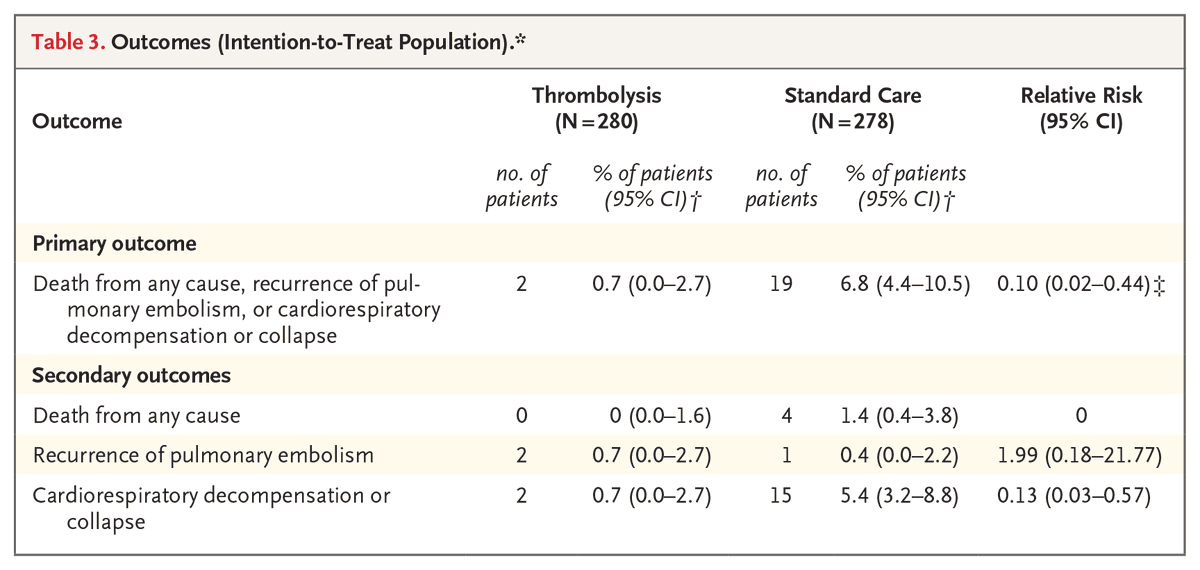
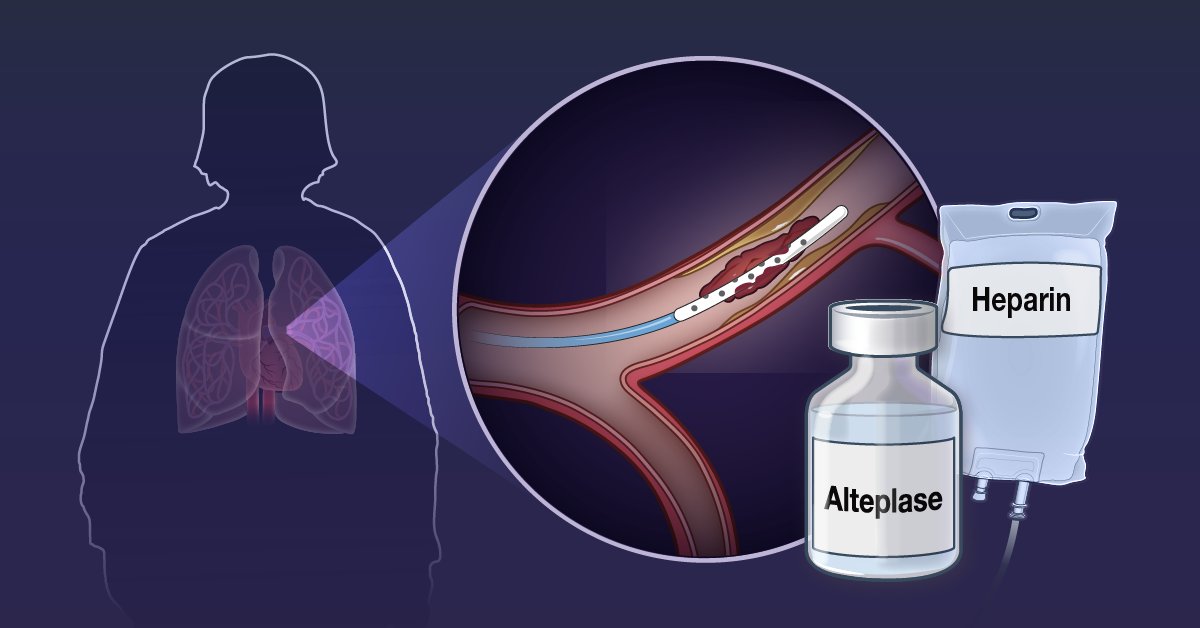
Original Article: Catheter-Directed Thrombolysis in Intermediate-High–Risk Pulmonary Embolism (PRAGUE-26 trial) https://t.co/V6301fwoYe
Editorial: Slipping the Gordian Knot — Net Benefit in Pulmonary Embolism Fibrinolysis https://t.co/FTEbrYvWd5
#Cardiology#ESCCongress
To a new medical student, the human body may seem beautiful inside and out, yet uninterpretable. Induction into the craft of medicine is in part the process of training the eye to see differently. Read the Perspective essay by James Lee, BA: https://t.co/GRpQaVrZQO
A liver-transplant recipient with metastatic melanoma had a complete metabolic tumor response to ipilimumab plus nivolumab after progression with nivolumab plus relatlimab. Subsequent graft rejection responded to glucocorticoids. Full case details: https://t.co/m9EVDjmyrx
A 27-year-old man presented with a 2-year history of facial erythema with recurrent papules and pustules. A standardized skin-surface biopsy of the cheek revealed numerous mites (shown in a video).
Read the full case details in the Images in Clinical Medicine article “Papulopustular Rosacea Associated with Demodex Mites”: https://t.co/Y2ESBUQgUS
Among patients with HER2-positive advanced breast cancer, the HER2-targeted bispecific antibody anbenitamab plus albumin-bound docetaxel led to 24-month progression-free survival of 58.5%, as compared with 34.4% with standard therapy. Full phase 3 HEALER trial results and Research Summary: https://t.co/TOX5nlWc95
In a study of adaptive deep-brain stimulation involving eight participants with refractory Tourette syndrome, seven had a greater than 30% decrease in tic severity at 9 months. Full study results: https://t.co/6aaHkWH4Tk
Some countries have expanded public support for fertility treatment as part of efforts to encourage childbearing, write by Elias M. Dahdouh, MD, and Jacques Balayla, MD, MPH, in a new Perspective. But population-level aims should not displace reproductive autonomy. Read the full Perspective: https://t.co/tCjlmhPqeY
The PRAGUE-26 trial tested whether catheter-directed thrombolysis improves outcomes in intermediate-high–risk pulmonary embolism versus anticoagulation alone. Research findings are summarized in a new Quick Take video. https://t.co/olI6TdSNWL
#ESCCongress
Case Record of the Massachusetts General Hospital (@MassGeneralNews): A 78-year-old man was evaluated in the ophthalmology clinic affiliated with the hospital because of periorbital edema and conjunctival injection involving the left eye.
MRI of the orbits (seen in figure) showed resolution of the myositis involving the right lateral rectus muscle and associated proptosis of the right eye that had been seen on the previous CTA. However, new ocular inflammatory changes were identified that reflected a shift in laterality and a different predominant pattern, including choroidal effusion of the left eye, as well as posterior scleritis, episcleritis, and optic perineuritis that were more prominent on the left side than on the right side. Dacryoadenitis was also seen on the left side.
Read the full case details in “A 78-Year-Old Man with Periorbital, Edema and Conjunctival Injection,” a Case Record of the Massachusetts General Hospital, by K.M. McKay et al.: https://t.co/sq56YVbG49
New in the November 26, 2026, issue of NEJM:
Catheter-Directed Thrombolysis in Pulmonary Embolism (PRAGUE-26 trial) https://t.co/A0rvZ7cd6U
Eplontersen for Transthyretin Amyloid Cardiomyopathy (phase 3 CARDIO-TTRansform trial) https://t.co/OP88h4Yivu
Sacituzumab Tirumotecan plus Pembrolizumab in NSCLC (phase 3 OptiTROP-Lung06 trial) https://t.co/8KxJzxKpQZ
Blood-Pressure Lowering and Cardiovascular Risk https://t.co/3YFoYLDLY3
Subscribe to NEJM for the latest medical research: https://t.co/QFe1he2Tzn
A 29-year-old woman with congenital heart disease presented with worsening swelling and redness of the legs. Physical examination showed tense, nonpitting edema up to the knees and erythematous patches on the shin and dorsa of the feet.
Read the full case details in the Images in Clinical Medicine article “Acute Inflammatory Edema”: https://t.co/gHBKnSAIVR
The Epidemic Intelligence Service has long facilitated responses to infectious threats and other health crises, write Amy L. Fairchild, PhD, MPH, and James Colgrove, PhD, MPH, in a new Perspective. But the politicization of epidemiologic work imperils its future. Read the full Perspective: https://t.co/7ZB64uVGt0
Giant-cell arteritis is a granulomatous vasculitis of large and medium-sized arteries. Glucocorticoids are the cornerstone of therapy, but understanding of the disease has expanded, and targeted therapies have been developed.
Read the Review Article “Giant-Cell Arteritis” by Frank Buttgereit, MD, and Cristina Ponte, MD, PhD: https://t.co/ofQtaebuuG
In a meta-analysis of individual participant data from randomized trials, blood-pressure lowering was associated with a decreased risk of major cardiovascular events across the risk spectrum. Full study results: https://t.co/MO6CUtayXq
Shattuck Lecture by Monica M. Bertagnolli, MD, of @theNAMedicine: Healing Health Care in Rural America — Toward Community-Centered Learning Health Systems https://t.co/Eu9ptuxQWw
#HealthPolicy#DEI#PublicHealth