Some truths in Scripture are not hidden because they are hard to understand. They are hidden because we have never been taught to recognize the pattern. Once the pattern emerges, something remarkable happens: even the most difficult passages begin to fall into place.
At the center of this discovery stands the Parable of the Sower. Jesus Himself attached extraordinary significance to it when He asked: “Know ye not this parable? and how then will ye know all parables?” (Mark 4:13) That statement suggests the parable is more than a story about agriculture. It is an interpretive lens. The four soils align with a recurring fourfold pattern that appears again and again throughout Scripture. Once you recognize it, it becomes difficult to unsee.
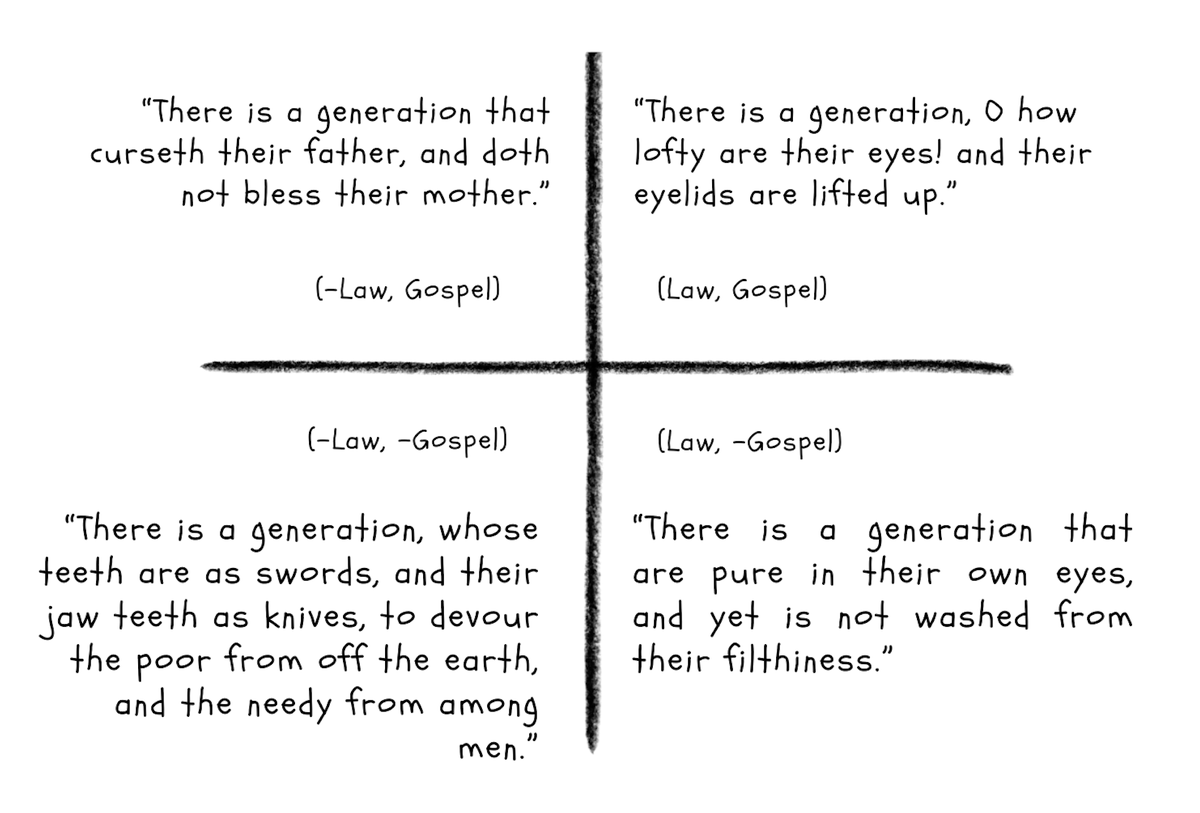
Passages that once seemed unrelated suddenly begin to harmonize. One striking example is Proverbs 30:11–14, where four successive descriptions are each introduced with the repeated phrase: “There is a generation…” That repetition suggests deliberate structure. In fact, the word generation becomes a key that unlocks the passage. Solomon is describing not only society, but the four spiritual character patterns that shape it.
Viewed through that lens, Jesus' repeated references to “this generation” begin to take on fresh significance. For example: “A wicked and adulterous generation seeketh after a sign; and there shall no sign be given unto it, but the sign of the prophet Jonas.” (Matthew 16:4) What if Christ is doing more than describing the people of His day? What if He is identifying a recurring spiritual character pattern?
Scripture also speaks of “the generation of the righteous”: “There were they in great fear: for God is in the generation of the righteous.” (Psalm 14:5) If so, Christ's references to “this generation” point beyond the people living in His day to recurring moral and spiritual identities that transcend time.
As you study the attached framework, here is a thought experiment: Where would you place the Dragon, the Beast, the False Prophet, and the Lamb; and why? Try mapping them onto the four quadrants. You may be surprised at how naturally the biblical patterns align.
One of the central discoveries explored in The Archetype is learning to recognize these recurring biblical patterns and, through them, distinguish the genuine from the counterfeit.
The Archetype. Coming soon.
#Technical-Theology
#Spiritual-Growth-And-Maturity
#Four-Character-Patterns
There is a Chinese proverb that says, “The beginning of wisdom is to call things by their right name.” Whether or not one accepts the saying in full, there is profound value in learning to recognize and identify patterns that have been hiding in plain sight.
One of the formative chapters in The Archetype explores what I believe are four recurring character patterns woven throughout Scripture.
Psalm 1 introduces them as the blessed man, the ungodly, sinners, and the scornful.
The apostle Paul echoes the same progression in different language: dogs, evil workers, the concision, and the circumcision who worship God in the Spirit.
Then Jesus presents the very same reality through the Parable of the Sower: the wayside, stony places, among thorns, and good ground.
What fascinated me was discovering that these are parallel portraits of spiritual condition. Even more remarkably, they can be organized into a coherent technical framework using the imagery of the cornerstone, drawing on Isaiah 28’s “line” and “plummet.”
The result is a roadmap that turns abstract spiritual concepts into recognizable, experiential realities.
Sometimes wisdom begins by simply giving things their proper names.
The Archetype.
Coming soon.
Some people talk about writer’s block. Honestly, I cannot relate. My problem has never been a shortage of ideas, it is trying to keep up with them. My mind is almost always exploding with ideas. I sometimes joke that I’m an “idea anthropologist,” always digging through patterns, connections, and hidden concepts.
There was a season when, once the creative vein in me opened, one idea started calling forth another. Over the years, those ideas accumulated into notebooks, outlines, scattered drafts, and unfinished manuscripts. But among them emerged one project that became especially close to my heart:
THE ARCHETYPE.
I am genuinely excited about this upcoming book because I believe it is one of those works every believer aspiring for God’s Kingdom ought to have in their library. The book explores spiritual growth and maturity in a practical and deeply personal way, showing how Christ is formed within the believer through the different stages of spiritual development.
What makes this book especially important to me is that it does not approach spiritual growth merely as abstract theology. It breaks the journey down into understandable patterns and everyday experiences believers can actually recognize.
No theological gymnastics. No complicated academic language. Just a clear roadmap for spiritual formation written in simple, accessible terms.
More details coming soon.
THE ARCHETYPE is on the way.
Isaiah 24:21 exposes something most people never see, it pulls back the veil and reveals that the kingdom of darkness is organized: militarized, stratified, and deployed across realms. “The LORD shall punish the host of the high ones that are on high, and the kings of the earth upon the earth.” The structure is deliberate. There is a host - a commanding head and his assembled ranks. There are high ones on high - principalities and powers entrenched in the heavenly places. And there are kings of the earth upon the earth - territorial rulers operating within the world-system below. Heaven and earth are both occupied. Authority is layered. Rebellion is coordinated.
At the summit stands the devil himself, commander of the host, the organizing mind behind revolt. Beneath him are the high-ranking principalities, spiritual authorities embedded in the unseen heights. Beneath them operate the kings of the earth, the rulers of darkness administering influence within nations, cultures, and systems. It is a mirror inversion of divine order. Just as God’s kingdom flows from heaven to earth, “on earth as it is in heaven”, so the counterfeit kingdom projects its rebellion downward, enforcing resistance across realms.
But here’s the hope: Isaiah doesn’t just reveal their structure. He declares their judgment. The military precision of the kingdom of darkness is temporary. The same LORD who sees the structure will punish it.
Link in Bio - "Portraits of Eden"
The second indication of two distinct worlds appears in the way each realm is watered. Genesis describes the earth at a stage before cultivation, noting that “every plant of the field” was not yet in the earth and “every herb of the field” had not yet grown. These phrases refer not to vegetation in general but specifically to cultivated plants, agricultural crops that require both rain and human labor, conditions not yet present, “for the LORD God had not caused it to rain upon the earth, and there was not a man to till the ground.” (Gen. 2:5) The narrative clarifies this absence: Adam, the only man at the time, had not been placed in the fields of the earth to cultivate them. Instead, he would be assigned to another realm entirely, “the garden which the LORD God planted eastward in Eden”, where he was commissioned “to dress it and to keep it.” Thus, while the forests and wild growth of the earth teemed with vegetation from Genesis 1, the fields, the farmland, remained uncultivated because the man appointed for cultivation labored in a different domain.
Instead of rainfall, the text explains, “there went up a mist from the earth, and watered the whole face of the ground.” (Gen. 2:6) This describes a closed, internal system of moisture rising from below, adequate for sustaining an uncultivated landscape but limited to natural provision. It portrays the earth as a realm maintained by its own internal cycles rather than by an external source. It also points to another truth implied by the narrative: while the mist watered the entire earth, rain was an additional form of irrigation available in God’s design, one suited particularly for cultivated fields, where human labor and divine provision would work together. The absence of rain, therefore, reinforces the uncultivated state of the earth at this time.
By contrast, Eden’s garden is nourished by a river. Genesis 2:10-14 records that “a river went out of Eden to water the garden,” and that it then divided into four distinct heads, Pison, Gihon, Hiddekel, and Euphrates. ....
Zion is one of the Bible’s central threads, woven through nearly every book and doctrine. The biblical writers speak of it with such constancy that one cannot study Scripture for long without encountering its presence. Its language permeates psalms, prophets, gospels, and epistles, not as a poetic flourish but as the very geography of redemption. This persistent visibility is not accidental. Mount Zion theology functions as the hub around which all other theological themes revolve. It gathers the motifs of sanctuary, kingdom, prophecy, second advent, inheritance, worship, and new creation into a single locus. This is why, regardless of the doctrinal avenue one pursues, be it eschatology, Christology, or ecclesiology - Zion eventually appears, quietly insisting on its relevance. Scripture refuses to let readers ignore this mountain, for it represents the first homeland of God’s people and the axis of His cosmic design. If Zion keeps interrupting the conversation of theology, it is because the mountain was never meant to be peripheral; it is the center from which all biblical truth radiates. Therefore, readers may as well become acquainted with this mountain that refuses to stay in the background, for understanding Zion is key to understanding the redemption story itself.
Link to Portraits of Eden: https://t.co/piWRwsUHwx
Scripture is a built world.
From Eden to Zion, from the firmament to Paradise, the Bible speaks in landscapes, directions, and sacred heights. Portraits of Eden reveals these not as isolated images, but as elements of a single, intentional design.
Approaching Scripture through an architectural lens, this book uncovers a coherent cosmic blueprint — stretching from creation to restoration; and invites the reader to see the Bible as a constructed world, measured and ordered by God Himself.
📷 Portraits of Eden: https://t.co/piWRwsU9GZ
Portraits of Eden, A Book for a Deeper Christian Life.
No private revelations - “God showed me…” kind of claims.�No conclusions that go beyond what Scripture itself supports.�No external authorities imposed upon the text.�Only Scripture read carefully, patiently, and in conversation with itself.
🔗 Portraits of Eden: https://t.co/piWRwsUHwx
Like the ruins of an ancient city uncovered beneath later civilizations, Eden appears preserved within Scripture’s most enduring landmark: Mount Zion. Just as archaeologists confirm ancient locations through layers of evidence, Eden emerges in the Bible through a cumulative witness: place names, directional language, geography, and recurring patterns. When these details are examined patiently, they converge. The trail narrows inward, drawing the reader toward a single, recurring center: Zion.
What archaeology uncovers in the soil, Scripture preserves in language and structure. Zion becomes the place where worship, prophecy, and hope are gathered, where the memory of God’s original dwelling with humanity is remembered and expressed again. Read in conversation with itself, the biblical record shows that Eden was not lost to myth, but carried forward in meaning, its “ruins” standing in Zion’s language, architecture, and promise.
🔗 Portraits of Eden: https://t.co/piWRwsUHwx
What if Scripture were approached with a systems mindset? When individual doctrines are examined in isolation, they often appear disconnected, or even contradictory, failing to form a coherent whole. Yet theology, like the human body, is not a collection of independent parts; it is an integrated system.
In medicine, true healing and long-term health are rarely achieved by treating symptoms in isolation. The body is understood as an interconnected organism, where each system influences and supports the others. In the same way, theological clarity emerges not by isolating individual truths, but by seeing how they function together within the larger framework of Scripture.
A systems approach allows theology to move from fragmentation to coherence, revealing how each part belongs, supports, and gives meaning to the whole. This is precisely the work "Portraits of Eden" undertakes, bringing Scripture’s themes back into relationship with one another, anchored in Eden and brought into focus through Zion's Cornerstone, so the biblical story can be seen as a unified and living whole.
If this vision resonates, Portraits of Eden is available now.
🔗 Portraits of Eden: https://t.co/piWRwsUHwx
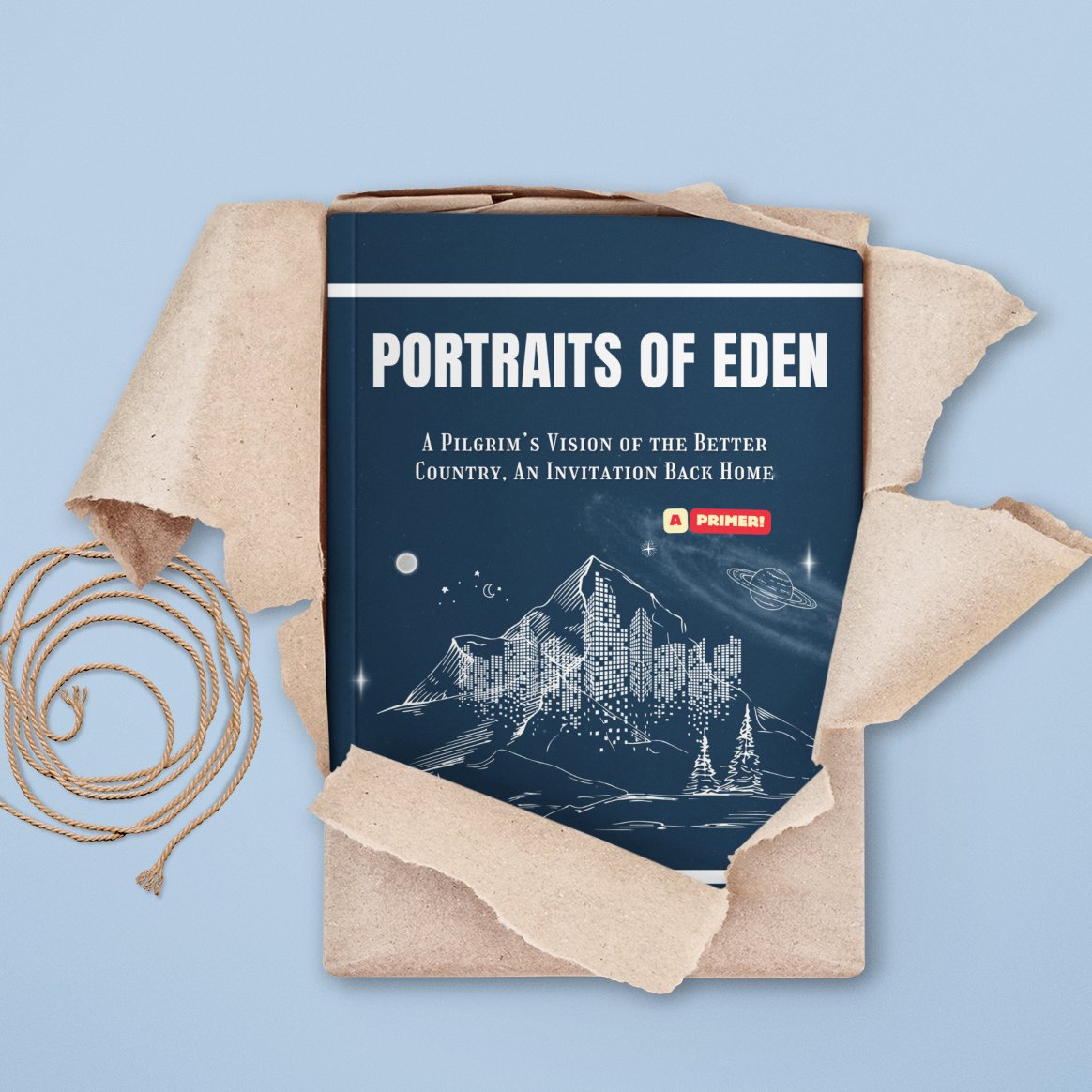
After years of study and months of writing, my book Portraits of Eden is now available.
This book began as a search for Eden, not just a garden, but the original homeland and organizing center of God’s world. Along the way, the wider landscape came into focus: Zion, the foundations of the earth, the architecture of the cosmos, Babylon, Hell, and Jacob’s ladder, all part of one connected story.
By following Scripture’s patterns rather than isolated passages, Portraits of Eden brings clarity to some of the Bible’s most complex and debated themes, replacing confusion with coherence and helping the story finally come together.
If you’ve ever sensed that certain theological tensions remain unresolved, and that there was more beneath the surface of Scripture, this book is for you.
🔗 Get your copy here: https://t.co/piWRwsUHwx
I’m excited to share a preview of my upcoming book, "Portraits of Eden." This work explores Eden, humanity’s original home, but along the way, the journey moves through patterns, geometry, and architectural logic embedded in Scripture, revealing a coherent cosmic framework that brings some of the Bible’s most complex themes into focus.
If you’d like to read the preface and first chapters, you can access them here in the comment section