Starting a thread of documentaries, shows, movies, & other media to get a better, more holistic understanding of China, its history, & China-US relations. Ok let’s go:
@BrianBeckerDC’s podcast series on China’s foreign policy, available in full here: https://t.co/EQEzxBzTiB
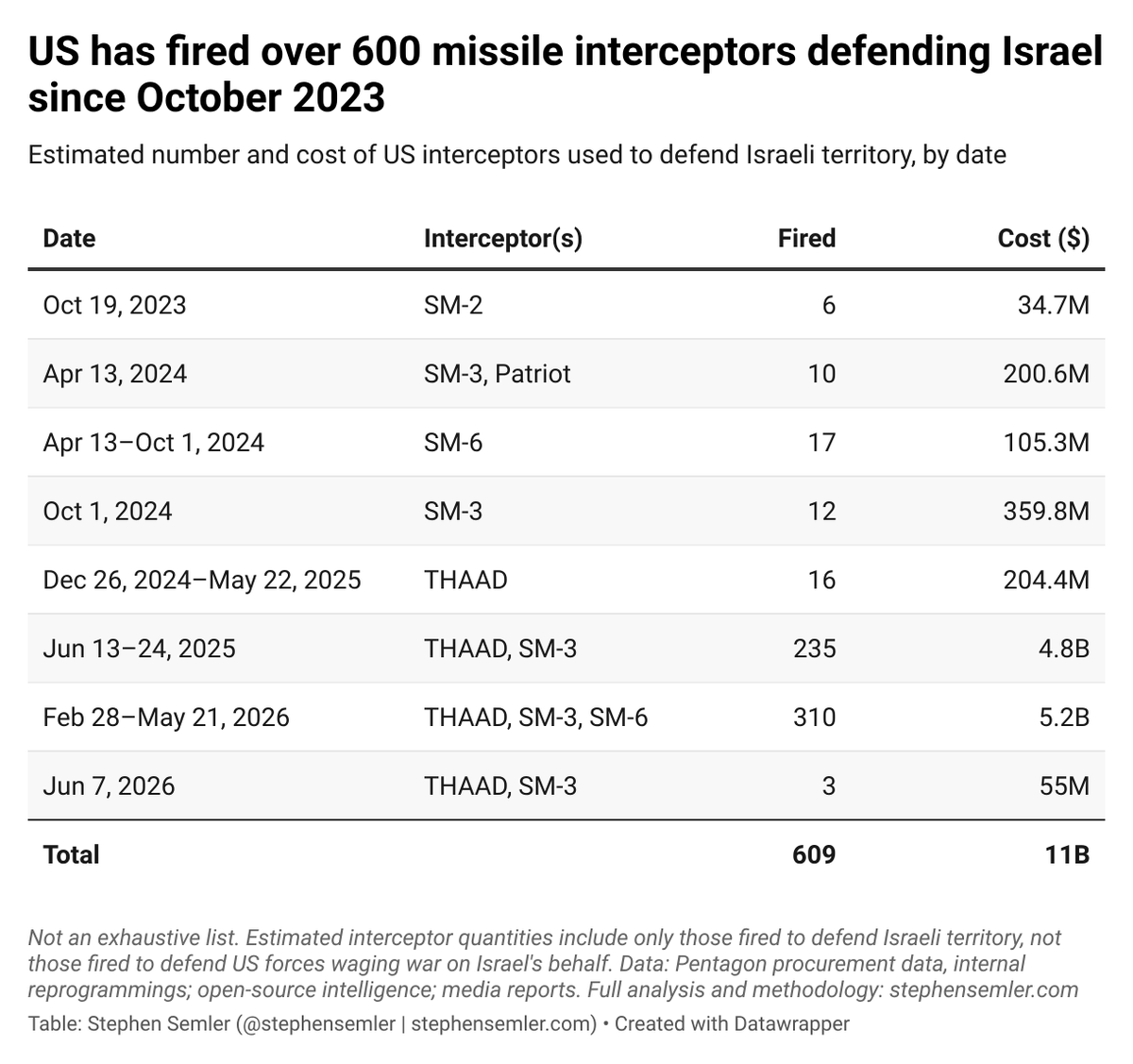
The US fired an estimated 609 ballistic missile interceptors to defend Israeli territory from October 2023 through September 2026.
The US has fired more interceptors to defend Israel than Israel has.
“It’s union busting.”
Illinois's Cook County School District 130 community members are sounding the alarm on the horrific conditions inside schools after the Board of Education laid off all custodial staff in August.
For the past two months, SEIU Local 73 custodians and the community they’ve served for decades have been fighting to get their jobs back. Now, public officials across the region are joining the call to reinstate the custodians and respect their labor rights.
In an attempt to silence widespread outrage, the board decided to cap attendance for the first time ever at Tuesday’s meeting, which led to community members rallying just outside. The next board meeting is scheduled for Nov. 17, but the demand for an emergency meeting to immediately reinstate the local custodians is growing.
Over 14,000 potted flowers from Beijing's National Day floral displays are being gifted to citizens for free, allowing the beauty of the holiday season to bloom in local homes! 🌸🌼✨
In January 2025 my mom’s lung cancer spread to her brain. The drug with the best chance of helping her was approved in China but not here.
A doctor told me, almost as an aside, that if she were Chinese she could buy it at a pharmacy.
So I flew to Shanghai and came home with 26 boxes in my luggage. That was 19 months ago. My mom is still here, still working, and in her words has had an amazing three years.
The drug was approved in China in 2023. The FDA approved it in July 2025. It still is not for sale here. I know of at least 30 Americans who have made the same trip.
I have been scared to tell this story because I worried it could cost my mom access to the medicine keeping her alive. But the problem matters more than my silence. These drugs need to be developed and available here, and that means FDA reform.
Art Allen at KFF Health News told our story this week. It also ran in The Washington Post.
https://t.co/tHKV3L004L
CALL OF DUTY AND THE WAR ON KOREA
On October 23rd, Call of Duty releases Modern Warfare 4, a game that portrays the DPRK as the enemy and is played by millions. Sovereign Media’s Devianni Ebanks breaks down the controversy surrounding the game.
Activists and Korean diaspora groups have accused the game of functioning as a weapon of imperialist propaganda designed to dehumanise North Koreans and manufacture consent for war.
The campaign argues that Modern Warfare 4 portrays North Koreans as aggressors while erasing the history of US devastation during the Korean War. According to the statement, the US dropped over 600,000 tons of b*mbs on Korea (3.7 times the amount dropped on Japan during the entire Pacific War) and k*lled more than 3 million Koreans. It also cites the No Gun Ri massacre, where US forces k*lled over 600 people, 72% of them women and children.
Today, millions of Koreans still live in the shadow of a war that never ended. Divided families. Mandatory conscription for South Korean men. Camptown prostitution, where US soldiers inflict violence on Korean women. In 2025 alone, the US conducted 274 days of war drills in Korea, rehearsing for n*clear strikes, b*mbing civilian targets, and as*assinations of North Korean leadership.
Call of Duty: Modern Warfare 4 does more than depict violence; activists say it trains players to inflict it, both in the US and abroad. Families of the Uvalde school sho*ting victims are suing Activision, Meta, and g*n manufacturer Daniel Defence, noting that the sho*ters in Uvalde, Parkland, and Sandy Hook all played Call of Duty and used AR-15s.
Activists also accuse the Pentagon of shaping how games and films depict US wars, arguing that Hollywood and Western media have spent decades dehumanising North Koreans. "War in Korea is not a video game … it's happening in real life," the campaign states. "Don't play the US's game. Fight the real war machine."
The release comes amid heightened tensions on the Korean peninsula and growing scrutiny of the military-entertainment complex.
Gideon Rachman asks whether the world is “sleepwalking into World War III?”
It’s a long read, and not a terribly enlightening one. Rachman tours Ukraine, the Gulf, the Taiwan Strait and the 65 conflicts currently raging around the world, and finds the culprits to be “revisionist powers”, “strongman leaders” and an “axis of adversaries”: Russia, China, Iran and North Korea.
In a couple of thousand words, he finds no space at all for the crisis of neoliberal capitalism, albeit he does note the important fact that the G7, which accounted for two-thirds of world output in 1989, is now down to 43 percent.
Lenin would have recognised the connection between this decline and the attempt by declining powers to use military means to hold on to a world they can no longer dominate economically. He would have easily recognised “the striving for domination, not for freedom”.
More than a century after his death, Lenin remains a far better and more relevant guide to the questions of war and peace than the FT’s chief foreign affairs commentator.
Imperialism is hitting out in all directions:
• Genocide in Gaza, armed and financed by Washington, London and Berlin.
• US-Israeli criminal war on Iran and Lebanon.
• A proxy war in Ukraine to weaken and dismember Russia.
• Economic warfare against China: tariffs, chip bans, sanctions, blacklists.
• A “Donroe Doctrine” under which a president is kidnapped, Cuba is placed under a genocidal energy siege, and election results are determined in Washington DC.
• AUKUS, RIMPAC, Talisman Sabre, and a ring of US bases around China’s coast.
None of this features as a cause of insecurity in Rachman’s telling. He’s more worried about whether Xi Jinping “considers that America’s Taiwan Relations Act means something”, or whether Putin sees NATO’s Article Five as an “iconclad commitment”.
In other words, his proposed path to peace is for the US to make its threats more credible. Peace through NATO. Peace through imperialism.
The real guarantee of peace is a multipolar world where no power gets to dictate terms to the rest – exactly what Rachman’s “axis of adversaries” is working towards, and exactly what the West is fighting to prevent.
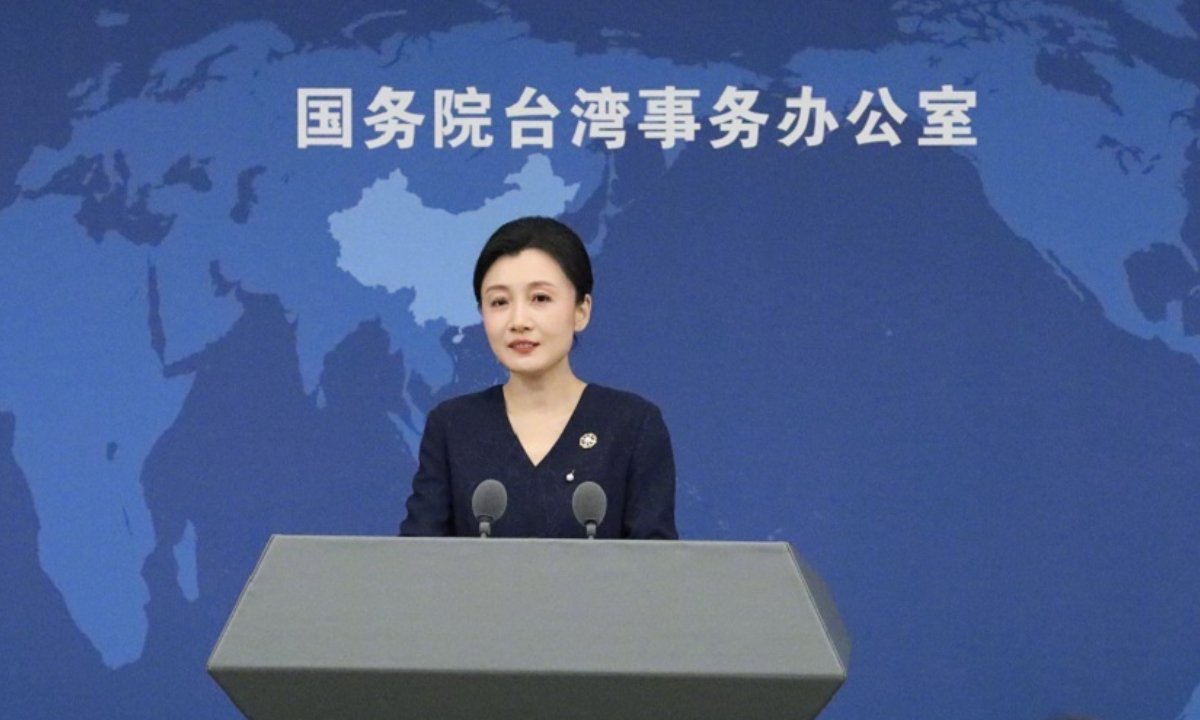
The Taiwan Affairs Office of the State Council on Tuesday criticized Taiwan authorities for rejecting #mainland actor #ZhangLinghe’s application to hold a fan meeting and other exchange activities on the island, while voicing support for Taiwan singer #JayChou’s identification as a #Chinese singer.
https://t.co/vvKlvNDVQ1
The fact that "human shield" is used to justify the "necessity" of killing civilians rather than demand the need to de-escalate and negotiate in order to preserve human life is beyond telling.
There's a direct line from the justifications made for domestic police violence and extrajudicial killings, even of literal babies, to the justifications made to the violence enacted by our govt abroad, directly or indirectly by the weapons we make and sell to our allies.
Carlos Martinez on Trade Unions Under Socialism vs. Capitalism
From our recent discussion of Ness’s book Dialectics of Chinese Labor. Watch full convo here: https://t.co/Vn6GGT1Y4r
Book available here: https://t.co/OWavSY56Kp
For more upcoming events: https://t.co/0lh6eRtEHX.
This is historic. The number of dockworkers set to go on strike on 30 October is expanding rapidly. Some 50 ports will now be shut down, not only on the Mediterranean, but also in Ireland, India and Mexico. The global movement against militarism and war is entering a new phase.
A smart projected zebra crossing is now operational at a scenic area in Suixi County, east China's Anhui Province. Switching on automatically after dark, this tech-enabled solution uses eye-catching dynamic projections to help drivers spot pedestrians from afar and enhance safety for road users. @AnhuiChina
1 year after a stroke, this British woman stands, walks and climbs stairs again with an exoskeleton robot from China.
She was moved to tears, and her son ordered one immediately on the spot.
This is what it means for technology to serve humanity.
🇨🇺 Cuba está a oscuras y la red eléctrica no da más. Hay barrios de La Habana con más de 34 horas sin luz, y en el resto del país los apagones duran todavía más.
La raíz es una sola, no hay petróleo, pero no hay petróleo porque desde finales del año pasado la isla no ha podido comprar combustible por el cerco energético de Washington.
Una asfixia, un genocidio ante los ojos del mundo, más de 10 millones de personas siendo castigadas por la impunidad de unos psicópatas que están haciendo sufrir a todo un pueblo!
Camp Pendleton is full of of hazardous chemicals from dumping, contaminated groundwater and toxic waste. It started in the 1940s. Declared an EPA Superfund site in 1989. Pendleton is very full of PCBs from deliberate waste spreading into soil that can go airborne with dust and ashes in such a firestorm. The military is a superpolluter.
https://t.co/KpWmVSqypa