How can we ensure cooperation between (natural & artificial) agents? Humans do this via social norms that constrain uncooperative actions. In this new paper, @xuanalogue and I show how artificial agents can *learn* these norms from observation!
Link: https://t.co/Qlwx8mSH0r
Our paper ImageChain (with @IngoZiegler & @delliott) was accepted at #WACV2026!
We explore how multimodal LLMs reason over sequences of images
I’ll present it at the @_LXAI Workshop @NeurIPS 🇲🇽 (Nov 30 ~10:45 Mex City).
Come chat if you’re there! 🫶
📄 https://t.co/iQdaNZcDsn
Can we find weight directions to modify LLM's behaviors?
Our new paper proposes contrastive weight steering, an alternative to activation steering for modifying behaviors using small narrow distribution data 🕹️
🧵👇
He is 13. A 7th grader w/ a pending asylum case. Being held more than 500 miles from home & housed w/ adults. He called his mom crying, & reported that he’s sleeping on concrete w/ an aluminum blanket.
How is this anything other than sick & shameful? https://t.co/ADIHGstajd
This should embrace uncertainty into governance principles and force policymakers to continuously update their proposals according to new evidence, thereby leaving room for developments to be incorporated into governance.
Lastly, we advocate for a pragmatic approach to governance, i.e., focusing on observable outcomes rather than speculative scenarios, examining tangible impacts that existing AI systems have on society, or inductively deriving governance principles from real-world evidence.
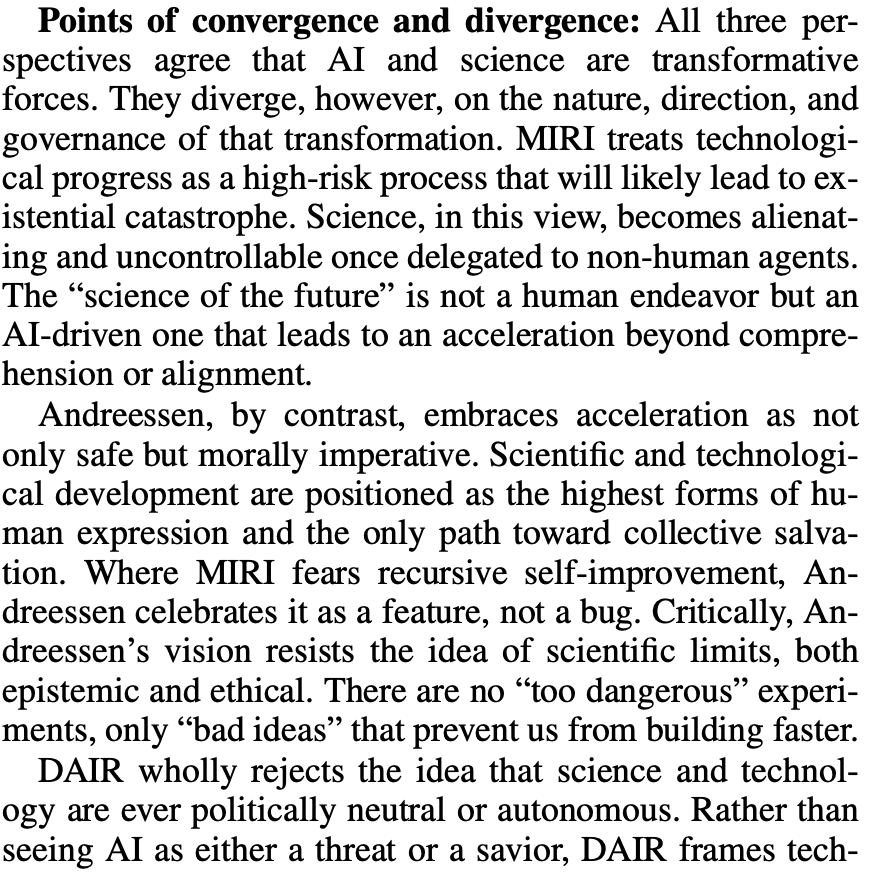
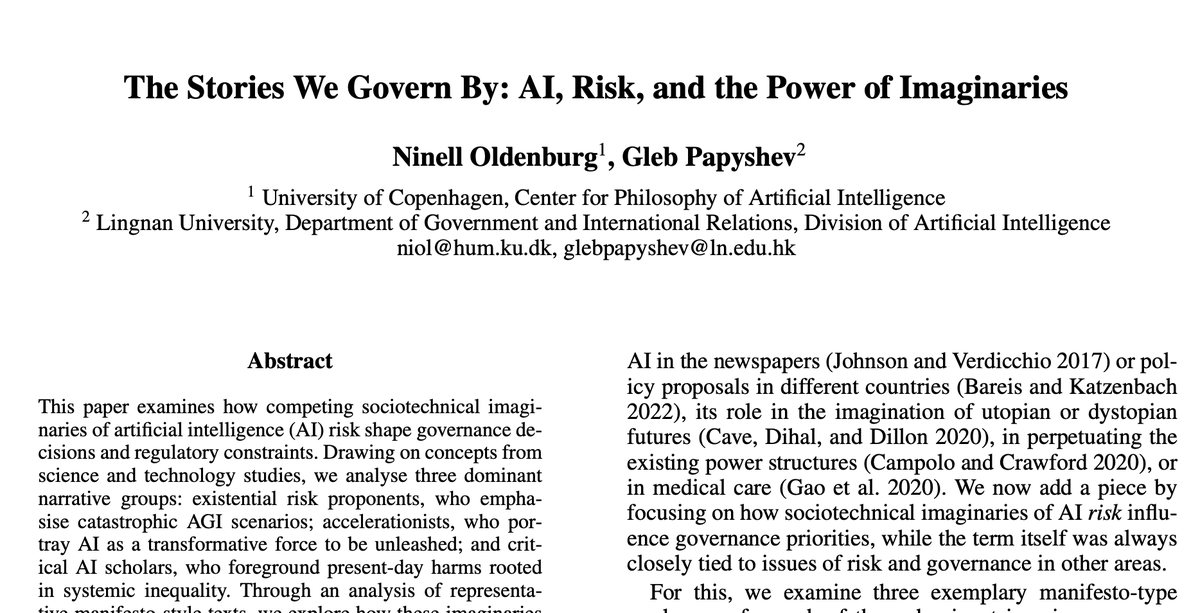
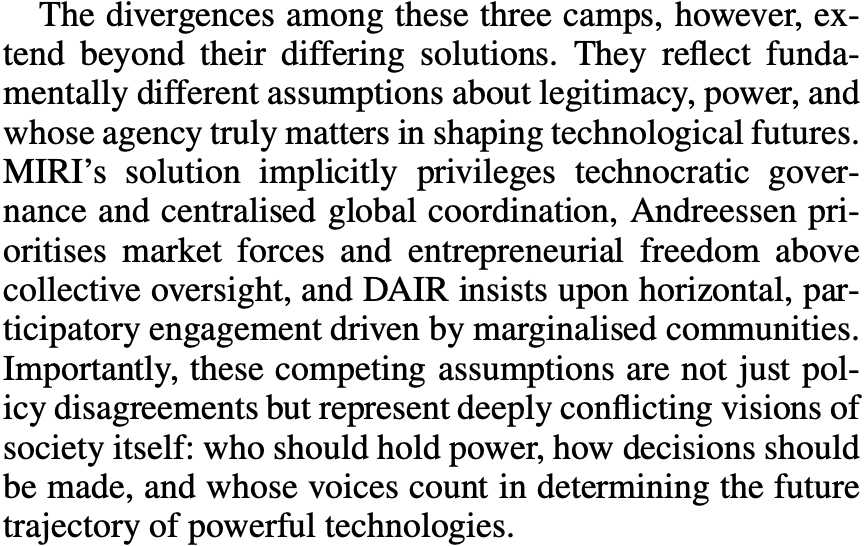
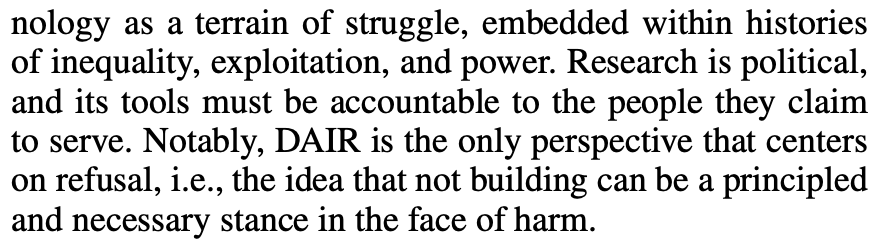
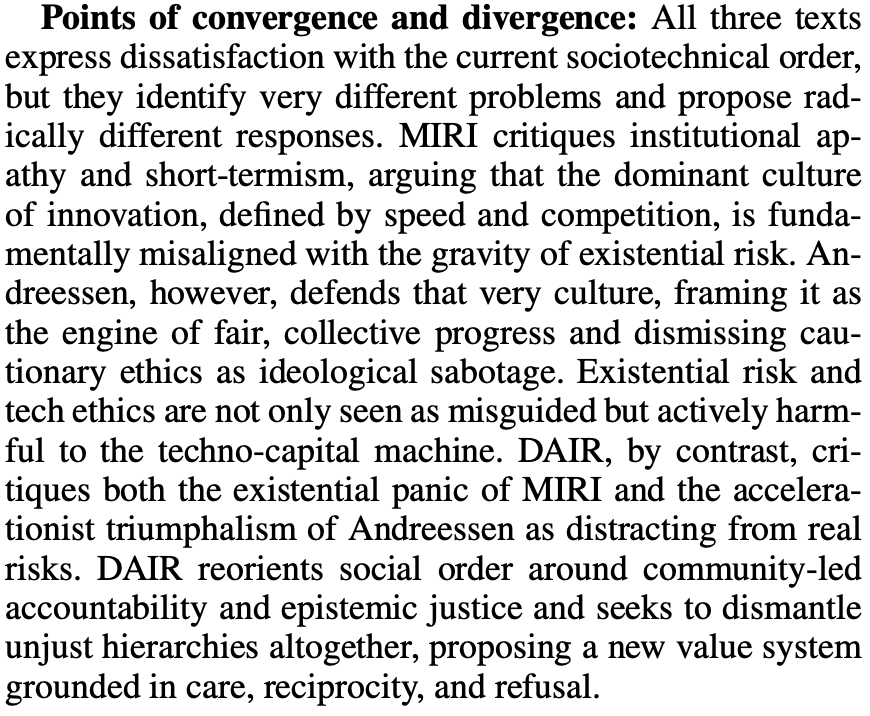
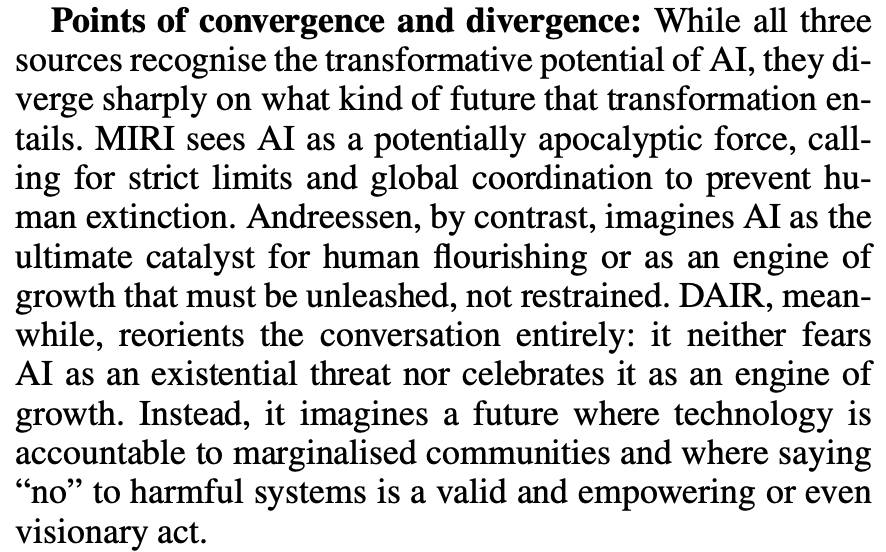
How does the language of risk imaginaries influence policy and governance? In a new paper, Gleb Papyshev & I show that dominant AI risk framings and the resulting policy proposals are of a deterministic nature. We argue for a pragmatic governance approach.
We then very (!) briefly review what AI Policy in the US, UK, EU, China, Brazil, and Russia looks like, finding that they most often employ such deterministic proposals.
And Determinism vs. Agency finding that all imaginaries promote a high degree of determinism for the future, however, in contrastingly different directions per imaginary.
Utilizing the concept of sociotechnical imaginaries, we operationalized each of the risk imaginaries into four categories: Normative Vision of the Future, Social Order and Values, Role of Science and Technology, and Determinism vs. Agency.
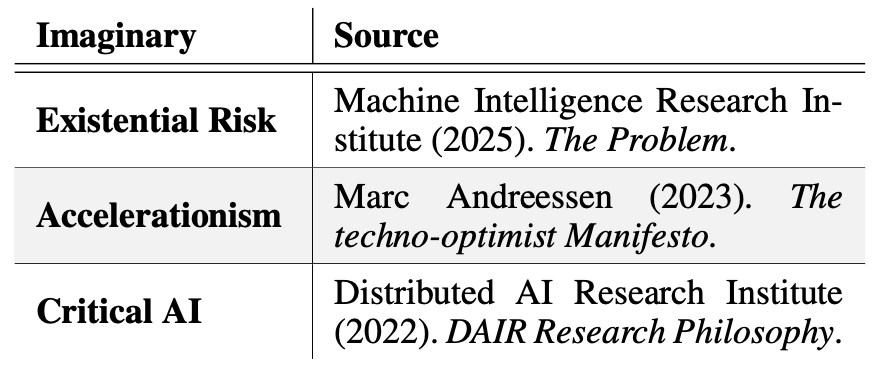
We conducted a comparative literature analysis of 3 manifesto-style texts: the Machine Intelligence Research Institute as a proponent of AI as an existential risk, Marc Andreessen as accelerationist, and the Distributed AI Research Institute as researchers of current-day harm.
🚀New Preprint Alert 🚀
Can Multimodal Retrieval Enhance Cultural Awareness in Vision-Language Models?
Excited to introduce RAVENEA, a new benchmark aimed at evaluating cultural understanding in VLMs through RAG.
and on top of that, it's also pretty hostile toward China by creating this narrative of them inevitably playing a big part in causing a catastrophe?
i'd love to see more hope in openness toward international collaboration instead of reinforcing the enemy image
What irritates me about the approach taken by the AI 2027 report looking to "accurately" predict AI outcomes is that I think this is highly counterproductive for good outcomes.
They say they don't want this scenario to come to pass, but their actions---trying to make scary outcomes seem unavoidable, burying critical assumptions, burying leverage points for action---make it more likely to come to pass.
The researchers aim for predictive accuracy and make a big deal of their credentials in forecasting and research. (Although they obscure the actual research, wrapping this up with lots of very specific narrative.) This creates an intended illusion, especially for the majority of people who haven't thought much about AI, that the near term scenarios are basically inevitable--they claim they are so objective, and good at forecasting!
Why implicitly frame it as inevitable if they explicitly say (buried in a footnote in the "What is this?" info box) that they hope that this scenario does not come to pass? Why not draw attention to points of leverage for human agency in this future, if they *actually* want this scenario to not come to pass?
I think it would be more productive to make the underlying causal assumptions driving their predictions clear, rather than glossing this over with hyperspecific narratives. (E.g. the assumption that "if AI can perform at a task 'better than humans' --> AI simply replaces humans at that thing" drives a large amount of the narrative. I think this is pretty questionable, given that AIs can't be trusted in the same way, but even if you disagree, readers should at least be able to see and debate that assumption explicitly.)
They gesture at wanting to do this, but don't at all do it! In the section about "why this work is valuable", they say that: "Painting the whole picture makes us notice important questions or connections we hadn’t considered or appreciated before" -- but what are they? Can this be articulated directly, instead of buried? Burying it is counterproductive and leads to alarm rather than people being able to see where they can help.
This is based on detailed tabletop exercises. Tabletop exercises have the benefit that participants are seeing the causal results of their actions, and such exercises are usually limited to experts who can actually make decisions about the subject at hand. Maybe instead of widely publicizing this, this kind of exercise should be 1) tied up with an understanding of the causal chain, and 2) left to those who can plausibly do something about it?
My timeline is awash with “inspiring women” for international women’s day
This would be a great campaign IFF the bottleneck to equality was women’s stereotypes
Activists would be more effective if they actually used evidence on what works, without triggering backlash
🧵
Free speech no longer exists in the US government. For @TheAtlantic I spoke with 12+ federal workers in 6 agencies who said the Trump admin’s actions have led to pervasive self-censorship, even on issues some view as critical to national security. 1/
https://t.co/7IhSWhJ76a