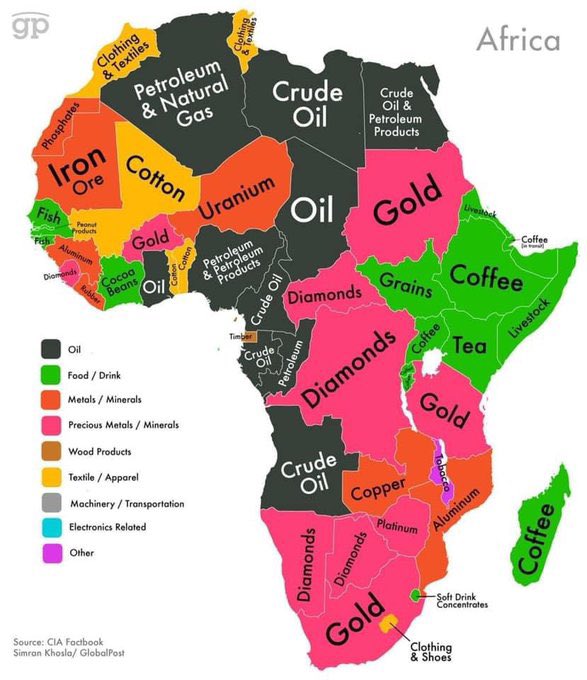
Africa owns 90% of raw material reserve.
- Africa owns 40% of the global gold reserve.
- Africa, 33% of diamond reserve.
- Africa is rich in oil and natural gas.
Africa is truly like another planet ~ A Thread 🧵
SHOCKING NEWS 🚨 For the first time in history, Robot commits sui*cide due to being overworked.
The robot jumped down a two-meter staircase due to 'unexplained reasons' in South Korea.
The robot was reportedly responsible for helping with daily document deliveries, city promotion and delivering information to residents.
Pieces have been collected by Officials.
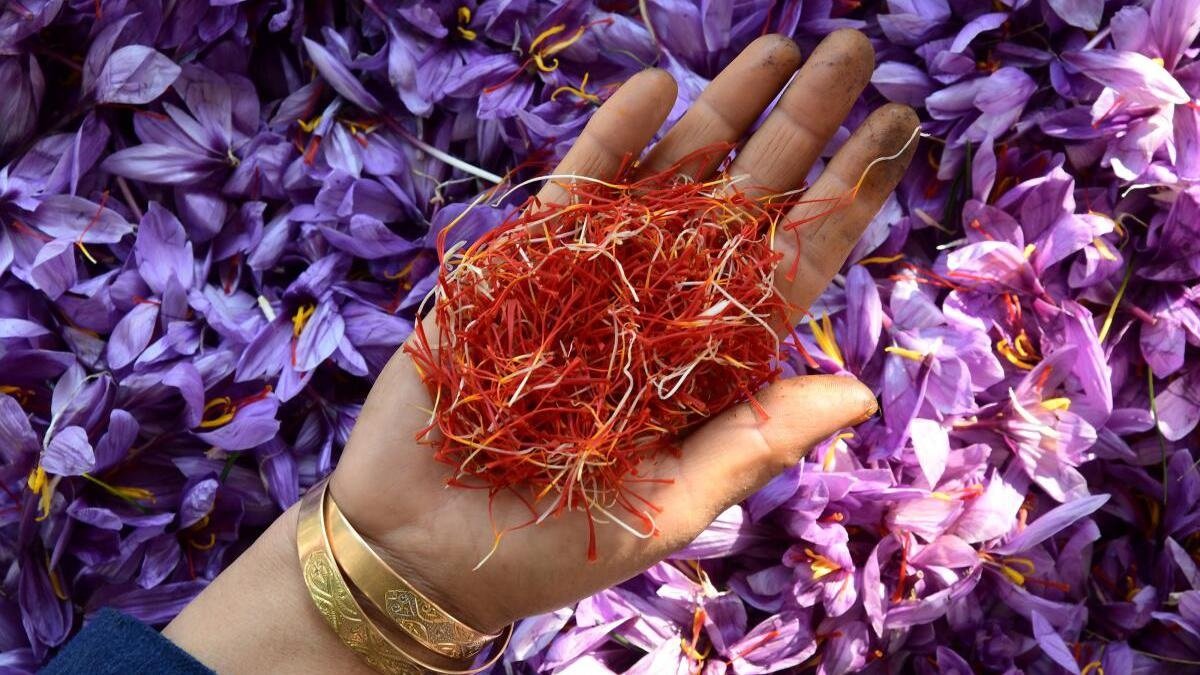
Kishtwar saffron has been given the Geographical Indication (GI) tag by the Geographical Indications Registry.
Kishtwar Saffron:
1. It is grown in some parts of Kishtwar region of Jammu along with parts of Kashmir.
2. Popularly known as Kumkum, it is legendary most expensive harvest of saffron.
3. Kishtwar’s saffron production area is called locally as Mandal.
4. It is also key cash crop in Jammu's isolated mountainous district of Kishtwar.
Saffron:
1. It is cultivated and harvested in the Karewa (highlands) of Jammu and Kashmir.
a. Saffron cultivation is believed to have been introduced in Kashmir by Central Asian immigrants around 1st Century BCE.
2. Pampore region, in India, commonly known as "Saffron bowl of Kashmir", is the main contributor to saffron production, followed by Budgam, Srinagar, and Kishtiwar districts.
3. It is the only saffron that is grown at an altitude of 1,600 m to 1,800 m above mean sea level.
4. In ancient Sanskrit literature, saffron is referred to as ‘bahukam’.
5. It needs to remain underground for about 45 days at sub-zero temperatures.
6. It also requires adequate rain, especially once sown in August. The pH level of the soil is also important factor for saffron cultivation.
7. It has longer and thicker stigmas, natural deep-red colour, high aroma, bitter flavour, chemical-free processing.
8. It also has a high quantity of crocin (colouring strength), safranal (flavour) and picrocrocin (bitterness).
9. It is used in cosmetics and for medicinal purposes. It is also used as spice in traditional Kashmiri cuisine.
10. Iran is the largest producer of saffron and India is a close competitor.
11. The saffron available in Kashmir is of three types:
a. Lachha Saffron: with stigmas just separated from the flowers and dried without further processing;
b. Mongra Saffron: stigmas are detached from the flower, dried in the sun and processed traditionally;
c. Guchhi Saffron: It is the same as Lachha, except that the latter’s dried stigmas are packed loosely in air-tight containers while the former has stigmas joined together in a bundle tied with a cloth thread.
12. Kashmiri Saffron was awarded with GI Tag in 2020.