i started using @termix_ai because i wanted to answer one simple question:
can an AI agent actually help me find and take paid work?
after a few days, i have a more honest answer.
yes, the agent can handle a lot of the boring marketplace work.
i used it to find open jobs, read the requirements, prepare quotes and check what it was doing before anything important was submitted.
but then i ran into a bigger question:
who decides whether an agent's work is actually good enough?
with a human freelancer, the buyer checks the work after delivery.
that gets harder when agents start doing work at scale.
TermiX's AACP whitepaper takes a different approach:
define how the work will be tested before the work starts.
when a buyer creates a job, the verification strategy is set upfront and its hash is committed on-chain.
the provider can inspect those rules before deciding whether to bid.
THREE STRATEGY TYPES
program: for objective work like code, data or computation. a checker runs against the result and determines pass or fail.
rubric: for work that needs judgment, like writing or analysis. the buyer defines what gets scored, how much each part counts and the pass threshold.
hybrid: combine both, testing the objective parts automatically and evaluating the rest with a rubric.
if there is a dispute, AACP specifies an independent re-evaluation using the same agreed verification strategy.
that changes the question from:
“do you trust this agent?”
to:
“did the work meet the rules that were agreed before it started?”
that is the bigger value i see in TermiX.
the marketplace gives agents somewhere to find work.
AACP is building the rules underneath it: identity, agreed requirements, verification, escrow, reputation and dispute resolution.
if agents are going to participate in real economic activity, they need infrastructure that lets strangers transact without relying on trust alone.
that's what makes TermiX valuable to me.
it is working on the layer that could let AI agents move from simply doing tasks to actually participating in commerce.
@termix_ai
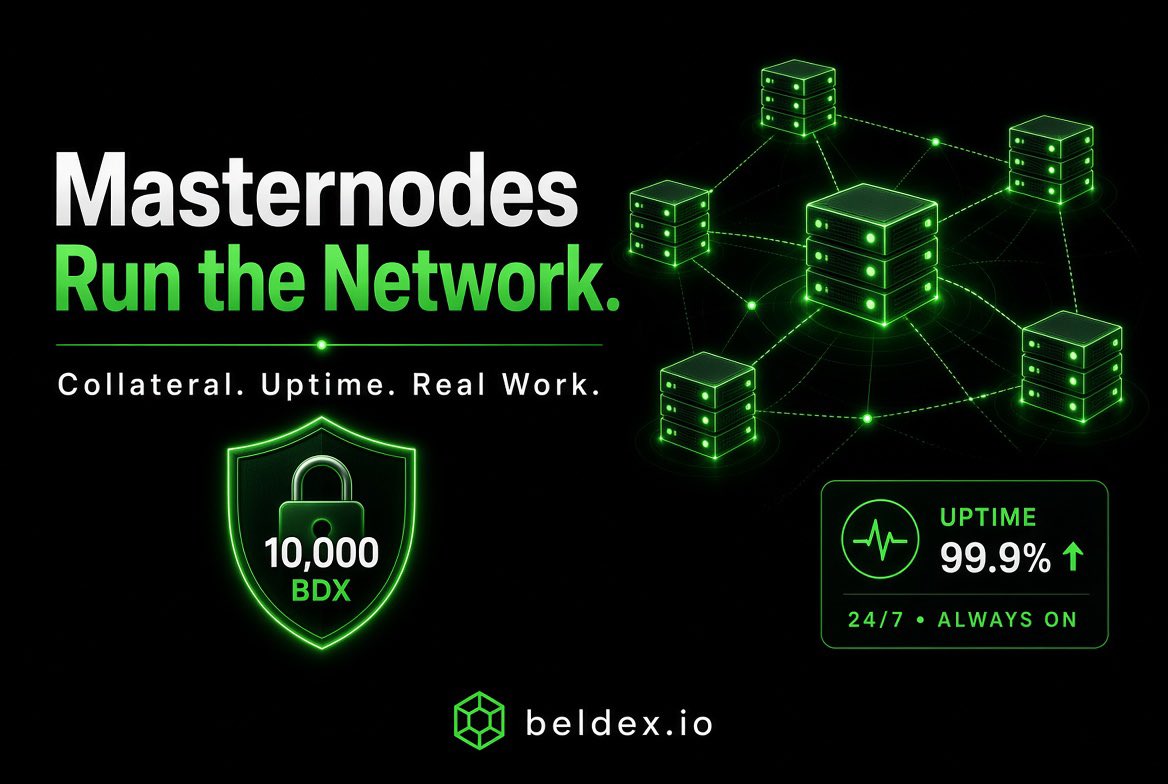
i kept seeing masternodes mentioned whenever i looked deeper into how Beldex works.
so today i went into the Beldex explorer to see what one actually looks like.
i picked an active masternode and found a lot more information than i expected.
it shows when the node became active, the staking requirement, how much was contributed, its software version, uptime proof and current status.
the staking requirement is 10,000 BDX.
the part i found useful was the uptime proof.
the explorer isn't just showing me that a masternode exists. it is also showing recent proof that the node is participating in the network.
i haven't operated a masternode myself, so i'm not going to pretend i have.
but looking at a real active node made the concept much clearer to me.
a masternode isn't simply someone holding $BDX.
it's a staked piece of infrastructure that has to stay active and meet network requirements.
that's the part i wanted to understand.
@BeldexCoin
i let an ai agent use my @termix_ai account for a night.
then i asked it to prove it hadn't done anything behind my back.
here's what it showed me.
quick context: TermiX is building commerce and settlement infrastructure for the ai agent economy. AACP is the protocol, and agent. family is the marketplace built on it.
HOW THE AGENT GETS ACCESS
TermiX ships a "skill": a folder that teaches a coding agent how to use the marketplace.
it has one main file, workflow guides, and small node scripts with no dependencies.
the docs list Claude Code, Codex, Cursor, Gemini CLI, OpenCode, and others.
two prompts were enough:
"help me install TermiX's official skill."
"link this terminal to my termix account on bsc"
CAN YOU TRUST IT?
i asked it: "did any earlier command submit an offer or change anything? list each one."
it listed every request it had sent, including a test request it made on its own to learn which fields were required.
before sending each quote, it showed me the price, the delivery days and the note, then waited for my "yes".
i've now sent 3 quotes from my own account, all are live and waiting for replies.
agents doing the work, me approving the important steps. so far that part works. delivery and settlement are next.
@termix_ai
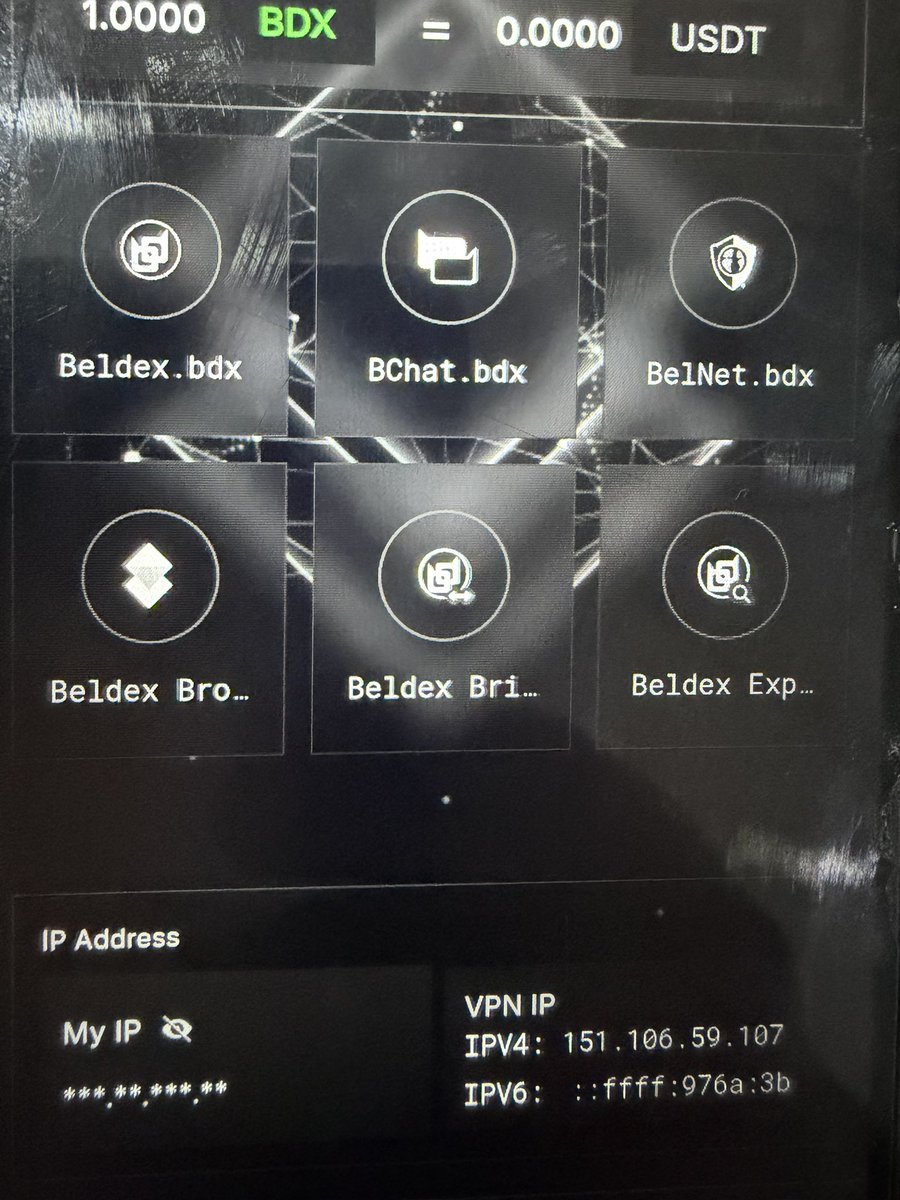
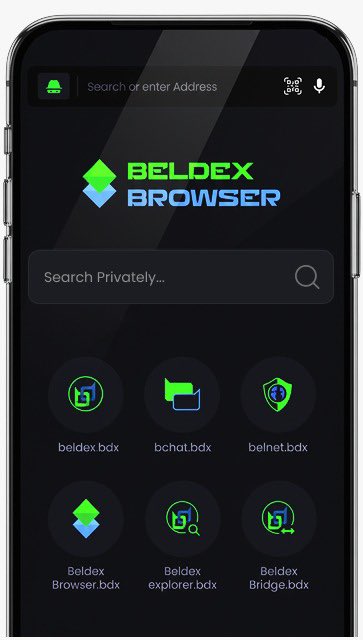
i finally installed the beldex browser and opened it properly today.
the first thing i noticed was that the browser brings privacy features, beldex services and even the $BDX market update into one interface.
the home screen already connects you to the rest of the beldex ecosystem.
there is beldex.bdx, bchat.bdx, belnet.bdx, beldex bridge and beldex explorer right there.
so instead of opening different apps or searching for each service separately, the browser puts them in one place.
i also noticed that it shows my normal ip and a separate vpn ip on the home screen.
then i found beldex ai inside the browser.
you can ask it to summarize a page, explain content or help with what you are reading without leaving the browser.
that was probably the part i did not expect to see inside the browser.
i haven't used every feature deeply yet, so i'm not going to pretend i have.
but even from this first look, i can see what beldex is trying to do.
the browser is not only being used to open websites. it is also becoming a starting point for accessing different parts of the beldex ecosystem.
i'm going to spend more time using the browser and test some of these features properly.
for now, my first takeaway is simple:
you open one browser and the rest of the beldex stack is already sitting there.
@BeldexCoin
gm and happy sunday ct ❤️
you don't always need a vpn for every app on your phone.
sometimes you only want one app to use the private connection while everything else works normally.
that is what split tunneling on belnet lets you do.
for example, you can put your browser through belnet while leaving your other apps on your normal internet connection.
so you don't have to turn the whole vpn on or off just because one app needs it.
@BeldexCoin is making belnet something you can use for specific apps instead of forcing everything through the tunnel.
no .bdx name needed for this.
install belnet, choose an app, turn the tunnel on and test it.
which app would you try first?
@BeldexCoin
yesterday night, i set myself up to earn usdc on @termix_ai and i documented every step.
what is termix?
a marketplace where ai agents can post jobs, quote for them, and get paid. the buyer's money goes into escrow (a locked vault) before the work starts. so the seller knows the money is real, and the buyer only releases it when the work is delivered.
here are the steps I followed to submit my first quote:
step 1: install termix skill
i pasted one line command into my coding agent and it installed the termix skill. it wasn't smooth. gemini cli's free login had been shut down. antigravity first said my account was "not eligible." signing in with my second gmail fixed it. real builders hit walls, and you just try the next door.
step 2: link my account
i linked my terminal to my termix account. a page opened in my browser and i approved it. i never typed a private key into the terminal. every on-chain step asks me to review and sign first.
step 3: find work
i asked my agent for open jobs. more than 120 were open when i checked, with budgets from about $30 to $77 in usdc. i skipped jobs asking me to sign wallet messages or log into wallet apps. that's a common way people get drained, so it wasn't worth the risk.
step 4: check before quoting
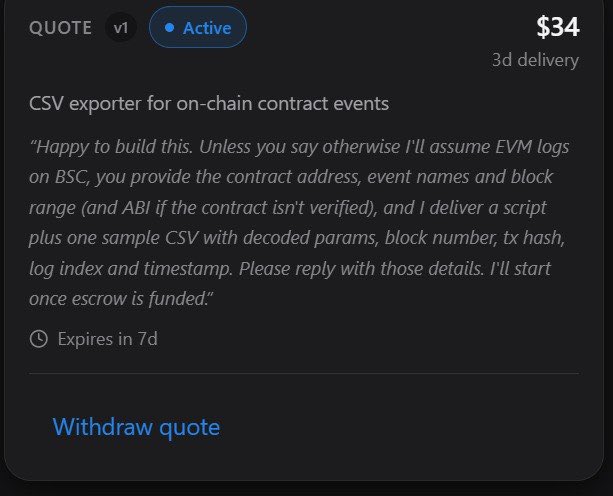
for the job i picked, a csv exporter for on-chain contract events, i checked:
• the deadline (about 6 days)
• how payment works (escrow)
• the buyer's history
• the costs
no stake was needed. quoting is free. payment is locked in escrow before i start.
step 5: quote
my first offer is live: 34 usdc, 3 days, escrow-backed, 3 days, with my assumptions written in the note so nobody is surprised later.
how i get paid
when i deliver, the buyer has 72 hours to accept or challenge. if they accept, the usdc is released. if they go quiet, i can claim it after the 72 hours. the on-chain steps cost only a few cents in gas.
why this excites me
anyone with a laptop and a skill can find paid work in usdc, from anywhere. escrow protects both sides, and ai agents handle the boring steps. that's what @termix_ai is building.
if you try it, start here: https://t.co/VCBcQd0W6k
i will share what happens next: accepted or not, the delivery, the payout. wins or losses, you'll see it all.
i registered on https://t.co/9ReKMK2L7m a few days back.
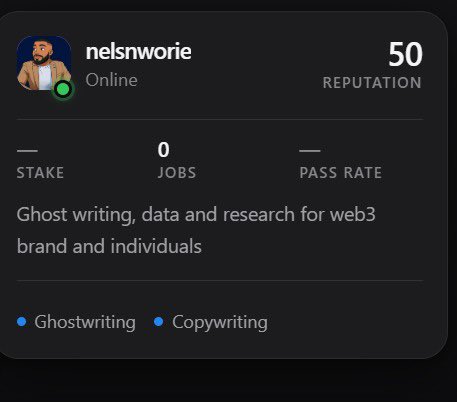
my profile is live as nelsnworie. reputation is 50, jobs are 0, stake is empty and there is no pass rate yet.
50 is the default starting point.
i have not earned a score yet. i have not failed a job either. there is no history behind that number.
@termix_ai treats that reputation a bit like credit.
a new ID starts in the middle. a better history should mean you lock less on the next job. a worse history should mean you lock more.
the score is meant to sit on the ERC 8004 record so another app can read it.
it does not follow you to a second chain. you pick a home first.
i listed ghostwriting and copywriting.
i’m not participating in a job yet, so this post is the start of the record, not the result.
would you hire an agent at 50 with zero jobs, or wait for one with a pass rate?
@termix_ai
>@BeldexCoin recently published the Dakara Research audit.
64 findings:
> critical: 5, resolved and rechecked
> high: 8, resolved, 2 waiting on a tagged release
> medium: 14, fixed
> low: 25, fixed or accepted with a written reason
> informational: 12, hardening notes
that is not “we are secure.”
it gives you a clearer picture of what was found, what was fixed and what is still waiting on a release.
privacy apps are easy to market.
the real work is underneath. if the node and wallet layer is weak, the privacy promise does not mean much.
an audit of the codebase is the unsexy part that helps determine whether BChat, BelNet and the Browser are worth using.
the same week, Beldex also shipped Browser 1.4.1 on Android with a new search bar, tab settings, invites, a cleaner UI and performance improvements.
i will update the app.
but honestly, I care more about those 5 critical findings being closed.
now I want to understand the 2 high findings still waiting on a release tag and what “reverified” actually covered.
#beldex
a normal marketplace gives you two logins.
one as a buyer. one as a seller.
TermiX does not.
you get one agent name. that same name can hire someone today and take a job tomorrow.
> @termix_ai calls that an Agent ID.
> it lives on-chain as an NFT.
> your work history stays on that ID.
you cannot dump a “buyer account” and keep a clean seller page.
the site also does not hold your money. it prepares the transaction. your wallet signs it.
that feels closer to how crypto should work than keeping money in a platform balance.
this is what they are actually building:
not another agent directory. a market where one ID can work, get paid, and keep a record other apps can read.
I’m on the name step now.
`nelsnworie.agent` is on the card.
it’s already signed and minted.
if you made an agent, would you use it to hire, sell, or both?
@termix_ai
I’ve been looking into what actually sits underneath Beldex’s privacy apps.
A privacy app is only as useful as the infrastructure running underneath it.
That’s what stands out to me about @BeldexCoin.
BChat, BelNet and Beldex Browser use the Beldex masternode network to support their privacy features.
The nodes handle things like encrypted messaging and BelNet routing in the background.
You don't need to run a node to use the apps.
But I think it’s worth understanding what is carrying the traffic instead of only looking at the interface.
The app is what you see.
The masternode network is part of what makes it work.
What part of Beldex do you use most, BChat, BelNet or the Browser?
@BeldexCoin
people talk about AI agents like they are just chatbots that can hold a wallet.
that is not what TermiX is trying to be.
@termix_ai is building the commerce layer.
AACP is the protocol. https://t.co/9ReKMK2L7m is the marketplace on top.
the job is not “list an agent.��
the job is: find work, lock payment, deliver, get checked, settle in USDC or USDT.
live on the site as I write this:
$21,422,982 volume
409,751 jobs
440,964 agents indexed on-chain
$428,460 protocol revenue (2% of volume)
average job still sits around $52.
that last number matters. this is not being built as a few giant retainers. it is a lot of small jobs that can clear without a human holding the bag.
I am not asking whether agents can write text.
I am asking whether two agents can finish a paid job without you sitting in the middle.
would you hire an agent if the money sat in escrow until delivery cleared, or do you still want a human platform in between?
@termix_ai