I have been SHOCKED at how many roof decks there are in NYC compared to SF, despite SF’s milder weather.
The reason: regulation. I tried adding a deck to my place in SF and found multiple layers of well-meaning regulation that would turn a simple project into a bureacratic obstacle course, so I didn’t proceed.
1) Because the building is over 50 years old, I need a historical review. That means hiring a consultant to produce a Historic Resource Evaluation, assessing architectural style, historical significance, and more. The Planning Department then has to sign off.
2) Next comes neighbor notification- I have to alert nearby properties, and even people who can’t see the deck can request a discretionary review that delays or blocks the project.
3) And the deck must be invisible from the street to avoid “disrupting neighborhood character,” which severely limits size, layout, and usability.
In NYC? You need a permit but if you aren’t changing use of the building there is no review.
In SF, we treat our entire city like it’s an artifact in a museum of imagined history. You’d think a city obsessed with outdoor space and climate action might allow more use of its sunniest real estate. But the bias is toward inaction, preservation, and process over outcome…
So we have stagnation (and a little less fun)
Whenever I note that fare-free transit hasn't reduced driving, activists say "But [fare-free city X] is a special case because it's [post-Soviet/sprawled/in Missouri/etc]. We can't draw broad conclusions!"
Here's the thing: Eliminating fares hasn't reduced driving *anywhere.*
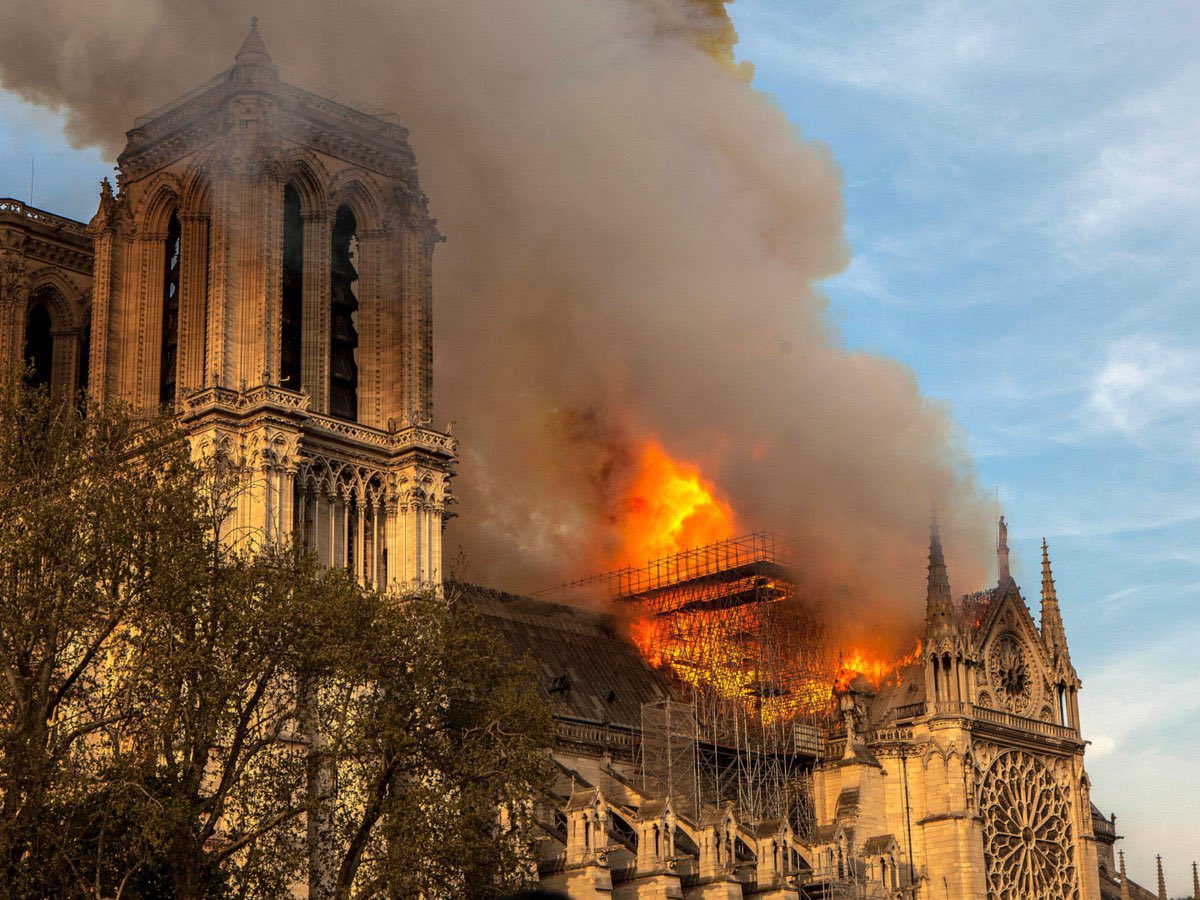
When the Notre Dame Cathedral in Paris was engulfed in flames, Ubisoft, the creators of Assassin's Creed, had previously mapped the cathedral for their game. They generously extended their plans and expertise to assist in the restoration and reconstruction of this iconic structure. Additionally, they contributed €500,000 towards the restoration effort.
As images of the cathedral's roof being consumed by fire began to circulate, Maxime Durand, the historian responsible for ensuring historical accuracy in the "Assassin's Creed" franchise, initially doubted their authenticity. In a phone interview with Business Insider, Durand shared that it took him a full day to articulate his feelings about this devastating event.
Notre-Dame Cathedral held personal significance for Durand. He had spent four years overseeing the creation of "Assassin's Creed Unity," a game set during the French Revolution that featured a remarkably precise representation of Notre-Dame Cathedral as its centerpiece.
In the days following the fire, Ubisoft, the French game developer and publisher behind the "Assassin's Creed" series, pledged €500,000 for the cathedral's rebuilding efforts and offered their extensive expertise. This offer made perfect sense as two Ubisoft team members had invested "over 5,000 hours" in researching Notre-Dame Cathedral, meticulously examining every detail inside and out.
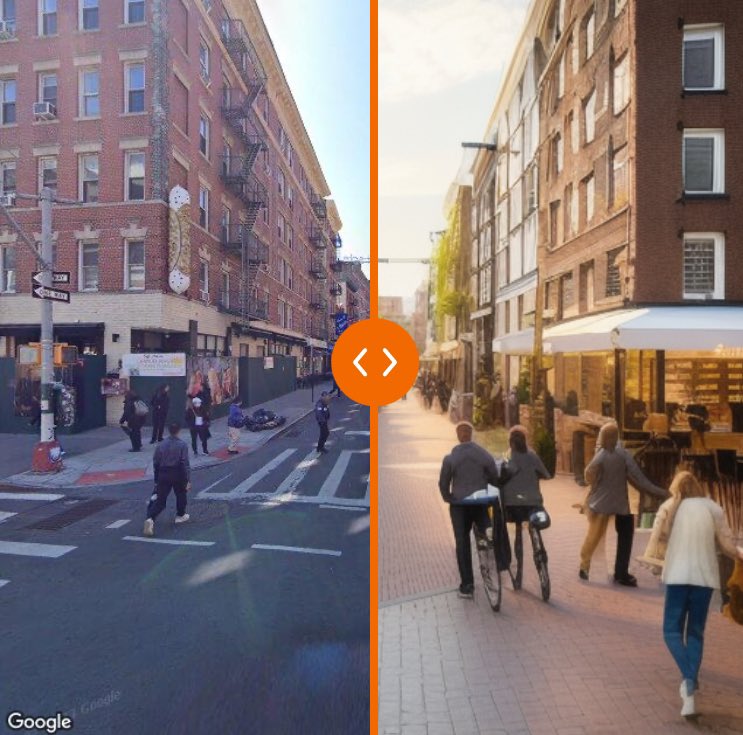
New tool lets you visualise how you turn YOUR street, ANY street into a #CYCLING street. It's simple. Use the tool and show the result to your neighbours and your politicians. https://t.co/GN1AuDJAXC
We partnered with Mastercard to look at how pedestrianizing 11 blocks of 5th Avenue last holiday season impacted the local economy. Guess what? It drove an estimated $3M in additional spending with merchants seeing a 6.6% increase in sales. https://t.co/44QOOtAhDs
@BrentToderian So more housing leads to lower property value. That’s a major reason why NIMBY is against building more housing. A better argument or focus would be on the overall benefits of dense and compact neighborhoods
Amazing image below
A core parenting belief of mine:
One of the most important things we can do for our kids is help them learn the power of their imaginations
But you have to contend with the constant onslaught of overstimulating screens
Here's 2 ways we beat screens:
First: reading, every day, no exceptions
In addition to the obvious benefits of being a strong reader, stories in books help open up the imagination and broaden our kids' worlds.
They expand their ideas of what's possible. My advice is start the reading habit as early as possible, and let your kids see you reading as often as you can
Second: audio stories
As an alternative to screens, we listen to audio stories (I even create one for 3-8 year olds that I'll link in a follow-up post). We listen to them together with our oldest son. You can SEE him engaging with the audio in a way he never does with screens. You can see his brain working. You can see him filling in the blanks in his mind.
Whereas if he was just watching a screen, there are no blanks to fill in. No imagining, no envisioning. Just consuming.
"Imagination rules the world"
- Napoleon Bonaparte
This quote is more powerful than people realize
It's impossible to build anything if you can't first imagine it
Everything ever created by man first existed in someone's imagination
Imagination is a muscle. And too much screen time just atrophies it.