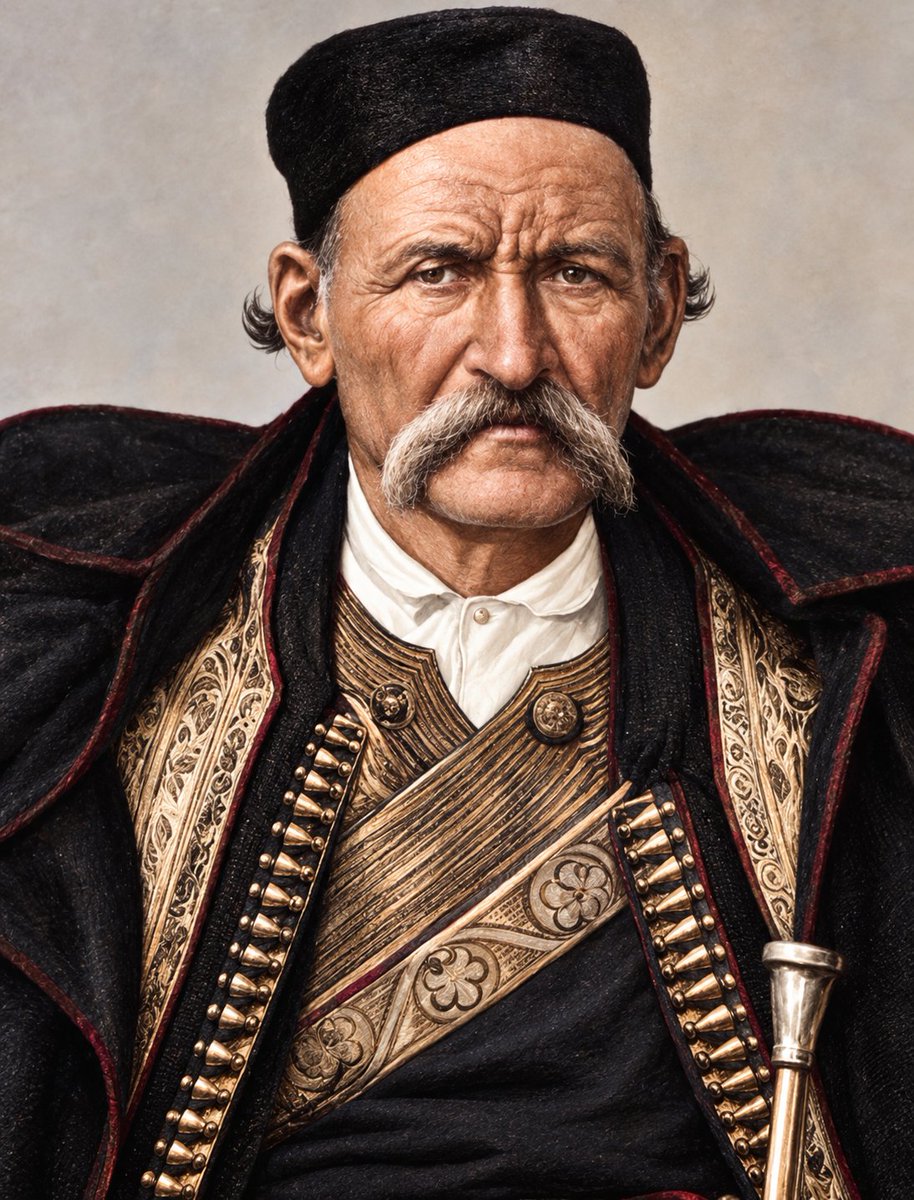
Stavi ruzmarin ispod jastuka, ori se u banjalučkom Boriku pred početak utakmice Borca i Partizana koji se bore za titulu 10. Svesrpskog kupa. I naravno, oči ratnika 🫡🫡🫡
Navijač Partizana Nikola Jovanović teško je povređen kada ga je grupa ljudi u crnom umlatila ispred beogradske Arene posle utakmice Evrolige. Kako „Vreme“ saznaje, u pitanju je bila sačekuša, verovatno zbog nečega što je Jovanović po Tviteru pisao o Ratku Mladiću❗️❗️❗️
https://t.co/cy2xwSAoz0
@ganstabajter Ko ima platu 1,5k eura od momaka? Kakvu ratu za stan? Kakvu ratu za auto? Pa 90% njih radi za max 100.000rsd, plate kiriju, režije, i ostalo spizde na kladionici pa gladuju. 😂😂😂
COME AND COLLECT IT YOURSELF.
Jihadist Ottoman official Smail-Aga Čengić ordered the killing of Orthodox Christian priest Milutin Cerović.
He was beheaded.
His son, Novica Cerović, was 8 years old.
Novica became one of the leading men of the Serbian clan of Drobnjak.
In 1840, Smail-Aga wanted a tribute from his clan.
Novica had another idea.
He sent Smail-Aga a message:
If you want the tribute,
come and collect it yourself.
Smail-Aga accepted Novica's challenge.
He entered the village with his men.
He took prominent locals hostage.
Then night came.
Novica's men gathered in the darkness, reinforced by other Serbs from Montenegro.
They moved toward the Ottoman camp.
And attacked...Then the darkness erupted with the thunder of gunfire and the clash of steel.
By the time the night was over, Smail-Aga was dead.
The Ottomans answered with a punitive campaign.
Drobnjak area was devastated, and Novica was forced to withdraw.
But his story didn't end there.
A prince made him a Duke and Senator, and one historical account says he received the first Miloš Obilić Medal for bravery.
And Novica still had another 55 years to live.
His life wasn't only war.
In 1854, he helped establish the first secular school at Morača Monastery.
Then he picked up his weapons again.
In 1858, he led forces in the attack on the town of Kolašin.
And he still wasn't finished.
When another great war against the Ottoman Empire began in 1876, Novica was already in his 70s.
The old warrior joined the struggle again, serving in Prince Nikola's high command during operations in Herzegovina.
But this time, he wasn't alone.
A new generation was fighting the same empire, men like Pero Tunguz, Mićo Ljubibratić, and others we've talked about.
Novica had been fighting it since before some of them were even born.
He lived until 1895, nearly 90 years old.
Perhaps the most interesting thing Novica left behind was how he explained sacrifice.
Speaking about everything he had lost:
“If I have lost everything I had, Prince Lazar too lost at Kosovo (1389) his empire and lordship, everything he possessed, and even his head...”
Nearly five centuries after Kosovo battle, Prince Lazar's struggle was still the example by which a man from Drobnjak clan understood his own sacrifice.
Kosovo as the pattern of loss that does not cancel the duty.
🫡