Open access data and infrastructure to study changing US ecosystems. @NSF continental-scale ecological observation facility operated by Battelle. #NEONscience
What does it take to produce ecological data that researchers can trust for decades? Kim Nitschke explains how instrument calibration, repair, engineering and QA/QC help build confidence in NEON data. Learn more in the blog: https://t.co/XvjNJUStUa
NEON organizes a monthly seminar series to highlight new findings and frontiers of ecology and NEON science. Do you have a topic for a seminar? Nominate yourself or a colleague to be a speaker by June 10. Learn more and submit a nomination: https://t.co/Yv92UTbaAL
The NSF Postdoctoral Research Fellowships in Biology (PRFB) solicitation is open! NEON offers several opportunities for support for a proposal. Learn more about how NEON can help: https://t.co/kxWvYHGSCm
Tiny creatures. Big ecological question. 🐛 What drives change in aquatic communities? NEON data is helping scientists understand what drives community synchrony in stream macroinvertebrates. Read more about the research: https://t.co/mMLy7hePo5
Battelle is seeking an accomplished scientific leader to serve as the NEON Chief Scientist and Observatory Director. The role provides strategic, scientific, and operational leadership for NEON. Learn more and apply for the role at https://t.co/MCjMNJftnL
Did you submit your nomination? The nomination period for the Science, Technology & Education Advisory Committee (STEAC) closes Monday, May 11.
Nominate yourself or a colleague by Monday for consideration: https://t.co/swHNWlwpsc
No single method can scale a field measurement to a continent. So how do you do it? Researchers tackled that question at the Remote Sensing and Fluxes for Real-world Impact Workshop. Learn more about it in the blog: https://t.co/Nzefsrz715
NEON Science Seminar coming up!
Tues., May 12, at 12pm MT listen to Dr. Ranjan Muthukrishnan of St. Olaf College present the NEON Science Seminar "Linking Local Scale Community Processes into Global Scale Ecological Dynamics." Register to attend at https://t.co/rcd2CooV58
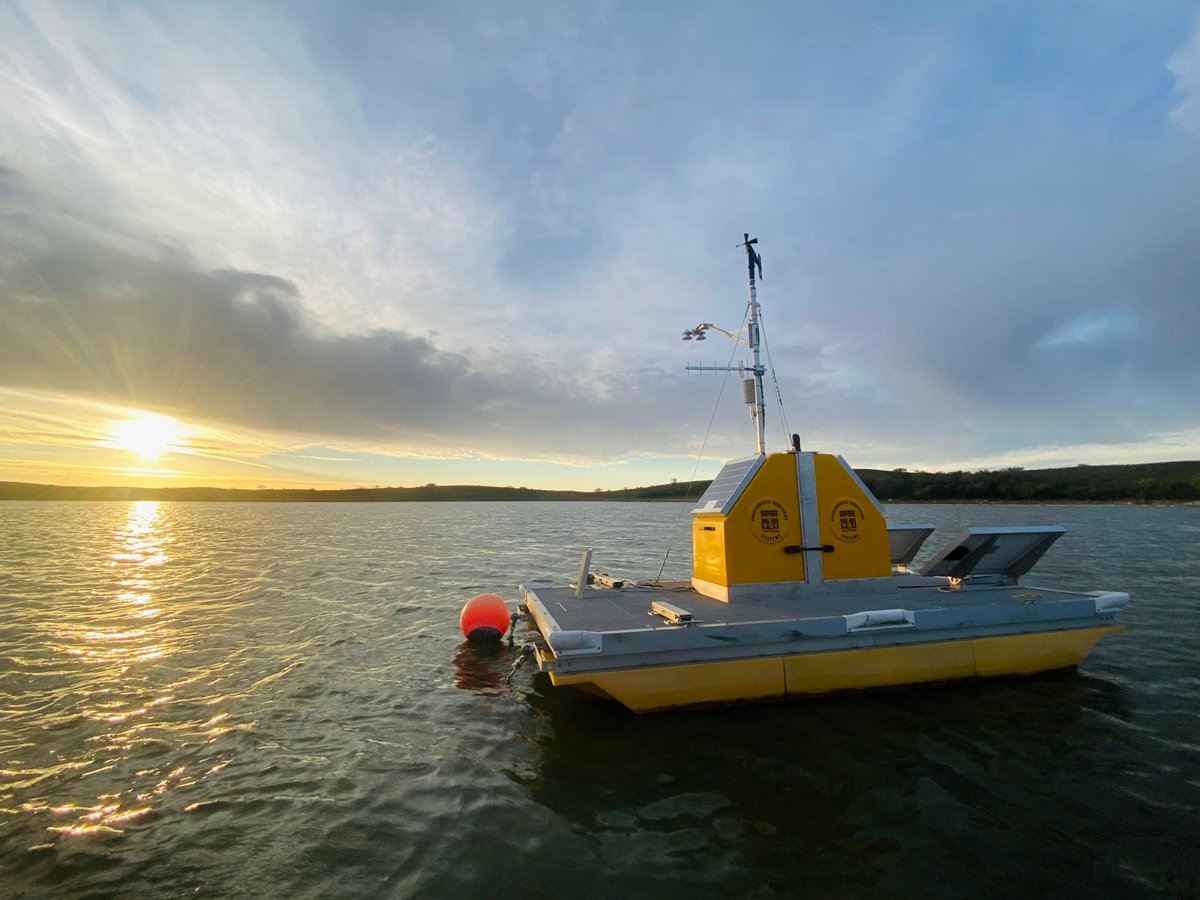
Collecting information about water means working with something powerful - and fluid.🌊 NEON Ecologist Zach Nickerson answers your questions about NEON aquatic sites and data. Read more in the blog: https://t.co/foROynEiuC
#NEONscience#Hydrology
Biodiversity, variation, traits, and more! Hear more about it all in-person at the Mini-Symposium on Integrating Organismal Biology into NEON on May 7, 9am-12:30pm at the University of Colorado, Boulder. Learn more: https://t.co/dVdArildvv
Nominate yourself or a colleague for the Science, Technology & Education Advisory Committee (STEAC). The STEAC provides strategic advice to NEON. Learn more and submit a nomination: https://t.co/hfyvFA2n6E
It's Earth Day! We are celebrating the power of long-term ecological observation 🌎️ NEON provides open data and samples from across the U.S., equipping scientists and communities with reliable information for discovery and advancement. Watch on YouTube: https://t.co/zosSCKDWiF
Interested in learning about NEON data in Google Earth Engine (GEE)?
On April 28, 12-1:30pm MT, join the workshop "Remote Sensing Data in Google Earth Engine" in partnership with the Ecological Society of America (ESA). Register on the ESA web page: https://t.co/opentXPQoM
⚙️Add this one to the tool box!
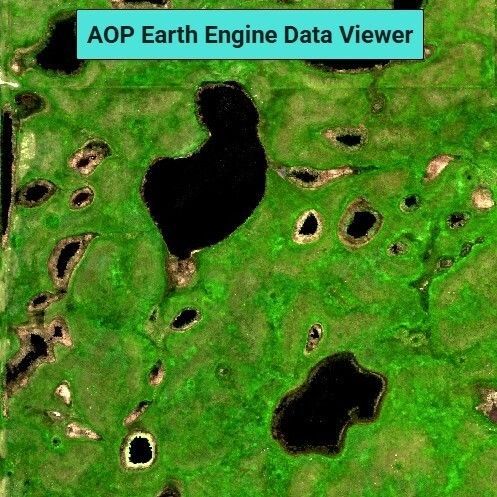
The Airborne Observation Platform (AOP) Google Earth Engine (GEE) app enables new interactive features and allows users to visualize NEON hyperspectral, lidar, and camera data. Read more in the Data Notification: https://t.co/IfcOpuyGcK
📣 Postdoc opportunity available!
The NSF ASCEND Engine in Colorado and Wyoming, in partnership with NEON and the National Institute of Standards & Technology (NIST), is offering a unique postdoctoral position in soil health measurement. Learn more: https://t.co/IwLaxroFJy
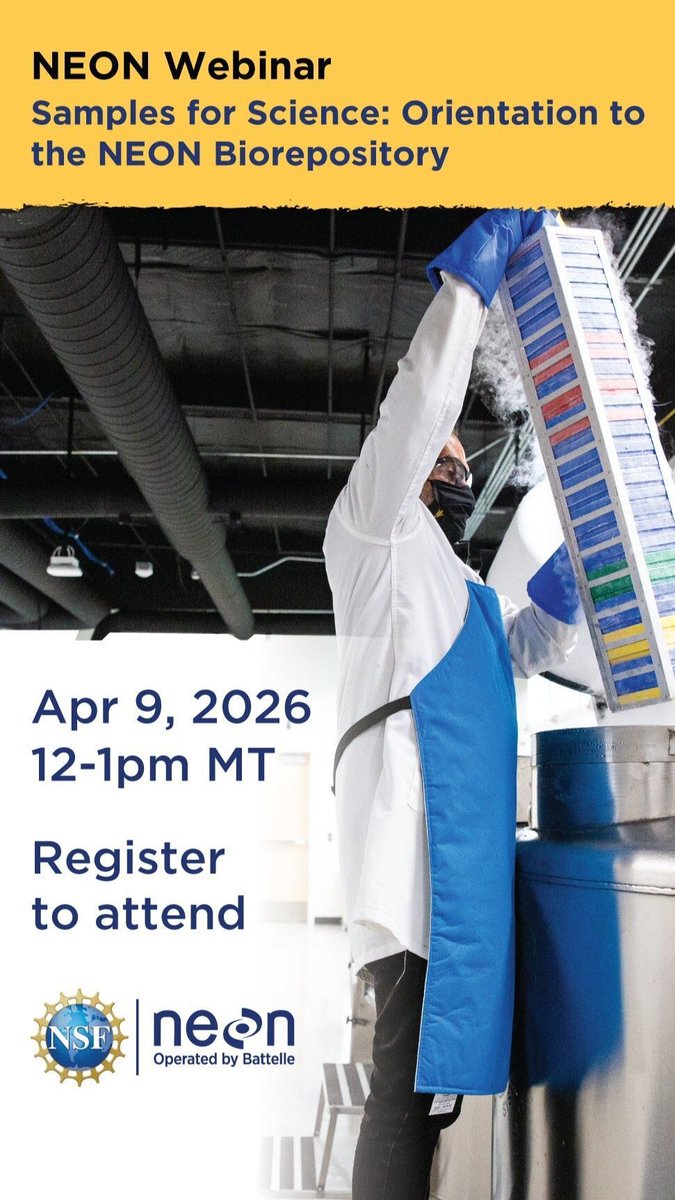
The NEON Biorepository provides more than 75 sample types from 81 field sites across the U.S. Learn more about the NEON Biorepository this Thursday, Apr 9 at 12pm MT in the webinar, "Samples for Science: Orientation to the NEON Biorepository." Register: https://t.co/EeQQIOr7VR
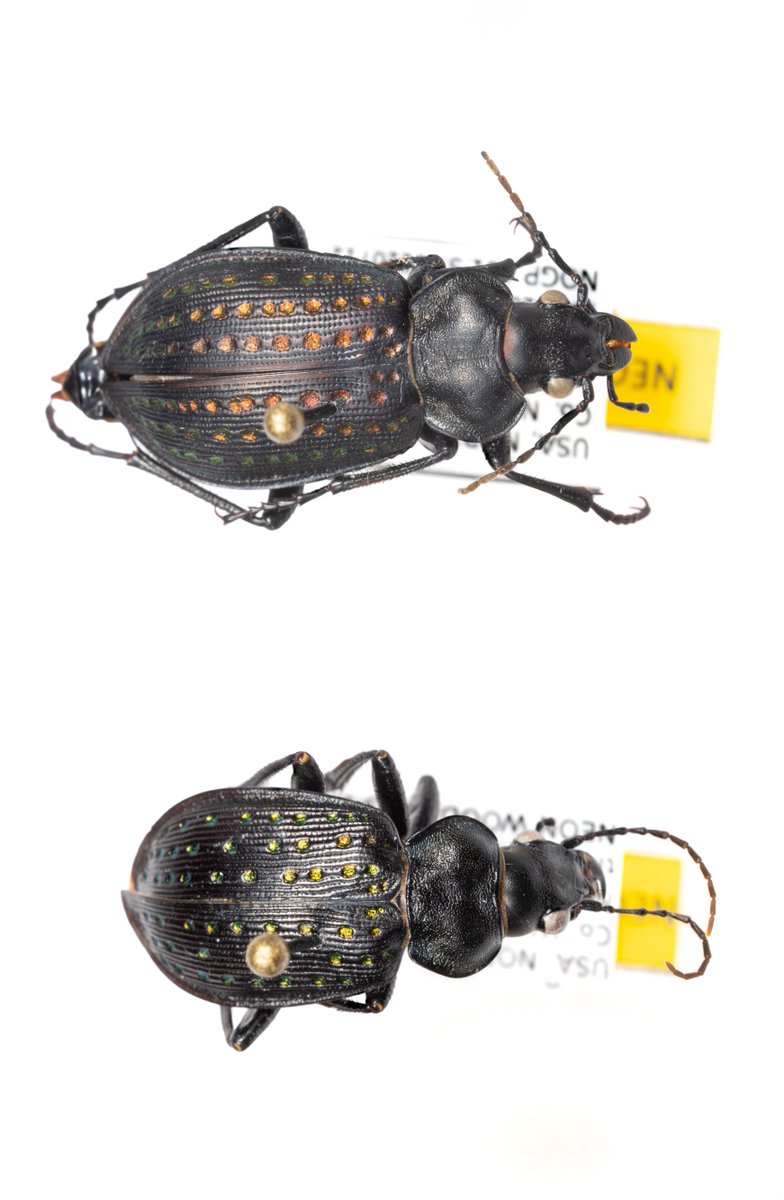
Can a beetle reveal when an ecosystem is under stress? At NEON's virtual hackathon, participants tested machine learning models using images of ground beetles collected across NEON field sites. Read more in the blog: https://t.co/SRaevHs2AO
Photo: Isa S. Betancourt
Soil microbes may play a surprising role in the future of hydrogen energy. Researchers at the University of Arizona are measuring how microbes absorb atmospheric hydrogen and what happens when H₂ levels change. Read more: https://t.co/um30RXpPmI. Photo: Robert Bordelon @uarizona
On Apr. 14 at 12pm MT, join in to hear Dr. Daniel Allen of Penn State present the NEON Science Seminar, "Towards Understanding how Drying Impacts Streams across Biological and Spatial Scales." All are welcome; Register to attend the seminar at: https://t.co/v7eGSRWEr9 @agsciences
Meet Dr. Rommel Zulueta, who leads NEON Research Support Services (NRSS). Rommel works with researchers to turn new ideas into field projects using NEON infrastructure, data and expertise across the Observatory network. Read more in our blog: https://t.co/vmvTyvNwDk