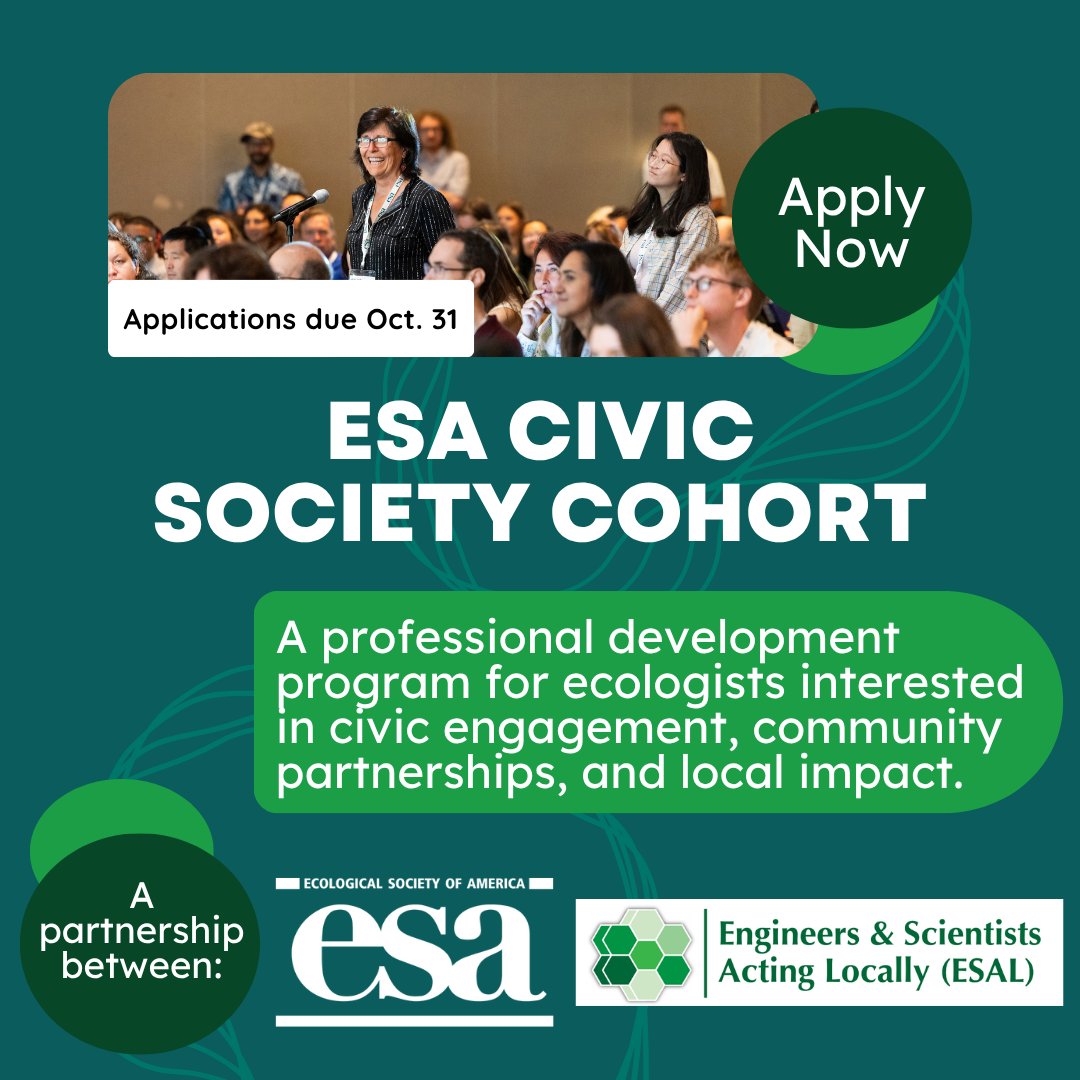
Curious about the ESA Civic Society Cohort, a partnership with @ESAL_us?
The program combines self-paced learning, virtual cohort discussions, and a capstone project designed to put participants' civic engagement skills into practice.
Learn more: https://t.co/TZqHXUICTM
ESA staff and members are on the ground at #CBDCOP17 in Armenia, helping elevate the role of ecology in global biodiversity policy discussions. Follow along as they share insights, observations, and experiences on the ESA Blog: https://t.co/RCkk5JDUgF
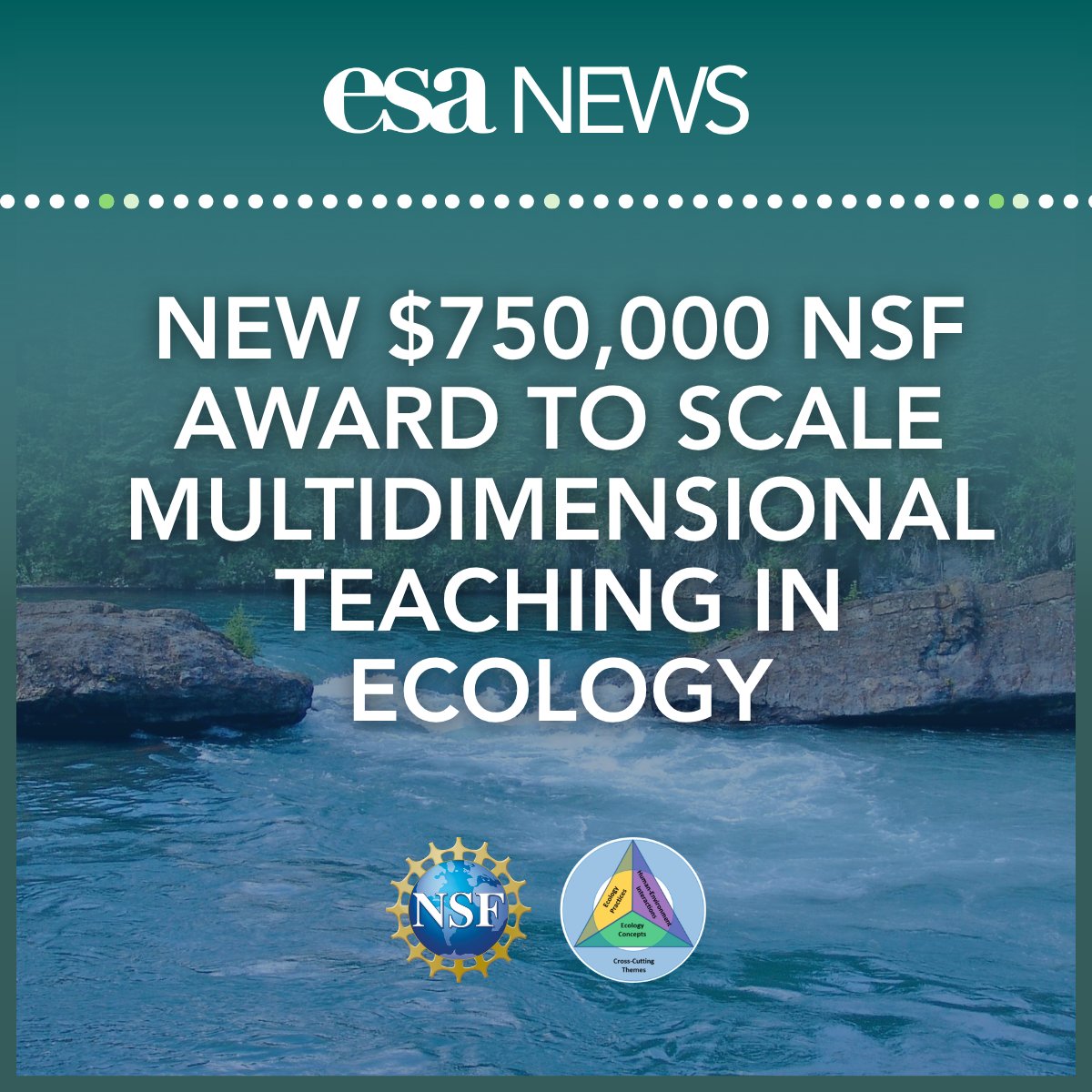
Announcing a new award from the @NSF to support our 4DEE program!
The new NSF grant will support evidence-based instructional practices and the development of resources with emphasis on integrating two or more dimensions in ecology education.
Read more: https://t.co/QIAxuaCrzf
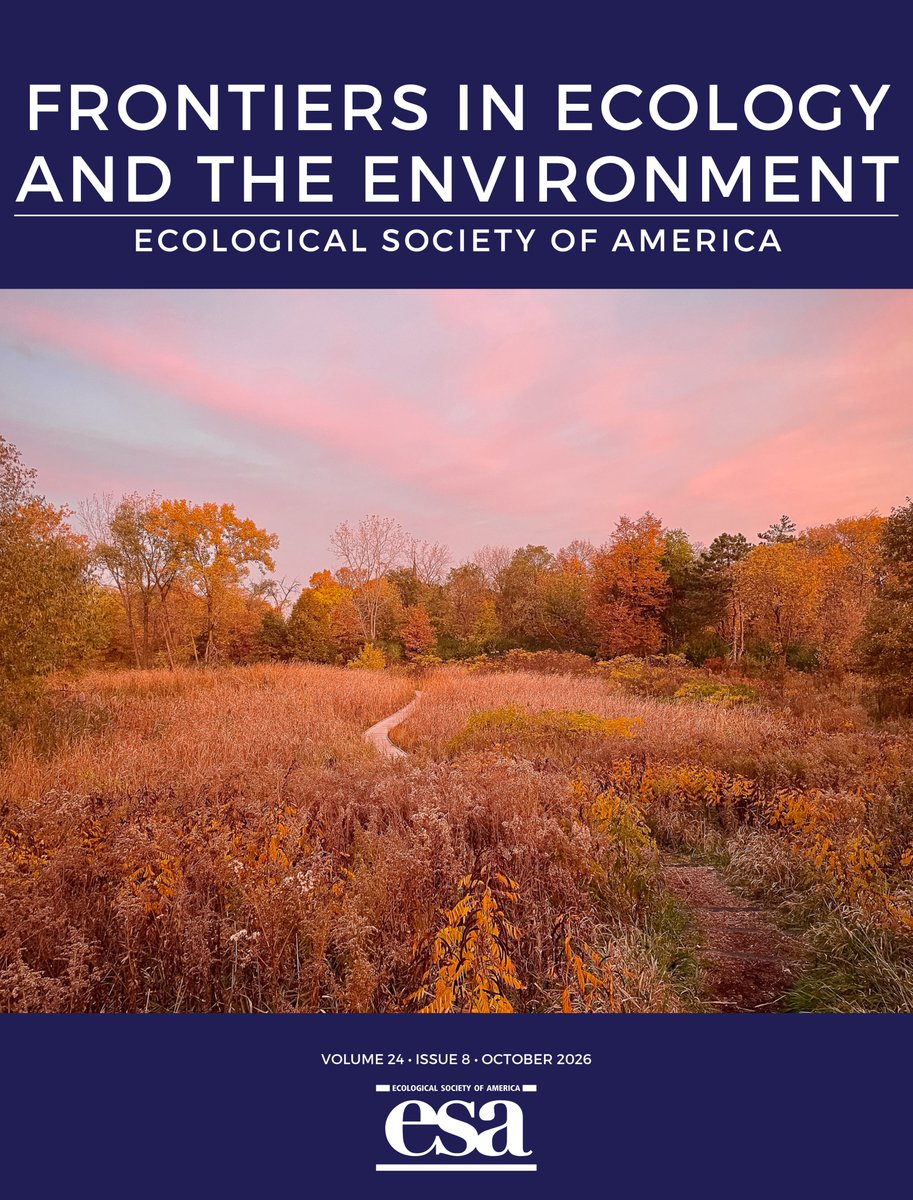
Take the scenic route to our new October issue, whose cover features Chicago parkland and highlights research showing that historically redlined neighborhoods often have fewer, smaller, and less-connected greenspaces
Browse the issue: https://t.co/iprjAPr1Yc
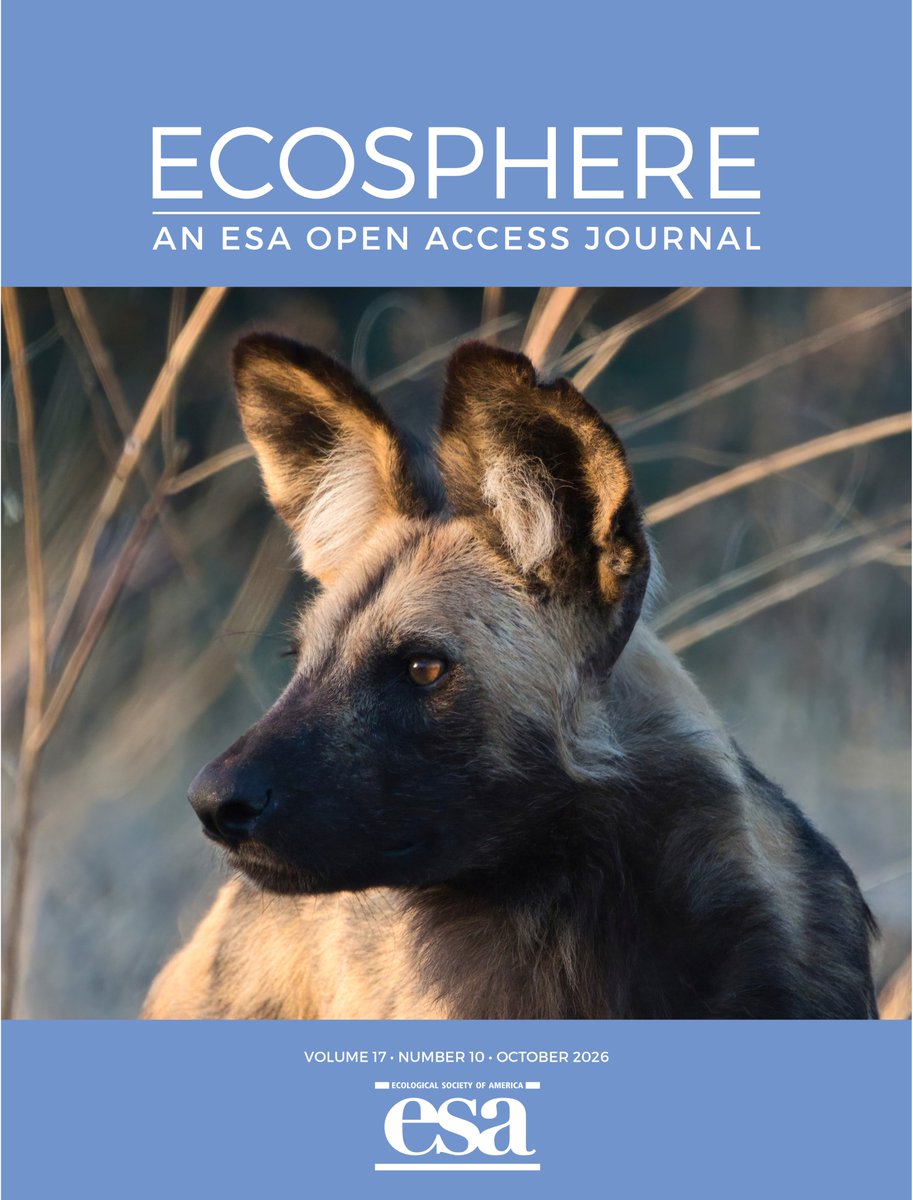
Track down our new October issue! The cover features an African wild dog from Botswana's Okavango Delta, from a study showing that realistic movement models can better predict connectivity as seasonal floods reshape the landscape
Browse the issue: https://t.co/l6nArEUaOv
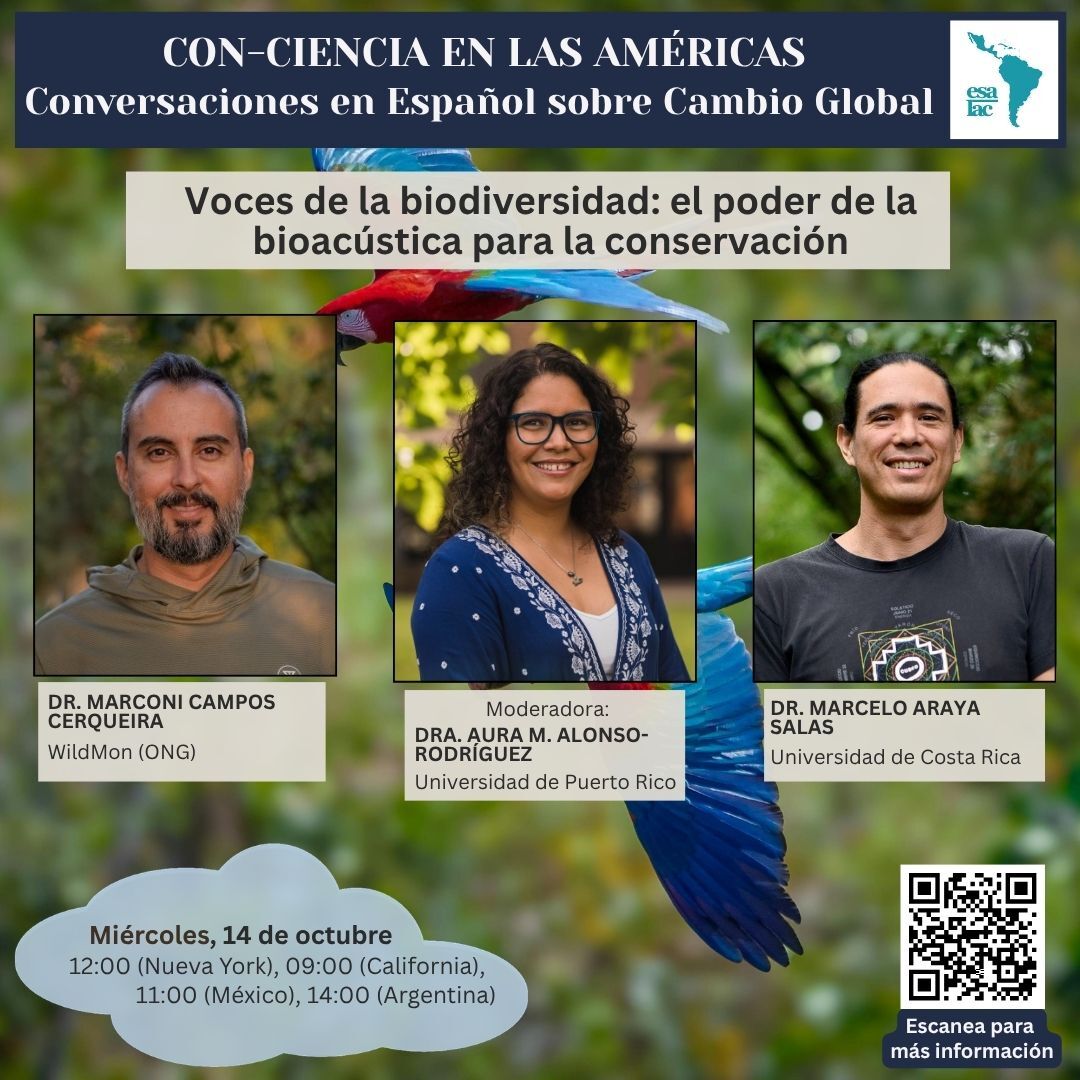
▶️ En vivo por YouTube Live: https://t.co/ckvVBZJ4HP
💬 Envía tus preguntas y suscríbete a nuestra lista: https://t.co/hC4GmemEYY
🎥 Mira las grabaciones anteriores: https://t.co/NqAetLDRMo
Your final reminder: #ESA2027 session proposals are due tomorrow, October 15, at 5:00 PM ET. If you’ve started a proposal, now’s the time to finish it!
Don't miss your chance to share an idea the field needs to hear: https://t.co/i1FwbF0mmP
This is your sign to pick up a pencil ✏️🌿
This fall, ecologist and educator Nancy Lowe is leading three arts & ecology sessions to teach you a new way to see the natural world. Join one or all. No experience needed.
Learn more and register: https://t.co/Wacgmn6GPa
Abstract submissions are now open for Ecologies of a Changing Planet 🌍 ESA’s NEW virtual conference coming next February 23-25, 2027!
Studying oceans, wetlands, or work that spans regions and biomes? We want to hear it. Submit by November 12: https://t.co/2sNFR7GK1i
New paper: Combined ozone + NOx impairs pollinator performance more than either pollutant alone, but the effect is sub-additive because the two pollutants interact and partially offset each other.
This has implications for the energy transition: ground-level ozone is still projected to rise until mid-century before declining. Faster NOx cuts would shorten that peak and speed up pollinator recovery. 🐝
@jakecologist@cwagstaff@UniofReading@UniRdg_SAPD@ESAFrontiers
https://t.co/Ygnh3mfzTl
Flutter over to our new October issue, whose cover captures a scene from a long-term Kansas prairie restoration experiment. The study behind the image found that native soil microbes can help accelerate grassland recovery
Browse the issue: https://t.co/pNWQkRfosN
🔎Looking for ecology stories? Our latest media tip sheet highlights new research on sea slugs and conservation, insects as key decomposers, wildfire history in the Southwest, marine predators, and nature-positive development.
Read the full roundup: https://t.co/is5hXIozpB
Excited to share that our soil microbes & prairie restoration work is featured on the cover of the current issue of Ecological Applications! with co-authors @MycorReb, Gunner Davies, @lizkoziol, & Jim Bever https://t.co/YGq8hCnbeO
New cover alert! This aerial view captures researchers surveying Georgia’s granite outcrop pools, home to rare endemic species like snorkelwort. A recent study showed that repeat surveys are key for reliable detection
Browse the issue: https://t.co/xXfu5CxWMa
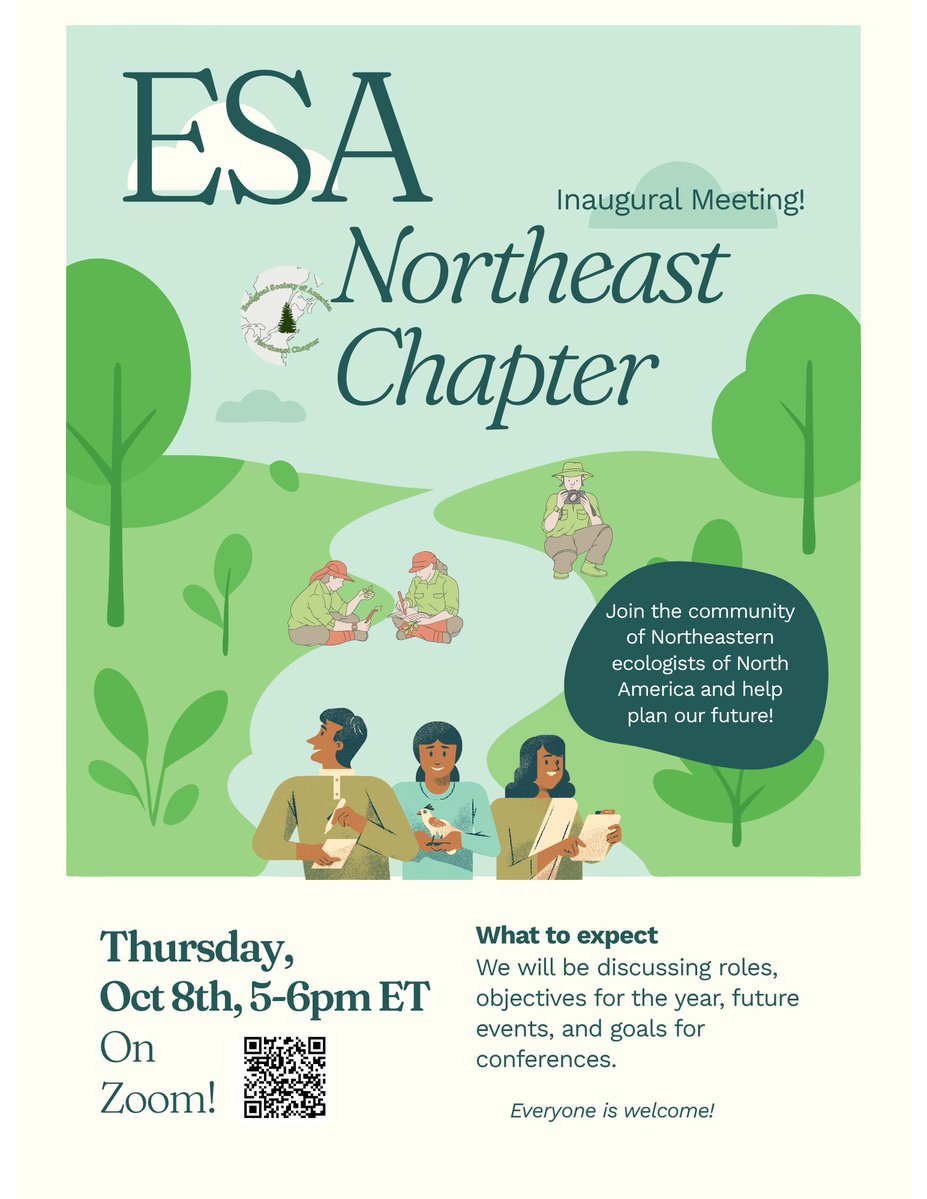
Members: We have two business meetings scheduled on 10/8!
The Inclusive Ecology Section will hold a meeting for members at 3:00 PM ET https://t.co/Qs497HHVWB
Then the new Northeast Chapter will have its first meeting at 5:00 PM ET https://t.co/aa0jlxNZ52
All members welcome!
Will you be attending #COP17 in Yerevan this month? We're sending an official delegation and we'd love to connect with other ecologists attending to strengthen our voice at the event. Get in touch with [email protected] if we may see you there!
Interested in building stronger connections between ecology and your community? Applications are now open for the ESA Civic Society Cohort, offered in partnership with @ESAL_us
Learn more & apply by Oct. 31: https://t.co/R0t3LtIWnZ
New in Ecosphere: tree cavities are keystone structures in Brazil’s Caatinga. They sheltered 475 anurans from 6 species—up to 98 per cavity—and were 5.4°C cooler, with RH 15 points higher. A UFRN–private-sector collaboration. https://t.co/R20YXDdiKF #Caatinga#Ecology