A cow takes grass (inedible to humans) and produces:
- Meat (complete protein + fats)
- Milk (complete nutrition)
- Leather (clothing, tools)
- Tallow (cooking fat, soap, candles)
- Bones (tools, broth, fertilizer)
- Organs (nutrient-dense food)
- Manure (fertilizer)
This is complete resource utilization from a plant humans cannot eat.
You cannot replicate this with any technology. The cow is performing chemical transformations we cannot industrialize.
Grass → complete human nutrition is alchemy.
The cow is worth more than any machine humans have invented.
It runs on rain and grass. Produces multiple products. Builds soil while operating. Sequesters carbon. Reproduces itself.
And we're told to eliminate them for environmental reasons.
While flying in almonds from California and soy from Brazil.
The stupidity is breathtaking.
When you see highly educated scientists and physicians (people with master’s degrees in public health and PhDs in their fields) completely disagreeing on a health topic (whether it’s diet, cholesterol, or vaccines), it should raise a red flag.
Why? Because when experts who are supposedly looking at the same body of evidence land on opposite conclusions, it usually means one or more of the following is happening:
• Someone is cherry-picking data.
• Someone is overly biased or dogmatic.
• Someone is ignoring inconvenient evidence.
• Someone has financial or professional incentives to defend their position.
Bad intentions are rarely the root cause. Most experts genuinely believe their viewpoint. But we can’t ignore the reality that careers, reputations, and salaries often depend on defending certain narratives. As Upton Sinclair put it: “It is difficult to get a man to understand something when his salary depends on his not understanding it.”
Example 1: Nutrition
Some PhDs will swear red meat is dangerous because of saturated fat, while others will argue it’s one of the most nutrient-dense, health-promoting foods. Both cite “the science.” The difference usually lies in what evidence they prioritize: weak food-frequency questionnaires vs. rigorous clinical outcomes, or epidemiology vs. biochemistry.
Example 2: Cholesterol and Statins
Decades of dogma have framed LDL cholesterol as the “cause” of heart disease, leading to the widespread prescription of statins. Yet, other equally credentialed experts argue the story is far more nuanced: LDL may be a marker rather than the cause, and metabolic health (insulin resistance, inflammation) drives cardiovascular risk far more than cholesterol alone. Patients are put on lifelong statins, despite the fact that for many groups (especially primary prevention in low-risk individuals), the absolute benefit is tiny, while side effects are real. Both camps have MDs, PhDs, and clinical trials to back them. So which one is “science,” and which one is “misinformation”?
Example 3: Vaccines
Some public health experts say every single vaccine on the schedule is safe and necessary, while others raise legitimate concerns about certain ingredients or the aggressive dosing schedule. Again, same credentials but opposite conclusions because interpretation and bias are involved.
Here’s the broader lesson: when smart people with the same level of training land on opposite sides of the fence, it doesn’t mean both sides are equally valid. It means you, as a critical thinker, need to look closer at the assumptions, incentives, and blind spots driving their conclusions. Science isn’t about consensus—it’s about evidence that can withstand scrutiny. Consensus is often just a snapshot of what the majority believes, not necessarily what’s true.
And history proves this over and over again. What was once “settled science” is often overturned later:
• Galileo was condemned for rejecting the Earth-centered consensus.
• Semmelweis was ridiculed for handwashing. Germ theory was once “quackery.”
• For years, smoking was considered safe, and even endorsed by doctors.
Each time, there was consensus. Each time, the consensus was wrong.
So the presence of disagreement among equally credentialed experts should not be dismissed as “misinformation.” It should be seen as an invitation to think more critically, to examine incentives, and to remember that truth doesn’t depend on a vote.
Here is Trump talking about women. "I did try to fuck her. She was married...I moved on her like a bitch...and when you're a star you can do anything...grab em by the pussy...you can do anything."
https://t.co/R4KOPgNJBG
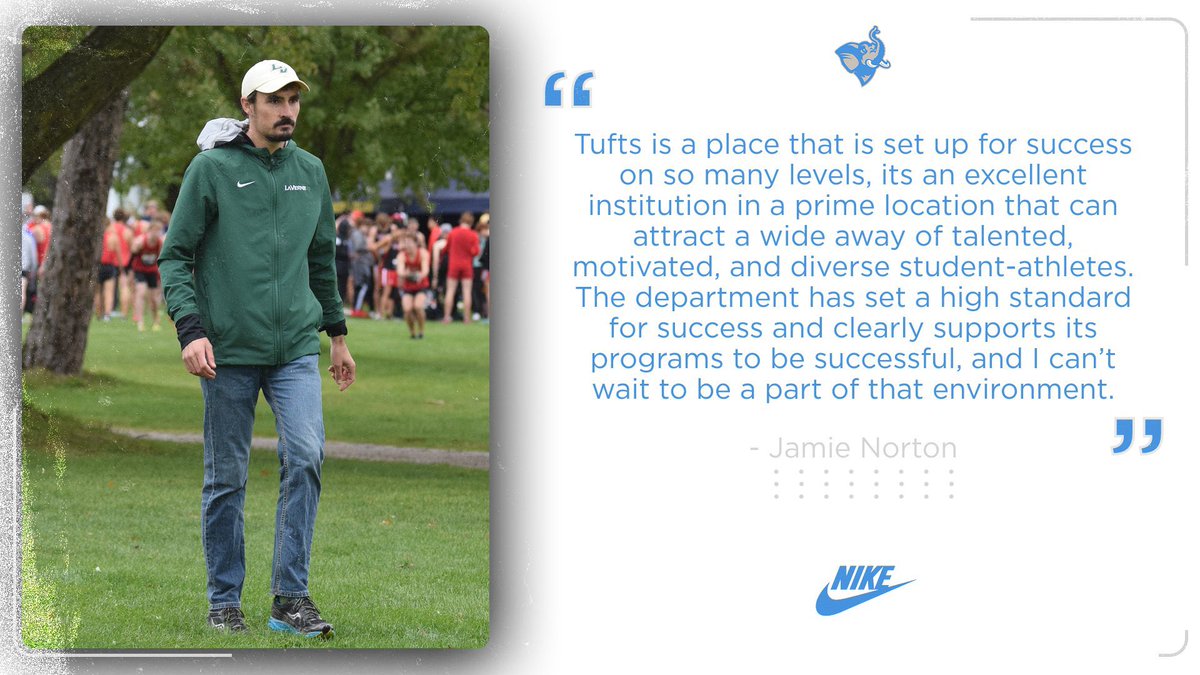
TF/XC | AN OLD FACE IN A NEW ROLE!
Congratulations to Jamie Norton ‘14 on being named as the new Tufts Director of Track & Field/Cross Country!
Read some of his quotes here, and then head to https://t.co/7GDFtxJfWM for more about his journey back to The Hill!
#JumboPride // #GoJumbos
For 80-90% of your exercise, you should be able to have a full-on conversation.
If you can't, and it's not part of the intentionally hard 10-20%, you need to slow down.